

 Apple Podcasts

 Spotify

 YouTube

 Amazon Music

 RSS Feed
 Goodpods
 iHeartRadio
Why Victim Thinking Keeps You Broke and Stuck
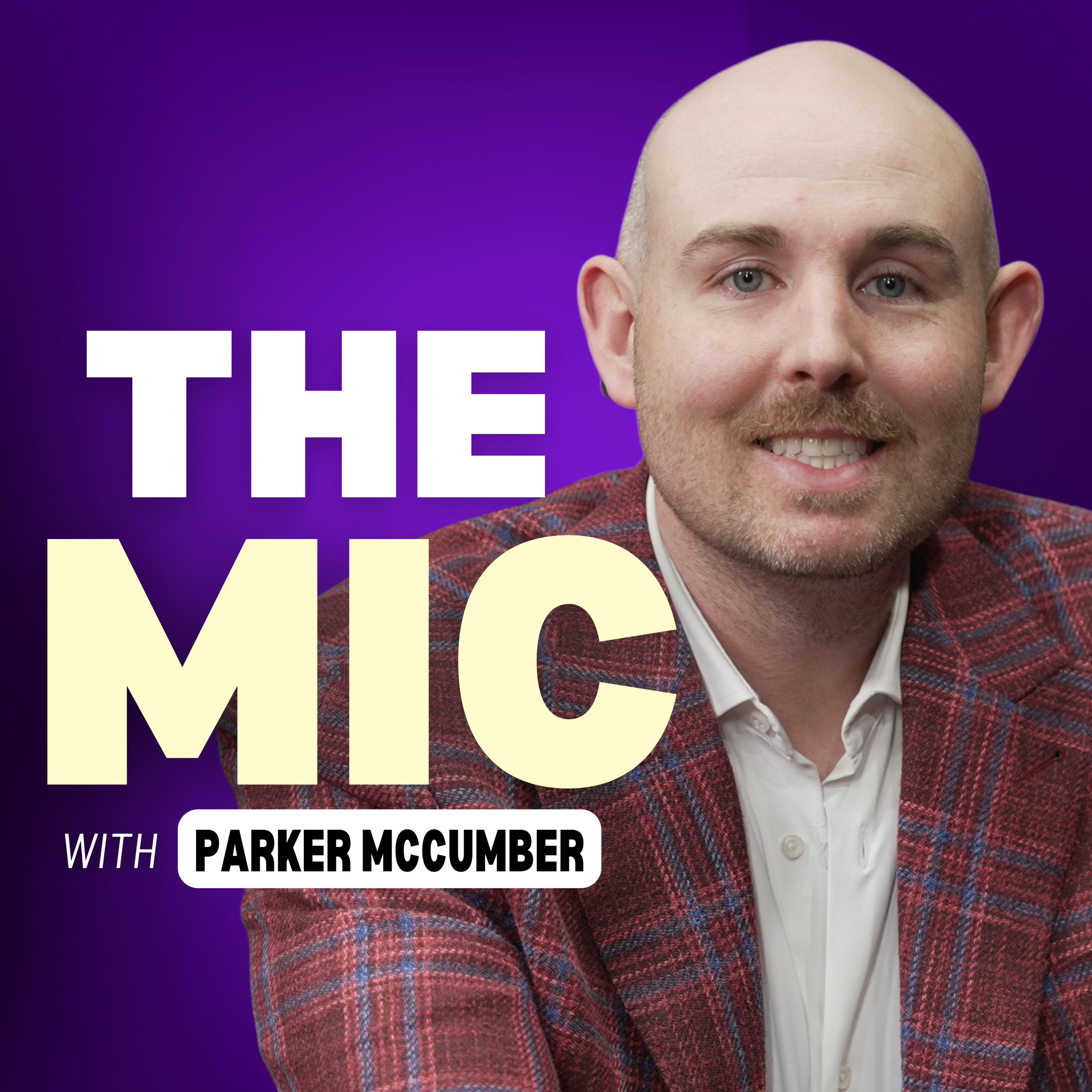
In this episode, Parker McCumber shares his inspiring journey from poverty to success, emphasizing the importance of ownership, military leadership principles, and effective organizational strategies. Discover actionable frameworks to elevate your leadership and business performance.
Get to know Parker further:
Website - https://www.parkermccumber.com/
Book - https://link.amazon/B0igrwTGC


In this episode, Parker McCumber shares his inspiring journey from poverty to success, emphasizing the importance of ownership, military leadership principles, and effective organizational strategies. Discover actionable frameworks to elevate your leadership and business performance.
Get to know Parker further:
Chapters
00:00 Meet Parker McCumber
13:00 Military frameworks that level up leadership skills
30:27 How do you communicate intent?
46:49 What are some of the best job interview answers you received from candidates you’ve interviewed?
Legal Disclaimer
Leonsolutions, LLC, and the content it produces are for educational purposes; your results may vary. No guarantee of results is claimed. The publisher of this content is not responsible for any actions taken or not taken as a result of reading, watching, or listening to our content.
Paul Leon (00:01.501)
Parker McCumber, welcome to the show. Parker, you are a US Army National Guard and author of How the Hell Are You Doing This? In that you lay out the principles behind your transformation from bo broke, called shooting, to building a multi million dollar businesses, all while actively serving in the military. You run an event out of Utah.
Called Mission Ready Live, which we're gonna peel the onion around. And I feel like, Parker, for you and I, I'd like to read something from your LinkedIn as a jumping off point that I think really sets the frame of how powerful your experience and leadership skills and tips need to come and be taken into the heart for the listener or watcher of this show, whether they're on YouTube, in the car, wherever that their journey. So I'm gonna read it out loud. I thought it was really powerful.
Your LinkedIn reads I once lay flat on my back in a cesspool in Afghanistan. A mud bridge collapsed under me and a hundred pounds of gear. It was a hundred and thirty degrees. I was covered in human waste, staring up at the sky, thinking one thing God, there has to be a better way to build a life and a family than this.
But that story starts earlier, you write. So Parker, where does that story start when we say earlier to really peel the onion together on your leadership frames, experience, and so on?
Parker McCumber (01:45.325)
Yeah, absolutely. Thank you so much for having me on the show. That that story begins as a poor kid in rural Utah. And when I say poor, I don't mean maybe like national geographic poor, but the kind that's real in the United States. And I'm sure a lot of listeners can relate to it. your parents arguing about what bills to pay and what checks to bounce, and you can hear them through the wall at night and it's keeping you up. Or for example, in ninth grade, my
A high school football coach tells me I need to eat more protein and bulk up and get stronger and bigger. And I go home and I ask my mom for if we can have meat for dinner. And she just sobs because it's not in the budget. And I had this this kind of realization at that time that no one was coming to save us. And I didn't really maybe understand the full scope or the the grasp of of poverty that we were experiencing at the time.
Paul Leon (02:28.334)
Mm.
Parker McCumber (02:44.566)
I just understood that my mother in that instance felt powerless. And I didn't never wanna feel powerless like that. And I didn't want to see my loved ones feel like that. So, like any 18-year-old boy looking for empowerment, I joined the United States Army. And that was really my escape from from poverty. three square meals a day, you know, hots in a cot. I found myself
stationed in Germany not too long after that. And I had a a really, really powerful experience one of my first weekends there. I was touring the city of Nuremberg with some some new army friends. And as I'm walking down these cobblestone streets, I see a Bugatti Veyron drive down the road and literally park on the side of the the cobblestone road in front of me. And I'm thinking, my gosh, this is real.
It's not a poster on a wall. It's not an image on a computer. If it's real, this guy obtained it. And if he could obtain it, then it must be attainable. And that means I could attain it. Now, hard cut to just, you know, a few months later, I'm in Afghanistan and I'm seeing the exact opposite end of the financial spectrum. People who are just struggling to survive, living in mud huts.
Paul Leon (03:52.089)
Right.
Paul Leon (03:57.261)
Yeah.
Paul Leon (04:08.099)
Mm.
Parker McCumber (04:13.578)
And it it kind of put this question inside of me why are some people blessed with so much opportunity and financial success, and others are just struggling to survive? And I I that kind of became this this question that drove me for the last 15 years of my life, give or take. And so while I'm laying there in that cesspool in Afghanistan and I'm staring up at the sky and I'm thinking, man, there's gotta be a better way.
Paul Leon (04:27.307)
Hmm.
Parker McCumber (04:44.064)
I kept coming back to this this question of if I could just figure out what the Bugatti guy knew. If I could just figure out what those people were doing, maybe I could emulate that and do that. And so that became what I what I've been studying, s trying to figure out for the last 15 years. And I've realized it it largely comes down to ownership. And I don't necessarily mean ownership of a business, but ownership of your life, your time.
and your outcomes maximum responsibility for what you can control.
Paul Leon (05:17.366)
Mm.
What is it that you feel, Parker, at this point? And at first before I go a little deeper, I think it's important to say thank you for your service. I think a lot of I and I just want to be very transparent in that before we go any deeper. And I encourage anybody, you know, to always say that to somebody who has served our country and whatnot. So go I'm gonna go a little deeper and kind of pull from some
Parker McCumber (05:30.018)
Thank you.
Paul Leon (05:47.209)
some key highlights there you share with me. And I invite you to share your feelings as much as you're comfortable with Parker. what do you feel the gaps were between you and the man with the Bugatti? You're looking back now, kind of connecting the dots. And what do you feel are some of those highlights that we need to kind of select for somebody who's let's just say in their twenties and they're just like, yeah, I'm in that spot.
Parker McCumber (05:48.398)
Let's do it.
Paul Leon (06:17.576)
And I wanna close those gaps to get closer to the Bugatti. Like I don't really care about like Bugattis, me personally. I think it's cool, but like maybe somebody who's like, I wanna get to the middle Bugatti. I don't know what a middle car. But the Porsche. Yeah. Yeah. Yeah. What do you feel?
Parker McCumber (06:32.674)
Maybe it's the Porsche, right? Or or or a lot of people want that BMW five, you know?
Yeah. You know, for me, I I I kind of shared what I've what I've settled on now is ownership. And I said time, outcomes, life. It's it's combating this victim mentality. I and I don't want to get too cliche, but the reality is the biggest gap most people have is that they think life is happening to them. Things are happening to them. But what are you doing?
Paul Leon (06:50.889)
Okay.
Paul Leon (06:57.662)
Yeah.
Parker McCumber (07:10.264)
To take ownership in that. If something's happening to you, you're not an owner, you're not responsible. It's really easy to pass the buck or put the blame on someone else or something else. The reality is, if you can step out of that mindset for a minute and recognize that ultimately you are the one that's responsible for your life and your outcomes and everything that goes on in there, then you can start taking steps to immediately improve your situation.
So I'd I'd like to encourage maybe that 20 year old listener who's like, man, there's I there's no way I could ever get to that kind of level. I was that person once. I mean, I was I was a 20 year old private divorcee in the army. The reality is, I think anyone can achieve a high level of success, but you have to take ownership, you have to do it consistently over a prolonged period of time.
where you can control all of the out inputs and outputs that you can control. And sure there's gonna be some things that you can't, but that just means you need to take more ownership of what you can and drive that piece forward.
Paul Leon (08:18.952)
Right.
Do you feel, and these are gonna be some some basic questions, but I feel coming from you it'll mean more because of what you've accomplished serving in the military, generating millions from you know, a company. Do you feel based on the people you've had the privilege to serve and help, that do you think people can change? And I and I know that seems like a very basic question, because my and the reason I'm I'm gonna tell you my intention.
I feel like you had to break some generational curses based on some stuff here. And I'm not talking bad of your mother. Like I just want to be very transparent. Yeah, like I have to break generational curses. Like like people who follow the show know I've done therapy and all that and like I was diagnosed with extreme depression and anxiety. And like part of that came from just generational curses. What are some of those things that you feel you had to break?
Parker McCumber (08:51.95)
Absolutely.
Parker McCumber (08:55.49)
No, but it's it's a hundred percent true.
Paul Leon (09:17.415)
And that other people need to break to become a better owner.
Parker McCumber (09:21.334)
This is a a great question. I'd like to jump into the concept for just a second further, because there was a presentation that I heard maybe back in 2021 that really helped me change my mindset around some of this. Ed Milette, motivational speaker, if if you're familiar with him, he teaches this concept of the one. And for people not familiar with that, that story that he shares.
Paul Leon (09:25.98)
Sure.
Paul Leon (09:39.632)
Yeah. Yeah.
Paul Leon (09:45.221)
Hmm.
Parker McCumber (09:50.199)
He he talks about while he's dating this this girl, they go for a walk down the beach in Southern California and they're looking at all these multimillion dollar homes on the on the side of the beach, and he realizes, you know, every family that has ever come to the United States or grown up in the United States has essentially started from a a relatively modest beginning.
Paul Leon (10:18.361)
Right.
Parker McCumber (10:19.082)
And what had to be true for them to ach attain the $20 million beach house or whatever like that. And he he thinks, you know, every family had that modest beginning until the one comes along, the one person who's going to break maybe those generational curses, who's gonna change the trajectory of the family mentally, emotionally, spiritually.
Paul Leon (10:35.842)
Parker McCumber (10:47.778)
financially, all of those things. And I had the realization, well, okay, it's not my parents and my siblings aren't doing anything. I'm the one. It has to be me. and so recognizing that one person can change the trajectory of an entire family's outcomes forever is very powerful. And I I would encourage people to recognize that they have that power.
Paul Leon (10:55.342)
Yeah.
Paul Leon (11:11.929)
Yeah.
Parker McCumber (11:15.638)
Then as far as what must have been true, you know, some of the curses, we we grew up you know, rural Utah, small town, everyone around us was in a similar financial position. And even the the best to do people in that community were not very well financially off in the long term. They were just the family that could go on a vacation once a year, you know.
Paul Leon (11:45.047)
Yeah.
Parker McCumber (11:45.351)
and so the perspective had to shift first. Because if you're poor and everyone around you is poor, all you see is that, if that makes sense. So getting out of my hometown, getting into the army, going and traveling, like I said, I'm I'm in Germany and I'm seeing the supercar for the first time. I started seeing different levels of wealth and different levels of success. So there was a perspective shift. So I would encourage people, if you're
Paul Leon (11:57.272)
Yeah.
Parker McCumber (12:15.586)
Finding yourself surrounded by general poverty, how can you start to position yourself in a in a place or going to a place and seeing what else is possible? What else is out there? And and if you can understand what's possible, then you can start to do something I call backwards planning. military teaches that concept, but you can reverse engineer.
Paul Leon (12:36.661)
Backwards plan.
Parker McCumber (12:41.39)
what has to happen to achieve those things. It just puts you in a position where you can start to think about it more. And that might, you know, for some people be a college campus. It might be going downtown to a business district. It might be going to the mall and watching the kind of people that are going in and out of Louis Vuitton. I don't know. It's it's going to be different for each person based on what your interests are and what you're passionate about. But find the people that are doing those things that you're interested in and passionate about at a very high level and start to reverse engineer from there.
Paul Leon (12:59.06)
Yeah.
Paul Leon (13:12.843)
Yeah. No, I like that. I as you were talking, I was thinking about my journey and like my wife's journey. I think for her, her military like she's a she was in the military. Sorry. She was she had a PhD. Like that was her journey, like kinda one of those stories like nobody in the family went to college, so she like went all the way. I think for me
You know, I don't have military experience. I just got an MBA like three or five months ago and like for me that was painful. Like I'm never But I and I'm when I'm and I I don't I struggle sometimes in these interviews with people smarter than me and people who are better I feel like better leaders than me, or at least that's just how I view these conversations, Parker, because like
Parker McCumber (13:49.646)
I relate. I relate.
Paul Leon (14:06.599)
I didn't have the military. I didn't have that. And I'm just genuinely interested in
In some of those military lessons you learned and frameworks, if we can go there and maybe pull some highlights from your book. And I'll be putting links to your book in the show notes. So those who are, you know, watching, you might see a pop up on the screen. But if not, just click the show notes in the YouTube description or wherever you consume your podcasts. But what are some frameworks, some lessons that you've had to lean on from the military that help you in your business life and help others that you serve in the context?
Parker McCumber (14:16.536)
Absolutely.
Paul Leon (14:41.303)
conference you run and other areas where you do consulting and coaching if we can go there together.
Parker McCumber (14:47.234)
Absolutely. I I love that you're bringing this up because it's really the the premise of what I've built my coaching and consulting business on now. when I started in e-commerce back in 2016, I really struggled for years. I tell the story often. I worked for free in my business for three years. I never took a paycheck. I made sure every cent got reinvested back into the company so that the company could just sustain, and then we were trying to grow. And I
Paul Leon (15:13.94)
Right.
Parker McCumber (15:15.042)
While I was struggling, I had this realization, you know, in the army, every time you take a new leadership position, the army sends you to a school to go and learn how to lead at that level. It's kind of like a formal education. But there's no education for being a CEO or an entrepreneur, really. I mean, even even maybe some schools have a program for that now. but they're not actually teaching you how to lead an organization and scale it.
Paul Leon (15:25.78)
Not really.
Paul Leon (15:32.295)
Yeah.
Parker McCumber (15:43.607)
And I I realized, you know, I I don't know how to be a CEO, but what I do know is how to run a squad. And so I I kind of, in my struggle, I said, you what, I'm I'm just gonna try to run the squad. I'm gonna try to be a squad leader in my business. and so I started drawing on some of those military leadership principles and frameworks. And I realized the Department of Defense is like the largest organization in the world. They've been doing this for over 250 years.
They're on 159 different countries. They've got tens of millions of employees. When you think about, you know, the millions of people associated with the armed forces and the reserves and then the civilian staff that supports them and the contract, like all that stuff. I'm like, why not learn and model from an organization that's been doing it at a high level for a very long time? So that's what I did. I started by creating clarity.
Paul Leon (16:12.689)
Yeah.
Paul Leon (16:37.521)
Yeah.
Parker McCumber (16:42.122)
in my organization with something called a command philosophy. And the military teaches this so that organizational commanders can essentially come in, draft this command philosophy, disseminate it to their team or their soldiers. And that way people know what to expect. Now this is important because when you know what to expect, then you're not frustrated when things come up because you expect them, right? A lot of employee frustrations and turnover happens when you start dropping things on people and they don't
understand why it's happening or or why it's being given to them. So the command philosophy, the way that I've adapted it for business and the way we teach our our clients now is it really comes down to four elements. The first, you need to have a very clear and concise mission, your mission statement, beyond the monetary goal. So what are you actually here to achieve or win? Write that down. Again, clear and concise.
Paul Leon (17:13.84)
Yeah.
Parker McCumber (17:39.703)
It should be something that everyone in your organization can understand and then hold you accountable to as well. Second, the vision statement. And I think about this in in terms of where do you see the organization in five years? Maybe that's after you've left it, but where do you see the organization and not just the organization? What does that mean for your life and the lifestyle of your employees? What changes? After you have the mission and the vision, you want to establish your non-negotiables.
Paul Leon (17:46.928)
Okay.
Paul Leon (18:04.282)
Right.
Parker McCumber (18:08.12)
These are the things that you absolutely will do and you absolutely will not do, right? If you have those established, your people know where you're going with the mission, they know what the vision and intent is, and they understand then where they're allowed to operate, the left and right limits. They can take action to go and achieve the mission. So you create some organizational clarity first. Now,
Paul Leon (18:24.336)
Right.
Parker McCumber (18:36.472)
The fourth aspect of the command philosophy is a little bit unique. It's how do you expect or want to be perceived as a leader? You write this down in a way that other people in your organization can hold you accountable to it. For example, for myself, in my organizations, I want to be known as a leader who will give them the trust and confidence to operate before it's earned.
Paul Leon (18:46.947)
Okay.
Paul Leon (19:04.099)
Hmm.
Parker McCumber (19:07.136)
I want to always make sure that one, if I've done my job and I've created clarity in the organization, what we're moving towards, why it matters, that two, I'm giving them the trust to go out and achieve it. And then they can and they can come and tell me, Hey, Parker, I don't feel like you're giving me the the trust that I need to go and operate or go and achieve this. And then I can stop and I can be introspective for a minute and I can say either yes, you're right, or B, you've done something that's caused me to not trust you to do that and will coach consult, train them.
Paul Leon (19:18.553)
Hm.
Paul Leon (19:33.518)
Yeah.
Parker McCumber (19:35.618)
get them to the point they need to be, but it's a facilitator for those kinds of conversations. And I think if you can have those conversations, you're inherently putting the organization into a position where it's constantly improving.
Paul Leon (19:41.538)
Right.
Paul Leon (19:49.43)
Yeah.
Parker McCumber (19:49.859)
So I think that that's the foundation, that's the the core piece that most organizational leaders need to just get started and and really scale the the fundamentals of their leadership right out the gate.
Paul Leon (20:07.229)
I
You know, it's funny 'cause I'll say to a lot of guests I've had, you know, common sense is not always common and it feels like this should be common sense, but as you were speaking about it, I was thinking in my heart, that's really hard to do. Like now that I've you know, just being real.
Parker McCumber (20:30.99)
Absolutely. And one piece of advice that I have on that, when you go to draft your command philosophy and the mission, vision, non-negotiables, how you want to be experienced, actually write it down. Put it on a piece of paper, and it does a couple of things, but it forces you to be clear and concise with yourself first. But if you can write it and you realize, man, I'm getting really rambly. this is getting kind of complex.
You need to go back and workshop it. It needs to be very simple and understandable. Because when you're done with those four foundational elements of the command philosophy, it should really fit on a single pe page of paper that everyone in your organization can read and understand.
Paul Leon (21:14.539)
Do you reinforce that? Like is it kind of like and this is kind of a dramatic example, but like is it kinda like the Pledge of Allegiance when you kinda come into work every day? Is it something that you have to also reinforce you find to keep the glue and the team morale high in your experience? Just
Parker McCumber (21:32.281)
So I I like the the imagery in my head of, you know, maybe being a school kid and you recite the Pledge of Allegiance in the morning. But the reality is yes, but it it's not what most people would think. And what I mean by that is when you're endeavoring on some new task, maybe it's a product launch or you have a a client that needs to be taken care of, something like that, the command philosophy just becomes this this fundamental piece where
Okay, are we working towards achieving that by doing X, Y, and Z? If yes, then we need to go do X, Y, and Z. If no, then we're not gonna do those things. It becomes like this, this guiding document. And so when somebody has a question, you can refer them back to the command philosophy, hey, is that in line with our mission and vision and non-negotiables? Yes, then go and do it. Or, hey, no, it doesn't meet those things, then we're not gonna do it.
Paul Leon (22:27.977)
Hm.
Parker McCumber (22:29.806)
There's a it's kind of a a silly thing, but a comparison that I make for a lot of people, if you ever played video games, there's the concept of splitting focus. Like if you're a maybe, maybe you're an attack damage kind of guy. You don't want to build a tank. You don't want to give yourself a ton of health and defense points, right? Because if you are, you're splitting focus. You're not being as effective in your role. So the the
Paul Leon (22:46.034)
Yeah.
Paul Leon (22:51.465)
Yeah.
Paul Leon (22:56.381)
Yeah.
Parker McCumber (22:57.612)
The command philosophy actually becomes a tool to ensure that we as an organization are not splitting focus. We're staying true to what we're supposed to be doing, what our mission is, and we're constantly taking actions in line with that.
Paul Leon (23:13.235)
Mm.
Is this stuff you cover in your events that you run out of Utah? I'm curious because I feel we've been growing, we're we're at a hundred and fifty emails, captures our newsletter now. Nothing to brag about, but we're getting there. I feel like some of the the emails I've collected over the last two years, Parker, is like small business owners.
Parker McCumber (23:19.072)
Absolutely. Yes. Mm-hmm.
Paul Leon (23:39.974)
And I'm just curious if there's a business owner who's considering like maybe I need to visit a new event, maybe I need to challenge my leadership vision. And I think what I've learned from you just in our short time together is or at least relearn is like hang out with people who are higher than you, like the Bugatti example, all that.
What can people expect if they go to your event? Like what are and what are some success stories you've you've managed to see from it? And I was studying your Instagram and saw some, but I was wondering if you could kinda h highlight some that you've seen come out of those events. Those the Mission Ready events, if I got the name correct.
Parker McCumber (24:18.988)
Absolutely. Yep. So we've been doing the mission ready events for the last couple of years, and and that name's derived from Mission Ready Systems. That's the name of my my consultancy. the premise of the mission ready events was what do organizational leaders need to know today to one, enhance their leadership, develop their teams, and scale their revenue and outcomes. It was those three things.
Paul Leon (24:46.215)
Mm.
Parker McCumber (24:47.51)
And so we started bringing in expert speakers from multiple different industries, people who are absolutely crushing it in their area to come and teach us what leaders need to know, whether that you're an entrepreneur, a founder, an owner, or even just an executive or even managers. but what do they need to know to go and immediately be more successful in what they're doing? And so we started building it that way. And it's kind of
Transformed a little bit over the course of the last two years, where now a lot of the emphasis is on building the community and the multi-million dollar network to support what organizational leaders need to know to go and scale their leadership, their teams, and their outcomes. so it it's been a ton of fun to do those events. we have another one just coming up next week. Mission Ready Live at Club Paddock in American Fork, Utah.
Paul Leon (25:33.508)
Yeah.
Parker McCumber (25:43.777)
I don't know if this episode will even be live by then, but there I definitely recommend them. I mean on the the personal guarantee that I make for those events to begin with is if you invest in coming to one of these events and you don't feel like at the end of the the event, you have a plan of action that will one return your investment on the event and two
Paul Leon (25:46.403)
Yeah.
Paul Leon (25:55.715)
Yeah.
Parker McCumber (26:11.256)
Help you scale your revenue moving forward, that I'll personally work with you one on one. And, you know, we've done these events now for for a little over two years. we've done like five plus events now. In total, no one's ever had to take me up on that because we just crush it when it comes to the value delivery and the people we bring in to teach. obviously now these events they support my commander's club mastermind, where we we bring people together.
Paul Leon (26:24.12)
Yeah.
Paul Leon (26:29.348)
Nice.
Parker McCumber (26:36.626)
at least monthly we do a a private club mastermind. We sit down and we help each other overcome whatever our obstacles are. And then we have four private, larger events for the club members, one each quarter. and the the culmination of that is at the end of each year, Mission Ready Live again.
Paul Leon (26:54.209)
Nice. Since you're running a mastermind in these events, and I'll do my best effort that even if this doesn't come out in time for that event, I'll still put links to your obviously your website so people can learn more about them because I'm assuming you're gonna be having more. But my goal's always I'll try to put a rush on this as best I can. What are some of the common denominator things that you feel you're seeing that man, if people just fixed
Parker McCumber (27:09.175)
Absolutely.
Paul Leon (27:23.296)
this one thing, like, they would be so much further ahead in life. Is it and we can if it's the vision, that's fine. I just didn't know if there was anything else deeper as we peel the onion.
Parker McCumber (27:34.457)
So the the two biggest I'm seeing right now, and they go hand in hand. So I I'll share them both. First, people don't actually know who they're serving. They don't understand who the dream client is or the target avatar. And I I don't want to just say, you know, the demographic information. It goes beyond that. It goes I mean, I think one of the the biggest issues now is people have a hard time.
Paul Leon (27:45.794)
Mm.
Parker McCumber (28:03.574)
Refining an avatar and then messaging to that avatar effectively because they're afraid that if they do that, they're leaving money on the table from all the other kinds of people that might want to hire them for something. But the reality is if you're messaging to everyone, you're effectively messaging to no one. And then businesses get stuck and they don't grow.
Paul Leon (28:26.529)
All right, it's a good one.
Yeah.
Parker McCumber (28:30.668)
And they wonder why their revenue is low and their sales are low and they can't get more clients. So the first first big problem that I'm seeing right now is defining the target avatar. And I mean like getting into the nitty-gritty. What's their name? What are their interests? Everything about where they spend their time. What kind of content do they consume? Right. And obviously demographic information plays a role in that. Like what's the age group?
Paul Leon (28:53.473)
Hm.
Parker McCumber (28:59.13)
where do they live? You know, any of those kind things are valuable too, but you want to understand the psychographics of the person as well. A great way to do that, go look at the reviews that you've received and that your competitors receive and start to understand the people giving the reviews and understand the words they use, the verbiage they use, because that becomes a tool for you to message later. So understanding the client. Then once you've understood the client, understand.
Paul Leon (28:59.851)
Right.
Paul Leon (29:13.628)
Mm.
Paul Leon (29:18.539)
I like that.
Parker McCumber (29:28.55)
What attracts the client? I like to call it bait because it's like fishing, you know, if you put out a different bait, you catch a different fish. You want to put out a bait, whether that's a lead magnet or an offer or something that that can get them in the door, that is unique and specific to them and their interests and their pains and their problems and their anxieties and their desires. But you have to understand them fundamentally to be able to do that. And once you've done that, then you can.
Paul Leon (29:32.703)
Yeah.
Parker McCumber (29:56.719)
Craft a core offer. This is, I guess, issue number two that I'm seeing. Core offer that actually supports one, the bait is kind of a natural transition into, and the target avatar. The problem is a lot of companies right now, they they they can do so much. So what they do is they go and they they advertise all of their different products and all of their different services.
Paul Leon (30:01.407)
Yeah.
Paul Leon (30:17.651)
Yeah.
Parker McCumber (30:24.13)
But then they're not effectively messaging to that core avatar again or people with a specific pain point. What I actually recommend, and here's the free chicken to everybody listening, you want one core offer, something that is just very good, very compelling, that you know you can get consistent results if you promise and guarantee it. And then all the other things you do to support it, those are the value ads that go back to that core offer later. So for example,
If I get somebody in the the door with a like a marketing offer, for example, I'm I'm working with a marketing company right now, somebody that we're coaching, and their their core offer is okay, we're gonna handle all of your SEO. We're gonna handle all of your business profile setups and analytics setups and all those kind of different things. And we're gonna go and and deliver a website to you in the first seven days. And so that's like boom.
Paul Leon (31:22.206)
Hm.
Parker McCumber (31:22.904)
Core offer. Boom, boom, boom. $5,000 offer. Great. Then obviously they're a digital marketing company. They can run your meta ads, your Google ads, all that stuff. That's not part of the core offer. But when they get in and they deliver and they provide a ton of value to these people with this core offer, then that becomes the next step or the next progression. And then they have their, their continuity play when it comes to, hey, you need somebody to manage your SEO now that it's set up. You're going to want more blog posts coming out.
Paul Leon (31:24.818)
That's it. Right.
Parker McCumber (31:51.385)
Consistently, you know, it's not just the one and done that we've delivered already. So then they have an SEO continuation. So they still have all of their other services, but they only have to advertise, and this is the beauty of it, you only have to advertise the one core offer. And then you learn the messaging that's effective at selling that. And then everything else sells itself once your clients are already in and they can see that there's additional value to be had.
Paul Leon (32:01.115)
Right.
Paul Leon (32:11.674)
Hm.
Paul Leon (32:18.938)
I like that. You know, that's actually really good. That's good feedback. sorry, I'm just like sometimes I get like I don't know, star struck or dumbfounded, I guess is the better word, maybe for this context. Just 'cause like I struggle with this too. You know, even like myself, I
Parker McCumber (32:25.315)
Ha ha.
Parker McCumber (32:39.714)
Yeah, it's it's very common.
Paul Leon (32:41.786)
Yeah, like I've worked with five hundred small businesses all around the country, like teaching sales skills, scripting, leadership. And one thing I did like about when I was studying you, there was one Instagram post that caught my attention of yours where you had talked about the reason why people sometimes get disrupted when the the script doesn't work. I thought that was very powerful about how to get intent in your messaging when the script doesn't work.
and I think one of the things I think I get asked a lot is how do you communicate intent? Like you don't want to be too like transaction oriented. And that's kind of a tough question. I'm just curious if you had any like thoughts from either your military or like anything that kind of resonates with you as to like how to make that intent come through better, or is it just something you have to just kind of grind it out through hard work? Just kind of curious.
Parker McCumber (33:29.87)
Absolutely.
Parker McCumber (33:40.655)
There's absolutely some tools and frameworks that people can take and apply to to make this a simpler process for them. The first one is right, we we already covered kind of the command philosophy. That vision and the mission, those are the highest level of intent, right? Everything subordinate needs to serve those. When you go to take on a a specific task or you're assigning someone a a task, a job, something like that, I like to use the the military format for a mission brief.
Paul Leon (33:46.906)
Yeah.
Parker McCumber (34:10.644)
In short, you define the objective. What are you trying to win? Then you define the end state. This is important for the intent piece. The end state is what's being achieved if this actually happens. So it's kind of the why. but then you also specify commander's intent behind it. So I'll give you a military example real quick. If your objective is to go and take hill A, because Hill A
The desired end state is you're prepared for follow-on offensive operations. And the commander's intent for you taking Hill A is to provide security and overlapping sectors of fire for the follow-on operation. And you go and you take Hill A and you realize you have no visibility there. There's big rocks and trees and and you know what?
If we actually move to Hill B, we'll have a much better ability to provide security and an overlapping sector of fire. So then someone on the ground, because they understand what the objective is, what the desired end state is, and the commander's intent behind them taking on this objective, they can make a determination on the ground to move, to go and do something a little bit different.
Paul Leon (35:18.083)
Yeah.
Parker McCumber (35:37.283)
Because it facilitates that intent. So part of the the way that we really transfer intent is we create clarity with all of the team members involved on what we're trying to achieve and why it matters and what it's facilitating afterwards. And if they can understand those three things, then they can take appropriate action at their level to continue to drive the organization forward when something does go off script, when you get to Hill A and it's not what you expect.
Paul Leon (35:37.452)
Yeah.
Paul Leon (35:57.399)
Mm.
Paul Leon (36:07.062)
Yeah.
Parker McCumber (36:07.98)
So after you've done those three things in your mission brief, we establish non-negotiables for the mission. Similarly to what we talked about in the command philosophy, it's the left and right limits people are allowed to operate within. So maybe in a business setting, for example, in my customer service team, my customer service team is allowed to give discounts up to 20% on stuff, and they're allowed to handle customer refunds in line with our refund policy.
Paul Leon (36:14.007)
And the goals.
Paul Leon (36:28.991)
Mm.
Parker McCumber (36:33.836)
As long as they're handling things at that level, they don't need to come back to me or a manager or anybody else. They can just take care of it. And we trust them to do that. if they operate outside of that left and right limit, for example, maybe they got a really big deal coming in, they want to do 25%, they go talk to a manager. Right. Or maybe this is a a refund, but it's outside of the refund window, but the package was never opened, they go talk to the manager, just get the blessing right. But those are just the limits that we've assigned to keep, you know.
Paul Leon (36:34.134)
Right.
Paul Leon (36:41.318)
wow.
Paul Leon (36:51.701)
Hmm.
Paul Leon (36:59.86)
Right.
Parker McCumber (37:02.358)
85% of the work at their level, and it doesn't need somebody to come and give it a second opinion. They can just keep taking actions and moving the organization. so we start every task, every new project, every product launch, every event that we do with a mission brief essentially in the planning process.
Paul Leon (37:13.117)
No.
Paul Leon (37:25.405)
Yeah. I love all this. and I always enjoy having military guests on here because I feel like people who have a military like foundation make them very typically good and transparent with how to lead people. I one of the things I've heard
from people who have been on this podcast and just even before I've done podcasting is that transition from military to business is very hard. Like it's incredibly hard because
you struggle to say no sometimes I've heard like this is just things I've heard. I'm just telling you what I've heard. I'm not saying any names, but like they struggle sometimes to say no. They they struggle sometimes to keep people because in the military it's much more like restrict. Like everybody's on the same thing. But when civilian life it's not that that they can become easily frustrated.
Did you experience that? Were you or was it because of the military? You was an easy transition for you? Were these skills you had to develop over time, Parker? just kind of seeing if there's anything there that we can kind of go together. All of the above. Okay.
Parker McCumber (38:39.758)
All of the above. So the the reality is the transition's often hard for veterans. and it's like some of the stuff you said, for example, in the military, very hierarchical. if somebody tells you to do something, it's probably not a request. There's not a no. No's not an option. So when you transition out of the military, a lot of veterans have a hard time saying no to stuff.
Paul Leon (39:00.307)
Mm.
Parker McCumber (39:08.45)
Because if somebody's telling them to do it, they just gotta go do it because that's the mindset that they're drilled into. Part of you know, basic training and all all of the the kind of buildup that makes a soldier effective initially is they essentially tear down the individual and create the ultimate team player. Everything you do is for your squad, everything you do is for your platoon, everything is serving the the collective at a higher level.
Paul Leon (39:13.714)
Mm-hmm.
Parker McCumber (39:38.889)
And that makes transitioning out of the military kind of difficult for some people because it's not that mindset or mentality in civilian organizations when you go to school again, any of those kind of things, right? So there's a culture shock associated with it as well. I found that some of the people who struggle the most are the people who feel like they need to adapt everything to.
Paul Leon (39:56.592)
Yeah.
Parker McCumber (40:06.626)
the civilian world. They need to change everything about them, who they are, how they operate. And to be honest, that might actually be part of the the reason or the struggle that I had when I first started in business. I had just left active duty. I had come back to Utah to go to Utah Valley University. And I was trying to fit into the civilian world and model, but I told you I had that kind of epiphany where I was like, well, why not just I know how to lead a squad. Let me be a squad leader.
I think some of the veterans who are the most successful post-transition are the ones who just learn how to adapt what the skills and the disciplines that they've developed through the military are, develop those or or adapt those into civilian lifestyle. So it's not that you have to change everything about you. It's that you just need to to tweak the framework in a way that becomes more fitting into what you're trying to achieve.
Paul Leon (40:36.784)
Yeah.
Paul Leon (41:04.475)
Yeah.
Parker McCumber (41:04.546)
But again, that that becomes a a puzzle to backwards plan what's the goal that you're trying to achieve.
Paul Leon (41:10.618)
Yeah. So you I was reading some blogs about you, some people that wrote on Medium. You I s I know we're both fathers of kids, a married and all that. I'm personally interested in what are you hoping your kids learn about leadership now that you didn't know? That if it's like
if there was a magic pill or vitamin you could give your kids, like what what would you want that pill to have so that they would just get it quickly? So that and I maybe this is kind of the wrong way to say this, but like maybe this makes me weak, but like my son's in football. I don't the first time he did it, he cried every practice, Parker. I mean like
Parker McCumber (41:56.034)
Yeah.
Paul Leon (42:04.815)
Cried. And I was like, I'm a terrible dad. That's all I thought in my head. I was like, I did you really? Okay. All right. Interesting. Okay. Yeah. And I was like, but I was like, we finish what we start. Like, I was like, I feel like a bad dad. We're gonna finish what we start. And this kid cried. But
Parker McCumber (42:07.95)
You know, I I I coached for ten years. Yeah, yeah. So I I'm I'm familiar with this, kids crying at practice.
Paul Leon (42:28.781)
Here's the funny thing, like at the end of the journey and we had like a little awards ceremony, he actually looked up and said, I think I wanna do it again, 'cause even though I cried so much, I think there's a part of me that liked it. And he's doing football again. He's not like a starting player, just gonna be very transparent, my son. And it may maybe he'll go to the NFL if that's his initiative.
Parker McCumber (42:42.84)
Yeah.
Paul Leon (42:52.727)
But I'm just curious, like what are we hoping that magic pill will have for the fathers or parents listening who don't have these experiences but they want those leadership skills for their kids. I'm just curious if there's anything there.
Parker McCumber (43:07.694)
Yeah, I I think the it's kind of fun because I can see my son starting to learn some of it and embody some of it now. I I think the most important thing, if I could just give him a pill and have him understand it, is that leadership is a service. It it's not necessarily a a job. and necessarily to be an effective leader, you have to be willing.
To put the needs of the mission or the organization before yourself often. And that's hard to do sometimes, but if it can be done consistently, you can achieve pretty much anything. I mean, the the there's really no limit on how you can build yourself and your team and your organization and the outcomes that you can achieve if you're willing to delay your own.
Gratification and benefit for the benefit of the achievement. And there's a a quote that kind of relates here. I think it was Ronald Reagan who said there's no limit to the amount of good that can be achieved if you don't care who gets the credit. And I think it can be adapted that there's no limit to the outcomes that could be achieved as long as you're willing.
Paul Leon (44:25.965)
I love that. that's a good quote. Yeah.
Parker McCumber (44:37.742)
To deny yourself for a period in the service of others.
Paul Leon (44:48.018)
How do you I'm kinda jumping all over the place, but how do you select talent? Is there what do you I'm I'm just because I feel like, you know,
Parker McCumber (44:55.445)
good question.
Paul Leon (45:02.174)
People a and the reason I'm going there is is because like I I'm getting p emails and sometimes texts from people are getting laid off and the interview process is hard and I'm just kind of curious, since you're on that other side of the table, what do you look for to select talent? Is there
Anything there that kind of is like this person would make the ideal soldier for us here. I don't know if that's the right way we think about it, but like or at least teammate I guess if we want to go softer. Anything there that you look for?
Parker McCumber (45:33.839)
So in I think March of twenty twenty five, Akbar Sheikh had me fly out and and speak on this at his mastermind. And he wanted me to talk about how I de or how I hire a players. And I got up there and and kinda, you know, tricked them all a little bit, maybe. and I just told him I don't. I don't hire a players. I don't try to do that.
Paul Leon (45:43.58)
Okay.
Paul Leon (45:49.427)
Okay.
Paul Leon (45:59.018)
Mm.
Parker McCumber (46:02.038)
I try to make sure that when we acquire talent, what we're actually doing is we're hiring for trustworthiness and culture fit.
Paul Leon (46:10.492)
Mm.
Parker McCumber (46:11.668)
My philosophy is that I can teach, train, and develop someone to be a high performer in their role and their specialty. But I cannot, or it's much more difficult, to develop someone into being trustworthy, loyal, and a good member of our organization. So
Yes, ideally, I want to have somebody who has a high level of experience in what they're coming into. We try to make sure that any role in our organization is very specialized. as in, you're not doing something that's outside of your scope and wheelhouse, and you get to live within your zone of genius so that you can always be maximally effective. But at the end of the day, I would rather take someone with minimal experience that is absolutely trustworthy.
Paul Leon (46:53.575)
Yeah.
Paul Leon (47:05.362)
Hm.
Parker McCumber (47:06.016)
than someone who is supremely qualified, but no one in the organization trusts them. So we we try to put a big emphasis on hiring v based on referrals. for example, I haven't man, in the last seven years I've only hired one person that wasn't a referral. And the one person ended up only working for us for one day. And so we're gonna stick to the referral thing.
Paul Leon (47:20.21)
Right.
Paul Leon (47:28.104)
Hmm.
Parker McCumber (47:35.823)
but but so I think you you accomplish a couple things when you do that. One, the person in our organization or who's friends with me that's making the referral, obviously they're invested in our relationship and they don't want to give us somebody who's going to be bad or reflect poorly on them. So there's that part. But then you also have the referral coming in doesn't want to have their relationship with the person referring them reflect poorly. So they want to come in and do a higher level of work.
Paul Leon (47:35.931)
full way.
Parker McCumber (48:05.558)
And then we can teach and train any of the skills or the tasks inside the organization. I mean, now you think about like AI has given us this access to almost infinite database at our fingertips. You can you can learn how to do anything at this point. Now, is everyone going to be a rock star salesman? No. But 80% done by someone else is a hundred percent awesome. So we want to get people in that are, you know, well trained.
Paul Leon (48:19.898)
Yeah.
Parker McCumber (48:35.182)
qualified. I would rather have people who are a better fit for our organization and our culture than people who are rock star salesmen, but they absolutely corrupt and destroy the office vibe.
Paul Leon (48:45.793)
yeah.
Parker McCumber (48:47.768)
We've had a couple of those. It's unfortunate.
Paul Leon (48:49.589)
I can I I've I've I get it. I I've worked in those settings where there's like you kind of bend the truth and I don't really like that. I feel like don't get me wrong, like you you have to I like what you said earlier about offerings, challenges. And one of the things I'll try to train people on is you want to get so good at selling that you're just helping people buy you at that point. You know, like that's just some a frame I try to lean on.
Parker McCumber (49:00.494)
Yeah.
Parker McCumber (49:19.468)
One of our core things with that, we go back to those non-negotiables in the command philosophy, but but we also have them for the roles. And we don't necessarily tell interviewers about those things first, but we'll ask them situational-based questions. for example, one of my one of my non-negotiables in Mission Ready Systems is that we will always be honest and upfront with the client, even if it is a detriment to.
Paul Leon (49:21.369)
Yeah.
Paul Leon (49:25.7)
Yeah.
Paul Leon (49:35.726)
Okay.
Parker McCumber (49:49.656)
to our relationship with the client.
Paul Leon (49:52.163)
Hm.
Parker McCumber (49:54.379)
If somebody comes in and you can pose a question to them about, you know, when have you or when would you bend the the truth a little bit to close the sale or make the deal happen, and somebody's just willing, ready, and eager to just close that deal and get that commission, not a good organizational fit. Right. So we have we try to ask situational questions that support the organization's key values and non-negotiables.
Paul Leon (50:22.647)
Hmm. I like that. It's a good intention. It it makes you a good business owner. is there a response you ever heard in an interview that you were like that really impressed you? When sh you know, when you kind of were interviewing people? Anything that stands out, obviously we don't we don't have to name the candidate, but like man, that was a heck of a response that made me want to hire that guy. Just curious.
Parker McCumber (50:45.602)
Yeah, some of and to be honest, it's not that the response in and of itself is the suit most impressive part of it. It's when they're willing to be vulnerable and explain maybe something that was wrong or that they've done poorly or that they've learnt but then they learn from it, right? And then they apply that and they become better. But they have to be willing to share that vulnerability in the the interview. And I typically when I see that.
Paul Leon (50:51.363)
Mm.
Paul Leon (50:58.497)
really?
Paul Leon (51:05.856)
Okay.
Parker McCumber (51:14.476)
I see somebody who's being very honest with me. They're investing in the relationship with me. They're willing to share that they're not perfect, that they've made mistakes, but this is how they've learned and they've overcome them. we've we've hired, you know, obviously sales, customer service, warehouse people. And the ones that impress me are the the ones that are willing to enter into the organization on that footing.
Paul Leon (51:21.643)
Mm.
Parker McCumber (51:43.361)
It's it's when they come in and and they just own what the past mistakes were or what the past issues were and how they've developed and how they've moved on and how they're growing and learning and still progressing. Cause I like to pick up on that. If you're willing to continuously learn, then you're probably willing to continuously improve. And if you're willing to always get better at what you do, then the organization is always going to get better as well.
Paul Leon (51:58.57)
Right.
Paul Leon (52:09.323)
I like that. Some really good insights. I what is it you feel we're in twenty twenty six that we need to talk about around the subject of people leadership, project leadership that if we don't talk about it, it actually does a disservice to the listener. Is there a subject
Or something you feel we need to discuss, Parker. That's like if we don't talk about this, we're actually doing someone a disservice when it comes to leadership.
Parker McCumber (52:45.304)
People will always lead people. AI is a tool to enable leaders, but AI will never lead people. And you shouldn't try to outsource or delegate the leadership of your organization and your teams to an AI.
Paul Leon (52:49.505)
Hm.
Paul Leon (53:07.666)
Why?
Parker McCumber (53:10.414)
Great question. Okay.
There is, like we talked about earlier, leadership is a service. When someone outsources leadership or tries to just have an AI manage people, do the recipients of that recognize any service there? No. There's an inherent loss of trust with the organizational hierarchy and leadership.
And it's not necessarily because the AI is incapable of doing project management or something to that effect, but it's because they don't interface with a leader in a way that allows them to experience leadership as a service. When you think about what actually builds trust in an organization, often it comes down to mutual sacrifice. It comes down to shared values and shared engagements.
And when leaders remove themselves from those things, they're removing themselves from effective leadership.
Paul Leon (54:19.813)
I like that. That was good. Sorry to Yeah. Yeah. Yeah. No, I like that. I I yeah. Yeah, I got a little wanted to challenge you a little. I was like, I feel like he can handle it. this is all really good. So we're coming up to the hour and I wanna make sure I feel we have a lot of good stuff, Barker. Is there a question
Parker McCumber (54:21.24)
Had to had to get that out there in twenty twenty six. If that's like one thing I could tell somebody, don't outsource your leadership. You can still use the tool, but it's a tool.
Paul Leon (54:47.396)
You wish I asked you that I did not ask you in our dialogue together. Do you feel it as you've been an empowered guest so far in this conversation?
Parker McCumber (54:56.546)
Absolutely. If I could leave one more maybe piece of advice, I I would tie off some of those frameworks that we've we've shared earlier with an after action review. Just give them that that free chicken here. So we we talked about the foundation of the command philosophy and then the mission brief when we take on a task or a new project. The after action review is what we do at the end of those. In short.
Paul Leon (55:00.944)
Yeah, please do.
Paul Leon (55:05.669)
Yeah.
Okay.
Paul Leon (55:23.396)
Okay. Talk to me about that, yeah.
Parker McCumber (55:25.644)
We ask ourselves four questions. What was supposed to happen? That's the objective that we've outlined in the mission brief. What actually happened? So we identify any deviation between those two things. We talk about what we need to improve upon the next time we endeavor on this task or a similar objective, right? What can we learn from and continuously improve on?
And then lastly, what do we need to sustain? What was good that we did that we're doing at a high level that we don't want to lose when we go and we make these improvements? And if you can answer those four questions very honestly, right, and and recognize that it's going to be an ego check sometimes. If you can answer those four questions very honestly, you can put yourself in a position where your organization is constantly learning and improving. So take the feedback from everyone who's involved in that.
Paul Leon (56:11.003)
Right.
Parker McCumber (56:23.352)
Task or that mission, collect all of the responses. You can sit down and do it in a meeting. Recognize that maybe you have somebody at a very low level in your organization who sees you doing something wrong, and they're probably going to call you out for it in this. Check your rank at the door, check your ego at the door, accept the feedback, recognize what was right, what was wrong, and how it can be improved. And if you can do that and answer those four questions.
Your organization will continuously improve. So, my core framework for everybody that's listening: a clear and concise command philosophy. Lead your team with mission briefs, follow up objectives or missions with an after action review. And you will always put your organization into the best possible position to continuously grow.
Paul Leon (57:16.387)
Rock on. That was good. No, this is all good stuff. So that's why I I asked this is that part where I'm just like, Okay, what do you wish I asked you on that? it was really good. This is a very impressive you're a very impressive person, Parker. I I was looking forward to this dialogue and I'm I'm glad we had this
Parker McCumber (57:17.76)
Rock on.
Parker McCumber (57:32.696)
Thank you.
Paul Leon (57:38.753)
You're heck you're really good communicator. I've had a lot of military leaders, Desert Storms, John C. Maxwell speakers on here. yeah, I think you're very impressive. I I lo I love the work you do, and I mean that sincerely.
Parker McCumber (57:50.274)
Thank you so much. Paul, I really appreciate you sharing the the platform with me and letting me come on and tell my story and and share some of what's worked for me with your audience.
Paul Leon (58:00.13)
Yeah, well that's the goal of what we're doing here, just helping newer people leaders level up those people leadership skills to win. So let's keep going. All right, I'm gonna hit stop. Just give me thirty seconds to let it upload.
Parker McCumber (58:08.238)
Absolutely. We love that.


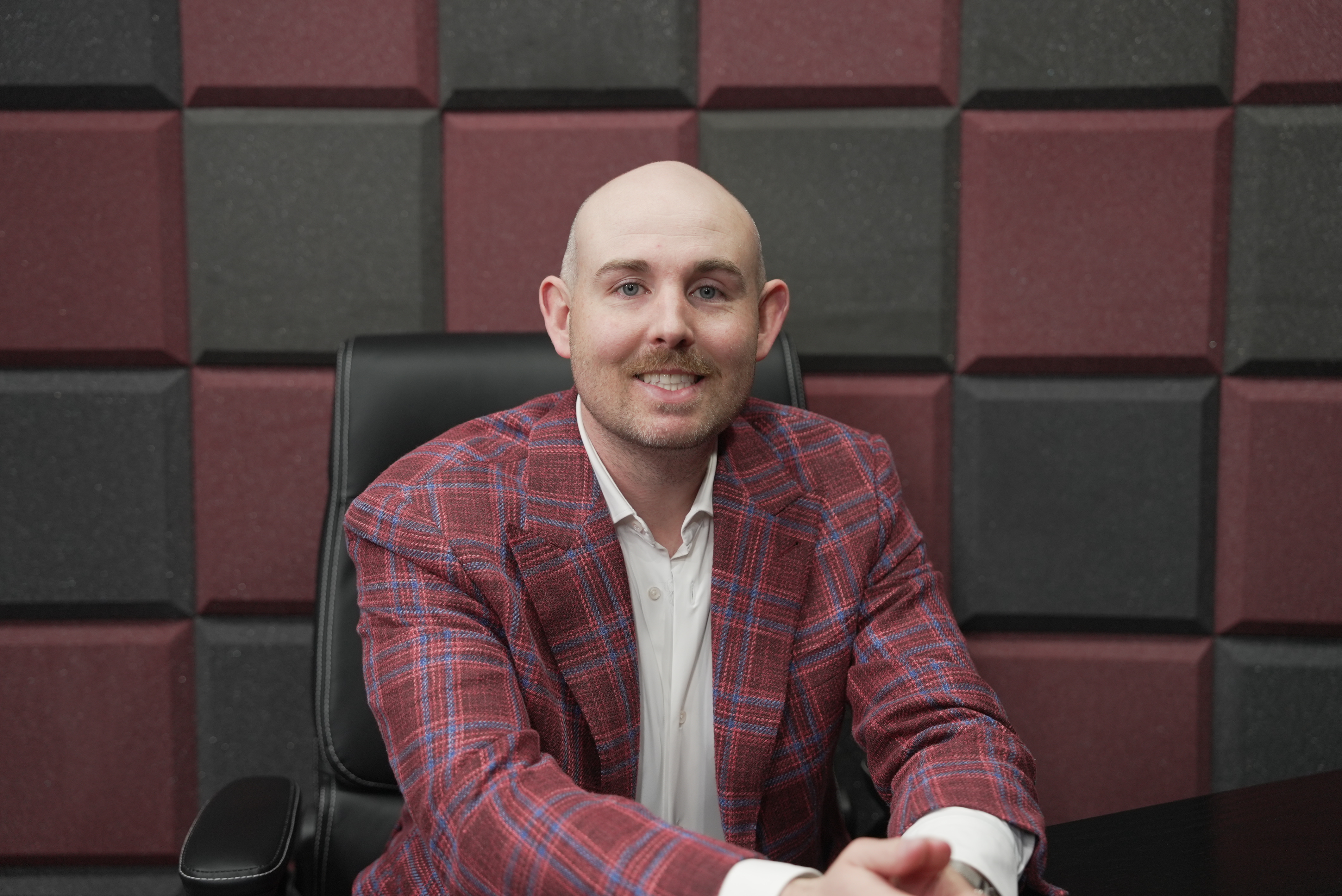
Author- CEO
Parker McCumber is a U.S. Army National Guard Captain, entrepreneur, bestselling author, business strategist, and founder of the Mission Ready Mastermind and The Rookery Studios. Throughout his entrepreneurial career, Parker has built and scaled multiple successful businesses, generated more than $50 million in sales, and helped entrepreneurs create organizations that grow beyond the founder. Drawing from both military leadership and real-world business experience, Parker teaches practical systems for leadership, team development, execution, marketing, and sustainable business growth. His passion is helping business owners stop becoming the bottleneck so they can build companies that operate with greater clarity, stronger teams, and scalable systems.