

 Apple Podcasts

 Spotify

 YouTube

 Amazon Music

 RSS Feed
 Goodpods
 iHeartRadio
How This Leader Beat Her Fear of Public Speaking
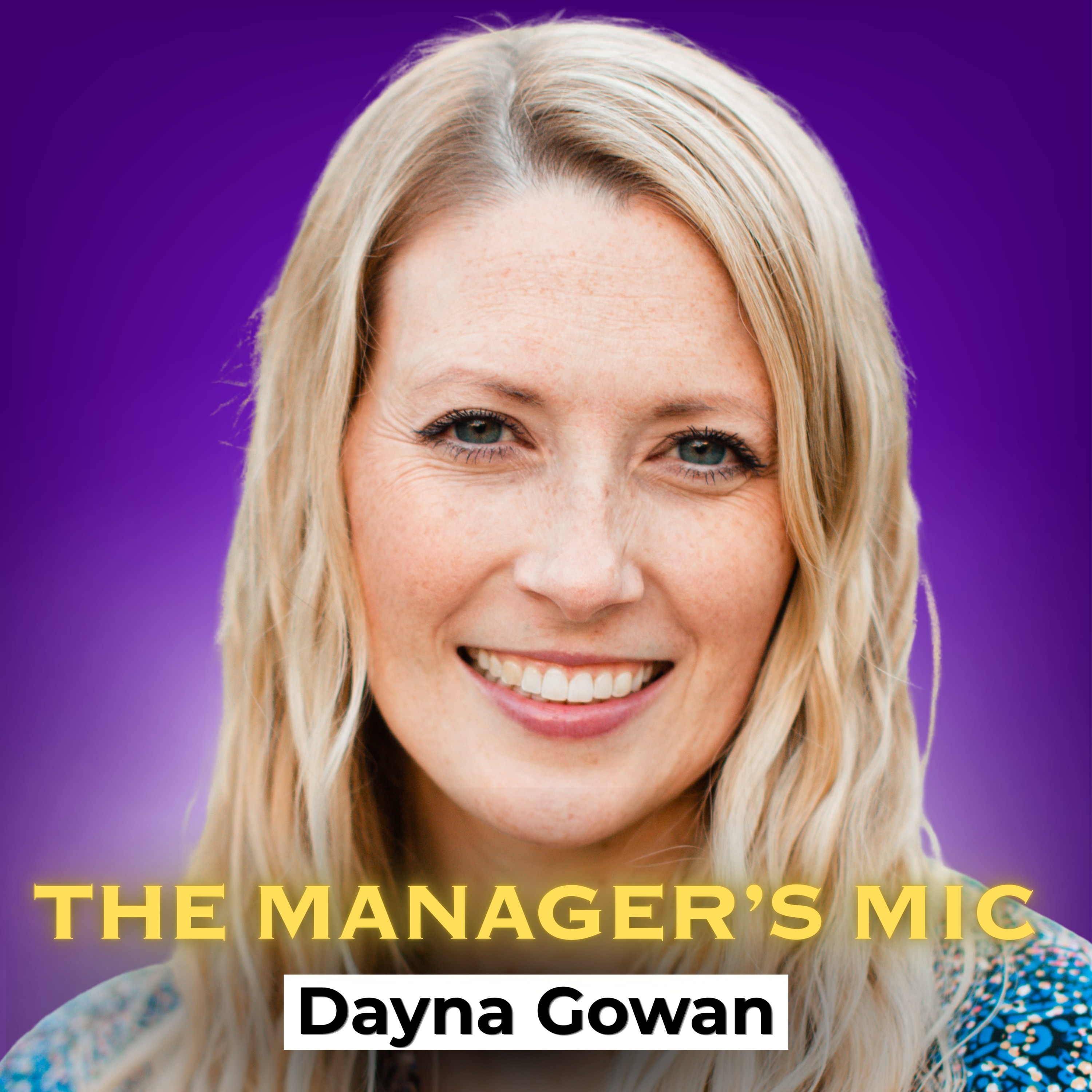
Dayna Gowan reveals how she went from being paralyzed by public speaking to leading with total confidence. She breaks down the mindset, techniques, and improv skills that help people leaders beat their nerves, connect through storytelling, and build real psychological safety within teams.


Dayna Gowan reveals how she went from being paralyzed by public speaking to leading with total confidence. She breaks down the exact mindset shifts, breathing techniques, and unexpected improv skills that help people leaders beat their nerves, connect through storytelling, and build real psychological safety within their teams.
Follow Dayna
LinkedIn - https://linkedin.com/in/danagowan
Instagram - https://www.instagram.com/improvlyspeaking/
Podcast - https://improvlyspeaking.buzzsprout.com/
Key Topics
-
How to conquer the fear of speaking in front of your team
-
The surprising way improv builds instant leadership presence
-
Exact breathing techniques to kill your nerves before you speak
-
How to use storytelling and humor to connect with any audience
-
The real secret to creating psychological safety at work
-
Why the best leaders use play to boost professional growth
Chapters
00:00 Meet Dayna Gowan and her leadership journey
02:13 Dayna's early struggles with public speaking fear
03:57 Joining Toastmasters to finally conquer nerves
05:59 How improv completely changes your stage presence
07:59 The mindset shifts required to lead with confidence
10:59 Coaching teams and stepping into leadership roles
13:53 Why play and fun are critical in team workshops
16:57 Using humor and storytelling to build connection
19:53 Breathing techniques to instantly calm your nerves
23:08 Dayna's exact coaching approach for better communication
27:04 How to foster true psychological safety in your team
29:55 Dayna's podcast and what she is learning right now
32:59 Final thoughts on storytelling and leading with confidence
Legal Disclaimer: Leonsolutions, LLC, and the content it produces are for educational purposes; your results may vary. No guarantee of results is claimed. The publisher of this content is not responsible for any actions taken or not taken as a result of reading, watching, or listening to our content.
Paul Leon (00:00)
Dana, in doing some research, you had a video that went viral. and even though it was some time ago, when I was watching it, consuming that content, going through your podcast, your LinkedIn, I found your story very captivating, relatable, and I wondered if
you could just share with the newest person who maybe has never met you or is tuning in for the first time to the Manager's Mic podcast who are you to them and and why your voice matters. I feel that's a good frame to start this dialogue together, if that's fair.
Dayna Gowan (00:42)
Totally fair. Thanks, Paul, for having me on. I'm Dana Gowan. As you said, I call myself a speaker, improviser, facilitator of fun, because if it's not fun, why do anything, in my opinion? And my story goes a little like this. I used to not love public speaking. I hated public speaking, in fact. I hated it in elementary school, high school, college, and I just felt like it
like I wasn't born with it. You know, I would see these good speakers and I'm like, well, they're just naturals. They're just naturally born with it. And I also had the theory that maybe it was a peers issue. Like in college, you know, we're all there to get the grade, get the degree, get the job. And everyone, you know, in my time in college, we had people with laptops, but we also had the the newspaper like Sudoku going on.
Paul Leon (01:33)
Yeah.
Dayna Gowan (01:33)
And, you know, people would have the newspaper doing Sudoku while
People were given presentations and it just didn't feel like the most captivated audience. So that was my excuse. I'm like, well, it's just a peers problem. When I get into the real world, I'll be fine. And that theory didn't pan out. I I got my big girl job. I went to I got my excuse me, I got my master's of public health degree and got my big girl job, the job I went to school for. And part of that job was giving wellness presentations to
the internal departments at the company. And about three months in to the job, I had to give a stress management presentation, like 20 minutes, no big deal, stress management presentation. I could do it with my eyes closed now. But then like huge deal. I wanted to do a good job. I wanted to, you know, I wanted to show that I could do this work. And I got in, you know, I was like pumping myself up in my head, like this presentation's going to be different.
I'm gonna be great. It's gonna be better this time. No nerves, you know, doing like all the power poses basically. Yeah.
Paul Leon (02:38)
Yeah.
Dayna Gowan (02:40)
And then I got in and just totally tanked, bombed, whatever word you want to use. I like I hated every minute of that presentation. I felt like I did everything wrong. I didn't introduce myself. I was new to the company. No one knew who I was. I just like jumped right in. I didn't introduce my coworker.
Natalie, who was there with me. We were both new, so everyone's like, who is this person? I called attention to how nervous I was. I tried to make the
Paul Leon (03:09)
Yeah.
Dayna Gowan (03:10)
joke that stress management, this is a stress management presentation, and public speaking stresses me out. And it it didn't land.
Paul Leon (03:17)
Yeah.
Dayna Gowan (03:18)
Good joke now, right? did not land.
Paul Leon (03:20)
Yeah, I like it.
Dayna Gowan (03:21)
Absolutely did not land. And then I went way over time. 20-minute presentation. I talked at least 30 minutes plus.
Paul Leon (03:29)
Mm.
Dayna Gowan (03:29)
And
you know, I just went back to my office. It was in a different building. I had to like drive back to my office, ran to the bathroom, cried. And just that
was my last straw moment of like, okay, my theory that it was a peers issue did not pan out. This is this is a
Paul Leon (03:47)
Mm-hmm.
Dayna Gowan (03:48)
me problem. Like I have to work on this. Nothing changes if nothing changes, basically. And so I I learned
From doing that presentation, that one of the HR professionals in that group was a distinguished Toastmaster. Didn't know what that was when I was giving the presentation, but it sounded really fancy. And I looked it up
Paul Leon (04:10)
Yeah.
Dayna Gowan (04:11)
in our company directory and we had a corporate Toastmasters club. So I went the next week as a guest and ended up joining. I tried to give a speech a month to keep, you know, to work on it. And I'll say by
Paul Leon (04:24)
Yeah.
Dayna Gowan (04:24)
a
By about 10 speeches, and you know, about a year after doing that, I had conquered the nerves. Like I wasn't super nervous about public speaking, and I actually enjoyed it. However, I was still really tied to my notes. And I'm like holding imaginary notes here. Like I had to bring my notes up, I had to write everything out, I had to practice word for word. I was I was spending a lot of time on each speech and presentation, which
You should prepare. We can talk about that. But
Paul Leon (04:55)
Right.
Dayna Gowan (04:56)
I was spending like too much time on it. And that followed me for a while. Like I I was relying
Paul Leon (05:02)
Right.
Dayna Gowan (05:02)
on my notes. I was worried I would miss something, miss a sentence, you know, not say the right thing. And I mean, that was a good like five years that I was kind of in that mode of like still needing my notes, still like a little nervous. And then I
Paul Leon (05:17)
Right.
Dayna Gowan (05:17)
started doing an improv class, improv 101. We had moved
Paul Leon (05:20)
All right. Yeah.
Dayna Gowan (05:21)
to LA and
When in LA, you must take an improv and acting class. Almost you must. It seems like everybody
Paul Leon (05:29)
Yeah.
Dayna Gowan (05:30)
does. And I loved it, like instantly fell in love with improv. I wasn't great at it, I wasn't good at it. I struggled quite a bit, but the playfulness of it, I was like, where has this been all my life?
Paul Leon (05:42)
Yeah.
Dayna Gowan (05:43)
And in doing that, like I started to notice my skills were getting better, like I was more comfortable on stage.
And I wasn't so worried about forgetting a word or two or a sentence, like I would be able to recall it or think of something on the spot. And I noticed over time that my skills, my speaking skills, my stage presence was getting so much better. And of course, COVID hit during that time. And so I was doing a lot of
Paul Leon (06:07)
Yeah.
Dayna Gowan (06:08)
virtual presentations, but my virtual presentations were very engaging too. And I I credit all that to improv. So
I've given you pr a pretty long story here, but the short summary
Paul Leon (06:18)
Yeah.
Dayna Gowan (06:19)
is Toastmasters helped me conquer my fear of public speaking and improv made me a more dynamic speaker. And so now I like to kind
Paul Leon (06:27)
Nice.
Dayna Gowan (06:27)
of combine those two worlds, make it a little easier for someone to not have to go on that 10 plus year long journey. And
Paul Leon (06:35)
Yeah.
Dayna Gowan (06:36)
you know, do and it it truly is also a mindset. Public speaking work is truly
a mindset piece, like you have to practice and get better, but there's a lot of inner work you have to do. And I think a lot of times like the Toastmasters of the world, they don't really talk about that inner work acceptance piece that needs to happen.
Paul Leon (06:54)
No, they
don't. No, they don't. And I feel for your story and I found it polarizing because and just for context for anybody who hasn't had an opportunity to meet me or Dana, this is your first time, like typically when I bring a guest on, I do some preliminary research, but I can't research everything. And I don't
Dayna Gowan (07:13)
Yeah.
Paul Leon (07:14)
sometimes because we're both busy professionals, what you don't know, or maybe you do know
Dana is that I used to be, and I'm I'm not flexing this to try to you know how people tell a story, and like you ever feel like that person's story's goal is to trump your story, like and it's just uncomfortable? Like, I don't want this
Dayna Gowan (07:33)
Yeah.
Paul Leon (07:34)
to come across that way. So
Dayna Gowan (07:36)
Course.
Paul Leon (07:37)
I feel for you because I used to be I used to be the president of a Toastmasters Club in Orlando, Florida. So I used
Dayna Gowan (07:42)
Mm-hmm.
Paul Leon (07:43)
to coach a lot of like NASA engineers and people, and like your story
resonates with me heavily because that was the thing that made that work so exhilarating was to help that new person kind of like eyes light up with those light bulbs behind just to be like, okay, I see that with these minor tweaks, this isn't something you're born with. This is a skill. And
Dayna Gowan (08:09)
Mm-hmm. Yeah.
Paul Leon (08:12)
like to also to your bombing story
That's and you know, did stand up comedy. I can relate many times to that
Dayna Gowan (08:21)
Yes.
Paul Leon (08:22)
to that f I still get that sometimes even like when I have the opportunity once in a while to have the outlet of picking up the mic to do that. But like I remember once I bombed so bad that a
Dayna Gowan (08:33)
Ha ha ha.
Paul Leon (08:34)
guy in a wheelchair said, walk off the stage. Like that was a time that's how bad I bombed once, just for context. Like so and like
one of the jokes I'll make with like comics, my wife, whatever, is just like, I'm glad my steering wheel can't talk. Like, 'cause the conversations I've had on the way home would probably put me in prison. You know like so
Dayna Gowan (08:54)
That's great.
Paul Leon (08:57)
I'm curious though, it it's pretty interesting and I think it says a lot about your character that you were able to seek out help. And I think a lot of people don't do that, number one.
And I'm going to say some things I've learned from interviewing many guests and and what I've learned from women guests who are like strong academics, some are like super entrepreneurs or business women I've had on this podcast. One of the things I hear a lot and and I'm not saying this to be weird and if this is an uncomfortable question, you could just reject it, Dana. But like it's harder for women to raise their hand than men.
in the workplace or even in anything. In fact, even my wife and I have been around the dinner table and like just had this conversation just human to human. But you did it. Despite that. I'm I'm curious, were there any moments, whether it was in Toastmasters or doing improv that come to mind that you're like, once you learn these certain things
that this was like, okay, now I can own this talent. I was wondering if you could speak to any significant moments or maybe like the speeches you gave, was there any one that stands out in your mind that you that resonates with you that you can still look upon to this day with grace?
Dayna Gowan (10:22)
I wish I could say there was a like a you know, a point in the curve where it just like kept going up and I was like, this is the time like I'm gonna remember this speech, that you know, this is the time everything changed for the better. I always wanted that in my speeches and and and in my improv too. Like I always wanted, you know, that class or that scene to be like, that went so well. I'm great at improv now.
Which is a lifelong skill to work on is just like doing well in scenes and supporting your scene partner and making it engaging and fun to watch for the audience. Like that is something you have to work on for a while. And so I wish I had that like pinpoint, you know, pin drop moment where I was like, this is where it all changed. Unfortunately, I don't. It was quite a gradual confidence shift, I'll say. And I've had to recognize that over time.
I can recognize in my journey, again, I said about the year mark in Toastmasters where I started to enjoy it. I then also took on leadership roles in Toastmasters, which, as you know, is a volunteer position. They usually try to recruit just about anybody to take on those volunteer positions. However, it was very helpful for me to be in those volunteer leadership positions.
as someone who was like in the a coordinate a coordinator role in my company, you know, I was on the bottom tot of the totem pole. Like it was nice to be in a leadership position. And I started to also see the shift in my work too, that as I was taking on more leadership in Toastmasters, and also I coached volleyball to youth volleyball. And that's
Paul Leon (12:08)
Okay.
Dayna Gowan (12:09)
that's a huge leadership role, let me just tell you, you might think, it's just like
Paul Leon (12:12)
Yeah.
Dayna Gowan (12:12)
an after school, after work kind of thing. no, no, no, no.
That is more work. Doing youth
Paul Leon (12:17)
Yeah.
Dayna Gowan (12:18)
coaching is more work than like the main job because those parents are not happy when they're paying a lot of money and their kid is not playing. And I did not know how to have
Paul Leon (12:27)
Yeah.
Dayna Gowan (12:28)
those conversations. You don't get trained on that when you're like a young 20 something coach coaching like 13 year olds. You have to learn
Paul Leon (12:35)
Yeah.
Dayna Gowan (12:36)
that on the job. Maybe I should do a training for that, because that is a definite skill of like.
how to talk to parents who are angry and basically like conflict resolution communication skills. I had none of those skills when I started. And so I just I I learned that as you know a 20-something like just kind of learning as I go.
Paul Leon (12:56)
Yeah.
Dayna Gowan (12:57)
But I could see in my job that even though I wasn't in leadership, I wasn't a supervisor or manager.
My coworkers were still coming to me for advice and suggestions and recommendations. And they would say, I have to give a talk. Can you help? Can you listen to it and give some critiques and evaluate? And so I started to, you know, become a a, you know, like a go-to person for for help. And I could see that
Paul Leon (13:24)
Right.
Dayna Gowan (13:25)
shift too in my journey. so yeah, sorry I don't have this like amazing answer of it all, it
Paul Leon (13:31)
No.
Dayna Gowan (13:32)
all shifted here, but
I can I can see also the shift of like when I started to release the notes and how much better my speaking got when I didn't bring the notes up with me. And
Paul Leon (13:45)
Interesting.
Dayna Gowan (13:46)
it took it took a while. I remember so I started Toastmasters 2014. I competed in an evaluation contest in 2017. And you know, Toastmasters does all the contests and I made it to the
Paul Leon (13:59)
yeah.
Dayna Gowan (13:59)
district level.
for evaluation
Paul Leon (14:01)
wow.
Dayna Gowan (14:02)
contest, yeah. And you know, they have all those rules where you you get five minutes, like they have a signature speaker, and then everyone evaluates the same speech. We go back, we have five minutes to like prep what we're going to say, and then you hand back your note cards. You can get them back when you go up, but like at the district level, no one's bringing up note cards. And so that was that three years, three years in Toastmasters. That was the first time I like
didn't bring the notes up with me on the district stage. I ended up getting second place in that. And I was
Paul Leon (14:34)
Wow.
Dayna Gowan (14:35)
really proud of that moment, like
Paul Leon (14:37)
Nice.
Dayna Gowan (14:38)
getting second place in the valuation. And I honestly, I don't compete now because I there's no time for that. I feel like
Paul Leon (14:45)
Right.
Dayna Gowan (14:45)
I could I could crush it now. I now
Paul Leon (14:48)
Ha
Dayna Gowan (14:49)
I have this confidence of like I can do anything. Like I can, I can go up on stage, I'll prepare a little bit, maybe I won't. Like,
I can do a five to seven minute off the cuff speech. Give me something to talk about. I can, I can make it up or I could do it. And I know that's like wildly confident and maybe not helpful in some circumstances, but what a confident shift overall in this, what is it now, 13-year journey to go from don't put me on the spot, don't put me on stage, I I'm afraid to raise my hand because I I don't want to mess up what I'm going to say to now 13 years later being like,
I'll raise my hand. I got an idea. It might not be said
Paul Leon (15:28)
Yeah.
Dayna Gowan (15:29)
so well, but I'm just gonna go for it. And I will say that I've I've done a lot of work in employee wellness and the culture space. Culture does dictate when people, especially women, when people feel comfortable speaking up. So that is a part of it, but having the confidence to speak up and feel like you're not going to be judged, that is also some practice and inner work that you can do for yourself.
Paul Leon (15:56)
Yeah, no, I like that. In your professional opinion, because hitting the district level, even on the evaluation, is a pretty hard achievement. And what people don't realize is sometimes you're competing around several people several run 'cause there's like your club.
There's your region, there's your state, and then I think it's district. You can correct me, I don't know. It's been a while since I the the tiers for me. But I'm curious from your perspective, what did you think made your evaluation unique? And then I'm gonna parlay that into how that connects to corporate culture if that works.
Dayna Gowan (16:30)
I did take an approach where I I did make it unique because, you know, there's six evaluators evaluating the same speech. Like we all say the same things. They usually pick
Paul Leon (16:41)
Yeah.
Dayna Gowan (16:42)
a really good speaker on that level. the levels are, I believe it's club club, area, division, district. so
Paul Leon (16:48)
That's right. Yeah, correct.
Dayna Gowan (16:50)
for evaluation, it stopped at district for the world champion of public speaking. God, I'm such a Toastmasters nerd. I swear I'm not as involved as I used to be.
But I was an area director,
Paul Leon (16:59)
I I I'm with ya.
Dayna Gowan (17:00)
so I I know all this stuff. I am a distinguished
Paul Leon (17:03)
Yeah.
Dayna Gowan (17:03)
Toastmaster, so I do know this stuff. But the world champion of public speaking is the only contest that goes above, and they go to the the like international convention stage. Every
Paul Leon (17:14)
Correct. Yep.
Dayna Gowan (17:15)
other contest stops. so anyway, such a Toastmasters nerd. I swear I could fill my brain with other stuff too. but I did
Paul Leon (17:22)
Yeah.
Dayna Gowan (17:22)
take the unique approach.
I really liked acronyms at the time. And so I would, I would do my evaluation with like, like, you were a rock star in your speech. And I'm going to use the acronym ROC to tell you all the things you did well. R stands for relatability.
Paul Leon (17:39)
okay.
Dayna Gowan (17:41)
Your speech and content were so relatable to everyone. O stands for my goodness. What?
That shocking
Paul Leon (17:51)
Ha ha
Dayna Gowan (17:51)
point in your story when where we all went, my God,
Paul Leon (17:53)
Yeah.
Dayna Gowan (17:54)
you delivered it so well. Right. And like I would usually pick the word and then I could fill in words from that. C might
Paul Leon (18:00)
Yeah.
Dayna Gowan (18:01)
be like composure or confidence. I could usually like
Paul Leon (18:04)
Yeah.
Dayna Gowan (18:05)
like fill it in. And it's cheesy, it like super cheesy, but it was different. And it stood out. And
Paul Leon (18:11)
Yeah.
Dayna Gowan (18:12)
the person who won was more more.
She was a better speaker than me, like more comfortable on stage, more confident. So
Paul Leon (18:19)
Right.
Dayna Gowan (18:20)
she didn't need the like gimmicky acronym to, you know, like kind of boost a head. She just was
Paul Leon (18:26)
Yeah.
Dayna Gowan (18:27)
like real and you could feel like it was from the heart. So yeah,
Paul Leon (18:31)
Yeah.
Dayna Gowan (18:32)
if I had to do it over again, I would come at it more from the heart instead of a gimmicky thing like that. But that's
Paul Leon (18:38)
Yeah.
Dayna Gowan (18:39)
what worked for me at the time, especially as like a newbie.
newbie-ish speaker needing notes to feel comfortable like the acronym helped me remember now at postpartum as a post as a mom I mean my child is two and I still feel like I'm postpartum I cannot
Paul Leon (18:54)
Mm.
Dayna Gowan (18:55)
do acronyms I can't do acronym frameworks I can't if you have a framework of like five different things and letters I'm like no brain can't brain malfunction I'm done
Paul Leon (19:05)
Yeah.
Dayna Gowan (19:06)
and I you know, I understand that frameworks and models are a huge part of the space that we live in, the time that we live in, you know, to make it memorable.
Paul Leon (19:13)
Yeah.
Dayna Gowan (19:14)
I can't do frameworks, I can't do acronyms anymore. So when I do evaluate, I don't usually go that gimmicky route now.
Paul Leon (19:23)
Hm. man. I was kinda hoping you'd do that. I kinda I honestly like when you were saying it and you're like there's some like amazing speaker and she didn't have to use a framework. Like I'm so easy minded and simple minded. Like if like I was having a performance review with my boss and he was like, The way we're gonna do your performance review is we're gonna use the word wow to explain it. Like
What you did so good this year. I would be like, this is amazing. Like I would totally like be the guy who would fall for that. Like I know like a lot of staff members would be like start texting other staff members like you won't believe what this SOB did in my one on one. But genuinely, if my boss did that, I'd be like, I have the greatest boss in the world. He used the word wow to define who I was and gave me a letter for each one. Like I would be that kid, you know, and I'm forty something and I'm
Dayna Gowan (20:13)
Yes.
Paul Leon (20:13)
being
like a child. So I Yeah, if somebody
Dayna Gowan (20:16)
Yeah. Sounds like we would work well together, I think, too.
Paul Leon (20:20)
started doing a framework on me, I'd be like, This is really weird, but this is kinda interesting.
Dayna Gowan (20:24)
I mean it's creative.
I I appreciate the creativity when people do that. And as as long as it would come with a nice pay raise too, then you can you can structure it however you want.
Paul Leon (20:34)
Yeah. I it it would be kind of funny like I can imagine someone go through a one of them and be like, you get this amazing framework and all this com by the way, we're not giving you a raise this year. And it's like, well at
Dayna Gowan (20:43)
You're like
Paul Leon (20:43)
least you gave me the framework, you know. So you go
Dayna Gowan (20:46)
Yeah, thanks.
Paul Leon (20:47)
No, I want the raise. I don't want the framework. I I think what's
Dayna Gowan (20:48)
Yeah. Right.
Paul Leon (20:52)
amazing though about you that I enjoy is you've managed to take and I I always like I genuinely like people who can take
paint and create it into a solution. I just genuinely like that story. I think most people can relate to that, you know, movies, whatever. talk to me about how you've parlayed
that pain into the solutions you bring now to who your client is, who works with you, and what those solutions are. So people listening, if they want to learn more about you, Dana, and for those I'm I'll be putting your links and everything in the show notes so you can learn about Dana, get to know her. But before you could kind of speak on a high level on what solutions you brought you bring to someone or qu companies that might have this pain in their culture. I was wondering if you could speak to that.
Dayna Gowan (21:41)
Sure.
Yeah, absolutely. And so I have been in my business now. It's it was a side hustle for three plus years. And, you know, I was working full-time as a wellness consultant. I helped companies with their employee wellness programs. I worked for insurance brokers. And I had to sit through a ton of really boring sales presentations and really boring team meetings.
And I'll be
Paul Leon (22:07)
Mm.
Dayna Gowan (22:07)
I'll be vague there, I guess. I don't know. I'm not with the company anymore. But and and again, a lot of this was during COVID and the height of the virtual presentations era. But I would sit
Paul Leon (22:18)
Yeah.
Dayna Gowan (22:18)
through these presentations and just be like, I I hate this. Like I'm not inspired to take any action, especially if it's like a team meeting or department
Paul Leon (22:26)
Yeah.
Dayna Gowan (22:26)
meeting. Like, I am not inspired to take any action. I I'm multitasking, I'm scrolling my phone or checking my email discreetly. Like
Just it was so frustrating to me is like the missed opportunity that we were having, you know, the missed
Paul Leon (22:41)
Okay.
Dayna Gowan (22:42)
opportunity to make connections in our team meetings, the missed opportunity that the salespeople had as, you know, with the 30 minutes or our time with us. And I would watch and just be like, I want to give you feedback. I want to help with this. And so when we moved from LA to Charlotte,
I was able to go all in on my business. And I say all in because I don't work full-time hours.
Paul Leon (23:07)
Yeah.
Dayna Gowan (23:07)
but now I'm all in on the business, it's my sole focus. And I I've been all in on the business now for a year. So I I mention all this to say that this past year has been monumental in my business and figuring out who I serve and what I do. When I was starting the business, I would say, I'm a public speaking coach. If you have a speech to give.
I can evaluate it. I'm a second place district evaluation contest winner. That means nothing to anybody,
Paul Leon (23:34)
Right.
Dayna Gowan (23:35)
but it means something to me. Like I know I can evaluate speeches, I can give suggestions for improvement, I can say it in a constructive way that keeps you going. And I I just assumed, you know, that's what a public speaking coach does. But being
Paul Leon (23:49)
Right.
Dayna Gowan (23:49)
in this year now of really getting into the business, like massaging it and like learning it more.
And also meeting other public speaking coaches here in Charlotte, and you know a few through Love Means Business, I've realized that I am different. I I can I can find a distinction between what I do versus what they do. So now how I phrase it is I help nervous speakers really underline that keyword,
Paul Leon (24:17)
Mm-hmm.
Dayna Gowan (24:17)
nervous speakers, find the fun and joy in public speaking. Because when you think of a regular public speaking coach, you think of
People who are wanting to do keynotes and TEDx talks. And I think it
Paul Leon (24:29)
Right.
Dayna Gowan (24:29)
it seems like everyone wants to do a TEDx talk now. Like that's the key to making it and getting on bigger stages. And I I love that for them and I want that for them. And and for some it is. for some TEDx talks, I'm like, God, ten minutes, and you gotta practice the same ten minute talk like for the next three months. Like that sounds awful
Paul Leon (24:51)
Yeah.
Dayna Gowan (24:52)
to me.
I am not the best coach to help you with one speech for the next three months. I I'm I'll help you
Paul Leon (25:00)
Right.
Dayna Gowan (25:00)
feel comfortable and confident on stage to release the notes. I'm not gonna go through your speech with a fine-toothed highlighter and pen and be like, cut this, it doesn't make sense, cut this for you. Like, I'm more
Paul Leon (25:12)
Right.
Dayna Gowan (25:12)
about like presence on stage, your comfort
Paul Leon (25:15)
Mm.
Dayna Gowan (25:15)
on stage, your confidence to go off script a little bit, your confidence to engage the audience.
And ask a question
Paul Leon (25:22)
Yeah.
Dayna Gowan (25:23)
and have no idea how they're going to respond, but be okay with that uncertainty piece that you're like, I feel like I can respond in the moment. And I'm going to ask the question and really let it land and really hear what people have to say. Not give like a canned question of like, how many of you hate public speaking? And everyone raises their hand. You're like, well, I knew
Paul Leon (25:43)
Yeah. Right.
Dayna Gowan (25:45)
I knew that was going to be the answer. But like, actually,
Paul Leon (25:47)
Yeah.
Dayna Gowan (25:48)
and that's why I love workshops.
I love
Paul Leon (25:51)
Mm.
Dayna Gowan (25:52)
workshops. The real work is done in the workshops. Great for keynoters who inspire, motivate, persuade, and change perspectives. I love that for them. I wanna I wanna get in and like really have those good conversations that change people's minds or make them think about something differently. And and we do or how I do my corporate workshops is I use improv exercises.
Very, you
Paul Leon (26:18)
Mm.
Dayna Gowan (26:18)
know, you could call them silly, playful, improv exercises that can teach the skill. So we'll practice the skill in a low-stakes way. We practice
Paul Leon (26:27)
Yeah.
Dayna Gowan (26:28)
the skill, but then we apply it to their work. And so in that debrief, we're really talking about how can we use this skill in our workplace, in your sales presentations, in your leadership? How what whoever I'm working with, like how can we apply this to the work? I don't have the answers
Paul Leon (26:44)
Right.
Dayna Gowan (26:44)
for that. The audience.
has those answers. And it's on me as the facilitator of fun to then, you know, bring that out of them and have them feel comfortable as well to
share maybe a half-brained idea, you know, a half thought. It it might not sound great how they say it, but they're like, hey, you know, I just thought of something and I'm just gonna say it. And it's like, say it. Like ha, you know, I hope you feel comfortable to say it. So
Paul Leon (27:09)
Yeah.
Dayna Gowan (27:10)
with all that to answer your question.
I do corporate workshops. I focus on public speaking, fundamental highlight fun, fundamental skills training. Some people call them soft skills. I like to call them fundamental skills, team building,
Paul Leon (27:24)
Yeah.
Dayna Gowan (27:24)
and I can do some wellness and self-care. If you want like a shorter thing or like a little kind of fun, little self-care thing, I can do that too. and then that's
Paul Leon (27:32)
Yeah.
Dayna Gowan (27:33)
my corporate side, corporate pillar. And then I have the coaching side that again, I've gotten really clear on this year.
Where I can do coaching for nervous speakers. And nervous doesn't have to mean beginner. I actually
Paul Leon (27:45)
Right.
Dayna Gowan (27:46)
hear from a lot of people who have been speaking for a little bit and they're like, I'm good with the speech, but I want to feel a little bit more confident. Like I want to drop my shoulders. I want to look more relaxed. I've also worked with paramenopausal or menopausal women who, you know, the brain fog is there. And they're like, I'm so nervous,
Paul Leon (28:02)
Hm.
Dayna Gowan (28:03)
I'm going to forget what I'm going to say. And
what I
Paul Leon (28:07)
wow.
Dayna Gowan (28:08)
work with them is just feeling confident that if you have that fog, you will find words to say. It might not be the words you've prepped, but you will find the right words to say in the moment. I know science is like, that's a hard one. They're up against science in their bodies and changes going on in their bodies. But if you
Paul Leon (28:28)
Yeah.
Dayna Gowan (28:28)
go in with the mindset of like, if I blank out, I will find something to say in the moment.
Like that's that's a mindset
Paul Leon (28:35)
Right.
Dayna Gowan (28:35)
piece that you can have too.
Paul Leon (28:37)
Correct. No, I love that. I I feel I think it's cool that so you have your B2C side, which is you help nervous speaker kill off the nerves it takes to be better at the skill of public speaking. That's how I'm interpreting it my words. You could just I don't want to butcher your value statement. That's not my intention.
Dayna Gowan (28:52)
Yeah. Great summary. No. Great summary.
Paul Leon (28:57)
and you level up team culture by helping people have the fundamental skills to have better public speeches.
and instill humor with the improv exercises you do in workshops. Is that kind of an int interesting way to frame it or did I frame it wrong? I just want to make sure
Dayna Gowan (29:13)
No
Paul Leon (29:13)
I'm not butchering your value statements here. That's why I'm just
Dayna Gowan (29:17)
I took like
four to five minutes to say that, and you said it beautifully in less than thirty seconds. So
Paul Leon (29:24)
Well, I
I and again, I d I do a lot of sales leadership coaching, so it comes natural from just meeting with over, you know, so many business owners. But here's the thing I'm gonna admit to you that a lot of people don't know about me, probably, or people assume about me,
Dayna Gowan (29:39)
Ooh, please.
Paul Leon (29:41)
is that a lot of people assume that
I never get nervous. and and that's simply just not true. even as you were saying that, like as somebody who's done over five hundred high stake presentations to companies, made a training program that made seven hundred million for an employer, I
Dayna Gowan (30:00)
Well done.
Paul Leon (30:02)
No, I I pre I didn't get any money of it, but it would be cool, but it would be cool to say
Dayna Gowan (30:04)
I know, right? That would have been nice.
Paul Leon (30:07)
I did that. This podcast wouldn't exist. No, I'm just kidding.
Dayna Gowan (30:10)
Ha ha ha ha.
Paul Leon (30:11)
No, I I still would have done it. Maybe. Maybe not. You'll never know. But I I s yeah Yeah,
Dayna Gowan (30:14)
Maybe not, I don't know. It's alternate universe U is is on a boat somewhere.
Paul Leon (30:21)
like the Wolf of Wall Street only. I'm not ripping people off, hopefully, right, God forbid.
Dayna Gowan (30:24)
Right.
Paul Leon (30:26)
I I don't know why that's funny to me. But
I I still get nervous. In fact, I don't know if you can see, like, even if you look at me, sometimes I do this thing with my neck. I have I have like a little bit of Tourette's like in my body and like and it's like a nervous tick that I have. So like I still get nervous. And so like I find that valuable. and I don't even like I've always struggled with like nervous ticks for me.
I'm just genuinely curious and you don't you know, is there like a tip you would have for somebody like me who has that like maybe you would suggest for me, like, hey, like try this, this might reduce that nervous tick you have, just since we're on this topic, you know, and I'm just kinda going off script here.
Dayna Gowan (31:08)
Yeah.
I really appreciate you sharing and being vulnerable. I know this is your show and you've you are
Paul Leon (31:16)
So.
Dayna Gowan (31:16)
vulnerable in every episode, but I appreciate you sharing that because that's a hard thing to admit too, that like, hey, I there is this thing that happens. And and I also felt in my journey that when I conquered my fear of public speaking, like I shouldn't be nervous anymore. And I and the nerves would still happen because of the uncertainty.
of the presentation. We're we get nervous. This is my theory. We get nervous because
Paul Leon (31:42)
Yeah.
Dayna Gowan (31:43)
it hasn't happened yet. We can't see into the future. We don't know how it's gonna go. We don't know how we will be received by the audience. For this episode, we don't know if our tech will work or it will cut off and we'll have to whatever, blah, blah, blah. There's a lot of
Paul Leon (31:55)
Yeah.
Dayna Gowan (31:56)
uncertainty with public speaking. And that's where the nerves come in for me now. I mean, before it was like nerves of like,
wanting to do a good job and wanting to be liked and there's a lot of people pleasing. And I've I've released that
Paul Leon (32:07)
Right.
Dayna Gowan (32:08)
piece. And so when you can then make it about the audience and you say, okay, there is some uncertainty. I am confident that I can handle anything that comes up. I'll I'll handle it as it comes up. Yes, I can prep and plan for different scenarios, but I can't plan for everything. Then you feel you can drop your shoulders and release and relax a little bit.
I I'll tell you for the for me, I don't have like a tick of per se. Well, I I haven't noticed that in your neck, so you might not have
Paul Leon (32:38)
Yeah.
Dayna Gowan (32:38)
had it. Have you had it this episode or no? Have you felt it?
Paul Leon (32:41)
I I
I you know, it's funny because like I sometimes will do it impromptly or when I look back at like a solo video I do, or I'm like, I'll get a
Dayna Gowan (32:49)
Mm.
Paul Leon (32:50)
call from like my sister who actually lives in Charlotte area, not far from
you. she's a speech language pathologist, so she she'll call me out on it on like, hey, I noticed you did that. She noticed
Dayna Gowan (33:01)
She notices it. Yeah.
Paul Leon (33:03)
it and maybe it's 'cause it's family, you know, they're closer to you.
And like sometimes when I look at a video, I'll notice like I do this with my neck or like something like that. And I think I don't know, maybe 'cause I had Advil earlier because I had headache. Maybe I'm managing it better today. But
Dayna Gowan (33:17)
Ha ha ha.
Paul Leon (33:19)
some I do notice it. And I I have talked about it with my doctor and he's like, dude, it's just a nervous tick. And I was like,
Dayna Gowan (33:26)
Mm.
Paul Leon (33:27)
you know, and I was like, Okay. So at least that's the theory. So that's why I was curious, like
Is there like an exercise you do like do ten jumping jacks, you know, or something, you know, or something there?
Dayna Gowan (33:37)
Yeah. S
so my nervous tick when I was very a ner nervous speaker and even still like working on it was I would cough. I would clear my throat a lot. And I I
Paul Leon (33:47)
Mm.
Dayna Gowan (33:47)
feel like that's a common kind of nervous tick. you know, you think, if I clear my throat, then I'll have a clearer voice. And I would I would be like hacking before I would have to talk, you know.
Paul Leon (33:59)
wow.
Dayna Gowan (34:00)
Like even when I was a early podcast host on my other podcast, I had one before I had my own,
Paul Leon (34:05)
really?
Dayna Gowan (34:06)
like I would mute myself and I would like cough. You know, we didn't really put the video out there, so I would just cough and it would never show up. And
Paul Leon (34:14)
Yeah.
Dayna Gowan (34:14)
so that was my nervous tick of like, I just gotta clear my voice. So I'll get to so my tip for that, at least for me, not having to clear my voice and having a stronger voice is actually what I did.
before we started, before we hit the record button. You know, I asked for that one minute of, you know, just
Paul Leon (34:31)
Yeah.
Dayna Gowan (34:32)
a chance to breathe. I have a five minute breathing and stretching routine that I love
Paul Leon (34:37)
Mm.
Dayna Gowan (34:38)
to do. I got from a broadcast journalist coach who teaches reporters how to have that strong commanding voice on the mic or on on s on set or out in the field.
Paul Leon (34:49)
Really?
Dayna Gowan (34:51)
and so she had this breathing routine and she taught it to me and it has graciously allowed me to use it. and we're actually doing a workshop together in a few weeks. So we we collaborate a
Paul Leon (35:00)
Yeah.
Dayna Gowan (35:00)
lot. But her that five minute routine has helped me so much. And not I don't have to clear my voice anymore. I don't feel like I have that nervous tick of like, God, my voice, it it helps give that supported voice. So you don't feel like you're
Trailing off the cliff you're running out of air and you're you're like, and that's it. You know, you you could tell like when your voice
Paul Leon (35:22)
Yeah.
Dayna Gowan (35:23)
runs out, or on the flip side, ending in like a question, like, did I do that correctly? It helps you maintain that smooth, clear voice all the way through to the period.
I won't go through the whole thing, but it's you know, it's just some simple like neck stretches. I'm happy to share it with you. I'll send you my handout after.
Paul Leon (35:41)
Yeah.
Dayna Gowan (35:42)
I gotta record it as a video and like send it to people too. Cause it really is, it's what I start with with all my clients, because it is it calms the nerve. So it drops the heart rate. So it's like nervous
Paul Leon (35:55)
Right.
Dayna Gowan (35:55)
system regulation, if you want to use like the fancy term.
Paul Leon (35:58)
Yeah.
Dayna Gowan (35:59)
But it puts you in a state where you're like, okay, like my body isn't in like fight mode or flight mode.
my body is calm and now my shoulders are dropped.
And everything's a little bit looser in my neck. And now my voice
Paul Leon (36:15)
Right.
Dayna Gowan (36:16)
is stronger. I'm speaking using the diaphragm now. And so I
Paul Leon (36:22)
Yeah.
Dayna Gowan (36:22)
can tell now when I'm speaking with supported breath versus unsupported breath. So there's neck
Paul Leon (36:28)
Mm.
Dayna Gowan (36:28)
stretches, there's little shoulder rolls. And then at the end, this is what we did or what I did for the minute, and you had to just watch me do it. Is I do it's a four-second inhale.
six second exhale and you do everything,
Paul Leon (36:44)
Yes.
Dayna Gowan (36:45)
every inhale, exhale through your mouth. Because when we're speaking, we're not doing any nasal breathing. Everything's coming in and out through the mouth. And so yeah, and you can even open your mouth bigger because
Paul Leon (36:53)
Right. I was doing it right
now to try to practice.
Dayna Gowan (36:58)
Yeah,
when we speak, we're not like hi everyone. Like we're not doing like like this, like straw breathing. Like you you can just you can open your mouth and do so it's inhale one, two, three, four. Exhale one, two, three, four, five, six. Inhale one, two, three, four. Exhale, one, two.
Three, four, five, six. A minute of that is usually six rounds. So you do that for a minute.
Paul Leon (37:33)
Six rounds.
Dayna Gowan (37:34)
Yeah. do that for a minute. And you can what I love about that is if you can't do the full five minutes of like the neck and shoulder stretches and rolls, you do that minute when you're sitting in the room, you're getting introduced, you're about to go on stage, you're backstage, you're hearing your name called. Take that deep breath.
And then and do that, you know, even three rounds, like as short as you you want to make it, that's fine. But you I I can tell a difference when I do that breathing routine and when I don't do that breathing routine. My voice is shallow and I tend to talk faster. And I have like faster pacing. I'm a little like all over.
Paul Leon (38:15)
Yeah.
Dayna Gowan (38:15)
So when I take that minute to calm, calm down, I I am a little slower in my pacing.
And
Paul Leon (38:23)
Yeah.
Dayna Gowan (38:24)
so highly recommend that for everyone to try out.
Paul Leon (38:26)
You know, and for those who may h hear that and have resistance to it, as somebody who who who I I I have been guilty of being a critic. When you were doing it, I was trying to do it.
I struggle with it and part of it's just in between my own ears. But even just now, like when I did it, I think I kinda even feel it in my voice. It's kinda weird. Maybe I'm just being more present at this moment. But it does
Dayna Gowan (38:50)
Yeah.
Paul Leon (38:51)
relieve a lot of that stress. In fact, like for me, one of the my goals for the rest of the year is to do more yoga and stuff like that, just because like
I don't do it enough. And I I have noticed it makes a difference.
Dayna Gowan (39:03)
Yeah. Same.
Paul Leon (39:05)
So it's a great tip.
for those who want to kill off the nerves of public speaking faster, contact Dana so that way you can expedite those results. But if you're a business owner, a company le wanting to have the culture of taking those public speaking skills and pull them to the present faster and remove the nerves and improve team culture. And here's another thing that is also a benefit that I feel of your workshops that
That we didn't hit on is the fact that when people do these workshops, a consequence is better psychological safety as a result.
Dayna Gowan (39:41)
Mm-hmm.
Paul Leon (39:43)
And I'm curious as to why that is. So I thought that was interesting. Some of your research researching you how your workshops did that. Is that because the exercises make people laugh? Is what contributes to that? I know this is a very plain question, but I was just curious, or is that feedback you've got just from like
An interesting frame there.
Dayna Gowan (40:02)
I think it's play in general.
Paul Leon (40:05)
Play.
Dayna Gowan (40:05)
Play is an excellent model of psychological
Paul Leon (40:09)
Mm.
Dayna Gowan (40:10)
safety. So think about your kids. Think about how they play. Think about how you played as a kid. They're throwing out ideas,
Paul Leon (40:16)
Yeah.
Dayna Gowan (40:17)
they're they change it up, they move to the next thing. And we've all played with the the bossy kids that like directed it one way. And you know, no, we're not doing that. We're doing this. You know,
Paul Leon (40:28)
Yeah.
Dayna Gowan (40:29)
we've had those interactions. But in general,
Paul Leon (40:30)
Ha ha
Dayna Gowan (40:31)
How kids play is they just they throw out ideas. They're not judging their ideas going, is that gonna be liked or well received or judged? Like they're just they're happy in their imagination to play and bring new things to life. And you're like, how did you think of that? And it's because they're not in their judgy brains worrying about how
Paul Leon (40:53)
Right.
Dayna Gowan (40:53)
it will be received. And somewhere along the way, we get judged for our ideas. We
judge ourselves. We go through puberty where we're very hypercritical of ourselves, and then the inner critic
Paul Leon (41:06)
Yeah.
Dayna Gowan (41:06)
keeps talking for a while, and then we don't feel like we have enough to contribute. We are enough to contribute. You know, I've gone on that journey for a long time and had to do a lot of work on acceptance and that. I've submitted
Paul Leon (41:19)
You're good.
Dayna Gowan (41:20)
some proposals for
Conferences and stuff this year to talk about psychological safety and how play and improv is a form of play, how play is an excellent model of psychological safety. It helps people drop their guards a bit. And because we're doing such low-stakes exercises that don't involve work at all, that we're we're able to kind of release that judgment and we're able to
Paul Leon (41:47)
Right.
Dayna Gowan (41:48)
create these scenarios and realities that.
you know, may not matter later, but in this moment, like this is what we're focusing on. And then we can take those skills and how we communicated and how we were able to sit back and listen without forming any responses to what people were saying. We've just listened and then we trusted
Paul Leon (42:09)
Right.
Dayna Gowan (42:09)
that we could respond. We gave space for everyone else to share. I will say it also is very important for the facilitator.
To model psychological
Paul Leon (42:19)
Mm-hmm.
Dayna Gowan (42:20)
safety. When you're doing any kind of workshops, whether it's public speaking, team building, fundamental skills, the facilitator models that psychological safety and then creates that room of psychological safety. And how I do it is you give the group agreements up front. So you say,
Paul Leon (42:40)
Mm.
Dayna Gowan (42:40)
here's what we're going to work on today. There will be some exercises that we're going to do. You are
Paul Leon (42:45)
Right.
Dayna Gowan (42:45)
Always welcome to sit out and observe. You learn a lot by observing, and or you can help me if you don't want to do the exercises. You can help me go around. all I ask is that you do not check out and get on your phone. Like, that's not the time to check out, but you can sit
Paul Leon (42:58)
Right. Correct.
Dayna Gowan (43:00)
out and observe, no questions asked. Like, I always give that
Paul Leon (43:03)
Right.
Dayna Gowan (43:04)
up front. I always try to create the space where it is not judgmental of ourselves and others, and that's really easy to say, but.
Paul Leon (43:10)
Hmm. Yeah.
Dayna Gowan (43:13)
You have to actually create it as the workshop leader, the facilitator.
Paul Leon (43:18)
Yeah.
Dayna Gowan (43:18)
Because if you throw out a question or an idea and I'm like, sorry, that we're not there yet, let's move on. And I don't honor that question or or what you just said, then you know, how am I creating the right space in this room? and I will say, you
Paul Leon (43:33)
Right. Yeah.
Dayna Gowan (43:34)
know, being a facilitator, there's a lot of uncertainty too, because
You you create this whole workshop, you have a whole plan, and a lot of times you do not get through everything you were trying to get through. I'm sure you can relate to that.
Paul Leon (43:48)
yeah. I I more time
than I count. I like what you said though about setting the rules engagement. I feel like that it made me reflect on my own presentations and like slides and content. Like I need to look at that 'cause that is a good call out. I know one of the things yeah, go ahead. Sorry. No no no I
Dayna Gowan (44:02)
Yeah, like, I was just gonna add, like in the
rules of engagement, like when should they ask questions? Can they ask questions
Paul Leon (44:09)
Hm.
Dayna Gowan (44:09)
during? Cause I've sat on like sales presentations where like the person doing all the slides is just like in their zone looking all the slides and going through and it's like, do I ask questions now or later? You know, and and I yeah, like
Paul Leon (44:22)
Right. You gotta set that up front. Yeah, it's a good call out.
Dayna Gowan (44:25)
let us know are you comfortable like having more of a dialogue rather than it feels like for me.
you know, just relate this to your work in sales, like for me, when I watched a lot of sales presentations in my previous job as a consultant, it felt like everybody was trying to do like a check the box. Like I talked to this company, check the box, they've
Paul Leon (44:44)
Yeah.
Dayna Gowan (44:44)
seen our product, they will contact us if they're interested. And we never contacted them because like i it was a check the box kind of thing. We were
Paul Leon (44:50)
Yeah.
Dayna Gowan (44:53)
multitasking, it wasn't very engaging. And also it didn't fit with our clients, but nothing lit us up in the the sales demo either.
So
Paul Leon (45:01)
Yeah.
Dayna Gowan (45:02)
allowing more engagement and dialogue, even in your sales presentations too, goes a long way. So you can set those
Paul Leon (45:09)
Yeah.
Dayna Gowan (45:10)
rules of engagement up front. And it it takes like 30 seconds to just say like, ask questions ahead of time. You know, let me know if anything comes up. I will be stopping throughout just to to see what's what's hitting and resonating. having the confidence to do that. And I know I cut you off to probably
Paul Leon (45:28)
No, you're good. You don't have to apologize.
Dayna Gowan (45:30)
you know, moved your train of thought in a different way.
Paul Leon (45:33)
No. No, you're good. No. I yeah, I I I like this dialogue. One of the things I think that makes
the cultures I build and who I work with is one of the rules or I guess I don't know rules. I I 'cause I don't like to be too stringent at times, but feedback is fuel. Like that's something we'll say even in my house with my kids,
Dayna Gowan (45:51)
Mm. Yeah.
Paul Leon (45:54)
you know, like feedback is fuel. Like it's
Dayna Gowan (45:57)
Love that.
Paul Leon (45:58)
not it's not you, it's skill. And like and I think there's a big delineation there, but like that's one of the sayings we say. I gotta a lot of other people have probably said that, but that's just one I I say.
so I feel that's just something important. I love I love everything you're talking about. I think it would be like I'd love to be a fly on the wall on one of your workshops and hopefully somebody hears this and ends up connecting with you as a con as a result. But you have a free resource, so there there's there's people who
invest with you and they give you an exchange of money for a really good return result. And and just to give some frame around everybody who how important this is, the culture, how important it is to have these workshops is because losing an employee in under 18 months to two years can cost two times more the salary it took to bring them in. So realistically, you're not a
Dayna Gowan (46:49)
Mm.
Paul Leon (46:49)
cost. You're actually preventing a loss. So I would encourage everybody who's listening to this to definitely click the links in the
show notes, get to know her. But if you're still on the fence, you have a podcast. I was wondering if you could speak to that resource, what that does for someone who may be having windshield time that can just benefit from listening to it. So if we could speak to that and peel the onion there.
Dayna Gowan (47:15)
Yeah. My podcast is the same as my business, improvly speaking. Improv L Y. The transcripts always like to spell it wrong, like improbably speaking, which it is quite improbable that I am doing this work, considering I was a nervous speaker.
Paul Leon (47:29)
Yeah.
Dayna Gowan (47:30)
So I love that happy accident. I'm like, no, it it is improvly, improv L Y speaking. My episodes are quite long. I love long form content. I am a total millennial. Like I can't do the jump cuts and like short.
episodes
Paul Leon (47:45)
Yeah.
Dayna Gowan (47:45)
kind of thing. and I think you have very like moderate you know length episodes, like an under an hour is great. but sometimes
Paul Leon (47:52)
Yeah.
Dayna Gowan (47:52)
our conversations go over 60 minutes because the guests
Paul Leon (47:56)
That's fine.
Dayna Gowan (47:57)
I find guests to be so interesting, as I'm sure you can relate as well. And for me, sometimes we're we're hitting on stuff that's great in the beginning and then we get to something at the hour mark and I'm like, we're just gonna keep going.
And I I go by
Paul Leon (48:11)
Yeah.
Dayna Gowan (48:12)
energy and feel. And so when I notice the energy drop or the guest is getting tired, I'll call it then. A lot of times the energy
Paul Leon (48:19)
Mm-hmm.
Dayna Gowan (48:20)
doesn't drop for a while. But in the podcast I interview, I like to have guests on. I do some solo episodes and I've I've got a few I want to record that will come out at the end of this year. But I love guest episodes because I get a lot of energy from the guests and
Paul Leon (48:37)
Hmm.
Dayna Gowan (48:37)
I also learn.
a lot from the guests. Like I secretly have
Paul Leon (48:40)
Yeah.
Dayna Gowan (48:41)
them on to pick their brain, but we record the conversation.
Paul Leon (48:45)
Yeah.
Dayna Gowan (48:46)
and so I'll have on experienced speakers and improvisers, also experienced facilitators. I'll have on people who took improv classes just to like grow their professional skills and get professional development. And I'll also have people on who use improv in their daily lives, but they don't call it improv. And
That's a wide
Paul Leon (49:07)
Yeah.
Dayna Gowan (49:07)
net because we're all improvising this thing called life. Like we don't have a script for our lives and how boring that would be if we did. So I can basically interview at anyone, as as long as there's an improv thread there. And just
Paul Leon (49:22)
Yeah.
Dayna Gowan (49:23)
really talking about how improv has it shows up in all aspects of our lives and it creates positive changes for our lives. For me, it changed my it totally changed my life.
and I'll say that in the most
Paul Leon (49:35)
Yeah.
Dayna Gowan (49:35)
exaggerative, dramatic way possible. Like it was life changing. for others it may not be as life changing, but it does add some very positive skills to your work and to your life.
Paul Leon (49:47)
Yeah, I've always had an affinity for improv. There's an improv club
Dayna Gowan (49:51)
Yeah.
Paul Leon (49:52)
around here. I've I've I've been g weighing the it's just two kids training leaders.
Dayna Gowan (49:56)
Are you purely
stand up or have you done any improv classes?
Paul Leon (49:58)
So when I
so just to give some context, so my day job full talk is just I work with an employer and part-time I do speaking training, content development. I work for employer do speaking training, content development on sales
Dayna Gowan (50:11)
Yeah.
Paul Leon (50:12)
leadership. did my MBA and organizational leadership, you know. so
P stand up for me where it has lived it in current state is it's more of an outlet for when I need it. So instead of having a beer, I'll do stand up 'cause I don't like to drink a lot, you know, and I feel that's just
Dayna Gowan (50:26)
Yeah. Yeah.
Paul Leon (50:29)
the healthier choice. when I was in the game, no, yeah, I'm just being real, like
Dayna Gowan (50:32)
That's so funny. That's funny because standup is so
like s like it's it's hard. I mean, you've done it for a while, so it
Paul Leon (50:40)
Yeah.
Dayna Gowan (50:40)
you're not having that like those really hard talks with your steering wheel, maybe anymore.
Paul Leon (50:46)
Well, I mean
it depends. I mean it i in the beginning when I was hosting I was I was a host for this with this comedy production company in Orlando, Florida, and had to work with some really good comics. In fact, some of the funniest comics are the ones you don't see on Netflix in my opinion. In fact,
Dayna Gowan (51:00)
Mm-hmm.
Paul Leon (51:01)
the reason I have an affinity for improv, I used to do this show with this sax in Orlando, Florida. It's an improv group there. There's a
Dayna Gowan (51:09)
Yeah.
Paul Leon (51:09)
lot, but this is call out the sax and they don't sponsor this. I just like them. And
Dayna Gowan (51:14)
Yeah.
Paul Leon (51:15)
I remember I did a show once back before it was the improv, now it's the funny bone, last I checked, was I would do my set and then the improv.
people, I don't know this the right way say this, or improvers if there's a word. improvisers,
Dayna Gowan (51:29)
Improvisers, yeah.
Paul Leon (51:31)
that's a good way to put it, would do my act out. So I did a set this one time
Dayna Gowan (51:34)
Yes.
Paul Leon (51:36)
where I met Kimbo Slice. I don't know if you know this name, but he used to be a
Dayna Gowan (51:39)
I know the name.
Paul Leon (51:41)
so he he was big on the internet. So Kimbo Slice has passed away now, but he was there's viral videos of this guy doing backyard fights, ended up being a UFC fighter.
Dayna Gowan (51:51)
Yes, okay, yes.
Paul Leon (51:52)
And I met him once and try to ask for his autograph and it's this whole shtick I did and it's a true story or based on a true story where I met him, try to ask for his autograph, and he was rude at first, and there's this callback and all this stuff. And then I I won't do this the bit here because it'll just be like, What? Like But I remember the improv people come on and like one guy would act like Kembo Slice and be like and then the other guy would meet me. And it was just this really cool.
Dayna Gowan (52:17)
Yes.
Paul Leon (52:19)
dynamic where you mixed stand up and improv. And I just thought that was really
Dayna Gowan (52:23)
Yeah.
Paul Leon (52:24)
neat. So I I just loved that show. It was one of my favorite shows to do just in general. So that's that's my infinity. Yeah.
Dayna Gowan (52:31)
I love that form format. Yeah. And
I was just at Improv Con in San Diego a few weeks
Paul Leon (52:36)
okay.
Dayna Gowan (52:37)
ago and they had a stand-up versus improv show, which was that format. You know, five a comic
Paul Leon (52:41)
really? I didn't know that.
Dayna Gowan (52:43)
gave his tight five and and then the improvisers got like twenty minutes to do scenes based on what he said and it was so funny. Like it was just it was great. Yeah. So I love that format.
Paul Leon (52:52)
Really? I didn't know there was an improv
con. That's interesting either. Huh?
Dayna Gowan (52:56)
It was the first year of it, so hopefully they do it every
year. But it was a beautiful success. I mean, it just went so well. So I'm hoping they keep doing it.
Paul Leon (53:05)
Yeah, I love that. I was gonna you know what I was thinking of maybe I should test your improv skills right now. I don't know if you're ready for it though. But it's it's
Dayna Gowan (53:11)
Let's do it. Sure.
Paul Leon (53:14)
you're gonna laugh. What I was thinking of asking you, I wasn't gonna, but I'm feeling comfortable enough to ask it to be like, Okay, what's your acronym for the word play? Because you were talking
Dayna Gowan (53:24)
Ha ha.
Paul Leon (53:24)
about it earlier, like, all right, I'm gonna put you on the spot. Let's see.
Dayna Gowan (53:27)
Yeah.
Paul Leon (53:28)
So like this is this is your true improv or I could just clip it out later. Like what would you if I
Dayna Gowan (53:33)
gosh, yeah.
Paul Leon (53:33)
said all right, make that
the acronym play and frame it any situation you want. Go ahead, let's let's test it
Dayna Gowan (53:38)
Sure.
Paul Leon (53:39)
out.
Dayna Gowan (53:39)
people love also yelling. I'll I'll lean back, but people love also yelling. Yeah, which is a form of play where we run around and yell. So that fits under the play umbrella.
Paul Leon (53:46)
That was pretty good. You did that right on the spot. People That was pretty good. Yeah. Yeah. Did you just
come up with it on the spot or did you have that prepared? That was pretty good.
Dayna Gowan (54:02)
No, that's
I mean like I guess the acronyms still I can still come up
Paul Leon (54:06)
Yeah.
Dayna Gowan (54:06)
with a good acronym framework. I just can't I can't implement any kind of framework afterwards kind of thing.
Paul Leon (54:12)
No. That's good.
I I'm curious at this point in the conversation, Dana, what is something around public speaking, improv?
Is an important thing we haven't talked about that you feel we should talk about that is important to the person who may be nervous at public speaking, having being in a psychologically unsafe environment, or maybe just that leader or manager who is trying to figure it out. What's something we haven't talked about that we should talk about in your personal opinion?
Dayna Gowan (54:46)
This is harder than the play acronym question to me. well first I wanna just honor you for stand-up, like like enjoying stand-up and going all in. And I know you've had the the five years plus experience of doing stand-up because open mics are are tough. And I actually I haven't done
Paul Leon (55:07)
Yeah, thank you.
Dayna Gowan (55:08)
one yet. I've taken one stand-up class and my joke is
That I've taken one stand-up class in 2023. So I'm basically an expert on stand-up now. but
Paul Leon (55:18)
Yeah.
Dayna Gowan (55:18)
during that time, I refuse I just couldn't go to any open mics. Like the class would all go, like, hey everyone, let's go to open mic. And I there was just
Paul Leon (55:27)
Yeah.
Dayna Gowan (55:27)
something like I I and I haven't gotten over it. I've done musical improv, I've sung on stage with no training,
Paul Leon (55:34)
Hmm.
Dayna Gowan (55:35)
singing training. I mean, musical improv will give you some training, but I like the idea of an open mic where there's a lot of
men and drinking in the crowd and it's it's mostly other stand-up comics like waiting to get on to do their thing feels like such an unsafe room to me. And so I I mean I've I
Paul Leon (55:54)
Yeah, it's fair.
Dayna Gowan (55:54)
did say earlier like I have the confidence to do anything. I have struggled with putting together a a good tight five since twenty twenty three and then doing an open mic. I'll give the excuse, I mean it is a good excuse. I have a two year old. I'm not doing any kind of evening things right now anyway.
Paul Leon (56:10)
No, of course.
No, I get it.
Dayna Gowan (56:13)
But that is on my list eventually is to to do more stand-up because I know that it would help me with my delivery. And so I'll I'll wrap that into just your question is that if you are nervous at public speaking or you feel you've noticed from this conversation that, wait, I might have that nervous tick of like I move my neck or I clear my throat or I touch my hair a lot, or you know, I I have that nervous tick.
One, you can get better at it. So I hope this episode is a model, an inspiration for you that you can get better at it. It is not something we're born with. But I also hope that it's something that you see the value in getting better at. In my experience in the
Paul Leon (56:56)
Right.
Dayna Gowan (56:56)
corporate world, I had a manager, I've had many managers that their communication skills and the way that they led meetings.
would either positively or negatively impact how the meeting went and my interaction with them moving forward.
Paul Leon (57:15)
Yeah.
Dayna Gowan (57:16)
had I've had department heads who would start meetings and the they would be like, so nice that everyone's here, in person they had there's a whole clash of like in person versus remote. And this person really
Paul Leon (57:28)
Yeah, I know.
Dayna Gowan (57:29)
liked
the people who would come in the office, but they allowed people to move away. So obviously they would join virtually,
Paul Leon (57:36)
Right.
Dayna Gowan (57:37)
but then they would be off like off screen. They just wouldn't stand in the camera. And then someone virtually would be like, hey, you're you're off screen. We can't see you. And they would be like, you don't need to see me. And I'm like,
Paul Leon (57:50)
Mm.
Dayna Gowan (57:51)
dude, your lack of confidence is affecting
Paul Leon (57:54)
Yeah.
Dayna Gowan (57:55)
how people interact with you and affecting this meeting. So
Whether you like to hear it or not, your public speaking confidence and comfort affects the room and it shapes and models the
Paul Leon (58:06)
Amen. Yeah.
Dayna Gowan (58:07)
room that you're in. And doing some work on that and improving will improve your conversations with others, your interactions, and also how you show up. So if you're feeling like every meeting is this high-stakes meeting where like I've got to sell or I've got to land it, I've got to do this.
Well, good luck. I hope you get that. but also you're putting a lot of pressure on yourself, a lot of pressure on the meeting, and you're putting it on like an inward focus where if you really want it to land, especially if you're in sales or anything, like you've got to put the focus on the audience. What do they need?
Paul Leon (58:44)
Yeah.
Dayna Gowan (58:44)
What do they want out of this? Checking in with them from time to time, is is this resonating? Is can you see this working for you in your workplace?
and not just making it all about you. Focusing on the audience is key. And when you're nervous and not comfortable, it's really hard to do that.
Paul Leon (59:04)
Yeah. Amen. That's well said. And I
Dayna Gowan (59:06)
Mm-hmm.
Paul Leon (59:07)
I've genuinely I personally enjoyed have enjoyed this conversation a lot. I I think it's been powerful for me to lean into your expertise and lean into your framing here because I when I first got into sales and leadership when I was a college dropout out in Full Lotto, Florida, we just, you know, didn't have the money for me to go to college. That's just kind of my
Dayna Gowan (59:29)
Yeah. Yeah.
Paul Leon (59:31)
story.
And I was making hundred and fifty, sometimes three hundred calls a day. And then working I remember there's
Dayna Gowan (59:40)
that's so hard.
Paul Leon (59:41)
well, I'm and I'm I'm I'm kind of projecting my whamways onto you not to try to make you uncomfortable, but just I wanna highlight
Dayna Gowan (59:47)
No.
Paul Leon (59:48)
how important your expertise is and why your solution matters through this frame is because when I finally got on the other side of just like there's one year like real talk, I worked three hundred and sixty four days.
I only took off Christmas and I couldn't go to like reunions with my family because it just wasn't available to me. And when I got on the other side of that, the hardest thing in the world that I still struggle with to this day is like work-life balance.
Dayna Gowan (1:00:21)
Mm, mm-hmm.
Paul Leon (1:00:22)
And I and
this and the reason I think people should lean into your expertise, lean into your workshop and and take that fun break of doing something like this is because it gives you back that fresh air to stay present. Before we hit record, you know, you and I were having an offline human moment and
And I was telling you that I don't want to s focus so much on the future that I miss the present. And I think your solution
Dayna Gowan (1:00:49)
same.
Paul Leon (1:00:50)
helps people to do that. And so I've had I've enjoyed you on this podcast a lot. You've been a fantastic guest, great communicator. And yeah, I th
Dayna Gowan (1:00:58)
And you've been a fantastic
host. You're a great listener. You asked really good questions, great questions. I've enjoyed listening doing my research of you. I was listening to a few episodes as well. The comedy one from last year. Kevin, yes. Yes, I was blanking on his last with Kevin was fantastic. And with Dr. Heather
Paul Leon (1:01:11)
thanks. Kevin. Kevin Hubschman. Yeah. Yeah.
Dayna Gowan (1:01:19)
Kidwell, I listened to that one. So you're a great host. you know, game recognizes game. I always appreciate podcast hosts who like
go off script or listen and and ask the the questions that come up, even if they're off script. And we didn't have a script for today either. So I love that.
Paul Leon (1:01:36)
Yeah.
Dayna Gowan (1:01:37)
Can I ask one ending question for you?
Paul Leon (1:01:39)
You
can ask whatever you want.
Dayna Gowan (1:01:41)
My question is, what's the deal with the hats? you would wear them in episodes, but now they sit behind you. So do you wear them still?
Paul Leon (1:01:46)
So so
so I'll tell you what happens. So sometimes I'll wear these for solo episodes and for those who are listening, I'm taking my black cowboy hat. Okay.
Dayna Gowan (1:01:57)
Ha ha.
Paul Leon (1:01:58)
Now you're gonna make me go on a path. So this
Dayna Gowan (1:02:01)
Yep, let's do it.
Paul Leon (1:02:03)
This actually is a long story. So sometimes I'll wear it, but I had a guess once that the ear pods, the airpods I was using kept glitching and the audio got messed up. So I started it and when I do a guest podcast, I my frame is nothing's more important than the voice of the guests. And I'm a bit of an ex Yeah, so
Dayna Gowan (1:02:23)
Make your scene partner look good. The improv principle. Yep.
Paul Leon (1:02:27)
right. So the cowboy hat story.
So you you this is part of my standup, so I'm gonna tell you the story if that's fair. If you
Dayna Gowan (1:02:36)
yes.
Paul Leon (1:02:37)
all right. This is supposed to be about you though, but you asked, so I'm gonna
Dayna Gowan (1:02:41)
I asked.
Paul Leon (1:02:41)
t I'll tell you the story. So I was doing a a gig in Dallas, Texas. I had been training all day.
And I was in Dallas, Texas, leaving to the voice to get myself into the moment.
Dayna Gowan (1:02:53)
Da Lus.
Paul Leon (1:02:55)
And I had like and I had binge watch the TV show Yellowstone. I don't know if you've ever seen that show.
Dayna Gowan (1:03:01)
I my parents like it. I haven't watched it.
Paul Leon (1:03:04)
Yeah, so I go into this store, and this is it's called Wild Bills. Like this is the store in Dallas, Texas. And if you're ever there or if anybody
Dayna Gowan (1:03:13)
Yes.
Paul Leon (1:03:15)
ever is in Dallas, Texas, please go to Wild Bills.
shout out to you guys. So I walk into the store and the lady like looks at me and like I don't fit the Dallas, Texas cult. Like, look at me. I'm five nine. I look like Steve Carell on drugs. Like, that's what look like. So and but I go into the store and I go, Hey, like, I've never bought a cowboy hat before. I was like, but I just binge watched Yellowstone, and the lady's like eyes got all big, and she goes,
I got the perfect parson for you. And I was like, okay. Yeah.
Dayna Gowan (1:03:47)
Ha perfect. The perfect.
Paul Leon (1:03:50)
Like that voice and everything. And this guy came out in spurs, the whole thing, like the like you could hear the noises. And they have like a sea of hats, like all hanging like this. And and we're going through and in a scene in Yellowstone, whenever they throw their hat on the bed, Dana,
they freak out. Like they the the cowboys get like mad. So like the I interpreted that scene to mean there's more to wearing a cowboy hat than most people don't realize. So the guy in mirror like shopping, and I go, hey man, like I saw this scene in Yellowstone. Is there were different rules to having a cowboy hat?
And his eyes got real big and he goes, rule number one. I was like, So so he goes, yeah. He goes and
Dayna Gowan (1:04:37)
there's a framework, there's a model here. There are rules to follow.
Paul Leon (1:04:42)
for real, he goes, rule number one, he goes, Nobody wears your hat but you. If somebody wants to wear your hat, you tell keep walking. And I was like, Okay. And then he goes, but rule number two has an exception.
The only other person that could wear your cowboy hat is your cowgirl for laugh. That's the only one. Nobody else. I go, Well, I have kids. What about them? He goes, They got their own damn hats. Do you understand me? And
Dayna Gowan (1:05:07)
Mm.
Paul Leon (1:05:08)
he would always say, like, do you understand me? Like, and I was like, All right, whatever. And I had a budget of like seventy-five dollars, but I ended up spending like I ended up spending over $150 on this hat.
Dayna Gowan (1:05:18)
Seems reasonable No Okay
Yeah.
Paul Leon (1:05:23)
And
that's expensive and I'm I I tend to be too cheap sometimes. So I d wasn't even gonna wear it because like and I do this when I do stand up, like as I'm wearing it, I'm like, am I now pro life? Am I now pro choice? Like I do this whole thing, like, you know? And
Dayna Gowan (1:05:37)
Yeah.
Paul Leon (1:05:38)
he goes, I go to put in my suitcase 'cause I wasn't even comfortable wearing it because I cared too much what people thought about me. And he goes, he slaps my hand. Like he like almost punches it, kinda hurt.
And he's like, What are you doing? And I was like, Well, and he goes, the he goes, this is the ultimate rule. He goes, Don't you ever apologize for wearing your cowboy hat? It is a part of you, and you are a part of it. Do you understand me? Do you understand me, Paul Leon? And I was like, Whatever. So fast forward to the airport, and this is all true, by the way. And I add Libit and stand up, but this is the true version. You're getting the raw. I go through TSA and I'm wearing this hat, feeling like
Weird, just weird. And the guy the lady sees me at TSA and we like lock eyes. Not like romantically, just like whatever. And she goes, Sugar, you look too good in that cowboy hat. She goes, Rico, and a
Dayna Gowan (1:06:31)
Mm-hmm.
Paul Leon (1:06:31)
guy takes off his gloves at TSA and he carries my hat on the other side through security as a plate and hands like he hands it to me like like this. Like as a plate. And I'm like, Rico.
Why did you put on new gloves to wear my hat? And he goes, 'Cause nobody wears your hat but you here in Dales, Texas. And I was like, well
Dayna Gowan (1:06:50)
Mmm, he knows the rules. Thems are the rules.
Paul Leon (1:06:54)
So that's the that's the story. I'm like I had this guy
Dayna Gowan (1:06:57)
I love that story.
Paul Leon (1:06:59)
Yeah, I I I tell and I do a little ad in fact when I do stand up at this one place, people will be like, Tell the cowboy hat story, it's my favorite like like as a local thing. So I know I went a little bit of a path there, but I felt comfortable enough
with you to share that
Dayna Gowan (1:07:14)
Course.
Paul Leon (1:07:14)
that story. and yeah. So
Dayna Gowan (1:07:16)
I so
appreciate that. I think that is the perfect way to wrap it up of just feeling comfortable and confident to share your stories, cowboy hats and all. I love hearing the background of that 'cause I was watching some episodes and I was like, he wears the hat sometimes, but not all the time. So now I know. I I love the the decoration behind it too, like you two hats sitting there.
Paul Leon (1:07:39)
Yeah. Yeah. So it'll it'll I'll I'll build this out. But yeah, I appreciate you asking. You've been a fantastic guest. Everybody please check out Dana and click the links in the show notes and I I look forward to one day meeting you in IRL or for those who get the opportunity to sooner.
Dayna Gowan (1:07:57)
when you're in Charlotte visiting family, you let me know. That would be great. Yeah. And I'm so glad
Paul Leon (1:08:00)
Yeah. Yeah, you got it. All right, thank you.
Dayna Gowan (1:08:03)
we met on Love Means Business too. What a great community. And I
Paul Leon (1:08:07)
Yeah.
Dayna Gowan (1:08:07)
yeah, I'm grateful for this episode and getting to chat with you more.

Speaker, Improviser, Facilitator of Fun
Dayna Gowan is a speaker, improviser, Facilitator of Fun, public speaking coach, Distinguished Toastmaster, and Host of the Improvly Speaking Podcast, which focuses on improv, public speaking, communication, performance, and creativity. She helps nervous speakers find the fun in public speaking and embrace the improvised moments on and off stage. Her mission is to make all meetings and workshops fun, engaging, and memorable for all attendees!