

 Apple Podcasts
 Spotify
 YouTube
 Amazon Music
 RSS Feed
  Goodpods
  iHeartRadio
 Leaders That Leveled Up Lawyers


Grab your Free 90-Day Leadership Roadmap. Click Here: https://www.themanagersmic.com/newsletter/
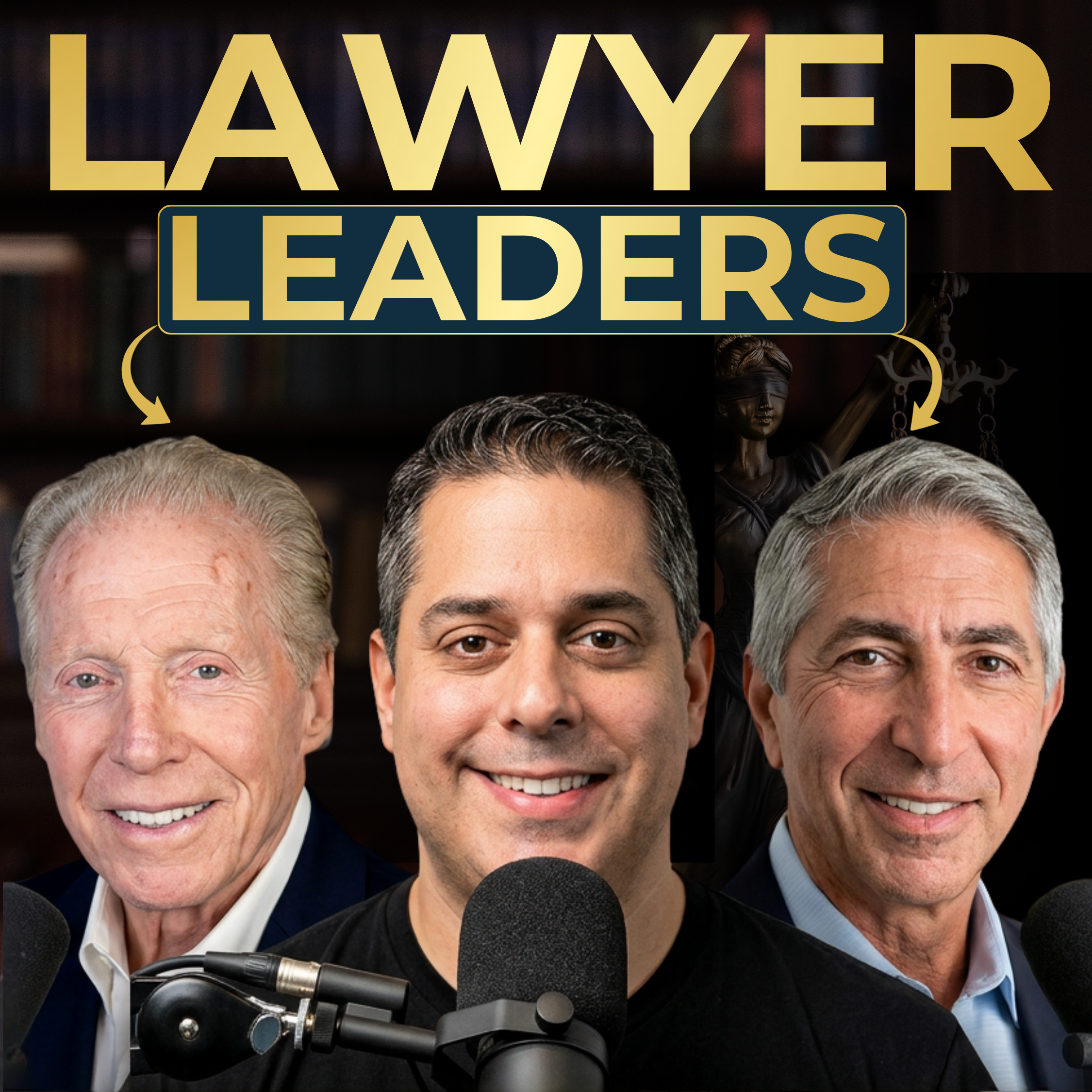
Robert Armstrong and Sanford Fish are two seasoned lawyer-entrepreneurs who share their journey of building a billion-dollar practice through innovative systems, client relationships, and the embrace of AI. They share insights on leadership, overcoming fears, and the future of legal practices.
Guests Names
Robert Armstrong & Sanford Fish
Resources
American Academy of Estate Planning Attorneys - https://www.aaepa.com/
The EMyth Attorney - https://amzn.to/4wb1wSX
Time Stamps
00:00 — Systems, character, and the law firm model
00:36 — Introducing the guests and the Academy story
01:14 — Building a law practice around systems
03:15 — Combining legal services with wealth management
05:03 — The real calling card: transforming lives
07:55 — Vegas boot camps and the “money back” trust play
10:16 — Leadership, integrity, and doing what you say
12:03 — Failure, grit, and being “three feet from gold”
15:56 — Helping thousands and spotting future success
22:01 — The books, the audience, and the enterprise model
25:18 — Why law is really a relationship business
27:22 — AI in law: fear vs opportunity
33:22 — How to connect with the Academy
35:43 — Advice to their younger selves
39:34 — Mentors, books, and lifelong learning
Legal Disclaimer
Leonsolutions, LLC, and the content it produces are for educational purposes; your results may vary. No guarantee of results is claimed. The publisher of this content is not responsible for any actions taken or not taken as a result of reading, watching, or listening to our content.
Paul Leon: Paul Leon here. I'm pretty excited about this conversation because I haven't had two leaders on this leadership podcast such as yourselves - Robert Armstrong and Sanford Fisch. You are two pretty incredible entrepreneur-lawyers who have carved out an incredible niche. I studied their content before prepping for this podcast; it's pretty intimidating, but intimidating in a positive way. Rather than me trying to dilute their message, I'll let them introduce themselves. Robert Armstrong and Sanford Fisch: for a new leader listening, what is your unique sales proposition to anybody who's listening for the first time or hasn't had the opportunity to follow or know you yet?
Robert Armstrong: Okay. Well, I guess the first thing to say is that I'm a lawyer, and this will be my fiftieth year practicing law. Way back in 1993, Sandy and I were partners and have been partners for close to 40 years, we had a successful practice that we created in San Diego where we did estate planning in a way that nobody else did. We got together one day and said, "I wonder if other attorneys would be interested in hearing how we practice law."
One of the salient features of our practice was that we did everything based upon systems. If you did anything more than a couple of times, we wanted to have a system for it. So we created systems throughout the practice, and it was very successful. In 1993, we invited law firms around the country to listen to us about how this might benefit their practice. It was a success right from the beginning because lawyers often have no systems. The systems they have are basically whatever one of their paralegals decides to do until that person leaves, and then they have no system. We wanted written-down systems in every part of the practice. We sold that to other attorneys through membership in our organization, where they had the privilege of getting all of our systems, plus our coaching, legal education, and everything an estate planning attorney needs to be successful.
As I said, this started in 1993, and here we are 33 years later, still going strong. One other thing - I'll turn it over to Sandy in a second - is that when we created a practice based on systems, one recurring problem was that many practices have to start over every month. They have to find new clients, do all the marketing, meet with clients, and draft estate plans. We wanted to find a way for them to have recurring revenue so they didn't have to start over every month. So we created a second company called the American Academy of Estate Planning Attorneys, where we combined legal services with wealth management for clients. We revamped all the systems so that when clients come in for legal services, through a process of five meetings, we discuss not only their legal needs but also how they're managing their money. In two and a half years, we went from zero to over a billion dollars. It has been very successful in such a short time. As a matter of fact, to memorialize this new business model, we created a book called The Enterprise Law Firm Model that describes how a law firm can offer legal services, get licensed in financial services, and offer wealth management as well. It's been very well received by clients and law firms around the country.
Sanford M. Fisch: When we think back to where we started 33 years ago, the concept that comes to mind is that, yes, we had systems, but we also had a decision to make: whether to expand ourselves or go to lawyers and fill a need we thought they might have. We decided to go that route. Underlying all of that was asking, "Is there a need out there?" Once we went out and marketed it, the attorneys' response showed they definitely had a need.
Then we started to see what we were actually doing, which became our real calling card: we inspire and guide people to transform their lives. Here we are 33 years later, and now when we talk to groups of attorneys, we talk about that first. Of course, their reaction is, "Wait a minute, I thought I was coming to hear a lawyer talk about lawyer things." And here we are talking about inspiring and guiding people to transform their lives. That's a big statement, especially coming from two lawyers, but the reality is that's what we've been doing for 33 years.
By showing them something they had never seen or thought about before - taking the practice of law, treating it as a business, and having a system for everything that occurs in the firm - we changed how they operate. Anything you do more than once should have a system. That way, there's something to follow, and when a team member leaves, there's a clear way to train the new person. The system remains the same until we update it.
When we sat down on that fateful day and decided to create the Academy, we didn't realize what we were doing in terms of changing people's lives. But that's really what we're up to, and the satisfaction we get from that is immeasurable. I just got a letter from a longtime member who recently retired. He was talking about a few things and mentioned, "By the way, I know I've told you this many times before, but you and Robert saved my career and changed my life." Reading that makes a huge impact on us. That's why we keep doing it - because why wouldn't we?
Paul Leon: When I was studying your background, if I recall, some of those first set of conferences during that early period before you grew to a billion dollars were held in Las Vegas, based on my research.
Sanford M. Fisch: The first conferences we held were in Las Vegas.
Paul Leon: Yeah, which is a fun place!
Robert Armstrong: It was kind of interesting, Paul, because we were two attorneys charging a lot of money for people to come to Las Vegas to learn how to run a successful practice. People were justifiably a little skeptical. So, we did something unusual: we told them, "We're not even going to cash your check or run your credit card. You come to Las Vegas, and if we don't prove to you that this was a good investment, we'll give you your money back or hand your check right back to you."
We had fabulous results in Las Vegas and decided to hold other boot camps after that. We created an organization that wasn't just devoted to teaching lawyers how to practice law, but giving them a life. Oftentimes, attorneys just work, work, work, and have no systems to support them. Once we gave them those systems, it opened up all kinds of new possibilities. They could take vacations, draw money out of the business, and actually support a great lifestyle. That's one of the things Sandy and I are really proud of.
Paul Leon: What I want to peel the onion on, maybe for a new leader in the legal space... In fact, I've never shared this on the podcast before, but when I used to sell door-to-door in Orlando, Florida, I had the opportunity to make a lot of connections with lawyers in the area, including people from Morgan & Morgan - a great company. What I noticed from a first-person point of view is that a lot of new lawyers, if things didn't work out initially, would just bail and become realtors. This was way before AI. Before you even started with this bold idea to say, "If this doesn't work, I'll give you your money back," what are some of those normal fears people face? If you can get on the other side of them quickly, how can you become a more successful lawyer and leader faster?
Robert Armstrong: Do you want to take this, Sandy?
Sanford M. Fisch: What comes to mind first are principles that Robert and I have really lived by. The first thing you have to understand as a leader is that you are always under the spotlight. Everything you do and say is being witnessed - often by your team or, in our case, our entire organization. Adopting a simple principle like "do what you say you're going to do" is crucial. When you look at business in general, most people and businesses don't do what they say they're going to do. When you live by that principle, you immediately separate yourself from all other leaders because demonstration is far more powerful than words. You have to be consistent and demonstrate how you operate.
That principle served us well from the very beginning, even in our firm before the Academy existed, so that clients could rely on us. That applies to any industry. As a leader, watch what you say and do, and make sure you're consistent.
Another aspect you mentioned is fear and your mindset around failing. It's critical for a leader or entrepreneur to understand how they handle failure. You mentioned meeting lawyers who tried it, had things not work out, and became real estate agents. As a leader, there will be failures, so what is your mindset around that? Is it, "Okay, that didn't work out, let me try something different. What did I learn from that experience?"
Underlying that is having grit - being able to stay with something. We've had many mentors over the years, many through books. One particular line that has always stayed with me comes from knowing when you're "three feet from gold" and stopping a little too soon. If you had just kept going a little longer, you would have figured it out and things would have come together. It all comes back to mindset: do you expect everything to work out instantly, or do you accept that there will be bumps in the road and know how you're going to handle them?
Robert Armstrong: Let me add a little to that, Paul. This idea of doing what you say you're going to do - call it integrity. If you have integrity with your word, it is whole and complete. What does that look like in day-to-day life? It means showing up to appointments on time. We are amazed sometimes when we have scheduled Zoom calls, people are waiting, and someone arrives five or ten minutes late saying, "Yeah, sorry I'm late." That doesn't cut it. That displays your character.
It's not just being on time; it's being transparent in what you do. Another aspect is keeping the customer or client top of mind - taking yourself out of the equation as you explain things and making sure you are delivering real value. Doing what you say you're going to do, being on time, and having integrity with your word will put new leaders in a class that almost nobody else occupies. It is the difference between failure and success. Holding yourself accountable to that level of integrity is a huge leadership attribute.
Paul Leon: Sandy, you mentioned reading a testimonial from a customer saying you saved their practice.
Sanford M. Fisch: Yes, a former member of the Academy sent me an email about a week ago reminiscing a bit.
Paul Leon: How many people would you say you've helped over your lifetime? I know it's a lot, so an estimate is fine. Out of those, can you think of one example that stands out where you saw someone enter the Academy and thought, "That person has what it takes," and then they made it? What went into that success?
Sanford M. Fisch: So many different members come to mind. First, regarding how many people we've helped: literally thousands. And those thousands aren't just lawyers - they're the families of those lawyers, as well as their team members and staff, because an entire firm gets involved with the Academy.
Robert and I used to run live boot camps right before our main summits. We would get anywhere from 10 to 30 people for a full eight-hour day. We taught about seven of those hours and really got to know people. Afterward, we would discuss who we thought would do well and who wouldn't.
One particular member comes to mind. He was at the boot camp with his wife. He had been in the military - a Marine. I remember the questions he asked and the focus he had. I thought to myself, "Not only is he going to make it, but I can't wait until he succeeds." He had just hung out his shingle, and it was just him and his wife running the firm. Now, nearly ten years later, he has built a fantastic law firm, expanded into wealth management, purchased another practice, and built a great team. He went through the pain of building a team - because any entrepreneur knows a team isn't static; it evolves. We introduce the concept of building an "A-team" with A-players, which is a whole other topic. But he had grit, focus, vision, and a willingness to put in the work.
Robert Armstrong: I'll mention his name - Mark Avrari, who is actually a co-author of our new book. He came to us about 26 years ago, and it was very clear he was going to make it. He put in the work and built a great practice. When we decided to integrate wealth management, we used his firm as a template because he had around $300 million under management. He showed us his process, and we integrated his systems into ours. He was extraordinarily successful. Again, success isn't just about money. Money is great, but character, how you treat people, and your attitude toward clients are what matter most. We feel a sort of parental pride seeing members grow over the years.
Paul Leon: I love a couple of key things you both mentioned. Sandy, when you said you've helped thousands, I appreciate how you framed it - not just the lawyers, but their families and staff. I'll admit that even I forget at times that when you train or sell to someone, you should think about your customer's customer. That's a great lesson.
I want to restate the title of the book and talk about who it's for. Who is the target reader, or "avatar," you envisioned when writing it? What will they gain when they pick it up?
Sanford M. Fisch: The most recent book we wrote is The Enterprise Law Firm Model. Prior to that, we wrote The E-Myth Attorney. We wrote The E-Myth Attorney because the two of us read the original E-Myth by Michael Gerber, which had a massive impact on how we operated our law firm and enabled us to create the Academy. Michael actually asked us to write a book applying his E-Myth principles specifically to law firms since we had done it successfully. That book is for any lawyer trying to figure out their career path and how to run their firm as a business. It's geared toward estate planning attorneys, but the principles are universal.
Our latest book, The Enterprise Law Firm Model, lays out the new system Robert mentioned - integrating wealth management directly into the estate planning process. The audience for this book is twofold: first, any attorney looking to enter estate planning, showing them that the modern approach is to build an enterprise offering multiple complementary services. Second, existing estate planning attorneys who need a new model due to shifts in the industry. Recurring revenue from wealth management is game-changing for a firm's business model, and it's equally game-changing for clients who often lack proper, cohesive investment advice.
Paul Leon: For someone looking at those playbooks from the outside, should they start with The E-Myth Attorney and then level up to The Enterprise Law Firm Model, or can they read either?
Robert Armstrong: Reading either book is beneficial, but reading The E-Myth Attorney first, followed by The Enterprise Law Firm Model, is probably the ideal sequence.
Right from the beginning of the Academy, we told everyone, "You've got to know what business you're really in." People would say, "We're in the legal business" or "the estate planning business." We told them, "No, you're in the relationship business." Once you understand that everything depends on the relationships you establish with your clients and team, everything changes. Your focus shifts from personal aggrandizement to serving the client.
The Enterprise Law Firm Model deepens that client relationship. Under the old model, an estate planning attorney might have two meetings: one to gather information and a second two weeks later to sign documents. You can't truly know a family in one meeting before signing documents. We created a five-meeting system that gives us the opportunity to really get to know them, their family dynamics, and their financial management needs. If you operate with the mindset that you are in the relationship business, it answers so many questions and helps build deep, lasting connections.
Paul Leon: I want to discuss AI. I hear a lot of statements from companies and lawyers I work with, and I'd love for you to address them. The first fear I hear is: "AI is going to take my job because it writes so well," or "AI is going to hurt the legal world." What is accurate or inaccurate about those statements, and where are the real opportunities for blending AI with the legal world?
Sanford M. Fisch: AI has become a massive topic over the last several years. In the legal world, articles come out daily about its potential impact. The truth is, nobody knows the full long-term impact yet. However, AI shouldn't be feared; it should be used. It is a remarkable tool.
We see large language models being integrated into legal workflows, specialized legal AI tech startups emerging, and larger law firms developing proprietary internal AI tools. I don't believe AI is going to replace lawyers. Instead, it will help lawyers be more productive and increase their capacity.
There's debate about whether this will affect newer lawyers whose traditional research tasks can now be automated. Regardless, the public will still need human lawyers because AI cannot replace professional judgment in complex situations. Furthermore, if you eliminate human lawyers and rely entirely on AI for contracts or advice, who is held accountable when something goes wrong? You can't hold a machine accountable. People want human interaction and accountability. It's a fabulous tool - use it properly to increase speed and capacity.
Robert Armstrong: To add to that, building a deep relationship with your clients acts as a moat around your firm against AI disruption. A deep relationship insulates your practice because no computer or large language model can replicate human connection. We are investing effort into incorporating AI to assist our operations, not to replace the human element. We feel very confident about the future.
Paul Leon: That makes total sense. If a lawyer or leader wants to connect further with the American Academy of Estate Planning Attorneys, is AAEPA.com the best resource, and what can they expect when visiting?
Robert Armstrong: Yes, AAEPA.com is the best site. Visitors can schedule a conversation to discuss their practice and see if joining the Academy is the right fit. We actually turn away attorneys if we recognize they don't have what it takes to succeed under our model or if their territory is already occupied, as we offer protected territories. If your territory is open, you can find information on upcoming events. We host two major conferences a year - one in the fall in San Diego (Coronado) and one elsewhere in the spring.
At these events, attorneys get three days of legal and practice management education. Beyond education, one of the biggest benefits is the camaraderie. Law can be a lonely profession, and attorneys rarely network openly with local competitors. Because our members have exclusive territories, they don't view each other as competitors. Many members tell us that the peers they met through the Academy have become their closest friends and trusted sounding boards.
Paul Leon: If you could go back to any point in your career and talk to your younger self - without revealing that you're from the future or breaking the timeline - what advice would you give yourself to achieve better results faster and become a better leader?
Sanford M. Fisch: That's an interesting question. The first thing that comes to mind is that Robert and I wish we had implemented our integrated wealth management model sooner. In the past, we affiliated with third-party wealth advisors. While it worked okay, there was always a handoff - and anytime you have a handoff, like in a relay race, there's a risk of dropping the baton. Creating a fully integrated internal system eliminated third-party handoffs and proved far more effective for clients.
The second thing would be expanding our reach to lawyers across the country earlier. For a long time, we focused almost exclusively on serving existing members rather than recruiting new ones. While serving existing members remains primary, I would advise taking more capital to expand our overall reach sooner.
Robert Armstrong: For me, I would tell my younger self that life is short and you need to get your priorities straight. If your sole focus is money, you're going to have a fairly miserable life because money won't buy what you think it will. I'm all for building wealth, but it isn't the end-all-be-all.
I wish I had learned earlier not to spend all my time hard-charging for the next client or dollar while neglecting the soft side of life - relationships with family, children, and peers. I would encourage prioritizing those connections and recognizing early on how quickly time passes.
Sanford M. Fisch: For new leaders and entrepreneurs: continue to learn, grow, and seek out mentors. You don't always have to reinvent the wheel. Mentors can accelerate your growth dramatically. Some mentors are people you meet directly, while others are found in books.
For instance, the principle "three feet from gold" comes from Think and Grow Rich by Napoleon Hill - a classic foundational read. We've also had the privilege of learning from authors who later spoke at our Academy events, such as Michael Gerber (The E-Myth), Stephen Covey, and Darren Hardy. Look for wisdom actively; it will transform your leadership journey.
Paul Leon: Amen. Well said!

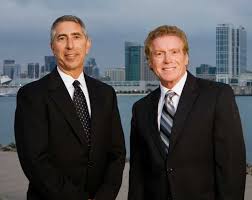
Coauthors / Cofounders
Robert Armstrong
Robert Armstrong is an estate planning attorney, entrepreneur, and co-founder of the American Academy of Estate Planning Attorneys. With more than four decades of experience advising families and building law firms, Robert has spent his career helping attorneys move beyond personality-driven practices toward well-structured, sustainable businesses. He is a nationally recognized thought leader in law firm systems, leadership, and long-term practice design, and a co-author of The Enterprise Law Firm Model. Robert is known for his clear-eyed approach to structure, ethics, and trust — and for helping attorneys see what is possible when a firm is intentionally designed to grow beyond its founder.
Sanford Fisch
Sanford (Sandy) Fisch is an estate planning attorney, educator, and co-founder and CEO of the American Academy of Estate Planning Attorneys. For over 30 years, Sandy has worked closely with law firm owners across the country, teaching them how to build strong systems, lead effective teams, and deliver exceptional client experiences. As a co-author of The Enterprise Law Firm Model, Sandy brings a practical, deeply human perspective to leadership and firm design, emphasizing trust, clarity, and sustainability. He is widely respected for his ability to translate complex ideas into actionable guidance that helps attorneys build firms that truly serve both their clients and their own lives.