

 Apple Podcasts
 Spotify
 YouTube
 Amazon Music
 RSS Feed
  Goodpods
  iHeartRadio
 Why Guest Podcasting Skyrockets Your SEO


In this episode, Brandon Leibowitz shares insights on how guest podcasting can boost SEO, the importance of backlinks, and the evolving role of AI in search engine optimization. Perfect for business owners and marketers looking to enhance their online visibility.
Grab Brandon’s Free Gift
https://seooptimizers.com/gift/
Key Topics
-
The SEO value of guest podcasting
-
How backlinks influence search rankings
-
The impact of AI on SEO and search engines
-
Common misconceptions about SEO
-
Strategies for building high-quality backlinks
-
The importance of content quality in SEO
-
How to measure SEO success
-
- The role of trust and website history in ranking
Time Stamps
00:00 - Introducing Brandon Leibowitz and his SEO background since 2007
01:24 - What The Power of Guest Podcasting is about and who it helps
04:40 - Why “SEO is dead” is a myth that keeps coming back
06:29 - A clothing company case study built on trust and backlinks
08:09 - What a backlink is and why Google uses trust signals
10:17 - Why Brandon wrote a book about guest podcasting and SEO
12:41 - How podcast appearances can be turned into real backlink value
13:19 - Teaching SEO through classes, workshops, and meetups
16:03 - Why content needs to beat competitors, not just hit 400 words
18:23 - Writing for the user instead of stuffing extra words
20:08 - Why buying cheap backlinks can backfire
22:24 - Brandon’s website audit process and why every site needs a custom diagnosis
25:13 - Why SEO is simpler than people think once the core logic is clear
26:47 - Free gift, classes, and website audit options
28:16 - How AI is shifting where people search and what the market may become
31:36 - Why AI can help with outlines and drafts but not replace accuracy
35:45 - Why Reddit and YouTube matter as AI training sources, but trust is still hard to measure
38:42 - What AI could mean for SEO, coding, and future tools
40:31 - Why the internet bubble comparison matters for AI
41:54 - Brandon’s accidental path into SEO after graduating college
43:18 - A website cleanup case study that quickly moved an old site to page one
45:13 - Why spammy SEO outreach and fake promises miss the point
46:25 - The biggest SEO pieces: content, backlinks, and consistency
49:16 - What readers should learn from the book to avoid years of backlink mistakes
Grab Your Free 90 Day Leadership Roadmap
https://www.themanagersmic.com/newsletter/
Legal Disclaimer
Leonsolutions, LLC, and the content it produces are for educational purposes; your results may vary. No guarantee of results is claimed. The publisher of this content is not responsible for any actions taken or not taken as a result of reading, watching, or listening to our content.
Paul Leon (00:01.111)
Welcome back to The Manager's Mic podcast. I'm very excited about this conversation because I'm joined today by Brandon Leibowitz. Did I say that name right, Brandon, or did I mess up your name? Brandon Leibowitz. Okay, and feel free to correct me—my wife always makes fun of me because I mispronounce stuff. He's the founder of SEO Optimizers. Brandon has been helping businesses grow through SEO and digital marketing since 2007.
Brandon Leibowitz (00:13.356)
No, all good.
Paul Leon (00:31.202)
Helping businesses grow through SEO and digital marketing since 2007. I want that number to sink in—since 2007—which is wild because, from what I'm looking at, you look like a young guy, so I'm pretty shocked by that. But the goal of what he's been doing is helping companies rank higher on Google and turn website traffic into real sales and leads—which we all know, if you're running a small business or you're a solo operator, is a huge pain point. Brandon helps close those gaps around this challenge.
He's also written a book. And instead of me butchering who the book is for, I'm going to lean into you now, Brandon. You can tell the new listener or returning listener to The Manager's Mic podcast: your book, who is it for, etc.?
Brandon Leibowitz (01:33.369)
Thank you for having me on. My book, which I just published a few months ago, is called The Power of Guest Podcasting. It goes into how guest podcasting is great for visibility and exposure, but a lot of people don't realize it has SEO value. I'm trying to lean into how to get people more visibility and more traffic from search and AI platforms, and guest podcasting is a great way to do that.
I show people how to find podcasts that have SEO value, how to make sure you get that SEO value from the recording, and how you can track everything and measure the results and impact. It's taking guest podcasting and putting an SEO spin on it to incorporate that. Really, it's about helping business owners who want more visibility, more exposure, and better rankings—and all of that falls into guest podcasting.
Paul Leon (02:39.656)
Rock on. Is your book available on Amazon, or do you have a preferred website where you want people to go? I'll put any links you want into the show notes for this podcast; I always like to ask what your preference is.
Brandon Leibowitz (02:55.266)
Amazon is a good place to find it, or they can find it at any major retailer if they just search online for The Power of Guest Podcasting. It should pop right up.
Paul Leon (03:08.083)
Rock on. All right, so it's The Power of Guest Podcasting. I encourage you to check out that book if SEO has been a pain point for you, as it has been for me.
Now that we have all the plugs in, I want to start leaning into the thought leadership around search engine optimization with you, Brandon, if that's fair and if I have your permission to do that.
Brandon Leibowitz (03:35.638)
Yeah, sounds good to me.
Paul Leon (03:37.426)
Rock on. I have talking questions prepared with AI, but sometimes what I'll do, Brandon, is go off on a tangent because I want to be authentic and speak from the heart, if that's fair.
I'll tell you how I view SEO at times, and I invite you to layer in your good thought process over my bad thought process around search engine optimization.
Sometimes I look at search engine optimization—this is a weird framing—almost like prayers. I don't know where it's going to go. I don't know if it's going to be heard or seen because there's such a massive amount of information on the internet. I've heard some thought leaders say SEO doesn't matter, and I've heard others say SEO definitely matters.
To start, what are some bad beliefs you've seen people hold around SEO—like the 101 version—that you've had to break down? Let's start there, if that's fair.
Brandon Leibowitz (05:01.300)
I guess we could start with "SEO is dead." That's what I've heard even back in 2007 when I first started doing SEO—people were saying SEO is dead. Anyone who says SEO isn't important, is dead, or doesn't work is probably not in the weeds or doesn't see the true value of it. People are searching—it doesn't matter if they're searching on Google, search engines, AI LLMs, Amazon, or Yelp. There are ways to make sure that you rank higher organically without spending money on ads.
That's where SEO comes into play: as long as people are still searching and looking for things, there are ways to get you in front of that user at the right moment and at the right time. "SEO is dead" has been around forever, and especially now with AI, it keeps coming up again—but it's been coming up for decades. I don't think it's going to die off until people stop searching. Once people stop searching, we'll have to figure something else out. But for the time being, everyone is searching, actively looking, and asking questions online, and that's where SEO gives you that visibility.
Paul Leon (06:19.064)
Rock on. Can you tell me about a time when you helped someone who had an interesting challenge where SEO served as an anchor for making a real difference? You can pick anything from your case studies and examples from 2007 until now. I know that's kind of hard because you've helped a lot of people, but is there a story top of mind where you can say, "Here's what they faced, and here's how SEO changed the game"?
Brandon Leibowitz (06:58.538)
Yeah, one that sticks out more recently is a fashion clothing company that I helped. They were getting good visibility and generating a lot of sales offline, but online they were struggling. I went in and evaluated their competitors to see where the disconnect was—why some of their competitors were getting much more visibility than my client.
We found a lot of technical issues, but a big factor was trust and getting backlinks: getting other websites to mention them so search engines would trust them more. By working on that, we were able to secure a lot of high-quality backlinks. There are tons of ways to build backlinks—I can use tools to spy on competitor backlinks, and guest podcasting, like we talked about at the beginning, is another great way to build backlinks and trust.
We focused on the trust side of things, and once search engines started trusting them more, they shot up to the top of page one for almost all their keywords. That has made organic search one of their largest revenue channels today.
Paul Leon (08:22.381)
So I have a simple question: are backlinks just links to other websites? Just in case somebody is new—because, again, this is for newer leaders who may not know anything about SEO—break down what a backlink is. Is it just a link to a website, or is there more to that definition?
Brandon Leibowitz (08:44.524)
A backlink is simply a clickable link from another website pointing back to your website. If you're reading an article on Forbes.com and it mentions Brandon Leibowitz, and you click on my name and it takes you to my website, I just earned a backlink from Forbes.com.
When Google came around in the '90s, all the other search engines were just looking at on-page keywords. But anyone could build a website and stuff it with keywords about unrelated topics. I could build a site claiming I'm an Italian restaurant in Los Angeles, and back in the '90s, search engines would instantly trust and rank that page for those keywords.
Google said, "Wait, how do we really know you are who you say you are? We can't just trust keywords." So they looked at third-party websites mentioning you as trust signals. If I'm a restaurant, I should be on Yelp, OpenTable, and local directories related to my industry. Those act like little votes of confidence saying, "We trust you." The more authoritative and relevant websites that mention you, the higher you climb in rankings.
Paul Leon (10:08.443)
I don't mean to laugh; an SEO guest previously mentioned backlinks, but we never broke down the basic definition. I felt like that was a gap, which is why I wanted to clarify it here.
Now, your book focuses on SEO through guest podcasting. What made you want to write this book, and what shifted your focus toward podcasting as an SEO vehicle? Let's lean into that.
Brandon Leibowitz (10:59.758)
I was told for years that I should write a book, but I didn't know what to write about because so many people have already written about general SEO. I was trying to figure out what would differentiate me.
In 2020, when the world shut down, I couldn't teach in-person classes anymore, so I moved them online. When recording on Zoom, it captures audio and video separately. That made me realize I could take the audio, publish it as a podcast, and start my own show. I did that for a few months, and then I was invited to be a guest on someone else's podcast.
That sparked an idea from the SEO perspective: if I'm a guest on someone's podcast and they publish show notes on their website mentioning me, I get an authoritative backlink. That led me to go all-in on guest podcasting. I set my own podcast aside and focused on guest appearances.
I've been a guest on over 300 shows since then to build backlinks, establish trust and subject matter expertise, and generate content for social media. It has helped my traffic and rankings on Google and AI platforms grow exponentially.
I decided this would make a great book topic because not many people talk about guest podcasting—especially the SEO side. It took me almost three years to write, but I finally published it in January 2026. It became an Amazon bestseller, which was awesome.
A lot of people do guest spots without realizing their full SEO value. For example, I had a client who had been a guest on 20 or 30 podcasts before we started working together. When I reviewed the published episodes, half of them hadn't included a backlink to his website. We reached out, asked for the links, and quickly secured a wave of high-value backlinks.
Paul Leon (13:46.498)
That's a very interesting angle. What took you so long to mention that it was an Amazon bestseller? You should have led with that!
What were you teaching before you took this path? Were you teaching SEO at a college, or what was your focus?
Brandon Leibowitz (14:05.900)
I was teaching SEO, and I still run my own workshops and classes today. I've taught through organizations like General Assembly, SCORE, and the Small Business Administration (SBA), and I also run my own meetup groups.
I teach various digital marketing topics—paid ads, social media, and email marketing—but the core focus is always SEO: local SEO, keyword research, backlink acquisition, and site architecture. I also publish these classes on my YouTube channel under Brandon Leibowitz so people can watch my current and past tutorials.
Paul Leon (15:02.424)
How many students would you say you've taught up to this point? If you've been doing this since 2007, my gut says at least over a thousand. Is that a fair estimate?
Brandon Leibowitz (15:15.502)
Yes. I started teaching classes around 2013, and some individual virtual sessions have had over a thousand attendees. Over the years, I've taught tens of thousands of people.
I typically host about one class a month. When I started in person, attendance was limited by venue size—usually around 100 people because I wasn't renting massive hotel ballrooms. But once Zoom and virtual learning took off around 2020 and 2021, class sizes scaled significantly.
Paul Leon (16:22.359)
Are there common questions students ask you that, if business owners simply understood the answers to those two or three things, could improve their SEO substantially? Is there a critical question people are asking that I should be asking you?
Brandon Leibowitz (16:54.774)
People often ask very specific troubleshooting questions about their own sites, like: "My blog post didn't rank—how do I fix it?" I usually steer them toward broader principles that apply to everyone: creating quality content, writing compelling titles, and providing sufficient depth.
Many blog posts are too short. The generic advice is to write about 400 words, but that's a misconception. It's not about hitting an arbitrary number; it's about outperforming the competition.
If you want to rank for a keyword—like "the health benefits of eight hours of sleep"—search that phrase on Google, analyze the top-ranking pages on page one, and look at how comprehensive their content is. If you can provide a more thorough, helpful answer than what currently ranks, search engines are far more likely to feature your content instead.
Paul Leon (18:38.851)
It's funny you mention the 400-word rule, Brandon, because I've fallen into that trap of treating 400 words like the standard target when it's really just the bare minimum. You're saying we need to look at what's already ranking and provide more real value than the competition, right?
Brandon Leibowitz (19:18.030)
Spot on. At the same time, if every top-ranking competitor has written 100 words and you write 1,000 words of fluff, search engines will notice that keyword stuffing. You don't want to overdo it; you just want to provide a slightly more comprehensive, useful answer.
The primary goal is answering the user's question clearly. If someone is searching "how to tie shoes," there are only so many direct steps, so keeping it concise makes sense. But if someone is searching "how to replace a car engine," that warrants an in-depth, step-by-step guide with detailed troubleshooting. Always write for the user first.
Paul Leon (20:34.874)
What's the strangest thing you've seen someone do when attempting to solve an SEO challenge?
Brandon Leibowitz (21:05.890)
Buying low-quality backlinks on marketplaces like Fiverr. You can find gigs offering 1,000 backlinks for $5, but you get what you pay for.
Years ago, SEO was a pure numbers game—if you had 200 links and a competitor had 100, you ranked higher. Today, Google prioritizes backlink quality over quantity. Most websites only need around 100 high-quality, authoritative backlinks to start ranking well. If a site has thousands of spammy backlinks and isn't ranking, those links are likely doing more harm than good.
Search engines will penalize manipulative link profiles, and recovering from those algorithmic penalties takes significant time and effort. When sites lose organic traffic to penalties, they often have to resort to buying paid ads to compensate.
Paul Leon (22:48.595)
I never realized people actively bought bulk backlinks like that.
When someone reaches out and says, "Hey Brandon, I'm struggling with my website and SEO," what does your onboarding and diagnostic process look like?
Brandon Leibowitz (23:30.080)
I always begin with a website audit. I analyze what's working, what isn't, why they aren't generating traffic, and why competitors are outranking them.
Every website is unique: a local service business with 10 to 20 pages requires a different tactical approach than an e-commerce site with thousands of product SKUs. The high-level principles remain consistent, but the diagnosis is tailored—much like a doctor giving a health checkup to identify specific performance bottlenecks.
Paul Leon (24:31.036)
What website should people visit to learn more about your audits and classes?
Brandon Leibowitz (24:51.596)
You can go to SEOoptimizers.com/apply to book an audit directly on my calendar. You can also visit the main site, SEOoptimizers.com, to explore free resources, or search for Brandon Leibowitz on YouTube and social media to find my video tutorials and classes.
Paul Leon (25:26.611)
Right on. Talking through this has grounded my perspective on SEO. I've fallen into the trap of spending hours obsessing over keyword research tools for a single YouTube upload to the point of frustration.
Is that emotional frustration something you hear often from people trying to navigate SEO?
Brandon Leibowitz (26:37.132)
Definitely. Teaching has helped me simplify SEO so people don't get lost in technical weeds like schema markup, heading hierarchies, and title tags right out of the gate.
Once you understand the underlying logic, it makes sense: search engines can't rely solely on keywords because people manipulate them, so they rely on backlinks as third-party trust signals. Then, when people manipulate backlinks, search engines refine their algorithms to separate high-quality links from spam. Search engines simply want to provide fair, relevant results to users, even if larger brands naturally carry more built-in trust.
Paul Leon (27:59.354)
That makes total sense. Let's address the elephant in the room: where AI fits into SEO and podcasting today in 2026.
We've discussed core SEO principles and how guest podcasting builds authoritative backlinks. How does AI fit into this modern landscape?
Brandon Leibowitz (29:14.016)
AI is fundamentally shifting where and how people search. Traditional search engines are trying to defend their market share with features like Google AI Overviews, Gemini, and AI Mode, while conversational platforms like ChatGPT continue to expand.
It's a transitional period where platforms are competing to become the primary search interface. However, many users still appreciate traditional search results with ten clickable blue links, because receiving a single AI-generated answer runs the risk of misinformation or hallucinations without diverse perspectives.
Paul Leon (30:48.277)
How should professionals use AI in their day-to-day SEO workflows without falling into bad habits, like auto-generating a 1,500-word blog post, copying and pasting it, and calling it a day?
Brandon Leibowitz (32:49.036)
Content creation is the biggest use case for AI—drafting blogs, product descriptions, and service pages. Search engines have stated that they don't penalize content simply because it was generated by AI, provided the content is helpful, accurate, and high quality.
The issue is that raw AI output often contains hallucinations or fabricated information. If you prompt an LLM to generate 20 articles and publish them without editing, you might see temporary traffic gains, but rankings usually collapse once search engines assess the poor user experience.
Use AI as a brainstorming assistant, outline builder, or drafting tool, but never rely on it to produce unedited final content. Misinformation in sensitive fields like finance, health, or legal will quickly trigger algorithmic penalties.
Paul Leon (35:02.842)
That aligns with what I see across the tech landscape. There are ongoing discussions about AI training sources like Reddit and YouTube, and stories about low-quality AI biographies appearing on platforms like Amazon.
Is AI primarily indexing and reflecting the broader internet, or how are these models determining source authority?
Brandon Leibowitz (37:10.578)
It evolves continuously. Reddit and YouTube have served as massive training inputs, but LLMs face the exact same challenge search engines have faced for decades: filtering out spam, bots, and bad information. Determining what constitutes an objective source of truth versus misleading content is difficult for an algorithm, especially when human nuances are involved.
Paul Leon (38:50.720)
Looking ahead over the next 5 to 10 years, where do you see the intersection of SEO, digital media, and AI heading?
Brandon Leibowitz (40:18.594)
AI is lowering the barrier to entry for software development and technical tools, allowing anyone to build custom solutions without extensive coding backgrounds.
While the search ecosystem is evolving rapidly, AI will likely remain a foundational layer of search rather than replacing it entirely. Much like the dot-com bubble—where initial hype was followed by a correction and eventual widespread adoption—AI is transitioning from a novelty into a standard utility. People value quick, direct answers, but the underlying demand for reliable information remains unchanged.
Paul Leon (43:19.207)
What was your earliest experience getting into technology, and what drew you to digital marketing originally?
Brandon Leibowitz (43:43.599)
I fell into SEO by chance. I graduated with a degree in business marketing in 2007, and one of the first job offers I received was an entry-level SEO role. I didn't even know what SEO was at the time, but the company offered to train me.
Growing up, my dad worked in computer sales, so I was around technology early on, but I hadn't envisioned it as a career path until that job. I quickly realized that every business would eventually need a website, and while paid advertising, email, and social media all work, SEO delivers consistent, organic traffic without ongoing ad spend.
Paul Leon (45:05.175)
What is one of your favorite client success stories from your career?
Brandon Leibowitz (45:15.176)
I worked with a business that had a 20-year-old domain containing the word "Amazon" in the URL—they had registered it before Amazon became the powerhouse it is today.
Because the domain was so old, Google already had high domain trust established, but the site's architecture was poorly organized and difficult for search bots to crawl. We worked with their web developer to clean up the site structure and on-page optimization. Within a couple of weeks, they jumped to the top of page one for nearly all their target keywords.
That kind of rapid turnaround is rare; usually, new websites require months of work to build trust. When a site already has historical domain authority, fixing the technical foundation yields immediate results.
Paul Leon (47:00.425)
That emphasis on patience and trust is so important. I regularly receive spam emails promising overnight rankings or thousands of downloads. SEO is a long-term investment built on real authority.
For leaders and entrepreneurs listening, what are the primary pillars they should focus on to understand SEO?
Brandon Leibowitz (48:35.746)
SEO is a puzzle, but the two largest pieces are content and backlinks.
If you consistently publish comprehensive, high-quality content and build authoritative backlinks, you will see your visibility improve over time. Progress happens incrementally—moving from page five to page three indicates that search engines are recognizing your trust signals, which paves the way to page one.
Paul Leon (49:48.337)
For anyone picking up your book, The Power of Guest Podcasting, what is a core lesson they'll learn that will save them years of trial and error?
Brandon Leibowitz (51:50.649)
Understanding how to secure and evaluate backlinks correctly. Many business owners waste years or buy spammy links on Fiverr without understanding the risks.
Guest podcasting allows you to reach new audiences, create reusable social content, and establish subject matter expertise—while securing legitimate, high-authority backlinks from podcast show notes. Many guests appear on shows and only get links to their social profiles instead of their websites; the book provides a clear framework to ensure every appearance drives real SEO equity.
Paul Leon (54:29.741)
Brandon, do you have a special resource or promotion you'd like to share with our audience?
Brandon Leibowitz (54:47.874)
Yes! You can visit SEOoptimizers.com/gift to access a free gift bundle, including recordings of my step-by-step SEO classes and workshops. You can also use that link to schedule a complimentary website analysis directly on my calendar.
Paul Leon (55:24.083)
Awesome. Brandon, thank you for joining us and sharing your expertise on The Manager's Mic.
Brandon Leibowitz (55:31.704)
Thanks for having me on, Paul.

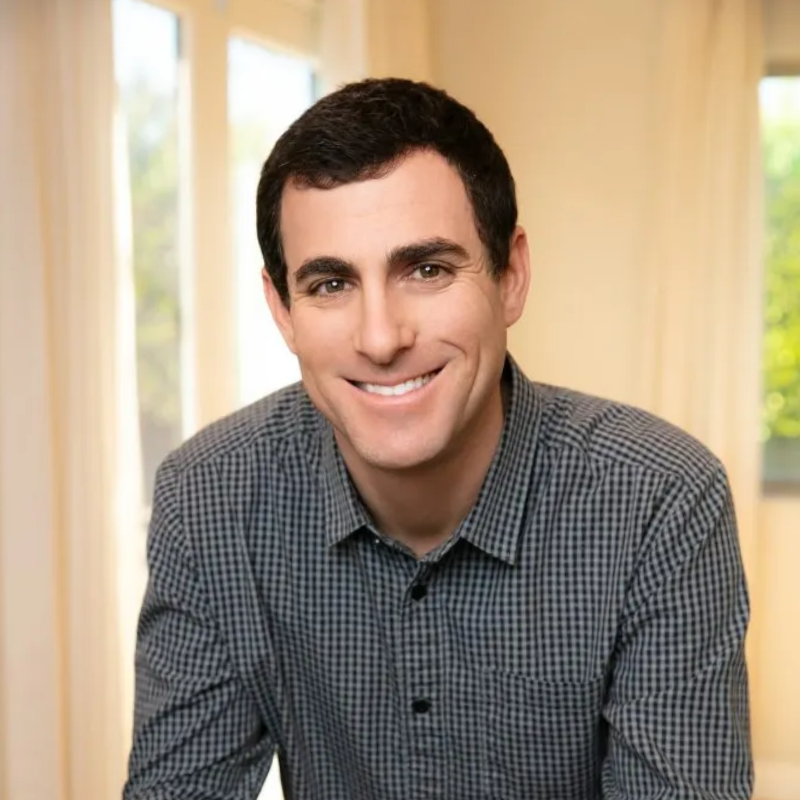
Title Founder & CEO of SEO Optimizers | Digital Marketing Expert | Author | Podcast Guest
Brandon Leibowitz is the founder of SEO Optimizers, a Los Angeles–based digital marketing agency he launched in 2007. He helps businesses improve their online visibility, generate qualified leads, and increase revenue through search engine optimization (SEO), paid advertising, and data-driven digital marketing strategies.
Brandon is also the author of The Power of Guest Podcasting and has appeared on more than 300 podcasts, sharing insights on SEO, entrepreneurship, digital marketing, and building authority through podcasting. His mission is to help businesses understand how to grow online and create lasting success through effective marketing strategies.