

 Apple Podcasts

 Spotify

 YouTube

 Amazon Music

 RSS Feed
 Goodpods
 iHeartRadio
Why Most Leaders Are Using AI Wrong
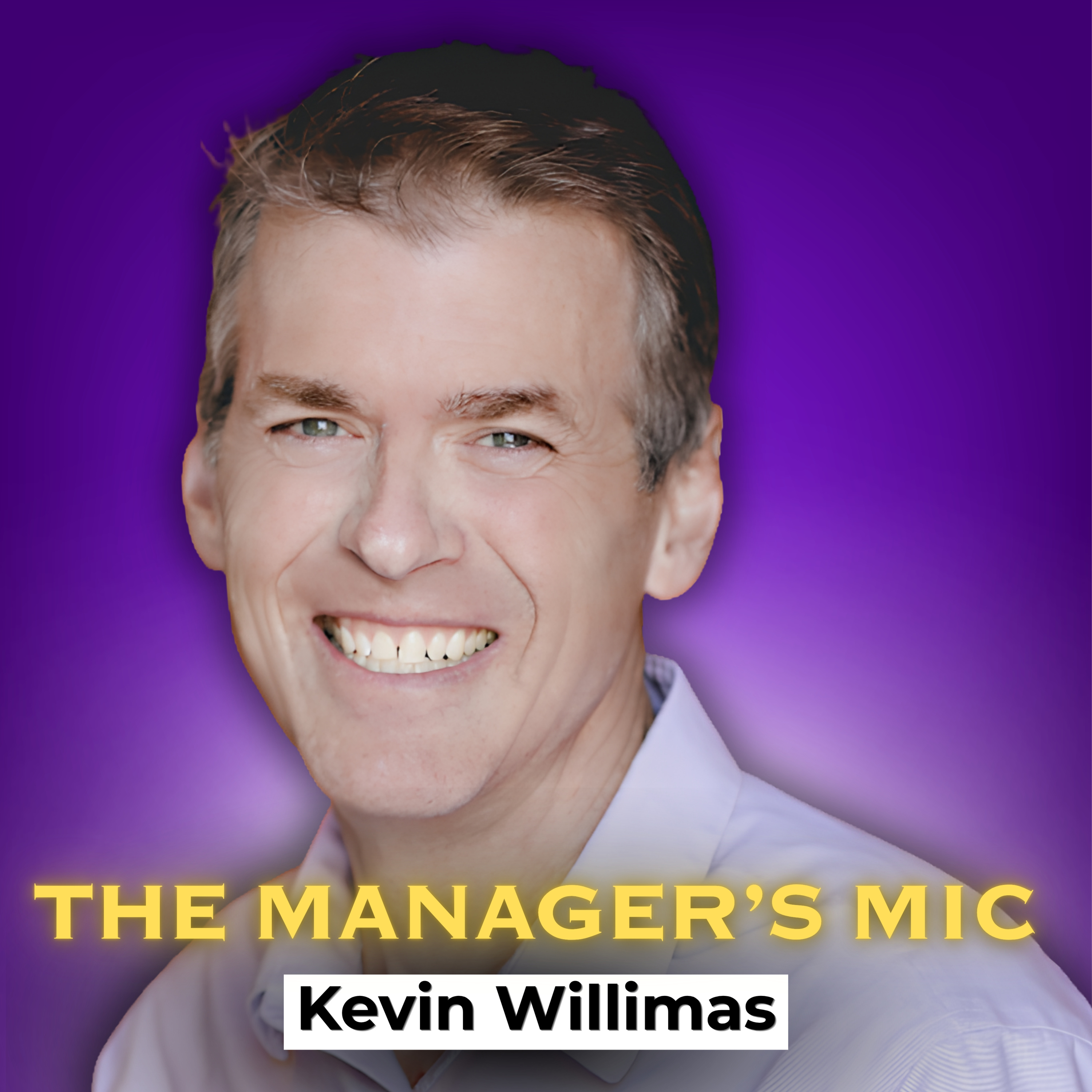


In this episode of The Manager’s Mic Podcast, Kevin Williams, CEO of Ascend, shares insights on how organizations can leverage AI to boost productivity, build infrastructure, and prepare for the future of work. We explore practical strategies, the importance of policy, and the evolving role of AI in business and society.
Follow Kevin
Website - https://www.ascendlabs.ai
Podcast - https://ascendlabs.ai/podcast
Instagram - https://www.instagram.com/ascendlabs.ai
LinkedIn - https://www.linkedin.com/in/kevinguywilliams/
Chapters
00:00 Introduction to Kevin Williams and AI in Business
02:01 Kevin's Background and Successes in AI
05:02 Current State of AI Adoption in Organizations
08:04 AI Infrastructure and Data Integration Strategies
12:08 The Rise of Agentic Harnesses and AI Tools
16:02 Practical Use Cases of AI in Daily Work
19:58 AI Policy, Security, and Ethical Considerations
23:55 Building an AI-First Company and Organizational Change
30:00 Kevin's Journey as an Entrepreneur in AI
39:50 Future Trends in Robotics and AI
50:04 Impact of AI on Jobs and Economy
54:02 Next Steps for Leaders and Organizations
Legal Disclaimer
Leonsolutions, LLC, and the content it produces are for educational purposes; your results may vary. No guarantee of results is claimed. The publisher of this content is not responsible for any actions taken or not taken as a result of reading, watching, or listening to our content.
Paul Leon (00:00)
What might that USP value proposition be to that new people leader who's meeting you for the first time today?
Kevin Williams (00:07)
Awesome, Paul. Thanks for having me on. again. So I'm Kevin Williams. I am the CEO and founder of Ascend AI. And Ascend operates forward deployed AI offices. So as opposed to just being a consultant who can come in and sort of figure out what strategy is, or being an implementer who figures out how to put the diff various pieces pieces together, our teams come in as a pod to solve problems across the organization.
At the intersection of people, process, and technology. So it's as an organization, and for sort of from my own background, I've been a problem solver my whole career. So being able to identify what the right problems are and what is the right technology that can be applied on top of them. And then probably most importantly, given where we are with AI, how do people adapt to those over time?
And that's that's our specialty.
Paul Leon (01:04)
That's nice. But this is also isn't your first runaround. You've had successes in other areas as
Kevin Williams (01:11)
Mm-hmm.
Paul Leon (01:11)
we kind of were peeling the onion in our prep talk and do studying your LinkedIn when and I would encourage everyone on here. I'll put links in the show notes, but definitely get to know Kevin Williams. But you've had other exits and other adventures. I wonder if you could kind of speak to that to kind of let's strengthen that proof a little more as to why your voice matters, kind of your journey.
to this point with ascend now and how that kinda came to the formation B.
Kevin Williams (01:38)
Sure. No, sounds great. And you know, everybody's an AI guy these days. but I I like to say that I was an AI guy before it was cool to be an AI guy.
Paul Leon (01:46)
Right.
Kevin Williams (01:47)
my I've done a lot of different things over my career. I was a venture in an angel port coexecutive. So for a long period of time, if you were in the Washington, DC area and you needed a COO with a really unhealthy tolerance for risk.
I'd be one of the guys that you would tap into to come into your company and try and figure out what was going around. But my own startup experience started with acquiring intellectual property and specifically like consumer-based intellectual property. So I would go out and I'd buy patents. I'm like, okay, well, how the heck does this tie in with AI? Well,
Paul Leon (02:22)
Right.
Kevin Williams (02:23)
with a modern direct-to-consumer company, you're dealing with
really big numbers as far as marketing and advertising spend and absolutely enormous numbers around advertising and data. So we were dealing
Paul Leon (02:37)
Right.
Kevin Williams (02:38)
with billions and billions of points of data back in the dim days of 2017 and had to lean pretty deep into machine learning, which at the time machine learning wasn't something that people looked at and they were like, that's artificial intelligence. Well, the the
Paul Leon (02:53)
Right.
Kevin Williams (02:53)
the the
The room of what is artificial intelligence is quite broad. These days we're generally talking about generative artificial intelligence, but machine learning is what led to generative AI.
Paul Leon (03:06)
Okay.
Kevin Williams (03:06)
I had the fortune of exiting that company to a private equity group what feels like five internet minutes before Mr. Altman dropped open AI on everyone without any instructions. So I had that just an entrepreneurial moment of, my gosh.
I totally get this. I see the direction
Paul Leon (03:23)
Yeah.
Kevin Williams (03:24)
this is going to go. I have time. I have some resources. This is exactly what I want to be doing with myself. So we hung the
Paul Leon (03:30)
Right.
Kevin Williams (03:30)
shingle around Ascend in December of 2022. So that is like minutes
Paul Leon (03:35)
Mm-hmm.
Kevin Williams (03:36)
after Open AI launched. And we have been charging forward ahead with it ever since.
Paul Leon (03:42)
Congrats and congrats on an exit with PE. That's very hard to navigate. I can't personally connect. but for those who don't know, I've I've seen those I've heard a lot of different versions of the story in different businesses and they're very intense. So congrats on your success there. At least from what I've heard. You can share more about that if you'd like. I feel like for
To really lean in to your expertise and this really cool background you have, I'm gonna shift a lot of this discussion to your expertise and to AI. And a lot of the stuff I hear, just like we'll just call it water cooler talk, is a lot I have two different voices I hear around AI. And this will kind of set us up and this word cell hopefully will make sense, Kevin.
Voice number one is typically afraid to adopt it. We've over-exaggerated it. It's very like we're blowing this out of the water. There's a bubble coming voice. And then voice number two on the other side of the water cooler is like, this is the greatest thing. Innovation is to slice bread. Welcome to the new industrial revolution. And obviously, depending on who you say it to, you might get some booze. So wherever you are on your journey, listener, etc.,
I would stay around the water cooler as we talk about this together with Kevin with my first question. Here is, you know, with organizations right now with AI, okay, there's and and and I and I fall into the FOMO trap of just like like I I feel I don't want to be left behind. Is it anthropics better? I don't know if chat GPT is better, and there's just almost of too many options. Where should
You say a new people leader's focus should be or on AI and their day to day. 'Cause there's a lot of different versions of that question, but even myself, I don't know how to answer that question. So what is your thoughts there? Where can you put some frosting on this cake that we're trying to build? I guess is what we'll say.
Kevin Williams (05:46)
So organizations are of course on on a broad spectrum of adoption. they're organizations that I I I I cite as being on the existential horizon. These are these are
Paul Leon (05:57)
Okay.
Kevin Williams (05:57)
organizations that woke up in January of two thousand twenty-three and had a holy crap moment.
Because they realized that their essential business model was at risk. So you're a copywriting organization, you're an outsource sales organization, you're doing media, whatever it is. Those are the organizations that that hopped right to it and dove in. And they've been learning some hard fought lessons over the last, no, we're going on four years. We're we're creeping up onto four years now with this this thing.
Most other organizations are just kind of all over the map. If you have
Paul Leon (06:35)
Mm.
Kevin Williams (06:35)
individual leaders who are like really hot to trot and they're really early adopters, or if it's a founder-led company, a lot of those companies have been doing really interesting things too. But sort of normal companies took them a really, really long time to engage. So
Where should an organization or a manager within an organization be at this point as far as setting expectations? we work with with a wide variety of organizations, tends to be mid-market, anywhere from 25 million to a billion dollars in revenue, but it tends to have a lot of people in it. So figure
Paul Leon (07:07)
Mm.
Kevin Williams (07:08)
50 to a couple thousand people in the organization, which creates a lot of complexity.
And it's not just like, you know, a couple of guys in a garage who are like moving around doing things really fast. There's like a lot of organizational inertia. at this point, leading organizations on that continuum, sorry, with the bell curve, right? Not those that are
Paul Leon (07:26)
Yeah. You're good.
Kevin Williams (07:27)
like building stuff every weekend and whatever. they've probably adopted a platform. So we
Paul Leon (07:33)
Right.
Kevin Williams (07:33)
call them, we went from chatbots like you know, GPT or or or
Paul Leon (07:38)
Yeah.
Kevin Williams (07:39)
Claude. Now they've become a gentic.
Harnesses. And I don't necessarily want to lean too much into the marketing, but it it makes sense that the chatbot has bridged into being an agentic harness. And we can kind of unpack what that is in a second. But they will have chosen probably GPT or Claude as their agentic harness. And they will have
Paul Leon (07:58)
Mm-hmm.
Kevin Williams (07:59)
started to actively manage what that experience looks like internally. So that means that they will have been connecting the right data sources.
They would have been setting permissions. They would have been establishing organizational context. I not to get jargon, but I think we all
Paul Leon (08:15)
Yeah.
Kevin Williams (08:16)
get at this point that you you get better results from an LLM if you tell it more about yourself. Well, the same is true
Paul Leon (08:23)
Right.
Kevin Williams (08:23)
about an organization. So the organization has spent time developing that context. And the last piece where most of them fail is they will have actually trained people how to use this stuff. And
Paul Leon (08:33)
Mm.
Kevin Williams (08:34)
there's a lot of let's buy a bunch of licenses.
Let's put somebody in charge of it. And then everybody's going to go off and just use it and do things. And I tell
Paul Leon (08:41)
Right.
Kevin Williams (08:41)
you, it's become way more complicated to use either GPT or or or Claude in the last six months than it was in the last couple of years. It used to be, we can do the little bit of this and a little bit of that, and we can create a custom GPT or we can do whatever. Now we're tracking
Paul Leon (08:57)
Right.
Kevin Williams (08:58)
like 85 different features between them. And
Paul Leon (09:01)
Mm.
Kevin Williams (09:01)
people need to know how that stuff works.
In order to really lean in
Paul Leon (09:08)
Okay. Let me yeah, I do want to back up to a few things you said there because I am interested. The first thing when you said agentic harness, based on the context and and I who you know when you do podcasting, Kevin, you think about like they say to say like one person's name, right? And just like
Kevin Williams (09:28)
Mm-hmm.
Paul Leon (09:28)
think of that one person. So like I got the privilege to donate to a cause for helping like people read and kids and books.
And there was a study done of where basically like sixty percent of people can't read past the fifth to eighth grade level and it broke my heart and like and I have my kids read and I try to define simplicity just because some people always felt like definitions they didn't get enough time. So like I wanna define what a genetic harness means to like that fifth or eighth grader person reading level to be like, what does that mean? What does it matter?
Because sometimes it could be a blue collar and not that blue collar or can't read, but somebody where maybe this doesn't matter, but they're interested. What does that
Kevin Williams (10:11)
Mm-hmm.
Paul Leon (10:11)
term mean to them and why does it matter under the ecosystem of AI as we kind of get into more tools and approaches from that definition, if that's fair.
Kevin Williams (10:22)
Sure, sure, sure. so backing up the clock to 2023, 2024, you
Paul Leon (10:27)
Yeah.
Kevin Williams (10:27)
you would have popped open GPT. It likely was GPT that you were playing with
Paul Leon (10:31)
Okay.
Kevin Williams (10:32)
in some way, shape, or form at that time. And if you were a total ninja at GPT, you would have been using projects to organize information and to create context. You would have been building custom GPTs to to
automates routine type tasks, etc. And then we started creeping into the connector era where you were first able to access things like Google Drive. That was sort of one of the first pieces of information that you could tie into the rest of this. The agentic harnesses really started kicking off right at the start of 2026. And a lot
Paul Leon (11:11)
Okay.
Kevin Williams (11:12)
has happened this year.
A lot, a lot, a lot. And 2026 has been the year of the agent. And that you hear about OpenClaw and Hermes and now Grokbot and like all of these like agents that are going off and doing things on your on your part. And there's there's there's there's a a continuum of success with that stuff. But all
Paul Leon (11:34)
Right.
Kevin Williams (11:34)
of those outbound agents depend on interconnectivity of other pieces of data that are that are under there.
So an agentic harness
Paul Leon (11:43)
Understood. Okay.
Kevin Williams (11:45)
generally relies on well more than generally, relies on a central LLM, and that's still usually anthropic or open AI that's connected to a whole bunch of different data sources. So it's harnessed to all of these different data sources such
Paul Leon (12:02)
Understood, okay.
Kevin Williams (12:03)
that it can start pulling information out of them and you can cross-pollinate it. So imagine.
You have your CRM, let's just call it HubSpot on one side, and you have your project management tool, which let's just call it click up on the other. Theoretically, in you know 2022, you could have done some no-code connections between those to do can kind of cool little automations or whatever you wanted to. Now they can be harnessed together such that your CRM and your project management tool.
basically can communicate using Cloud or GPT as the the central communications factor.
Paul Leon (12:43)
Okay. So and if I ask some dumb questions, it's just 'cause I sincerely don't know. So in your frame we had HubSpot, which was your C R We had click up, was that was the other solution, was like your project management tool?
Kevin Williams (12:54)
Yeah, Monday, Asana, it could
be any number of things. Yeah.
Paul Leon (12:58)
Yeah, and like I know like Smartsheet's one that I'm familiar with. It's like another example. and then you said the thing that connects them was the agentic harness or did I miss that? Just so I could be
Kevin Williams (13:10)
Yeah.
Paul Leon (13:10)
aligned with you.
Kevin Williams (13:11)
So again, not to get like into marketing jargon, but it's in my world, it's Claude that connects them or GPT. I
Paul Leon (13:14)
Sure. Okay, it's clawed. Okay.
Kevin Williams (13:17)
I I use all of the tools because of course I do.
Paul Leon (13:20)
Right.
Kevin Williams (13:20)
But if you put a gun to my head and said select one, I would say, okay, I'm gonna probably go with anthropic for a bunch of internal
Paul Leon (13:27)
Mm.
Kevin Williams (13:27)
reasons. And the way that my day works is probably quite a bit different than most people's expectation of it, in that
I have mainlined how AI works in my world. So, you know, when I woke up this morning, I opened up Claude, I opened up Anthropic, and I said, literally by dictation, because I don't type anymore, I pretty much just dictate. That's like a huge unlock, guys. So if you're not, if you're not
Paul Leon (13:54)
Yeah.
Kevin Williams (13:54)
dictating, dictate, like biggest thing ever.
Paul Leon (13:57)
Yeah.
Kevin Williams (13:58)
and if I I just said, hey, Claude, give me my morning briefing.
And what it did is it pulled from all of these sources of information. And just to keep the example simple, it looks at ClickUp, it looks at Hubspot, and it pulls in outstanding tasks from my team and it does an analysis
Paul Leon (14:14)
Mm.
Kevin Williams (14:15)
of all of those. Okay, so we call that like a chief of staff agent because it's harnessing these different pieces and it's bringing together. If if you are sidecarring AI, you're kind of pivoting in your desk and you're going over and you're using it like.
Okay, Claude, connect to HubSpot and tell me some stuff. Okay, that's interesting. And then pivot back in
Paul Leon (14:37)
Right.
Kevin Williams (14:37)
and do something in your email. By mainlining it through an agentic harness, I see everything that's going on, and I actually can live my entire day through a single chat. The chat gets quite long and quite gnarly, but it's like, I see that my priorities are X, Y, and Z.
let's start off with a follow up with Sonia because I see that Sonia looks like she's behind on a couple of tasks. let's
Paul Leon (15:00)
Right.
Kevin Williams (15:01)
send her a direct message in Slack, so Slack for direct message of what's
Paul Leon (15:05)
Right.
Kevin Williams (15:06)
going on there. it looks like I have a meeting with Paul at 10 a.m. give me a briefing on on what's going on there and when I've talked to Paul in the past, et cetera.
So again, it's
Paul Leon (15:18)
Right.
Kevin Williams (15:19)
like I have this Jarvis like experience where I'm not having to open anything else up. I I haven't been in HubSpot. This is sort of a lie because I was in HubSpot this morning, but I haven't like
Paul Leon (15:31)
Yeah.
Kevin Williams (15:31)
been in HubSpot for like an as an operator in months. And I haven't been in clicks
Paul Leon (15:36)
Right.
Kevin Williams (15:36)
clickup as an operator in months because I've harnessed all of that information and I put it right in front of me. And it makes me feel like I'm in just this contr controlled chair where I can be.
dispatching different things out. And that's not even like agentic stuff. That is really just
Paul Leon (15:53)
Yeah.
Kevin Williams (15:53)
like block and tackle, executive, managing my day type stuff. In my world, it does go beyond that, where I can dispatch an agent to go do something specific, but we don't
Paul Leon (16:04)
Yeah.
Kevin Williams (16:04)
want to go down that road quite yet.
Paul Leon (16:06)
No, and I I I feel like that's part of the bigger picture of this part of the pain you solve with Ascend though, Kevin, right? 'Cause
Kevin Williams (16:14)
Mm-hmm.
Paul Leon (16:15)
you're your your value is you're helping busy CEOs and their organizations leverage AI to I guess be more productive is one frame way to put it because you build those efficiency
AI solutions, whether it's a chat bot and everything, and take all 'cause like I think this leads into my next question, like for somebody who, you know, like your AI day will look different because I you're more seasoned.
But I'll tell you what I see most people's AI day looks like just from like an eighty thousand foot view, who are not and I'm not saying not as advanced as you, not because they can't learn it. It's just because they're not as much in the game as you. I guess is the best the nice way and political way to say this.
Kevin Williams (16:57)
Yeah.
Paul Leon (16:58)
But in most organizations, what I see is that they are
There there's the frame of that they're only allowed to use copilot, and the reason they say that is because of leakage purposes. This is just what I've learned. Okay. Like copilot doesn't have any leakage. And what that means is that your data's safer. Alright, like that's what I've heard. I could be wrong. Okay. and then
But there's another population of employees doing dark AI where they're taking pictures of a screen and using Chat GPT to interpret it, you know, like I I'm not gonna say who, but like I I've heard of people have admitted that to me after
Kevin Williams (17:39)
Uh-huh.
Paul Leon (17:39)
hours. And I'm just being real. So I'm saying all that to say what are the best practices for somebody who maybe is not a CEO.
Kevin Williams (17:51)
Mm-hmm.
Paul Leon (17:51)
Who, like, maybe it's just an employee, but wants to do the right thing, but wants to use AI solutions to the best of their way that can serve the solutions for the company and get the results, but also maximize time and workflow. What are some of your recommendations to that person? Like, where should they start? Is there a framework we should be discussing? Just kind of peeling that onion. Now that's a weird word, salad.
Kevin Williams (18:18)
Ha ha ha.
Paul Leon (18:19)
But I'm I'm and I'm
giving you a lot so you can push back and ask me questions first if need be.
Kevin Williams (18:24)
Okay, so so first it's you know, I want to just just head on.
Paul Leon (18:29)
Sure.
Kevin Williams (18:30)
Copilot is run by GPT. So the this this this thing
Paul Leon (18:33)
Ha ha ha.
Kevin Williams (18:34)
that is this this it's a piece of misinformation that there you know
Paul Leon (18:37)
Okay, interesting.
Kevin Williams (18:39)
technically from a data science perspective it is possible for information to kind of leak through to the other side, but from any
Paul Leon (18:49)
Okay.
Kevin Williams (18:50)
sort of
practical perspective, you know, you're you're looking at giant pharmaceutical companies that are leaning into this, like, you know, rocket science, mission critical type stuff.
Paul Leon (19:01)
Right.
Kevin Williams (19:02)
most mere mortal business, this is really a non-issue type risk. That said,
Paul Leon (19:08)
Okay.
Kevin Williams (19:09)
things like HIPAA type data, things where if it's mishandled
you know, people can go to jail, like you know, that's definitely worth a little bit of a gut check and it takes more rigor. Or in financial services, we're concerned with FERPA and you know, things like that. Like
Paul Leon (19:25)
Right.
Kevin Williams (19:25)
totally reasonable to make sure that it has auditability, etc. Okay. What organizations are more worried about is actually the permeability of information within their own ranks. Because when you harness
Paul Leon (19:38)
Okay.
Kevin Williams (19:39)
all of this information together.
if you don't know what you're doing, it is relatively easy to harness it in a way together that creates too much transparency of data. As in, you know, somebody in marketing all of a sudden accidentally has access to HR data. HR data has all kinds
Paul Leon (19:57)
Mm.
Kevin Williams (19:57)
of sensitive information. And then much hilarity ensues when, like, you know, in a bureaucratic organization, stuff gets disclosed that shouldn't get disclosed.
So that's sort of what's
Paul Leon (20:09)
Right.
Kevin Williams (20:09)
going on underneath the hood. And one good part about copilot, and most people like me just loathe co pilot, and I do loathe copilot, is that a a well thought through implementation can follow Microsoft type security protocols to segregate data. And if you're in that sort of environment, then then okay, great. All right. So what do you do? First, shadow IT is bad. That's what you're referring to. That's like be what
Paul Leon (20:34)
Shadow IT.
Kevin Williams (20:35)
That's that's
Paul Leon (20:35)
Okay.
Kevin Williams (20:36)
where where people like BYO AI and the numbers are staggering. It's like it's like 90%
Paul Leon (20:40)
Gotcha. Yeah.
Kevin Williams (20:42)
of people are using AI and people don't understand that there's a there's a marketing adage that if if a product is free, you're the product. Like there's there is no such thing as a free lunch, right? So if
Paul Leon (20:53)
Hm. True. Yeah.
Kevin Williams (20:56)
if if you're out there and you're using some free AI.
much less like a free Chinese AI, like you're
Paul Leon (21:03)
Yeah.
Kevin Williams (21:03)
kind of signing up for information being transferred to that model. So that is really bad
Paul Leon (21:08)
Mm.
Kevin Williams (21:09)
news. So everyone, first piece of advice is whether you have a very liberal policy at your organization or not, you need to be on a paid plan, probably GPT or Claude, and you need to make sure you go into your settings and you turn off the
improve the model for everyone setting. It's this really innocuous term, but that means what you say can be used in the training of the next model, which means that your data is being used. So pay for it. It's all of you know 20,
Paul Leon (21:40)
That's fair.
Kevin Williams (21:40)
25 bucks a month for a super intelligence in your pocket. So pretty awesome, but make sure you're turning off the the training. Two organizations need to be need to be embracing this. They have to have some sort of a policy
And I really like to see leadership statements that are around this. That it's not just like this bureaucratic policy of don't use shadow AI AI, whatever.
Paul Leon (22:04)
Ha ha.
Kevin Williams (22:05)
It's more of a more of a testament from leadership saying, we call it a manifesto. Like this is what we
Paul Leon (22:11)
Yeah.
Kevin Williams (22:11)
believe about AI. We are a marketing organization. We are in trouble if we don't figure this out. We all need to lean in together and do this in a smart way.
If you instead are in an organization and it's got like 50 people in it and there's like no policy or anything else, then
Paul Leon (22:28)
Right.
Kevin Williams (22:29)
you as a leader kind of have an obligation to start leaning into that and making that happen. So that other otherwise, somebody in the organization is using Gemini and somebody's using GPT and somebody's using Claude and they have all of these different like disconnected things. And then
Paul Leon (22:44)
Yeah.
Kevin Williams (22:44)
people start abdicating.
so something we almost insist on being included in either a manifesto or a policy is a non-abdication clause, because I think most of us get at this point that AI makes stuff up, which so do humans, by the way. Humans make stuff up all the time, but
Paul Leon (22:59)
Yeah. Yeah.
Kevin Williams (23:02)
at the end of the day, you as a manager, you are responsible for your output and you need to be held accountable. And when you phone it in and you just like have AI build you a brief.
And you send it off to a client, if that goes sideways, the the it's never the AI's fault. It's still your fault as an individual. So you can't just abdicate from your role. Okay, cool. So disclaimers aside, now you your organization, maybe you can push them into it. if not, at least have some transparency around, hey, I'm using a paid plan. This is what I'm doing. Shouldn't hide that you're doing it.
It's more about experimentation and seeing kind of pushing the limits of what you can do. Where you're going to run into very real walls is with that harness part because you've BYOAI, you're paying your $25
Paul Leon (23:52)
Yeah.
Kevin Williams (23:53)
for Claude, and you're like, hey, CIO or CTO, can you give me access to that Snowflake database? And they're just gonna like explode, like their head's gonna melt. because you know, you can't.
Paul Leon (24:03)
Right. Exactly.
Kevin Williams (24:05)
You can't do that. And then that comes back to the first point of you have to have an organization that is thinking about this a little bit more holistically. And if they're not deer managers, there is a void. And people who step into that void and help push the organization forward, we tend to see end up with a lot of upward mobility in their individual organization.
Paul Leon (24:29)
Interesting. My gut tells me, based on our earlier dialogue, Kevin, when it comes to which paid plan to use, my gut tells me anthropics is your bread and butter. Tell me if I'm wrong in that assumption. And I know you shouldn't, but that's where my gut goes based on how you were speaking to about it earlier.
Kevin Williams (24:48)
So I'm I'm looking at my screen and even right now I have it looks like I have four anthropic two GPT and then I have agentic functions that are going on in GPT codex, which is its coding engine, and Claude Code. So the answer for me is still all of them, and I do
Paul Leon (25:11)
It's crazy.
Kevin Williams (25:12)
I do go back and forth between them all the time because
I honestly think that GPT has the edge on
Paul Leon (25:19)
Mm.
Kevin Williams (25:19)
like they fell behind for a while. I'm
Paul Leon (25:22)
Right.
Kevin Williams (25:22)
I'm doing some testing with their latest and greatest model on another screen over here, and it looks absolutely amazing. but there's
Paul Leon (25:29)
Mm.
Kevin Williams (25:29)
there's some quality of life pieces in GPT that are just way better than Claude. So GPT,
Paul Leon (25:35)
Interesting.
Kevin Williams (25:36)
if if you have a G enabled GPT account, just look in the left bar and look for agents. Click on agents and look at the library.
And there's a library that has like a chief of staff agent. Just it has all happy, smiley little icons and you just click and you connect your email and you connect your calendar and you connect to your if you're you have the permissions to, you connect to your CRM
Paul Leon (25:56)
Right.
Kevin Williams (25:57)
and whatever, and it does that that I was talking about. You don't have to like burn your weekend trying to figure this out. It's just like click, click, click, easy. Then GPT has far superior image capability. Claude
Paul Leon (26:08)
Mm.
Kevin Williams (26:08)
is none.
By the way, Claude is not an image model. So if you were doing, yeah,
Paul Leon (26:13)
really?
Kevin Williams (26:14)
it can it can make things like slides, but it's actually using coding to create that. It's not creating an image from scratch. It's kind of a nuance. But
Paul Leon (26:22)
Okay.
Kevin Williams (26:24)
I can't actually tell you which is better. I can tell you that that Claude is much more expensive. So as an organization,
Paul Leon (26:30)
Mm.
Kevin Williams (26:31)
we kind of go back and forth.
Our agentic harness in Ascend happens to be anthropic, but half of our clients are on GPT and half are on anthropic. And it's like the features are all gonna kind of come together over time. It's not like you know, it takes a twenty dollar subscription to see what the other guy is doing. So like what
Paul Leon (26:51)
Ha ha.
Kevin Williams (26:52)
if something's working on the GPT side, expect it to appear on the anthropic side and vice versa.
relatively
Paul Leon (26:58)
Right.
Kevin Williams (26:58)
soon. So I actually I don't I I don't have an opinion. I will say that as a as a citizen developer or as a like a vibe coder,
Paul Leon (27:07)
Yeah.
Kevin Williams (27:08)
I do prefer OpenAI at the moment. I I think it
Paul Leon (27:11)
Okay.
Kevin Williams (27:12)
is more efficient. I think that it is more intuitive to use. but I was a hardcore anthropic Claude guy for most of 2026. So this is sort of this interesting
Paul Leon (27:23)
Interesting.
Kevin Williams (27:24)
in between time.
But you can't go wrong with either. You really can't. Where you can go wrong
is with free Chinese models that you don't know how to use without proper
Paul Leon (27:32)
Mm.
Kevin Williams (27:32)
supervision and things like that. So stick to the main ones. Gemini, which is Google's, has really fallen behind, but you you would Google's
Paul Leon (27:41)
Hm.
Kevin Williams (27:42)
ginormous and they have all of this intellectual heft. So I assume they'll catch up at some point, but at the moment it's pretty dismal. And then for those
Paul Leon (27:50)
Mm.
Kevin Williams (27:50)
of you trapped in Microsoft environments.
know that both Cloud and OpenAI integrate almost seamlessly with Microsoft environments and are much better than Copilot as far as using them. So you
Paul Leon (28:03)
Hm. Nice.
Kevin Williams (28:05)
you yeah, you you can be kind of platform agnostic and it it doesn't really matter. You're not gonna be left behind.
Paul Leon (28:11)
Yeah. No, and I appreciate your transparency. So I'm gonna go down the path of talking about chat bots because it's a gap for me. I think a gap for a lot of organizations. And this is a prescribed question that I did ask you for. So for those who are watching, like I am looking at guided questions, but sometimes I'll deter from them. So but I think this one's really important, even though I feel like we kinda hit the nail here. So one of the questions are for organizations that want to build.
versus just using a chat bot. how should and I think we probably hit this on you already or at least peeled it, how should they approach it in terms of building infrastructure and risk avoidance? So I think the answer is higher ascent. No, I'm just kidding. Well maybe that is. But it and that might be the answer and that's fine. but yeah, I I kinda wanna go there and then I want to ask a little bit more about your journey to what it was like to build the
an AI first company after we
Kevin Williams (29:05)
Mm-hmm.
Paul Leon (29:05)
answer this question a little more.
Kevin Williams (29:07)
okay, first, let's just take your company this generalis. It's got fifty people and some if you if you're in technology, like there's a technology component of what you're doing, you probably have an IT department that is doing some sort of development. So if you have people in
Paul Leon (29:24)
Right.
Kevin Williams (29:25)
the organization with the title of developer, they probably report to somebody who is the
Head of development or the head of product or whatever it is, even if there are like just three of them. if that capacity exists, you want to be able to tack it on to that because they are the ones who already understand where the data sits. They already understand the risk. what's interesting about it is usually those people are are, they may be using advanced AI coding tools, but they're they're locked in on product.
Because that's what the CEO needs them to do is make the product better. Because less churn, more money, keeps everybody employed. That's exactly what they should be doing. Going off and solving Sally's
Paul Leon (30:03)
Right. It's fair.
Kevin Williams (30:04)
challenge in accounting is not really high priority for that CTO. So usually we like to see an organization attach what are often called forward deployed engineering resources. either we provide them or other people or they hire for them. These are
sort of systems-oriented developer type people who understand how process works and can rapidly develop solutions in the organization. And then they trot over to Sally and accounting, and Sally has this high friction point of something that takes her 10 hours a week and it's a nightmare. They talk to her, they're like, okay, got it. They pivot away. They build the thing. They hand it back to her. Sally brings them cake and cookies forever because she's delighted that she never has to do this thing anymore.
That's all fine if you have those people. Most organizations
Paul Leon (30:51)
Right.
Kevin Williams (30:52)
don't. Like you're some manufacturing organization or you're an advertising organization or whatever. You might have some web developers around, but you probably don't have like developer-developer type resources. This is the one that I think makes up the broadest stroke of well, frankly, my opportunity, but just where
Paul Leon (31:10)
Yeah.
Kevin Williams (31:11)
organizations are trying to figure this out. Like Sally has a legit problem.
Like you shouldn't be you shouldn't be like just doing things willy-nilly. Like hopefully her problem has an ROI. It's taking her away from
Paul Leon (31:23)
Right.
Kevin Williams (31:24)
all this other stuff that she needs to be doing. Maybe there are 10 sallies in the organization. So if you solve
Paul Leon (31:28)
Yeah.
Kevin Williams (31:28)
her 10 hour problem, you're solving a hundred hours a week. Like, you know, CFO is gonna like, shut up and take my money. Like, please do that stuff.
Paul Leon (31:35)
Ha ha
Kevin Williams (31:36)
But you don't know how to build it. And you don't really wanna end up totally beholden on me, which, you know, i I get it. Like, of course you don't.
But one option is to hire a me to come in and do the thing and own it. But if you want to figure this out on your own, there are two major paths that you can take. we talk about vibe coding, and it's it's it's almost a pejorative term. I think the term
Paul Leon (32:01)
Right.
Kevin Williams (32:01)
is actually going to go away. Like I have been creating
Paul Leon (32:03)
Mm.
Kevin Williams (32:04)
code since like five thirty this morning, but I've been doing
Paul Leon (32:07)
Yeah.
Kevin Williams (32:08)
so by dictating into
Claude code and codecs, which is producing the code on the back end. That's what we mean by vibe coding. And it allows people who have really good ideas, but not much technical background, to be able to solve problems. It does not necessarily make it easy. So the easiest path for an organization is to lean into one of the vibe coding platforms like Lovable or Replit.
And I I have a bit of a
Paul Leon (32:36)
Lovable room plant. Okay.
Kevin Williams (32:37)
deep loathing for their business model because their business model is based on getting you through the door, Sally
Paul Leon (32:44)
Yeah.
Kevin Williams (32:44)
being able to build whatever she wants and Tom being able to build whatever he wants, and the data is controlled on the back end so they can't get into too much trouble. They're not going to create like huge vulnerabilities in the organization that say expose the, you know, the payroll system or whatever it is. It's
Paul Leon (33:02)
Right.
Kevin Williams (33:02)
this like nice walled garden.
But it's a walled garden with really high walls. So you can get trapped
Paul Leon (33:07)
Yeah.
Kevin Williams (33:07)
into that a little bit, but it works. And Lovable just raised $350 million cash. So, you know, the markets
Paul Leon (33:15)
All right.
Kevin Williams (33:15)
are saying, hey, this is a really good option. Okay. Other
Paul Leon (33:18)
Mm.
Kevin Williams (33:19)
organizations look at that and they're like, I don't really want to get trapped by these guys. And the I
Paul Leon (33:24)
Yeah.
Kevin Williams (33:25)
I I played with it. It didn't do quite the things I wanted to do. I need to connect all of these other things, and it's complicated.
Now you're in the realm of actually vibe coding or building yourself. And the first thing I'll tell people is that you are playing with fire a little bit, that all
Paul Leon (33:42)
Mm-hmm.
Kevin Williams (33:42)
of a sudden, like you're opening up the terminal on your computer, which is like, you know, the black bar that says, you know, C D space, whatever. Like that
Paul Leon (33:49)
Yeah. Yeah.
Kevin Williams (33:52)
thing controls your computer. And if you don't know what you're doing, you can cause havoc.
And just like opening people up
Paul Leon (33:59)
There you can.
Kevin Williams (33:59)
to that is a problem. So what we like to do, we actually run a program, we call it the AI build kit, where we come into
Paul Leon (34:06)
Hmm.
Kevin Williams (34:06)
an organization and we give them the tools that they need to create a foundation. So what are the right what's the right database to use? How is it going to be live on the internet so you can access it? How do you keep things in relative control? which is helpful because
If you have, you know, Tom and Sally and they're both on their weekends vibe coding away and they don't, they're not really talking to each other, your organization is building this very loose foundation. And then you hire Sam, who comes into the organization, and maybe they learn Sally's way, and now, or maybe they do their own thing, and stuff just starts going off in all of these different directions. So
Paul Leon (34:48)
Right.
Kevin Williams (34:49)
Yes. Well, you can just open up. You literally, if you've never done it before, like if you have a GPT or a or a Claude subscription, you can download the desktop version and do something like, hey, I want to build a snake video game or whatever it is
Paul Leon (35:04)
Yeah.
Kevin Williams (35:04)
that like, you know, gobbles up the strawberries. And, you know, in a
Paul Leon (35:07)
Yeah.
Kevin Williams (35:08)
in a few back and forths, you could actually like build that little video game. And that's pretty cool and that's pretty neat.
And you're you're
Paul Leon (35:14)
Yeah.
Kevin Williams (35:15)
you're now you're cooking a little bit and you can start doing things. But you wanna have some adults in the room as far as some policy, some controls, like such that things don't go super sideways with that stuff. But it's pretty cool once once an organization gets their feet wet and they start building little solutions, they kind of can't get enough of it. we're gonna build this and we're gonna build that and whatever.
Then it's like, what should we be building? What should we be buying? Like, et cetera. people are always trying to like rebuild or like build their own CRM or they're trying to build an ERP or they're trying to build whatever. And it's
Paul Leon (35:51)
Yeah.
Kevin Williams (35:51)
like, I don't know, guys. Like, there's a reason that that HubSpot and Salesforce exist for this stuff.
Paul Leon (35:58)
Yeah.
Kevin Williams (35:58)
but but being able to bridge between things and create automations is really, really powerful for an organization.
and it gets easier every day.
Paul Leon (36:10)
Right. So could you give everyone listening or watching at home the plug to your website and any call to actions they should take if it's a company that wants to go down that path of leveling up those skills, but maybe doesn't want that fire to get out of control since you help
Kevin Williams (36:31)
Mm-hmm.
Paul Leon (36:31)
prevent that fire from
from happening or at least reduce the risk greatly. Where should people go to learn more? What action should they take next? If you could speak to that and I have some follow up questions about you a little more.
Kevin Williams (36:42)
Yeah, sure. I I mean,
there are all kinds of toys on our website, as you might expect. various
Paul Leon (36:47)
Yeah.
Kevin Williams (36:48)
like assessments and things that that are will legitimately give you sort of next steps as far as things that you can try. that's ascendlabs.ai. And that product that I was just mentioning, which by the way is brand new for us. We only have a few clients who are going through it right now. It's called the AI Build Kit.
and the organization walks away with those foundational files plus training plus the ability to actually start executing on these things.
Paul Leon (37:16)
Yeah.
Kevin Williams (37:17)
there's also a resources page in there. We talked earlier about just all the different features that are in GPT and and Claude. I think we're tracking 85 different features at the moment.
And you can see the difference of what they are. So if
Paul Leon (37:30)
Yeah.
Kevin Williams (37:31)
your organization hasn't leaned into a harness yet, and there's a little bit of this and a little bit of that, and people are like, let's do Claude because let's do Claude, like this will give you more tools to have an intelligent conversation with your team about which of these you should lean into. Because, you know, there is a bit of a lock-in and it it could get expensive over time. So it's a relatively big decision there.
Paul Leon (37:51)
Right.
Yeah. No, and you'll see if everybody watching home, you probably will see a pop up up up on the screen, but to click the link in the show notes. I'm curious, since you've had an exit, you've had some successful entrepreneurial outcomes, and I don't think a lot of entrepreneurs have, Kevin, w
What was it like for you to build an AI first company since this is your seventh startup?
Kevin Williams (38:15)
There's
Paul Leon (38:16)
Did you just feel a calling? Have you always just kind of lived for the challenges? Kind of like, you know, I like the challenge too and the feeling of the big win. Just kind of speak to that if you don't mind, sharing part of your journey there.
Kevin Williams (38:30)
Sure. deciding how glib I want to be because this is a manager podcast. I do have an MBA. So like, you know, I'm like that
Paul Leon (38:36)
Yeah.
Kevin Williams (38:36)
that like credentialed guy. part of it is I have always been a move fast and break things sort of guy. And
Paul Leon (38:44)
Mm.
Kevin Williams (38:44)
as much as I I do love people, I am a humanist. being able to reduce human friction right off the bat, that's not.
firing people, but that's making
Paul Leon (38:54)
Right.
Kevin Williams (38:55)
decisions in the organization that can avoid the friction that I've ended up in front of six other times of my life. Like I will do that any day of the week, that I can have a lean, mean team that is super well informed and can run autonomously. So we
Paul Leon (39:13)
Right.
Kevin Williams (39:14)
happen to be an EOS organization, if you know what traction is,
And do you know what traction is? The yeah,
Paul Leon (39:20)
Me personally?
Kevin Williams (39:21)
entrepreneurial operating system, Geno Wickman.
Paul Leon (39:23)
Okay.
Kevin Williams (39:24)
It's it's just a it's an it's a total it's like a diff that's a different like game show, but it's
Paul Leon (39:29)
Okay.
Kevin Williams (39:30)
it is like an operational system for organizations for running their meetings
Paul Leon (39:35)
Okay.
Kevin Williams (39:35)
and things like that. Highly recommend it. Like if you're out
Paul Leon (39:38)
Okay.
Kevin Williams (39:38)
there and you're dealing with some chaos, EOS can be great. But part of the point is you spend a lot less time in these organizations on
Briefing and like, let's come together and tell each other what we've been doing. And you spend almost
Paul Leon (39:51)
Right.
Kevin Williams (39:52)
all of your time on solution design and client service and these like high inflection point activities for which you hired people. Like we all do it as managers. You hire, let's just say a salesperson. You hire a salesperson. Why? Because they're good on the phone. They're good at closing, whatever. And what do you
Paul Leon (40:11)
Right.
Kevin Williams (40:12)
make them do?
You make them spend 30 to 40% of their time like entering things into CRMs, which makes them die inside. That is not like who they are. And you
Paul Leon (40:18)
Hmm. Yeah. Yeah.
Kevin Williams (40:23)
wonder why they don't do it. And you have all the arguments in the world for why it should be done. But if you can take those impediments away from somebody and you can put them in their own
Paul Leon (40:31)
Mm.
Kevin Williams (40:32)
zone of genius, and you can do that across an organization, like, my gosh, it's like it's so powerful to be able to do it. And
I'll also I'm a you know I'm a very curious person. I am
Paul Leon (40:44)
Right.
Kevin Williams (40:45)
not a dev, but I have, you know, air quotes written several million lines of code in the last six months. And for the first time in my professional life, my ideas can match to my capability to actually produce them without having to go through really expensive and laborious like dev chains. So
Paul Leon (41:08)
Right.
Kevin Williams (41:09)
it's it's been a real unlock that way. Now I'm lucky, right? So I'm starting from scratch. So I was able to make these decisions. Like, I'm gonna I hired a marketing director and I told him right off the bat he he was managing 20 people in his last organization. I'm like, you were going to be the only person on this marketing team. Like, and Meshort
Paul Leon (41:28)
Mm.
Kevin Williams (41:28)
made eye contact with him that that was going to be the way that this was going to work.
And he is expected to lean in and be a ninja such that he can ad he can walk the walk, you know, eat the dog food, use the tools such that he is amplifying his own ability to do things in all of these directions, even if he doesn't have the personal expertise in some of them. And yeah, there are like vendors and things that sit on the side of that. But
If you're instead walking into his old organization where there are 20 people on his team, you're inheriting all of those operational processes, that whole org chart and everything else that goes along with it and all the caring care and feeding that goes into it. And it's really disruptive. It, you know, it turns
Paul Leon (42:13)
Hmm.
Kevin Williams (42:14)
it turns out that, you know, when you're me, like I take a wrecking ball if in the right client environment, it's usually founder led, it's usually super aggressive.
They basically
Paul Leon (42:24)
Right.
Kevin Williams (42:24)
want us to take a wrecking ball to the way that they do the the do things in their business. And it turns out that the org chart has opinions about that. And, you know, people have their,
Paul Leon (42:32)
Mm. Yeah.
Kevin Williams (42:34)
you know, it's it's like long established practice, and that's really hard to do. So it lends itself a little bit to the why do we, why is this so important? Because what if the guy next to you?
is the one who's building my version of the company. You think you look at your company,
Paul Leon (42:50)
Mm.
Kevin Williams (42:51)
you think, we're pretty efficient. You know, we're doing 15% net margins. We're clicking along, we're growing at 10% a year. You know, we've got good systems and we've got good people. And
Paul Leon (43:01)
Yeah.
Kevin Williams (43:01)
the guy next to you is like, yeah, I need a tenth the number of people and I can have 45% net margins. And what do you suppose that's going to do to pricing pressure in whatever vertical where you sit? It's going to wreck it.
Paul Leon (43:15)
Yeah. No, those are all good call outs. And I think it's just I'm always just genuinely curious too, 'cause you know, some people don't have to do the type of work they know to do 'cause they've had success. And I just find it very honor I don't know if honorable is the right word. I impressive to me personally. I guess is where I'm going. So I'm
I know you have a son in high
Kevin Williams (43:38)
Mm-hmm.
Paul Leon (43:39)
school. We were talking about this offline. I have two kids, as you know, in that middle of the row. They're not in high school yet. But I'm I'm I'm purposely going down the path of how we're gonna think about the future of work for not just your kid, my kids and those coming up because
You know, my wife, for example, she works in the career space as well. This is like an an actual, I would say almost daily topic for us. So I'm curious about your thoughts around the future of work, thinking about your high schooler and I'm putting my kids too in the mix and just in a general sense and I'll let you decide how specific or why you
Kevin Williams (44:20)
Nice.
Paul Leon (44:21)
want to go with this, if that's fair, Kevin. Like what are your thoughts there around the future of work and and all this?
Kevin Williams (44:26)
I think it's a great question.
i
Paul Leon (44:27)
Yeah.
Kevin Williams (44:28)
on the one side, so I I I have my kid's sort of a wild entrepreneur. I guess the the the the apple doesn't fall too far from the tree. He's been starting businesses since COVID and like running around and
Paul Leon (44:39)
Yeah.
Kevin Williams (44:39)
doing this thing and that thing. And frankly, we're a little worried we were a little worried about him about like, man,
Paul Leon (44:43)
Mm.
Kevin Williams (44:44)
like you know, there are ideas, but execution, he's still a seventeen year
Paul Leon (44:47)
Right.
Kevin Williams (44:48)
old boy, like, you know, it's it's it's it's hard to do that. But what
He is showing is a great deal of agility and
Paul Leon (44:56)
Mm.
Kevin Williams (44:57)
the ability to move really fast and test things. And I
Paul Leon (45:00)
Good.
Kevin Williams (45:01)
think that that's going to serve him in really good stead. And originally we were looking at like more like traditional type schools, and increasingly he's been leaning really hard into two different types of schools. one are like classic liberal arts schools.
Because
Paul Leon (45:18)
Not really.
Kevin Williams (45:19)
and I encourage this because and it's such a spin from you know five, six years ago where everything was stem, stem, stem, stem, stem, stem. Well, with
Paul Leon (45:26)
Right.
Kevin Williams (45:27)
you know, quantitative outputs being not a solved problem yet, but sort of heading that way, the human elements become more important communication, leadership. dare I say writing is a way of expressing yourself, probably endangered.
Paul Leon (45:42)
Yeah.
Kevin Williams (45:43)
discernment, etc. These are things that you learn in a classic liberal arts environment. And I think that if that's the way he goes, that will put him in good stead as far as resilience. The other way is
Paul Leon (45:55)
Good.
Kevin Williams (45:56)
more like peer entrepreneurial programs, where he can be surrounded by people who are firing on all cylinders and trying all this stuff and failing really fast because.
In our family, it's not, we're not one of those families that's going to be like, don't go to college, don't do your thing. It's it's very important to us for our kids to have that experience. There's a totally debatable thing because
Paul Leon (46:17)
Yeah.
Kevin Williams (46:17)
I have never seen a better time in my adult life to be an entrepreneur than right now. And part of
Paul Leon (46:24)
Hmm.
Kevin Williams (46:25)
me thinks, come on, kid, like if you come up with an idea and you can lean into it before this is all commonplace, you're gonna be able to absolutely kill it.
But I don't
Paul Leon (46:35)
Yeah.
Kevin Williams (46:36)
think he's really ready for that so much. And it it does give me some willies about it's gonna be five years before he comes out the other end of university. And all of these hard
Paul Leon (46:44)
Mm.
Kevin Williams (46:45)
fraught lessons that are still like raw and new now will be reasonably well enculturated. So finding a path in there along that line, I think, is important. And then my other one is he's my STEM kid. He wants to be a physicist. Okay, great. He's
Paul Leon (47:01)
Nice.
Kevin Williams (47:02)
like an old soul, like.
really into it. but you know, being able to find the path of like what types of sciences are going to be relevant. And physics for a lot of reasons that are out of scope here make a lot
Paul Leon (47:17)
Yeah.
Kevin Williams (47:17)
of sense for where technology is heading with artificial intelligence in the future. But
Yeah, it's interesting. I thought that that was the one that was going to take care of me when I'm old, but it might be the crazy entrepreneur. I don't know. We'll see.
Paul Leon (47:30)
Yeah, I I don't know, I I have two, so it's like my son, since we're sharing, he he I want him to to have his education type, but I also encourage entrepreneurship. Like we for example, you can't see it, but there's a three D printer that I got him and it wasn't cheap. But what I I framed it was was okay, now you gotta pay back that printer
And he, you know, built a desk and went to the corner of our neighborhood and we started selling these things at the corner. And there's a kit effect, obviously, of why people give money. You know what I mean? Like that that helps. Like if it was me at the corner selling stuff, I don't maybe people would just 'cause whatever.
Kevin Williams (48:15)
Yeah.
Paul Leon (48:16)
But I think he has a little more, you know, the kit effect. So
I I'm I also kinda wanna lean into that. I don't want this podcast or conversation and apocalyptic, but I guess I kind of was asking that question in terms of like the the thing that I like we were talking about the water cooler example. The thing that that one other person would say, the negative person about AI is saying, like there's a job apocalypse coming. And you know, you're obviously a smart guy.
You have an MBA, you you're also an entrepreneur, which I think is super impressive to me. Do what are your thoughts? Is this are we calling shenanigans on that? Do you think it's a possibility? I'm just genuinely curious since you're in the game and AI and you you lo you kinda walk in both worlds.
Kevin Williams (49:07)
So I see two things, neither of which is particularly good for the job market. number one is
Paul Leon (49:12)
Mm.
Kevin Williams (49:13)
I do work with some private equity type portfolio companies or very aggressive companies that are already dramatically reducing their headcount. Are they calling it AI?
Paul Leon (49:21)
Mm.
Kevin Williams (49:22)
No. This is different from like block and AI washing and you hear a bada blush, they'll they cut four thousand people and they had just overhired and yada yada yada. no,
Paul Leon (49:33)
Right.
Kevin Williams (49:33)
no.
I am seeing organizations that are actually doing it. one client has reduced its headcount by 55%, so 200 people down to just over 100 and completely
Paul Leon (49:41)
my goodness. Wow.
Kevin Williams (49:43)
transformed their net economics. Do you think they're not gonna keep doing that? No, they're gonna keep doubling down into that. more organizations are looking at it as a way to decouple labor and growth. So we're growing it 25% a year.
Typically our hiring would be, you know, 20% a year. And based on that growth curve, we want to continue to grow at 25% and only hire at 5%. So whenever
Paul Leon (50:09)
Mm.
Kevin Williams (50:10)
we see the opportunity to create an automation that allows us to better lever our internal staff and ideally put them in their zone of genius so they're better levered, we're gonna do that. So that's great for people in the organizations.
It's pretty hard
Paul Leon (50:25)
Right.
Kevin Williams (50:25)
for people who are trying to find roles in the organizations.
Paul Leon (50:29)
Mm.
Kevin Williams (50:30)
I would say that anybody who is in a job that essentially involves moving data from one side of their computer to the other side of the computer with a little bit of human sort of, you know, insight that's in the middle needs to be
Paul Leon (50:44)
Yeah.
Kevin Williams (50:45)
paying really, really close attention to this because those are exactly the sort of knowledge jobs that are.
That are going to be endangered. Will it work out over
Paul Leon (50:54)
Mm.
Kevin Williams (50:55)
time? Of course it will. Like the you know, we talk about the Industrial Revolution, we talk about all of these things, and economies find equilibrium. GDP will continue to grow. there's a lot of new businesses and a lot of stuff going on. But if all of those new businesses are predicated on AI first growth like mine.
Paul Leon (51:15)
Right.
Kevin Williams (51:15)
My organization at scale today will employ a tenth as many people as it would have five years ago because of the sort of things that we're doing. So does that mean that you have to grow the economy by 10x in order
Paul Leon (51:28)
Yeah.
Kevin Williams (51:28)
to find homes for all of the people that are displaced? Maybe, because you
Paul Leon (51:33)
Hm.
Kevin Williams (51:34)
know, the industrial revolution took like it took like 80 years for electricity to really like click into place. All of this is happening
Paul Leon (51:41)
Interesting.
Kevin Williams (51:42)
super duper fast.
And I think that there's going to be disruption first. Not showing up in any
Paul Leon (51:48)
Mm.
Kevin Williams (51:48)
of the job numbers. But I don't I you know, I it's it is a little bit it's a little bit weird for me in that perspective as far as why, because I'm seeing it on a micro level and I just don't
Paul Leon (52:01)
Yeah.
Kevin Williams (52:01)
I don't I don't, you know, I I'm being honest. I d I don't really know, but I am very, very concerned about short term prospects for people who don't have really dynamic.
jobs. Like what is the what
Paul Leon (52:15)
Mm.
Kevin Williams (52:15)
is the dynamic part of your job that that can't just be done by road because economies
Paul Leon (52:22)
Right.
Kevin Williams (52:23)
have a tendency to turn. We're, you know, what 15 years into a seven year cycle at this point? Like at some point
Paul Leon (52:30)
Yeah.
Kevin Williams (52:30)
we're gonna have some sort of economic disruption, at which point the technology just continues to get get better.
I think it could be really, really rough as far as that displacement.
Paul Leon (52:41)
Hmm.
Interesting. very interesting dialogue. What is I guess where we should kind of take this is really just to kind of say what's next on the roadmap around everything around w AI. Is it
Is it a robotics thing that you think is what's next for our and when I say what's next, I know this is a really wide question.
Kevin Williams (53:06)
Mm-hmm.
Paul Leon (53:06)
Like we go anywhere with this. And then we're coming down to the wire. Kevin, I want to be respectful of your time. But is it the robotics as a role models? Like what is your opinion, your professional perspective as an entrepreneur, MBA graduate, father of a high schooler? Like what do you feel is next?
for the new people leader coming into the mix or just anybody on the street who you shake hands with and you wish them well in their career.
Kevin Williams (53:35)
So so many things are coming together at once. And the first has been these generative large language models, the chatbots and things like that, that have the ability to combine large sets of language. One of the pieces that's been missing from that, and you touched, you you said the term, are world models. And world models, you know, I talk about my kid, the physics geek. I hope that he might be able to find focus around world models. These are models that understand
Paul Leon (54:00)
Hmm.
Kevin Williams (54:01)
how the world works.
So this is important because imagine now the third one, robotics. Like you can have a robot that understands like the physics of dropping a pen, but it kind of air quotes understands those physics based on the language model interpretation of the physics. So it knows the math, it understands, it can extrapolate, and then it can move its hand to maybe catch something, but it never will. Whereas a physics,
Paul Leon (54:25)
Right.
Kevin Williams (54:26)
A world model incorporates real world physics into that behavioral aspect of a program or into say a humanoid robot. So we've had the biomechanics around robotics for decades, really. Like the they they keep getting better, of course, but the ability to manip manipulate large language models have added a little bit of a tin man brain to the
to the the the mix. sorry, it's not the Tin Man brain. I'm mixing up my it's the
Paul Leon (54:55)
Mm.
Kevin Williams (54:58)
it's the scarecrow's brain, right? Yeah, yeah. The the heart. The the heart, yeah, the missing heart. That's wrong. I got my nineteen thirties literature wrong. Yeah, sorry. But
Paul Leon (55:00)
that's right. The Tin Man had what was it, the heart? I was I was thinking about that too and I was like, Well wait a minute, but I wanna correct ya. But no, you're fine. Yeah, you're good. It's okay.
Kevin Williams (55:13)
Now you're combining,
you had this little brain that kind of understands the world, and that's where it is right now. You add more advanced world models on top of that, and humanoid robocs are going to start to work. And you look at economies like China, which for a lot of very good, very poorly planned demographic reasons, has a massive problem as far as its own labor force. And they've made it a national priority to lean into this.
If you haven't seen anything from the automation Olympics in Beijing in August, you totally should. It's like wild to watch, like, you know,
Paul Leon (55:49)
Yeah.
Kevin Williams (55:49)
building robots that can outpace Usain Bow Bolt and things like that. But but you have trillions
Paul Leon (55:53)
yeah, I saw those.
Kevin Williams (55:55)
of dollars that are being dedicated to this and you have a real problem. This isn't a nice to have for them. They absolutely need to figure this out in the next 10 years, and I think they
Paul Leon (56:05)
Yeah.
Kevin Williams (56:06)
will.
So you're going to start to see that humanoid robotics part start creeping into manufacturing, distribution, et cetera, in the next
Paul Leon (56:15)
Yeah.
Kevin Williams (56:15)
few years. on top of that, you have autonomous driving. you know, there's quantum, there's like all of this stuff. And you know, AI isn't actually new. AI popped on the scene in World War Two with Alan Turing, and it's just taken
Paul Leon (56:30)
Okay.
Kevin Williams (56:31)
this long.
For all of the things
Paul Leon (56:33)
Hmm.
Kevin Williams (56:34)
they talked about all the way back then to become possible based on the combination of scientific discovery, hardware capability, et cetera. And now like the pace of change is just like almost vertical with all of this stuff. So there's always this, there's
Paul Leon (56:50)
Yeah.
Kevin Williams (56:50)
often the joke of, you know, nobody's gonna be able to replace the plumber. Well, I know of some very AI-enabled plumbing organizations, and no, they haven't replaced the plumber yet.
But the next thing you're going to see are like plumber assistant bots that they're not necessarily turning the wrench, but they're like going back and forth to the van to get the parts and like, you know, things like that. Like
Paul Leon (57:12)
That's crazy.
Kevin Williams (57:13)
it is crazy the sort of stuff that's starting to pop up left, right, and center.
Paul Leon (57:19)
You know, you're absolutely right. you know, I I I I was the other day when I was driving in my neighborhood, I used to see like three or four guys on lawnmowers. Now I'm I I did see one big lawnmower and just a guy with a remote control. Like kinda like the big one from Back to the Future. I don't remember
Kevin Williams (57:39)
Uh-huh.
Paul Leon (57:40)
which one it was, the first or second one I think where Marty or Doc had like this big handheld thing. It kinda looked like that, so
Yeah, it's a it I think you're right.



CEO
Kevin Williams is a five-time CEO and the Founder of Ascend AI, where he advises boards, executives, and leadership teams on the adoption, risk, and governance of artificial intelligence. With a background spanning machine learning, digital marketing, and international business growth, Kevin has launched four commercial LLM-based products, exited a prior company to private equity, and built a career at the intersection of commerce, technology, and organizational change. He has been cited by leading media outlets including The Wall Street Journal, Financial Times, and Inc. Magazine as a primary source on business, technology, and innovation.
Kevin serves as a confidential advisor to federal and state lawmakers, public company CEOs, and founders navigating the strategic, operational, and societal implications of AI. His private advisory practice supports high-net-worth individuals and senior executives who need a trusted thinking partner on decisions where the stakes are high and the playbook doesn't exist yet.
He has led large-scale AI programs for multi-billion-dollar global organizations in sectors including entertainment, consumer products, marketing services, property management, and environmental services, helping leadership teams and employees integrate AI quickly and effectively. His approach starts with the human side: working with the C-suite to frame what's actually possible, then building foundational AI literacy across the organization before any tools get deployed. It's a method that turns skeptics into champions and ensures adoptio… Read More