

 Apple Podcasts
 Spotify
 YouTube
 Amazon Music
 RSS Feed
  Goodpods
  iHeartRadio
 AI Is Coming for Managers, Not Leaders
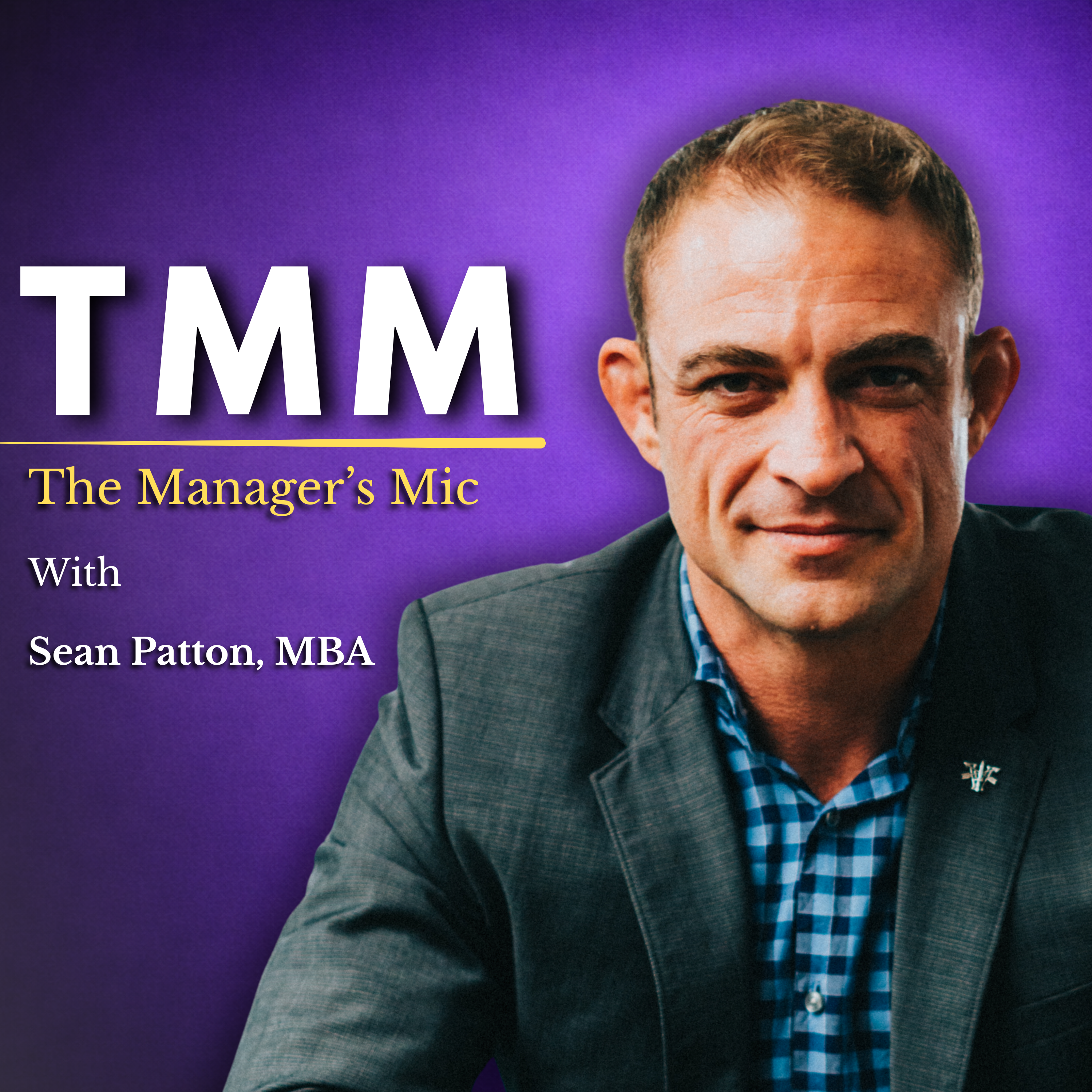


I sit down with Sean Patton, MBA ACC, a former U.S. Army Ranger and Special Forces Green Beret. Sean is also an executive performance coach, keynote speaker, author, and host of the popular podcast No Limit Leadership. His experience in building trust in teams, creating a compelling vision, and leading through uncertainty will empower you to lead better.
Do you want to level up your leadership skills by connecting the principles of military leadership with those of business ownership to shape organizational culture for the better?
If yes, then we invite you to join our conversation as we discuss how to:
✅ Build trust across teams with different goals and competing priorities
✅ Create a leadership vision that inspires high performers
✅ Lead through conflict, friction points, and uncertainty
✅ Strengthen workplace culture through communication and feedback
✅ Develop employees so they stay engaged, grow, and perform at a higher level
✅ Understand why human leadership matters more as AI changes management
Chapters
00:00 Trailer and Newsletter Plug
01:02 Meet Sean Patton
02:14 Understanding Special Forces and Leadership Dynamics
6:23 Leadership Challenges in Complex Environments
12:01 Building Trust And Relationships in Leadership
17:28 The Importance of Vision and Intensity in Leadership
21:04 Navigating Leadership Transitions
23:36 Lessons From Business Ventures
27:40 Sean Patton’s Journey to Self-Discovery
30:06 The Leadership Trinity Framework
35:53 The Future of Leadership in a Tech-Driven World
Follow Sean Patton, MBA:
Website: https://SeanPatton.me
Coaching: https://Novus.Global/seanpatton
Book (A Warrior’s Mindset: The 6 Keys to Greatness): https://amzn.to/4a6W4r4
Podcast (No Limit Leadership): https://nolimitleadership.buzzsprout.com
LinkedIn: https://www.linkedin.com/in/nolimitleadership
Instagram: https://www.instagram.com/nolimitleadership
YouTube: https://www.youtube.com/@NoLimitLeadership
For more practical tips on communication, sales enablement, team building, workplace culture, and leadership development, follow The Manager’s Mic Podcast.
Legal Disclaimer
Leonsolutions, LLC, and the content it produces are for educational purposes; your results may vary. No guarantee of results is claimed. The publisher of this content is not responsible for any actions taken or not taken as a result of reading, watching, or listening to our content.
Plug: Paul Leon here. Thank you so much for being a consumer of the show, and I want to take our relationship a step further. When you join our newsletter at TheManagersMic.com, I am going to give you a free resource called a selling script to help skyrocket sales.
Paul Leon: I have with us today Sean Patton, whose mission is to unite greatness in each member of the audiences he speaks to, which is elite teams. In those audiences, Sean shares the secrets to creating high-performing teams through mindset mastery. His leadership foundation was forged as a U.S. Army Ranger and Special Forces Green Beret commander, during which he earned the respect of his men and his chain of command while operating in hostile, politically sensitive environments. Sean Patton brings his unique combination of battle-tested leadership and business experience to life on stage. Sean, I want to welcome you to The Manager’s Mic. I am looking forward to our conversation today. I have been looking forward to it for some time.
Plug: Thank you so much for being a listener and watcher of the show. And now back to the episode.
Sean Patton: Yeah, thanks for having me on, Paul. I am really excited for this. I am also an executive performance coach at Novus Global. I have recently put my coaching practice under this larger firm because they are doing really cool things, and I get to work with amazing coaches and bigger clients. That is what I am up to these days, on top of the speaking and running my own podcast.
Paul Leon: Here is my question to you. You were a Special Forces commander, which is incredibly hard to achieve. What do you think people hear or think when they hear “Special Forces”? I ask because from people with similar backgrounds, I hear there are a lot of assumptions or definitions about what that is. So for those who may not be familiar with it, let us talk about that a little bit to peel back the layers and humanize you, if that is fair.
Sean Patton: Yeah, totally. This is actually an interesting educational point because people hear different terms in the U.S. military like special operations, special forces, SEALs, Delta, Rangers. You hear all these different terms. I would say the biggest misconception is that it is some giant military hierarchy, like you start at one level, then move up to Army Ranger, then Green Beret, then Navy SEAL, all stacked like a totem pole. People think you work your way up and that one is somehow above the other. In reality, when you hear the term “special operations,” that is the umbrella term, at least in the U.S., for the branches and units underneath U.S. Special Operations Command. From an administrative standpoint, the funding and uniforms may come from the Department of the Navy or the Department of the Army or whoever, but from a command standpoint, they are under a separate command. Even in the press and in journalism, they get that mixed up. They will use the term “special forces” to mean everything from a local SWAT team to Navy SEALs or something else. But the umbrella term is special operations.
And just like in a business, you would not have eight teams inside your company all doing the same thing at different levels of ability. That would be a silly way to build a company. Same thing in special operations. Everybody has a specialty they do really well. You might have a special boat team whose job is to drive specialized boats, move Navy SEALs around, connect ship to ship, and determine where you can moor ships or navigate shipping lanes. That is their specialty.
So what makes Army Special Forces different is that when you say “special forces” doctrinally, you are specifically referring to Army Special Forces, the Green Berets. What makes them different from what most people think of from movies is that most movies show direct action. You see raids, ambushes, hostage rescue, things like that. That is part of what we do. But the larger mission of Army Special Forces is unconventional warfare. Our job is to go in with a small team. Everyone on my team was regionally aligned. I was in Fifth Special Forces Group, so everyone on my team, because we were aligned with the Middle East, spoke Arabic or Farsi.
The larger mission of Army Special Forces is unconventional warfare. Our job is to go in with a 12-person team, link up with a local indigenous force, and then train, equip, and fight alongside them. The most recent example of that is the initial invasion of Afghanistan. The Taliban was the government we wanted to overthrow, and there were the Northern Alliance and other rebel groups trying to do that. So along with the CIA, we sent a few teams in. Instead of an entire giant invasion force, something like 300 Green Berets went in, linked up with those local forces, got alongside them, and you had 12 Americans fighting alongside 500 local Afghans, leading them, equipping them, and bringing resources to them. That is what makes Army Special Forces different.
And I say that because as a leader of a unit like that, you are solving very complex problems. It is not just, “Here is your target packet. Go hit the house and come back.” That is one type of leadership. Ours was more like, how do we integrate with different cultures? How do we solve complex problems and bring different resources to bear? So being the commander of a Green Beret team was very enriching and gave me a lot of opportunity to develop as a leader in the craziest, most wide-ranging scenarios you can imagine, so that I am now able to bring that experience to businesses.
Paul Leon: Is there a scenario, Sean, that you are comfortable speaking to that highlights some leadership examples? Something you can look back on and say, man, that was really tough, and I am glad it happened. Are you comfortable sharing anything from that time, or is it too sensitive?
Sean Patton: No, that is totally fine. I will give you one from a leadership perspective. We went into Afghanistan with my first team. It was one of the most violent regions in the world, right on the Afghan-Pakistan border. It was a place where you had different ethnic groups and also a bunch of different Afghan forces all in one area. You had the Afghan border police because it was on the border. You had the national police because there were city centers. You had the Afghan army because you were on an international border and also fighting an insurgency. Then you had local police and militias that we were training and working with from the local groups.
One of the major issues that had not been solved in that area was the mistrust between all those different groups. You also had corruption in some of the leaders, just like you have in most parts of the world. Someone would pay somebody at a checkpoint to get through with explosives or bomb-making materials, and then those materials would be used somewhere else. Then one group would hear about it and mistrust another group. It became this very complex situation that no one had really been able to solve for years.
At the same time, conventional Army units were there just doing patrols, and they were getting beat up. What I mean is there was a U.S. Army infantry unit there, maybe around 150 soldiers, and they had multiple killed in action. By the time they left, over half their company had Purple Hearts for being wounded. They were getting ambushed, hit by IEDs. It was a violent area.
So if you are talking about a leadership challenge, it was this: how are we going to go in there and solve this with a bunch of competing interests? A parallel in business, although with lower stakes, might be the messiness of the market. You have division leaders, a board, shareholders, clients. You want to advance some new technology, but you still have to make money over here. You have all these competing interests that do not seem to go together.
So as a leader, it became about creating a vision. How do you create a compelling vision for the team beyond, “We are just doing another combat rotation”? This was 2011. We had already been in Afghanistan for 10 years. Some of those guys had been back multiple times. Just like in a company, it can start to feel routine.
One thing we talk about at Novus Global is how high-performing leaders can be both overwhelmed and bored at the same time. Maybe some people listening are nodding right now. You are doing great things, taking on a lot, and you are also kind of bored because the vision you have created is too small. What we find with leaders, and what I think had happened with that infantry unit, is that their vision was not too big. It was actually too small. It was too small to ignite passion, to be thrilling, to be engaging, to be worth the pain of transformation.
So we said, no matter what it takes, our vision is that we are going to solve this problem. We are going to get creative and get involved with all these different factions and make this happen. What we came up with, and it is funny because it sounds so simple, was joint checkpoints. We got all the leaders together and said, what if instead of having an Afghan border police checkpoint here and then an army checkpoint farther down the road, we staffed them together with local militia, local people from the area rather than people brought in from another part of the country? Now you have a natural check on inspections because you have people from different units all there seeing what is going on. It builds trust. And over time, because they are staying together for days at a time, they build personal relationships. They become friends. They now have buddies across these different groups.
We would stay and live with them for days at a time at these checkpoints. We would help create SOPs. We would help them build those joint operations. And here is another leadership lesson: we have to see where the friction points are. Friction points are where two different people or two different teams are coming together to do something that is not already a standard operating procedure. As leaders, that is where we have to inject ourselves. So we inserted ourselves there as leaders to create this vision and help them build these joint operations with all those different forces. We were able to do that, and it dramatically reduced the amount of violence. It also dramatically reduced the attacks on our local infantry and the smuggling that was coming through and contributing to larger attacks farther inland.
Paul Leon: I want to peel the onion around a few things there, if I have your permission. I thought it was fascinating that you said joint checkpoints. Even though it sounds simple, I do not know that most companies connect those dots. I think if I heard you correctly, you said in your unit you had to learn the language. Remind me what the language was again.
Sean Patton: What is interesting is that the people on my team all knew Arabic or Farsi because we were aligned with the Middle East. But because we were on the Afghan-Pakistan border, everyone there spoke Pashto, so we still had to use interpreters. We could still get by because it was close enough to Farsi, and some of the local Afghans spoke Farsi because they speak it in the western part of the country near Iran.
Paul Leon: Okay. Right. I also wanted to make sure I heard you correctly on the numbers. You said it was 12 against 500 earlier. Was that your unit, or was that just an example?
Sean Patton: Yeah, that was an example of how a Green Beret team or Special Forces team operates. During the initial invasion of Afghanistan, you would have a 12-man team drop in and link up with a guerrilla force, like a Northern Alliance unit, and you might have 500 or more local Afghans with 12 Americans among them. Then we would go and fight alongside them.
And we carried that model forward. For example, with local Afghan commandos, we might send out a company of around 120 Afghan commandos on a night raid, and you would have maybe eight Americans on the ground with them. That is a very different way to go into a fight than, say, a SEAL platoon of 35 or 40 guys where everyone knows each other, everyone is American, everyone has been working together for years, and everything is very precise.
I use Navy SEALs as an example a lot because their work is so different. If you are going to take down a ship, and if you have ever been on a boat or military ship or even a commercial ship, you know it is very narrow and tight. So if you are going to shoot guns inside that environment, you better be incredibly precise. That is a very different mission from landing helicopters at night with 300 Afghans carrying AK-47s and eight Americans and then assaulting a target. Both are complex, difficult missions, but in radically different ways.
Paul Leon: From those experiences, I have heard people from military backgrounds talk about that “band of brothers” bond that is unbreakable. I used to be a head coach for a CrossFit gym, which a lot of people do not know. It went out of business. I did not make any money with it. But I heard those stories a lot. I am curious, do you still have those relationships with some of those people since transitioning into business ownership? And what did you learn about relationships from being with those “band of brothers”? I do not know if that is the right term, Sean. I am pulling that from a movie title.
Sean Patton: Yeah, I still have some of those relationships. It is interesting in the military because you do form very tight, intimate, trusting relationships quickly. But the machine of the Army and the broader military just keeps moving. As officers, you get those deep bonds, but years later everybody is on to the next role. You still know each other, but the units are constantly changing and moving in a way that is much faster than almost any civilian company.
It is literally up or out. Imagine if in a company a manager could only stay in that role for three years, and then after three years they either get promoted, move to another division, or leave, and another manager comes in. The same thing happens all the way up. Even the CEO is there for three years and then out. You have this constant churn because new officers are always coming in. That is very different from a normal company.
But to your point about the “band of brothers” bond, yes, those shared experiences matter. The intensity of those experiences matters. And from a leadership perspective, what matters is the culture the leader creates that bonds the team together. That has to be a priority. That is what I have carried forward into my own companies and into the work I do coaching senior executives and CEOs.
It is your job as a leader to build others up, invest in them, create relationships, and have a company culture rooted in trust. That is how you create that bond and invest in people. In the military, we know that very intensely. Obviously, shared adversity also bonds people together. So the question in business becomes, how do you do that when so many corporate cultures operate transactionally? Tit for tat. What are you going to do for me? People get treated like functions or cogs in a machine, and then leaders wonder why they are not engaged or giving 110 percent.
The parallel is that the best leaders in both military and civilian worlds are the ones walking around actually investing in the development of their people and inspiring them to become greater versions of themselves than they thought possible. Those are the leaders people will run through walls for. They will go the extra mile. They will follow them anywhere. But it takes you stepping up and leading the human being, not just managing the job function.
Paul Leon: Very well said. Do you believe there is a certain level of intensity needed even in corporate workspaces? I am not talking about anything crazy. But based on your experience, do you think we sometimes get a little too soft?
Sean Patton: I would say yes, but I would describe it a little differently. Going back to the idea of a compelling vision, intensity does not mean yelling at people or driving them into the ground or saying, “You have to work 60 hours or you cannot be here.” That is not strong leadership.
What actually bonds people together is saying, what do we want to accomplish as a team, and then stretching it to the point where everybody says, that would be awesome, but I have no idea how we are going to do it. That creates intensity. If the vision is just, well, we have been growing at three to five percent, so let us try for six next year, no one gets excited about that. But if the vision is, we are going to grow by 20 percent next year, and by the way, I want people working an average of 40 hours instead of 50, now you have a real challenge. How are we going to grow by 20 percent while working 10 hours less a week? Who do we have to become? That becomes an exciting problem.
That kind of challenge creates intensity without creating burnout. It creates what we would call a high-performance mindset, not just doing more and more of the same. People get enrolled in that because now there is a vision they can see. And if you connect it to what it means for them personally, more time with their kids, more money, a promotion, then now they want to go chase it with you.
Paul Leon: So intensity could mean stretching the goal a little farther than the team is comfortable with. That is what I hear. You own your own gyms. I think one of them is a UFC gym, if I understood it correctly, but you can correct me if I am wrong. You also have your MBA. You are very well educated. Talk to me about that transition. Was it easy for you? Were there struggles you did not expect that you have now overcome to become the leader you are today?
Sean Patton: Definitely not easy. In some ways, I am still learning and figuring out what all of it means. I will give you the short version of the sequence of events and then the deeper part of it.
When I got out of the military in 2015, I knew I wanted to do what I am doing now. I knew I wanted to work with leaders and help them become the leaders they are capable of being, and help them bring real leadership into their organizations. Everyone listening can probably think of a time they were on a team with a great leader, even if it was just as a kid with a coach. We know what that feels like. We know what it feels like to show up to a great culture with a great leader and think, I want to be like that person. This person makes me better just by being around them. And we also probably know, maybe even more deeply, what it is like to be led by a bad leader. Someone we do not respect. Someone who is not pushing us. Someone treating everybody like a transaction. That is miserable. That is what creates burnout. Not just the amount of work, but doing things that do not inspire you and not being called into a larger vision.
That was always my big goal. Even with all the things I had done, I was never really the gun guy or the gear guy. I liked blowing up doors and doing all of that like every other soldier, but for me it was always about people, problems, and leadership. Ever since I was a kid, it was about that.
What I did not want was to be the military officer who got out and immediately started telling business leaders about “real leadership” when I had never worked in business a day in my life. So I thought, for me, I needed to prove myself in business first before I started talking to business leaders. I wanted to relate to them more and understand their world. So first, I got a formal education in business by getting an MBA at UNC Chapel Hill. I went to West Point, and there were no business classes there when I went. Then I thought, if I can start my own company and get it sustainably profitable, it does not need to be some billion-dollar unicorn. In fact, I did not want that. I wanted to build a business I enjoyed, one that made money without me being there, because that seemed like the fastest way to learn what leadership from the military applied in business, what did not, and what else I needed to learn.
So to your point, my first business was buying a UFC Gym franchise. In my head, the franchise model sounded great. It was a proven business model. Just run the playbook, lead the team, and it is in fitness and martial arts, two things I am passionate about. Perfect.
There were good and bad things about that experience. Some of it was the support. Some of it was my own knowledge gaps and my own mistakes. In my head, I thought it all had to be perfect. It had to be in the best spot. It had to be all new stuff. Because it was a franchise, I could not just buy cheaper equipment. I had to buy branded stuff. What had originally been proposed as a 5,000-square-foot gym turned into a 10,000-square-foot gym. It became a much bigger project. Basically, I took on a lease that was too expensive, and I did not fully realize it. I got over-leveraged with loans. And by the time I had learned my operational lessons and had a gym with well over 300 members doing $45,000 a month, which in the gym business should be good, I still was not making money because I had gotten over-leveraged and had tax issues.
So three years into it, I went through a bankruptcy. I lost everything. And that really caused me to hit a low point and do deep inner work. I started questioning my identity. I had gone from Captain America, West Point grad, Army Ranger, all that, to within three years going through a divorce, leaving the only job I had ever known, losing my identity, starting a company, failing, and losing money, mine and other people’s. That led me to ask, who am I really?
I realized that through my whole life, even though I had accomplished a lot, I had been driven by fear. Fear of not being enough. Fear of not mattering. A sense that I had something to prove and had to achieve in order to feel valuable. So I did a lot of deep work on who I am as a person outside the job I have or the role I play in society. It is so easy to attach your identity to your job, your business, even your family. Then what happens if that gets taken away? We see that with stay-at-home moms too. This is not just about soldiers or CEOs. If your whole identity is “my kids need me,” what happens when they do not anymore? Who are you then? Same thing if you spend 10 or 20 years building a company, then sell it, get the big payday, take a few weeks off, and find yourself miserable with a stack of cash. That happens. I meet those people. It happens because you never actually established your identity outside of what you do.
That kind of inner work took me into conscious leadership. Then I started another gym business with a couple of investors, a non-franchised Brazilian jiu-jitsu and MMA gym called Legion Jiu Jitsu. We grew that to three locations. We sold one. We still have two, and it is running great. After a few years of doing everything from the ground up, being CEO, CMO, teaching kids’ classes, scrubbing toilets, selling memberships, we got it to a multi-million-dollar valuation. I now have a CEO running it and general managers in each location.
That was when I got my formal coaching education, and I have been figuring that out for the last five or six years. More recently, I joined Novus Global. After being on my own for that long, now being part of an elite team again, I am rediscovering the power of being on a team with people who push me, give me feedback, and call me on my nonsense so I get better. Because of that, my coaching business this year is going to double my best previous year. I am having more fun, more energy, and my clients are getting transformational results instead of just good ones.
So yes, it has been a journey. And I would say it starts with a desire and a commitment to ask yourself the question we love at Novus Global: what am I capable of? Not in comparison to someone else, not about being the best, but what am I capable of creating in this world as a human being? If you chase that question, you will become a leader because you will naturally inspire, influence, and empower others to do the same.
Paul Leon: That was really powerful. When I was studying your background, one thing I liked on your LinkedIn was your phrase, “Lead yourself first.” It sounds common, but as you know, common sense is not always common. I also saw that you have a leadership trinity framework. I know one part of it is trust. For those meeting you for the first time, would you walk through that framework and talk about it a bit more?
Sean Patton: Yeah. The framework is trust, communication, and growth. When I wrote my book, A Warrior’s Spirit: The Six Keys to Greatness, which is available on Amazon, that book was really about self-leadership. The first five keys are my personal framework for leading yourself, and the sixth key is leadership.
Then as I started working with more organizations, I was trying to figure out the simplest, clearest framework for organizational leadership. What is actually required? Where do leaders need to focus? What I came down to was these three things: trust, communication, and growth. If you can establish trust, have great communication, and commit to growth, which means you have systems around those things and they are not just words, then you have the foundation for great leadership.
So first, trust. How are you building trust inside your organization, and are you checking it? At Novus, we talk a lot about integrity. What I tell my executive coaching clients is this: my job is to care more about your integrity than anyone else in your life, including you. That means asking, are you doing what you said you were going to do when you said you would do it? If you have a high-trust team, you have a team with high integrity. Integrity is not just about morality. It is about doing what you said you would do when you said you would do it. When you do that, you build trust. And when you fail at it, because we all will, how do you respond? Do you own it? Do you say, hey, I messed up, I said I would get you this direction or this project, and I did not. How did that impact you? How can I rebuild trust? Here is my new commitment. That is the first pillar.
Second is communication. Communication should be part of your leadership strategy. You should constantly be asking: how are we communicating, and where are we losing communication? You have to communicate in every direction. It is not just about information from the top flowing down. It is also about creating regular feedback loops up the chain and across the organization.
So the real question is not, “Do you have anything to tell me?” or “Do you need help with anything?” It is, “What are three things I could do better as a leader?” or “What are three things we are messing up as a company?” That has to be a regular function, not an annual survey or an open-door policy. Because people are not usually coming through that open door. And the first time they do give feedback and hear nothing back, they are not giving you feedback again. At least not honest feedback. Even if you are not going to act on it, you need to respond. “We heard you. We will get back to you by this date,” or “We heard you, but we are not going to make that change right now because of these reasons.” Fine. At least now they know you listened. So communication is about creating a constant feedback loop.
Then the third pillar is growth. The reality is you are either growing or dying. There is no homeostasis in life or business. Your muscles are either getting stronger or weaker. Your company is either getting better or getting worse. There is no steady state. So if you are not measurably helping your people grow, they are getting worse.
Growth means investing in your people and having a plan. What are they chasing for themselves? How are they getting better? How are you holding them accountable and empowering them? The people you really want on your team, especially in a world with AI and everything else coming, are the high performers who look for problems to solve, who have ownership, and who identify and solve issues you did not even know existed. Those people often value growth even more than compensation. If they are making 20 percent more in another job but they are miserable because they are not growing, they will leave. But if they are making 20 percent less in a role where every day they are getting better, learning new skills, improving their relationships, communication, self-leadership, and even their family life because of what they are learning at work, they are not leaving. They are highly engaged.
So it really comes down to trust, communication, and growth.
Paul Leon: I am not mad at that. You also have a powerful podcast on leadership. I was wondering if you would share a little more about that resource and what people can expect to gain from it. I will put links to your book and podcast in the show notes.
Sean Patton: Yeah, thanks for that. My podcast is called No Limit Leadership. I have a few different types of guests on there. One is thought leaders, people on the cutting edge who are writing books, studying what is coming next, taking an academic or strategic approach to leadership and performance.
Another is high-level executive coaches, especially from Novus Global, because we coach professional athletes and Fortune 100 companies and other very high-level clients. So I bring on some of the best executive coaches in the world to talk about what they are seeing with their clients and what actually moves the needle.
Then I also bring on operational leaders, founders, CEOs, and even people like a VP of sales currently inside a company. I want to hear what life is like for them right now. What are they dealing with? What is working? What are they struggling with? So you hear from all three types of people.
And I would just say, if you are going to be a leader, then being a learner is non-negotiable. That is just part of leadership. So whether it is my podcast or this one or another one, if you are serious about becoming the leader you are truly capable of being, then you should be consuming content that helps you get there. It is one thing to read industry magazines and stay current on technology. That is great. But what books are you reading, what podcasts are you listening to, what newsletters are you consuming that are specifically helping you become a better leader?
Paul Leon: Very well said. I always tell people to rotate their content. Everything is brainwashing. The question is what you are washing your brain with. Sean, what have we not talked about around leadership that we need to talk about? Maybe it is something that irks you when people define leadership the wrong way. Or maybe it is something important over the next five to ten years as leadership changes. What have we not touched that matters?
Sean Patton: Good question. I feel like we hit so much, and I could go in a lot of directions. But what I would say is this: human leadership is only going to become more critical as technology, automation, and agents become more prevalent. That might sound counterintuitive because people think, wait a minute, if AI agents are going to do all these things for us, why would human leadership matter more?
The reason is that companies are going to shrink in head count. If all you know how to do is show up and wait for someone to tell you steps one through twelve, that role is already disappearing. And if you are a middle manager whose job is just to take what the person above you says and tell eight other people what to do and make sure they do it, that job is disappearing too.
What is really going to happen is you are going to see smaller companies, maybe 20 people, 30 people, maybe 100 people, doing the kind of work that used to require thousands. They will be empowered by technology to do engineering, design, marketing, and all kinds of execution. Those people are going to need leaders who can inspire them, push them to the next level, and help them think and adapt in rapid ways. They need to be bought in. If you think about it, that starts to look a lot like a Green Beret team. You get 12 highly motivated, highly engaged, smart, driven people, and they can be 10 times more productive. But that team is not interested in being managed.
The robots are coming for managers. We do not need managers in the old sense. AI can help manage workflows, systems, and processes. But AI is not calling me on my nonsense. It is not disrupting my limiting thought patterns. It is not calling me into becoming a better human being, a better version of myself than I thought possible. That is leadership. So if you want to step into the future, step into leadership. Because if all you want to be is a manager, then yes, a robot is coming for that job.


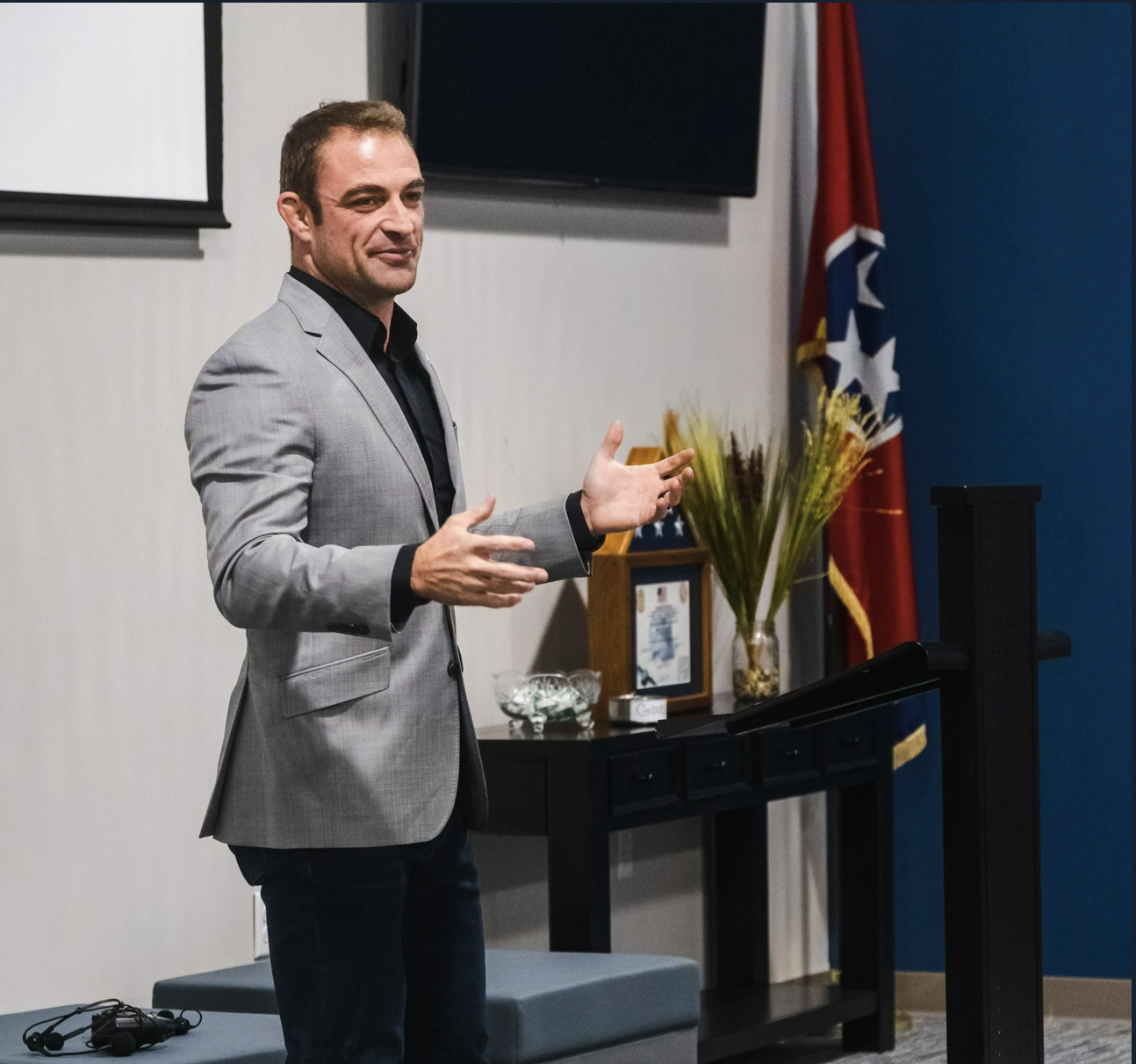
Executive Coach at Novus Global, Leadership Speaker, and Host of the No Limit Leadership podcast
Sean’s mission is to ignite the spark of greatness inside each member of your audience. Elite teams require elite leaders. Sean shares the secrets to creating high-performing teams through mindset mastery and modern conscious leadership.
His leadership foundation was forged as a US Army Airborne Ranger and Special Forces Green Beret Commander, where he earned the respect of his men and chain of command while operating in hostile and politically sensitive environments. Sean brings his unique combination of battle-tested leadership and business experience to life on stage.