

 Apple Podcasts
 Spotify
 YouTube
 Amazon Music
 RSS Feed
  Goodpods
  iHeartRadio
 Leadership With EXPERT Educator: Dr. Stephanie Duguid
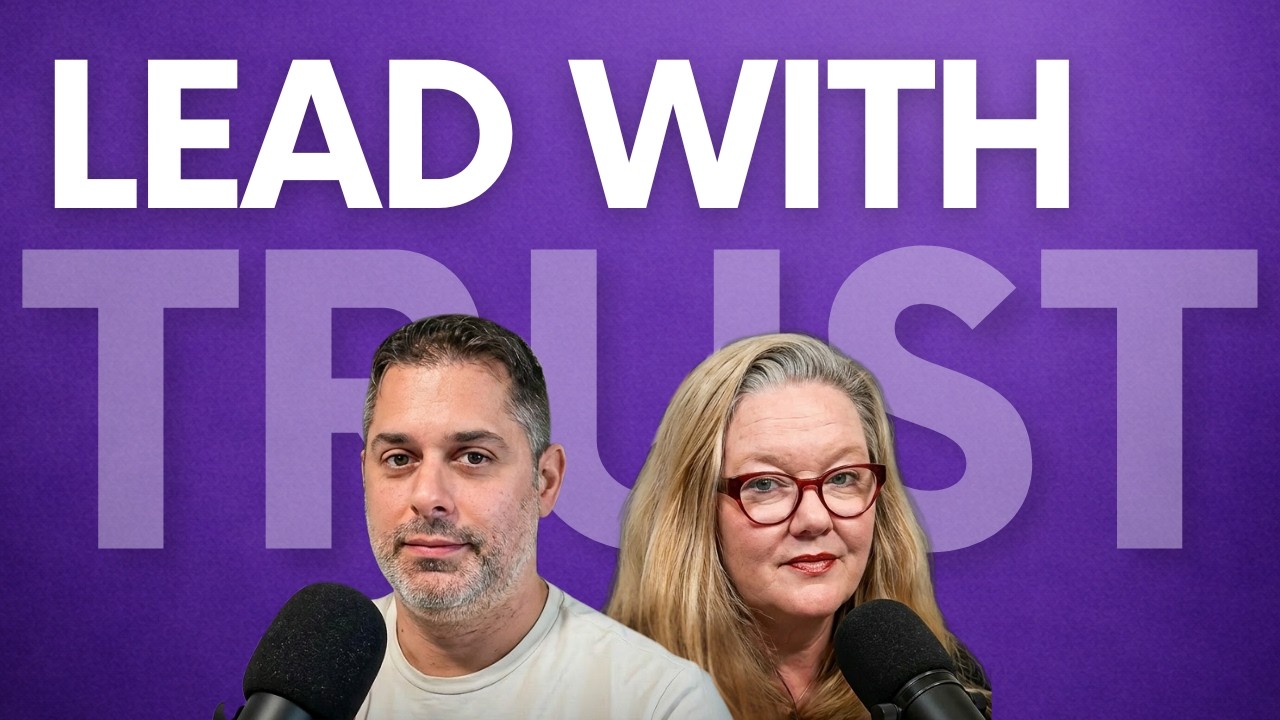


Doctor Stephanie Duguid shares her inspiring leadership journey rooted in her mother's legacy, emphasizing authentic communication, boundaries, and cultural transformation. Discover practical frameworks and leadership tips to overcome burnout, empower women in leadership, and build trust.
Key Topics
- Leadership foundations from childhood experiences
- The importance of authentic communication and connection
- Frameworks for personal and professional growth
- Strategies to prevent and manage burnout
- The role of culture in organizational success
- Women in leadership and overcoming imposter syndrome
- The impact of mentorship and legacy
- Leadership tips for building trust and engagement
Sound Bites
"Leadership begins with growing up in connection."
"Boundaries are essential for preventing burnout."
"Serve with goodness, lead with greatness."
Chapters
00:00 Introduction to Dr. Stephanie Duguid
01:55 The Roots of Leadership and Connection
11:29 The Impact of Personal Loss on Leadership
17:03 A Leadership Framework to Lead Better
22:16 Athletics and Leadership: A Personal Journey
26:36 Burnout and Boundaries in Leadership
28:04 The Shift to Online Education
30:53 Burnout and Boundaries in the Workplace
35:09 Leadership Beliefs and Self-Perception
38:45 How to Have Authority While Maintaining Leadership
42:36 Navigating Leadership Challenges for Women
50:26 Legacy and Leadership Impact
Resources
Website - https://meetdrstephanie.com
John Gordon's Leadership Principles - https://amzn.to/4eqFUeL
Legal Disclaimer
Leonsolutions, LLC, and the content it produces are for educational purposes; your results may vary. No guarantee of results is claimed. The publisher of this content is not responsible for any actions taken or not taken as a result of reading, watching, or listening to our content.
Music Attribution
2SQTYGPJQEWFOIX1
CEDSSM45W26IPJDA
Paul Leon (00:01.236)
Our guest today is Dr. Stephanie Duguid, a leadership cultural strategist and keynote speaker with more than 30 years of experience in education, athletics, and administration.
Throughout her career, she discovered that many organizational challenges, including burnout, disengagement, and turnover, often stem from communication, connection, and culture.
Today, she helps organizations build stronger leadership cultures through clear communication, trust, alignment, and consistency. Her work empowers leaders to create environments where both people and performance can thrive.
Stephanie Duguid, Dr. Stephanie Duguid, welcome to The Manager’s Mic.
Dr. Stephanie Duguid (00:48.962)
Thank you so much, Paul. It’s a pleasure to be here.
Paul Leon (00:51.505)
Yeah. I’m very excited about this conversation because when I asked you if you had any questions you wanted to be asked, I have never had anybody email me such an easy-to-understand document that could help guide our conversation.
I almost fell out of bed last night because I was so happy. I love it. I always believe people win in preparation rather than reputation. That’s a belief I have.
Dr. Stephanie Duguid (01:17.934)
That’s who I am.
Paul Leon (01:34.554)
I have some of your questions here, and I might change some of the wording, but we’re going to start this conversation around where leadership began.
In a lot of your content, you often say leadership begins with connection. Growing up, you accompanied your mother on Welcome Wagon visits, walking into the homes of strangers to help them feel seen and welcome.
What did those experiences teach you about leadership before you even realized you were learning it?
Dr. Stephanie Duguid (02:09.218)
I love this question because it really talks about the foundation and how what my mother did modeled so much.
We don’t always realize that as kids, our environment is the model for what we’re going to become. For anybody who doesn’t know what the Welcome Wagon is, it was an organization that trained individuals in the local community to visit anybody who was new and welcome them.
They would share tidbits, facts, and great things about the community. They were really the go-to person.
My mom graduated from Welcome Wagon School in 1977. I have one of her little Welcome Wagon pictures, and I was four years old. I would go with her on these visits to different houses where she would convert strangers into friends, lifelong friends, in a matter of minutes.
When I saw that, I thought that was normal. I thought that’s just how you communicated with people all the time: building connections and relationships and making people feel seen and heard. They felt like they belonged, and they were comfortable with her. It came so naturally.
As I grew up, I was able to build relationships like that with my friends, teachers, and teammates on the sports teams I played on. I didn’t realize until I was an older adult, especially in my teaching positions, that what my mom taught me helped me become a better educator and administrator because I could connect with people like nobody else could.
I didn’t have classroom management issues. I could teach professional development to anybody. I could have a conversation with somebody as young as elementary school all the way up to a legislator for a state organization or nationally.
Her foundation really taught me how to connect, and that has been the basis of everything I do.
Paul Leon (04:00.939)
Even though it’s been some time since you were part of the Welcome Wagon visits, can you recall any particular visit that has stayed with you throughout your leadership journey?
Dr. Stephanie Duguid (04:14.582)
I don’t know if there was one particular visit because there were so many, but I do remember the way my mom spoke to individuals.
Not only was she the Welcome Wagon lady, but she was also a 40-year educator. When she talked with her students, taught her classes, and interacted with individuals, people just leaned into her because she made them feel safe. She made them feel comfortable.
That’s what I remember most.
I vividly remember that we would have students live with us who had bad home lives so they could finish out their high school career and move on to something else. She would find jobs for students. She would create jobs at our house for students to do little things around the house so she could support them.
She really met people where they were, heard what they needed, and found a way to support them.
Paul Leon (04:53.341)
Wow.
Dr. Stephanie Duguid (05:09.622)
I think that was so unique because, back then, there wasn’t internet. She did old-fashioned phone calls.
I remember she used to sit at this little table in our kitchen area and make phone call after phone call, not with an agenda, but just to check in with people.
She would also write letters, handwritten letters, which I know a lot of people don’t do anymore, but she did it every day.
In fact, she came to visit me in Phoenix one time. She came with two suitcases for a weekend, a two-day trip. One was for clothes, and one was for her stationery, address book, stamps, and everything else. She sat in the backyard and wrote letters for an entire day.
When you take time to do that, people remember it.
I had somebody reconnect with me who was one of my mother’s students. My mother was her elementary teacher, and she had saved a letter that my mom wrote her for 50 years. The date on it was 1972, just before I was born, and she saved it for 50 years. It’s actually one that I have over on my side table.
Paul Leon (06:06.356)
Really?
Dr. Stephanie Duguid (06:18.402)
When somebody connects with you, when somebody takes time to write a letter to you, that means something. I’ve always remembered that.
Paul Leon (06:25.419)
It’s fascinating that you talk about the concept of writing a handwritten letter. If I got a handwritten letter today, I would be scared because of the whole AI cloud.
The reason I’m excited about our conversation is that I have a lot of guests, and I wanted to ask: would you prefer Stephanie or Dr. Duguid throughout our conversation?
Dr. Stephanie Duguid (06:54.576)
You can call me Stephanie. That’s fine. Some people call me Dr. Stephanie. Some people call me Doc. It’s whatever you want.
Paul Leon (07:15.498)
Okay, Stephanie. I know there is sometimes a stigma with people who have a doctorate. I’ve heard you should always ask if they want to be called doctor because of how much work it takes. That’s why I was curious.
I was going to ask your permission because I think it’s fascinating that your mother was a 40-year educator, and she knew how to build deep relationships.
One of your questions here is called “the pallet in the classroom,” and I want to peel the onion around this question. I think it’s interesting and stands out.
You’ve shared the image of lying on a pallet in the back of your mother’s classroom when you were sick. What do you remember about watching her teach, and how did that quietly influence your leadership philosophy?
Pick any examples you want, and even some questions she used to ask, because you said the way she spoke to people mattered. I’m curious if there are any key questions she would ask that you still use to this day.
Dr. Stephanie Duguid (08:06.322)
The pallet in the classroom happened when I was sick. My mom was a single mom, and we didn’t really have babysitters during the day. I couldn’t stay home by myself because I was too young.
We would bring blankets, a pillow, my stuffed animal, and all those things. Behind her desk, between her desk and the chalkboard, we would create a pallet, a place for me to sleep or lie down. I would lie there quietly while she was teaching. I don’t think you could do this anymore.
I would lie there while she taught and just listen. Of course, I was looking underneath her desk, so I could see her move around the classroom, and I could hear the students coming in and out. I didn’t see all the faces all the time, but back then, it was the chalkboard. She would come up to the chalkboard, do some things, and then flow back into the students.
A couple of things I remember: first, there was a lot of movement. She didn’t always stand at the front. She wasn’t always pointing to the board. She wasn’t always telling the students what was going on. She was engaging with them.
She would ask open-ended questions and pause for a response. She wouldn’t give the answer. If a student had a question, she would respond in a way that was so caring. It wasn’t that anybody had a silly question or asked something out of turn. She would always bring it back.
She would move around the room and flow from student to student. She didn’t stay in one area. She didn’t avoid anybody. They all felt they had an equal opportunity to interact with her.
At the time, I didn’t realize it, but that is such an incredible way to manage a classroom.
If you’re always the leader and you don’t interact with the individuals, you don’t really know what they’re feeling, thinking, or what’s going on in their minds. But if you take time to go where they are, you gain different perspectives.
She would say, “Okay, Sally, that is a great point,” and then she would share it with the class. Or she would say, “Sally, would you like to share your idea?”
My mom taught government, economics, and leadership, so there was a lot of interaction and communication in what they did.
The other thing my mom did was, at the end of the year, they had a trip called Close Up, where they took local juniors and seniors to Washington, D.C. Mom was at a huge Texas high school in Stafford, Texas, and she would take these students to D.C.
This involved several high schools, so there were 200 to 300 students who would emerge onto D.C. They were close up to government interactions. They would meet with legislators, go to chamber meetings, tour government facilities, and see all of these things.
Mom didn’t only talk about it in the classroom. She went every single year. It was a week-long trip, and she would show them for real what it was like.
I thought that was such a cool opportunity for students. That’s more common now because people travel all over the world and can see so many things virtually, but back in the 70s and 80s, that was very unique.
For her to have that type of relationship with her students, they kept in touch with her for years.
She would recognize them, too. We were in Washington, D.C., in Union Station, and I was with my mom. We were about to get on a train, and somebody came running down the steps yelling, “Miss Rector! Miss Rector!” which was my mom’s name.
My mother turned around and called her by name. This was a student she hadn’t had in class for about 20 years, but she remembered her. She knew her. She was invested in her. I just thought that was such an incredible gift she had.
Paul Leon (12:21.815)
The way you talk about your mom, I’m assuming she’s no longer with us. Is that fair to assume?
Dr. Stephanie Duguid (12:26.830)
Correct. Yep, correct.
Paul Leon (12:33.518)
I don’t know how long ago that was. I don’t think you ever get over that. I just want to say, I don’t know if it’s too late to say sorry for your loss.
Dr. Stephanie Duguid (12:39.456)
It’s never too late.
Paul Leon (12:49.628)
I’m curious. If your mother were with us today, since she’s such an important part of your leadership and making you the success you are, seeing everything we’re seeing today, what do you think she’d have to say about everything going on?
Dr. Stephanie Duguid (12:56.108)
Let me back up and tell you a quick story about her and when I lost her, and that will answer a couple of things.
I mentioned that Mom taught government, economics, and leadership. She was so involved in the political side in that she was a supporter. She never shared if she was one party or the other because she was in a classroom, letting students make their own decisions.
Whenever we would go to Washington, D.C., my grandmother happened to live there as well. My mom knew the area because she grew up in D.C. and Maryland. We would always go see our state representatives and state senators. One of my mother’s student teachers was our national representative’s wife locally, so she was really involved in politics and saw it from both sides.
Mom was a bigger-than-life Texas woman: tall hair, long nails. When she said she was going to arrive with bells on, she did because she had a bell necklace.
My mother knew I was going to go into education before I did. I was kicking and screaming, saying, “I’m not going into the classroom. I’m going into athletic training, the non-teaching route, just to make sure I’m not in the classroom.”
Of course, my first job required me to teach, and I loved it. So I went back and got my post-bacc degree in teaching.
On the third day of my first real teaching job, my mom sent me flowers. The first days of school are crazy, so I didn’t have an opportunity to call her back. I wouldn’t be able to because she died in a car accident that night. This was August of 2001. I was in my mid-twenties.
At that time, I was thinking, “Oh my gosh, what just happened?” She was 61 years old. Why did this happen to a person who was so good and did so many things for so many people? Of course, she had her flaws, but I choose to remember the good things.
It really hurt my heart that my mom was taken so early.
A couple weeks later, September 11th happened. I happened to be teaching at a school in Arizona where the students were sons and daughters of military personnel at Luke Air Force Base, which was the F-15 jet training center.
As soon as 9/11 happened, their parents were getting deployed. So not only had I lost my mom, but now these kids were losing their parents, meaning their parents were going off to war.
It was a huge dynamic for me.
When 9/11 happened, I realized why my mom had to be taken. In my mind, the way I dealt with her loss at that time was that she needed to be the Welcome Wagon lady in heaven to welcome all the people who lost their lives on 9/11.
For me, when I was coping with her loss that way, I said, “If, in her loss, she can be used for something better, then in her loss, I need to do something better.”
Instead of going into a deep depression and wondering why they took her, I used it as an opportunity to continue her legacy.
When it comes to the political atmosphere, and again, I don’t talk about politics very much, I feel that my mom would be distraught because she cared so much about so many people. The fact that there is this pulling from one side to the other, no matter which side you’re on, she would almost be at a loss in wanting to fix it.
She would want to hear everybody’s sides and what was going on. She was a typical Texas woman, but she was born and raised in the D.C. and Maryland area. She was also a very faithful person.
I think she would have had some challenges with all that’s going on right now, but there would be a lot to talk about in her classroom as well.
Paul Leon (17:32.175)
Yeah. I agree.
I just want to say I invite any feelings you decide to share in our conversation today. It was kind of hard for me because I know my mom’s getting up there. You try to do these podcasts and save face, but it’s hard because I do believe, even though we’ve only had a handful of conversations, Stephanie, that she’d be proud of you. That’s something I’m going to go out on a limb and say.
Dr. Stephanie Duguid (18:02.606)
Thank you.
Paul Leon (18:16.162)
That comes from the heart.
In your questions, because that date changed everything, and she’s leading people into heaven, I believe that can be true as well. There was a framework that came out of it. I was wondering if you could peel the onion and give people that framework from that moment that shifted everything.
Dr. Stephanie Duguid (18:30.510)
When I lost her, as I mentioned, she was my mentor. I lived with her. My parents got divorced when I was six. I’m still close to my dad. In fact, he still lives here on our property with us.
When I lost Mom, I wanted to find another mentor. Of course, you look at all the ones who are publicly out there, like Tony Robbins, John Maxwell, and others, and they were all men.
I wasn’t aligned with working with a man, and I probably couldn’t afford it at that time anyway. I kept thinking, “I need to find a female who could be my support network.”
In my space, as a younger teacher in the classroom during 9/11, there was so much shift and change. There wasn’t really anybody I saw as a mentor, especially not as strong as my mom was.
I finally sat down one day and thought, “I don’t need anybody else to support me right now. Instead of asking, ‘What would Jesus do?’ like some people say, I’m going to ask, ‘What would Margie do?’ which was my mom, or ‘What would Mom do?’”
At that moment, I decided I was going to shift. Instead of going the negative route, I was going to go the positive route.
That was the first step of this framework. I call it Decide, Discover, Defy.
First, I decided to make a change. I was tired of whatever was happening, and I needed to make a change.
Then I discovered. That’s the second D. I discovered that I’m stronger than I realized. By taking one small step at a time, no matter how difficult it was, I found strength. There were all these emotions. I would hear a song on the radio and break down. I would pass by something that reminded me of her and break down. I lived in Arizona, and she mainly lived in Texas.
The loss never goes away. The hole never goes away. Time makes it easier to deal with, but it’s been 25 years, and I still think about her all the time. She’s involved in everything I do.
I had to discover who I was, what I was going to do, and find my journey along the way.
Because I did that and chose to see the positive light out of something so horrible, I defied the odds. That’s where Decide, Discover, Defy came from.
At the same time, that morphed into more. When I was discovering, there was a whole bunch of stuff I was doing. The decide was 10%, the defy was 10%, and 80% was the discover.
As I went through that process and through my professional career, I realized I was sharing some of my steps with others. I became a mentor to others. When I was an administrator at a college and was serving other emerging leaders coming from the classroom into administration, I was using the same framework that wasn’t a framework yet.
That discover piece morphed into something I call the Leadership Dance, which is a whole other series of steps you can go through to figure out who you are as a leader. It takes you through all the steps until you can not only empower yourself but also empower others. There are 10 steps involved.
That all came from my mom being the model she was in my life. As a single mom, with all the obstacles she overcame, she always had a smiling face and always saw the opportunity in everything.
You asked before what questions she would ask me. It was never, “How was your day?” It was, “What is something that inspired you today?” or “How did you support one of your friends today?” It was never a yes-or-no question. It was always more of a conversation.
Paul Leon (22:42.160)
I like that.
Dr. Stephanie Duguid (22:49.686)
She did it in a way that was very respectful and engaging. It wasn’t that she was my powerhouse mom and authoritative. It was a conversation where she respected who I was and respected my answers.
If there was a concern with one of my answers, we would have a conversation about it. That’s how I learned.
That’s what I realized in speaking with anybody else. It’s not about being authoritative. It’s not about pushing your ideas on them. It’s about having the conversation, no matter how challenging it is.
Sometimes it’s uncomfortable, but if you present it in a way where you are truly seeking more information to understand the situation and make a values-based decision, everything changes.
Paul Leon (23:39.741)
Yeah. I love that. I love that framework, Decide, Discover, Defy. I haven’t heard it quite that way before, so I think it’s very powerful, and I like its roots.
I don’t know if I overlooked this, but what athletics were you most passionate about when you decided to go into that? Was there a particular sport, or what were you drawn to?
Dr. Stephanie Duguid (24:09.070)
I’ve always been a very active individual. As a kid, I did dance. In junior high, I was on a national jump rope team. I was in the rodeo as a kid. I was an all-around sub-junior cowgirl and won a saddle as a kid in junior high.
In seventh grade, the first sport you could try out for was volleyball. I tried out for volleyball. I had really good hand-eye coordination, and I excelled at it.
I played volleyball all the time, year-round, starting from seventh grade. When I got into high school, we had club teams. Back then, you had the sport you played, so volleyball went through October or November. Then I played club ball from November all the way through August. Then I would start back with school volleyball again.
I played it all the time, traveled around the state, went to Junior Olympics for a couple of things, and even had the opportunity to play in college. I played volleyball at the University of Southern Mississippi.
I also played soccer. Quick story, which is really funny: I had never played soccer in my life. Never. But the freshman volleyball coach was the varsity soccer coach, and the goalie hurt her knee and had to have ACL surgery.
My coach said, “Hey, Stephanie, you’ve got great hand-eye coordination. Come on out and play soccer with us.”
I said, “I’m not going to run. That’s not my thing. I don’t like running long distances.”
She said, “No, no, no. You’re in the goal. You’re just going to stand there.”
I said, “Okay. What do I do?”
She said, “Keep the ball from going in.”
I said, “I can do that.”
The first ball comes at me, and of course, I pass it out like a volleyball pass.
She said, “No, no, no. You can catch the ball.”
I said, “I didn’t think you could use your hands.”
She said, “Goalies can.”
I think this was my junior year of high school. I was on varsity all four years in volleyball. I finally realized I could catch it. I’m five-foot-nine, so I could cover the goal pretty well.
I ended up making all-district both years I played high school soccer, just because of hand-eye coordination. I don’t know. But it was a lot of fun. I never played soccer again, but volleyball was my love.
With that, I also have a very logical and analytical mind. I love math and science, so I decided to go into athletic training. I didn’t want to go into medicine. I didn’t want insurance companies and pharmaceutical companies telling me what I could and couldn’t do, even at that time.
I chose athletic training to work with active individuals. My first degree is in human performance and athletic training, and one of my master’s degrees is in sports healthcare.
When I look at these things with culture, which you mentioned in my bio, I look at it in a very unique way. I look at the anatomy and physiology responses to culture, stress, and all those pieces.
I look at culture as the intersection of communication, leadership, and wellness. All those things come together. Athletic training and sports medicine were my first love.
Paul Leon (27:16.450)
I love that.
We’re going to get into some stuff around BurnUp and hard truths, but before we do, I hope if people have joined us this far in the episode, they’re asking, “How do I learn more about Dr. Stephanie Duguid?”
Could you share where people can find you and where you prefer to be contacted?
Dr. Stephanie Duguid (27:42.127)
Of course. You can find me at meetdrstephanie.com. That’ll take you to my website. There’s a lot of information there, not only about me, but also a little bit about what I do with organizational cultures.
I started out focusing on mentoring women in educational leadership because that’s where I once was. I have a mentorship program, and I also do a lot of keynote speaking.
No matter how somebody wants to work with me, that is the best place to find me and get in touch with me.
Also LinkedIn. I’m on LinkedIn. I love LinkedIn, so you can find me there, friend me, and we can move on from there.
Paul Leon (28:24.160)
Absolutely. I’ll put the links in the show notes, and for those who are watching, when I edit, there’s usually a pop-up on the screen as well.
You mentioned you grew up in cowboy-type culture. Is this background making you more comfortable?
Dr. Stephanie Duguid (28:38.798)
Partially. Yeah, black hat is what I would have.
Paul Leon (28:46.046)
Okay, this one. I know there’s a brown one for the fall. That’s why I was curious. I used to wear them with guests. The challenge was that one time it messed up, so now I do this so I can hear everything the guest is saying.
I want to talk about burnout and some hard truths about leadership. You’ve spoken openly about burnout within institutions and organizations. What did that season teach you about boundaries? I want to highlight the word boundaries because I think it’s super important: boundaries, values, and self-preservation when it comes to a burnout season.
Dr. Stephanie Duguid (29:29.826)
This is such an important topic.
When we look at this, and it doesn’t have to be just educational institutions, this can be anywhere.
When computers came out, and I’m kind of dating myself, I was in the world before there were a lot of computers. It used to be just a couple of data points, and that was it.
When computers came out, we thought they were going to be such an asset and give us more time back. But as we’ve developed and there has been so much more, it has created a challenge with time because you’re expected to do more because you have access to the technology.
Fast forward to COVID in 2020. We were clicking along. Everything was normal. Yes, we were stressed. But when COVID happened, there was this abrupt shift in the way institutions were run.
I’ll go back to the educational institution. Before, it was: let me meet with my students, do things in person, put some things online, submit grades, submit attendance, have interaction on the website. In general, that’s pretty much what you did.
But when COVID happened, we went from, and these are random numbers, not specific, about 30% of people online to 100% online in a day.
Paul Leon (30:59.154)
Yeah, that was crazy.
Dr. Stephanie Duguid (31:00.654)
Shifting everything in such a massive form was draining. You were expected to create everything in a matter of a day, maybe a week, because you had to have a little bit of leeway.
Once that happened, it didn’t stop. Since 2020, everything is now online. There are new opportunities, new resources, new tools, and new everything. Something is always better than the next, and something is always competing with the other.
Because of the technology, some people are leaving because they don’t want to deal with it. Maybe they’re old school, or they just don’t want to deal with it. They want to do things their own way. Others are confused by the technology, so they’re frustrated.
But when people leave, those positions are not being rehired because leaders think, “We have the technology to take care of that position.”
Now you have individuals who were already overworked and overwhelmed, and you are not rehiring individuals. Or you don’t have the right people in the right places in the organization. That causes stress and burnout.
Meanwhile, leaders are still focused on the data and output. What’s our graduation rate? What’s our attendance rate? What’s our success rate? How are the class grades? What’s the interaction with online activity?
All of these data points become blinders to who is creating the space. We are so focused on policies, procedures, data, politics within the organization, and all those other things that we forget about the people.
When you talk about burnout, people don’t feel heard. They don’t feel seen. They don’t feel appreciated. They don’t feel like they have enough time, and that is continually getting worse.
Even if you had a culture before COVID where maybe the leader wasn’t very engaging, it was okay because people had the opportunity to collaborate with others, share experiences, and have interactions.
But now it’s almost head down to the grind. We can’t do any of those other things if the data points aren’t there. It’s all about accreditation. It’s all about output. It’s all about success.
When you talk about burnout, because of the stress, individuals feel overwhelmed. They feel like they can’t be creative. They feel like they can’t really breathe in their space, and they’re taking extra time away from their family.
If they have health issues, they have to deal with them, but then they miss work, and that causes a whole other range of issues. So it’s a very big thing.
When you talk about burnout and boundaries, it’s being strong enough to realize that you have to have boundaries.
If you have the opportunity to leave at, let’s say, five o’clock, but you have a big project due, can the project wait?
I was really bad at this. I have to admit, I was very bad at this. I would stay late after hours. I would get there early in the morning because I thought I had to for my job.
Paul Leon (34:24.279)
Yeah, I can relate.
Dr. Stephanie Duguid (34:25.464)
But what I realized is that if I wasn’t there, they’d replace me.
Paul Leon (34:34.199)
Yeah, I agree.
Dr. Stephanie Duguid (34:34.846)
Even if I wasn’t there, they would replace me.
I had young kids at the time, and I started to feel pressure from above saying, “Hey, this has to get done,” or, “We need to do all of these things,” or, “This is what you need to do, and I don’t have to tell you why. You don’t have to understand the why. This is what you have to do.”
That started weighing on me very heavily.
When there were changes in the leadership space, I felt that the newer leaders didn’t share the same values I did. I was there for the students. I wanted to make sure the students had everything they needed, promote the students, and support the students. That’s the whole reason we were there.
In my opinion, when the values of those I worked for shifted, and it became more about them and their name on something rather than the reason we were there, I realized there was a disconnect.
I feel that your values have to be in line with where you are. If they’re not, then you need to have a deeper conversation with yourself.
That also connects to boundaries and self-preservation because I wasn’t taking care of myself either.
You only have one body. If you don’t take care of it, where are you going to live?
Paul Leon (36:02.818)
I can relate in some regard.
I remember I made a mistake years ago. In corporate settings, sometimes they’ll have an annual HR call. You’re probably familiar with this on some level.
I remember I was going through a really challenging time in my career, and I had an outburst. Not really an outburst, but I was really mad. I don’t know if you’ve ever been in a meeting where you felt like, for some reason, you had to hold court.
I want to be very clear: what I’m going to say here was a mistake I made, Stephanie. I don’t recommend people do this. This was a “bad, no, don’t do that, Paul Leon” moment.
Afterward, the leader I was reporting to and I met, and I started the meeting with, “Hey, I’m really sorry. I know my communication in this meeting was poor.”
He had a conversation with me that was very uncomfortable, but I needed to hear it.
He said, “You’re just part of the system, dude. When are you going to get that in your head?”
I remember that moment. I don’t think he was saying it from a place of, “I hate you,” or, “I don’t like you.” I think he was saying it from a place of, “Thank God you’re here. Accept it.”
We’re in a time of dramatic technology change where it almost seems like biology is taking a back seat. Some beliefs are going to have to change in society if people leadership is going to stay top of mind.
What’s one leadership belief you once held that you no longer believe, whether it relates to this time or just in general?
Dr. Stephanie Duguid (38:13.836)
I used to believe that if you did your job well enough, you couldn’t be replaced. I really did. I believed people would appreciate you for what you were doing.
They don’t. They don’t.
In the space where I was, at a college, I was over 10 divisions, had a whole bunch of people working for me, and was involved with three different campuses and a lot of different things.
When I came into that space, I was faculty before I became the dean. By having that experience, I knew what the other faculty members I now oversaw were experiencing.
But I also went from being a peer to a supervisor with many of these individuals. There was a shift in our dynamics. For some, that was really challenging. For others, they said, “Okay, she cares about us, but she’s still going to hold us accountable because we know who she is.”
I always say I’m CDO. Have you heard of that?
Paul Leon (39:23.693)
I’ve heard of OCD, obsessive-compulsive disorder, but not CDO.
Dr. Stephanie Duguid (39:38.479)
CDO is OCD in alphabetical order, as it should be. It’s just me being overly OCD.
People knew I was like that. I follow the rules. If I say to be here on time, you should be 10 minutes early. Those types of things.
I hold people accountable. But there is a difference between holding someone accountable and holding someone accountable with love.
You can hold somebody accountable by saying, “You were late. You can’t be late again.”
Or you can say, “Hey, I noticed you were late this morning. Is everything okay?”
Maybe they had an emergency with their family that morning. Maybe they had a car accident on the way. You don’t know unless you create the opportunity to hear it.
Some leaders make assumptions. They only have their perspective in mind when they speak to you. Instead, you can say, “Hey, this is the situation. I hope everything is all right.”
Then you get the rest of the story, and you can support that individual.
If they say, “No, I was just running late,” you can say, “Thank you for letting me know. Hopefully, we see you on time tomorrow.” Nonthreatening. I’m not going to write you up for one time.
When those things happened, I realized that because of the way I treated those individuals, we became almost like a family. We would support one another. If somebody was out, somebody else would cover without question, without asking to be reimbursed or compensated.
If something happened and there was a mistake, people would jump in to help each other because that’s what we had developed. You weren’t on an island. You weren’t on your own.
But there was a huge divide between those individuals and some of the other departments, or even above, because they could feel the difference.
In one space, people felt free to share their thoughts and information. In another space, people were scared to say anything because somebody might snap back at them.
The belief I no longer hold is that people can’t be replaced and that appreciation is just a natural part of doing good work.
I made a point as a leader to appreciate individuals, even if it was a small “thank you” or “great job on this report,” where other individuals and departments didn’t. That made a huge difference.
Paul Leon (41:50.967)
I love that.
You use the phrase authority without armor. We may have already peeled the onion around this in some of what you’ve shared, but is that what it means? What does that mean personally, especially for women who may feel they have to harden themselves to be more respected in the workplace?
I know I’m not a woman, but I’ve had a lot of female guests, and I’m noticing that pattern recently.
Dr. Stephanie Duguid (42:18.886)
Yes. In education specifically, and again, that’s where I’ve been for 30 years, you notice, and these are random numbers, that 90% of faculty are women and 10% are men. But if you go to administration and presidents, 90% are men and 10% are women. It flips along the way.
What I’ve found is that the women who get to that point often feel they have to become very masculine. You can see how they shift from where they were to where they are. A lot of times, they have that masculine output, if you will. Not all of them, but a lot of them.
Authority without armor is similar to what I mentioned before. You can have conversations with individuals where you have expectations with love and accountability with love.
Jon Gordon talks about this all the time: when people know you care about them, they’re going to move mountains for you. They’re going to do anything they can for you.
Authority without armor is really about the communication side. When you’re in a manager or leadership position, a lot of times you have to have difficult conversations.
Authority without armor is asking: how do we have that difficult conversation without getting our guard up, without putting on that mask or shield, and without trying to block anything that comes our way?
How can we have a conversation where we ask, “Help me understand,” or “How can I support?” or “What is your next step?” or “What do you feel you should do?”
There are conversation starters you can use in difficult conversations to help you respond to individuals rather than react. When you respond, you’re trying to get more information. When you react, you’re making assumptions and pouncing on somebody.
It also encourages you to think about your voice, tone, body language, and all those other pieces.
You heard me say earlier, “Why are you late? I can’t believe you’re late today. This is your third time.” That’s one way.
Or I can say, “Oh my gosh, why are you late? I know this is your third time, but are you okay?”
Similar words. Different tones. Different meanings.
Authority without armor breaks down communication patterns. It is not only about your words. It is also about your hand signals. Are you closed off with your arms crossed, or are you open and willing to receive?
Then there is the environment. A lot of people don’t consider where they are having a conversation.
In my office, I had a large rectangular desk, one of those really big desks that went all the way around the corner. If somebody came in, they felt like they were in the principal’s office. If I was sitting and they were standing looking down at me, or if I was standing looking down at them, there was this big barrier.
When we were just having a conversation, or I needed to have a conversation without angst and anxiety working in, I would move over to a small round two-person table. That showed we were on equal playing fields. Their guard came down. The stress came down. We could have a better conversation.
Authority Without Armor is about how to communicate and all aspects of communication. It also includes how to interact with people in meetings, because there are ways to run meetings that can make a huge difference so they are nonthreatening but still very productive.
Paul Leon (46:00.187)
I like that. Those concepts and ideas are subtle, but they make such a huge impact.
I know we’re coming up soon on our time, and I want to go a little deeper into the heart of your work, if that’s fair.
Right now, there’s a lot of data coming out about AI. I hope this word salad doesn’t confuse you, and if it does, I invite you to push back and say, “I’m unclear. Say it again.”
I’m seeing a lot of data and news about turnover, layoffs, and organizational shifts. People who have worked at companies for sometimes 17 years are getting cut.
Earlier, we were talking about women. I sometimes hear from women in leadership positions that they have to be more careful, that they have to avoid “resting you-know-what face,” and things like that.
When women come to you doubting themselves, and I’m going to ask you this because I can’t answer this question, it wouldn’t mean anything coming from me as a guy: what do you see in them that they often cannot see yet?
What are three things, if you had to list them one, two, three, for women?
Dr. Stephanie Duguid (47:42.626)
What they’re experiencing when they have doubt about who they are?
Paul Leon (47:46.947)
Yeah. You’ve talked a lot about women in the workplace, and I always find this such an interesting topic.
For me, there was a time in my career when I reported to a woman. I’m going to share some of my feelings, if that’s okay.
Dr. Stephanie Duguid (48:05.526)
Of course.
Paul Leon (48:09.946)
I dedicated over 60 appointments to a therapist trying to get along with the situation because I believed I was the problem. I believed I was the mistake in the workplace.
I was told statements like, “You need to fix your face.” When my daughter was in the hospital, and I tried to tell this person, I was cut off mid-sentence and told, “Your daughter doesn’t really matter to me. Keep your personal problems to yourself.”
These were very intense statements I heard. Very scary.
This was years ago. I’m on the other side of it. We’ve both grown. Our careers are going in better directions. I’ve got my MBA.
But part of the reason I do this podcast sometimes is to help that one new leader, man or woman, who doesn’t know what they don’t know yet. I don’t feel like I can speak to women as well on this subject matter, which is why I’m challenging you with this frame.
Dr. Stephanie Duguid (49:22.786)
Three things come to mind, and I’m sure there could be more, but I’ll start with the first three.
The first thing I would share is that not all women, and not all leaders, are good leaders. Some people are there for the right reasons. Some people are there for the wrong reasons. Some are there for the right reasons but are horrible at the job. Some don’t want to be there but are really great at the job.
There is a whole spectrum.
For instance, and this is just an exaggeration, Hitler was a good leader, but he did horrible things. There are people on the opposite side, too. There are teachers who are not very good leaders, but they really care about those they work with. So it’s finding that dynamic in the middle.
The first question I would ask the leader in that space is: are you there because you are self-serving or because you are selfless?
Are you doing it because you want the position, title, and power? Or are you there because you care about individuals, want to serve the mission of where you are, and want to support others in their journey?
That’s the first question.
If you are a self-serving leader, you’re not somebody I can work with unless you’re willing to shift. That person you were speaking of sounds self-serving and narcissistic. I see it right there.
But if you’re the person who says, “I need to change. I really enjoy doing this. I want to support others,” and they see themselves as selfless, then I would put them in another category. That’s absolutely somebody I would want to work with.
The second thing, especially for women getting into leadership positions, is that a lot of times they don’t feel like they deserve it or don’t feel qualified enough for it. A lot of times, that comes across as imposter syndrome.
You don’t feel deserving. That comes from a history of women being told they have to be one thing or fit one mold. You’re the teacher. You’re not the leader. You’re not in charge. You’re the teacher, the nurse, the social worker, or whatever it might be.
Over the years, because of most women’s ability to blend leadership, multitasking, empathy, and all these other pieces, they are usually the perfect type of leader to step into some of these places.
I encourage them to do an activity called Own Your Greatness. Write down everything great you’ve done.
I don’t mean it has to be big like an award or celebration. It could be, “I got out of bed five days this week and didn’t hit the snooze button.” “I got my kids to school on time all week.” “I got up three days this week and went for a jog or went to the gym.”
Start writing those things down and keep a running list. I’m not talking about a resume, just a running list of all the great things you did.
Then take a break from it and come back and read it with energy and power as if you’re reading about somebody else. You’ll say, “Oh my gosh, that person is freaking awesome.”
And that’s you.
So take that step. Make that application.
Most women don’t apply for something unless they have all the skills and qualifications. Most men will apply even if they only have 40% of them because they’re willing to take that step.
Get out of your comfort zone and take that step. Just one time.
The first thing is being a selfless leader. The second thing is working on imposter syndrome.
Everybody suffers from this. I’ve suffered from this. I still do in certain cases and situations. Most women suffer from it, and even men do.
The last thing I would say is to wear your own shoes. That is a piece of advice the chancellor of one of the Arkansas universities shared when I had her on my show.
So many people get into positions and try to copy those who came before them or those they’ve seen in a similar space somewhere. But you are not that person. That is not who you are authentically. That is not your authentic self.
You wouldn’t want to wear somebody else’s shoes. They probably don’t fit. They’re worn differently. They have a different heel and different soles.
When you step into leadership, wear your own shoes and develop the culture and environment you would want to be part of.
Become the leader you always wanted to have. Don’t become the leader people want to run away from.
If you’re the latter, just because you have the term leader doesn’t mean anybody is following you. The person who is the leader is the one without the title and accolades that people are following because they want to be around that individual because of the positive influence they have.
Paul Leon (54:29.948)
Amen. Well said.
To piggyback on something you said earlier, for women who may be hearing this and struggling, just remember, I don’t know of any women Hitlers, so you’re already winning. When you think about it, the guys are losing in that comparison.
I want to end on legacy. I think it’s important.
When your career is complete, what do you hope people say about you, how you led, and how you made them feel when it’s all said and done?
Dr. Stephanie Duguid (55:08.194)
I want them to say I lived by my name. I’m Dr. Duguid. I want them to say I supported others, encouraged others, and walked as I hope they see that I choose to walk.
I want them to say I continued my mom’s legacy of supporting individuals and making them feel seen and heard.
My goal is to empower women to transform cultures so that people want to stay, where it’s an environment where they feel trusted and safe.
I want to continue serving people with goodness. I always say, “Serve with goodness. Lead with greatness.”
Your goal is to serve others for the goodness, then lead them through to reach greatness.
Paul Leon (56:00.475)
I love that.
We’re coming up on the hour. I thought this was really good so far. I’m going to pause here because this is the moment where you tell me if there is anything you wanted to be asked that you didn’t get asked.
Overall, one to ten, ten being we’re doing well and one meaning we’re still missing some gaps, how did this conversation go, Stephanie?
Dr. Stephanie Duguid (56:27.116)
I don’t think we’re missing any gaps.
I feel like my whole thing is that I come from a place of caring. I come from a place of wanting to support others.
I started in a place of supporting women in education through my years and just after I left the educational space, but that has really morphed into culture.
I encourage those who are in leadership positions to be proactive and explore your culture.
If you walk into a room and people are excited to see you, their conversations continue, they have questions for you, there’s interaction, and you feel welcome, then you probably have a pretty good culture.
But if you walk into that space and it’s dark and dreary, somebody walks the other way, the conversation stops, or you don’t feel like you belong, then there’s probably something wrong with your culture.
The key is that you have to be the leader willing to hear that and see that.
I encourage you, if you’re willing to be proactive, reach out to me. I have something called a Culture Pulse Check that can give you amazing insight in a matter of minutes with your individuals.
Or better yet, take one person out to lunch off-site, out of the building and away from everybody else, and have a conversation. Ask them, “How are you enjoying your job?”
The key is to listen without defending. Just listen and be willing to receive. Once you do that, you’re going to find out so much and have much more insight into what’s going on in your organization.
Paul Leon (58:18.198)
Amen to that.
Okay, this was very good. I like this conversation. There were some questions I didn’t get to ask you, and I apologize for that.
Give me 30 seconds to hit stop unless there’s another question you want me to ask you. Good?
No, you crushed it. You’re the best. Alright, hold on. I’m going to hit stop.
Dr. Stephanie Duguid (58:31.926)
I am good.


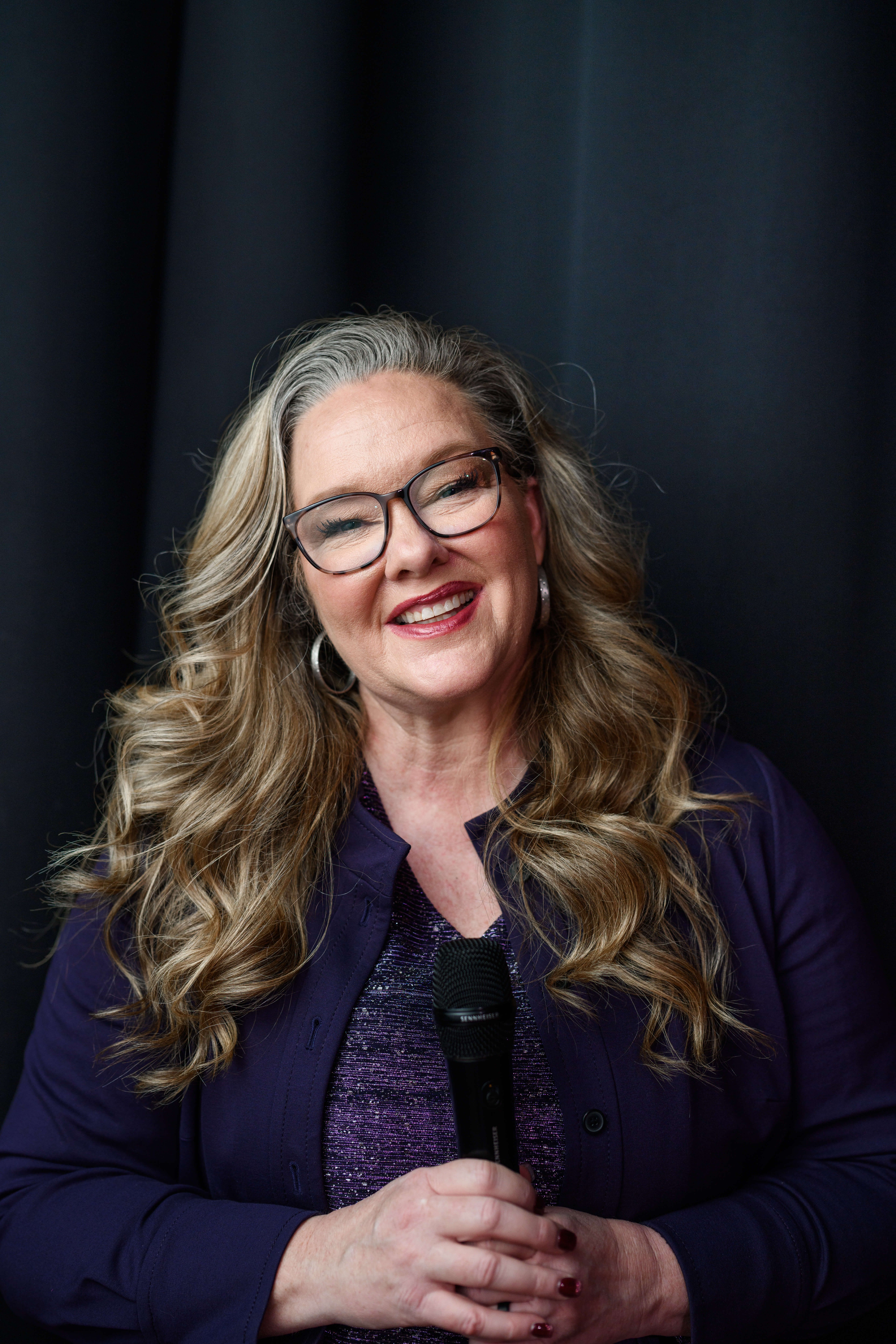
Leadership Culture Strategist
How can leaders transform not just their leadership—but the culture around them?
We’re joined today by Dr. Stephanie Duguid, a leadership expert who specializes in cultivating cultures of authentic leadership. She partners with organizations and small businesses to strengthen communication, navigate conflict with grace, and build impactful teams where trust, connection, and performance thrive.
With over three decades of experience as an educator, athletic trainer, and administrator, Dr. Stephanie brings both strategy and heart to her work. She is especially passionate about supporting women in leadership to serve with goodness, lead with greatness, and cultivate cultures of authentic leadership.
She holds a Doctorate in Educational Leadership and has received numerous honors in the field. She is also a keynote speaker, podcaster, and bestselling author of Exponentially Elevate Your Leadership Impact. Her mission is to not only provide purposeful strategies—but to honor her mother’s legacy by helping leaders create meaningful impact through the cultures they build.