
 Apple Podcasts
 Spotify
 YouTube
 Amazon Music
 RSS Feed
  Goodpods
  iHeartRadio
 Pizza Chef to Millionaire (Gino Barbaro's Wealth Journey)



How do you build wealth without losing sight of what matters most?
In this episode of The Manager’s Mic, Paul Leon sits down with entrepreneur, investor, and bestselling author Gino Barbaro to discuss money, legacy, leadership, faith, and family.
Gino shares how he went from working in a family pizza restaurant to helping build a real estate portfolio with more than $300 million in assets under management. More importantly, he explains why true wealth is about more than money.
The conversation explores money mindset, financial habits, limiting beliefs, family values, entrepreneurship, and the lessons Gino learned while building businesses, raising six children, and creating a lasting legacy.
Whether you’re just starting your career, growing a business, leading a family, or working toward financial freedom, this episode offers leadership tips to help you think differently about money and success.
About Gino Barbaro
Gino Barbaro is an entrepreneur, investor, certified money coach, bestselling author, and podcast host. Through Barbaro360, he helps families build lasting legacies by improving their relationship with money, family, and personal development.
He is the co-founder of Jake & Gino and has helped grow a multifamily real estate portfolio with more than $300 million in assets under management.
See a few of the resources, Gino recommends
Happy Money, Happy Life, and Happy Legacy - https://amzn.to/4a2BYhN
The Richest Man in Babylon by George S. Clason - https://amzn.to/4vbSp3H
Men are from Mars, Women Are From Venus - https://amzn.to/43Nfwpl
See Gino’s Barbaro Website
https://barbaro360.com/about-us/
Chapters
00:00 Trailer and Introduction to Gino Barbaro
01:58 The Importance of Legacy
04:14 Building a Strong Financial Foundation
10:05 Understanding Money Archetypes
16:10 The Role of Faith in Wealth
21:14 Overcoming Personal Gremlins
31:55 Finding Faith in Difficult Times
33:00 Secrets to a Lasting Marriage
36:34 Understanding Family Dynamics
39:32 The Immigrant Experience and Its Impact
43:22 Wealth vs. Riches: Building Lasting Wealth
47:16 Defining Legacy and Its Importance
Subscribe to The Manager’s Mic For Leadership Tips
Leonsolutions, LLC, and the content it produces are for educational purposes; your results may vary. No guarantee of results is claimed. The publisher of this content is not responsible for any actions taken or not taken as a result of reading, watching, or listening to our content.
Paul Leon: Gino Barbaro. Did I say your name right, or did I say it wrong? Gino Barbaro. Did I say it right?
Gino: You did. You nailed it on the first try. Everyone is always saying something like Barbaro, Barbarinski. It is Barbaro. You rolled it off the tongue, my friend. How are you doing, brother?
Paul Leon: Barbaro. Good. I love it. I have been studying your background. You are an investor, money coach, entrepreneur, and podcast host. As an entrepreneur, you have grown a real estate portfolio to over 1,900 multifamily units and $450 million in assets under management.
What I like about your mission, Gino, through Barbaro360, is that the goal is to empower families to build lasting legacies by focusing on restoring traditional values in family life and finance and helping families create a healthier relationship with money. Also, you are the bestselling author of Happy Money, Happy Life, and Happy Legacy. You reside in Florida with your beautiful wife, Julia, and your children.
Gino, welcome to The Manager’s Mic. I am happy to have you on the show.
Gino: Paul, thank you for having me. As the listener hears that, they might say, “That is really impressive.” But you know what is more impressive than that? Being married for 27 years and having six kids. I give my wife a lot of grace. I give her a lot of credit. I think that is probably the biggest accomplishment I have had. We have had 27 amazing years. There have been some rough ones wedged in between, but overall, it has been an incredible ride. Thanks for having me on.
Paul Leon: I have been looking forward to this conversation because I was watching some of your content, and I saw you had an interview with one of your boys. I thought that was really cool. My son is now 10 and is starting to scratch the itch on what content development means. I just thought how cool that would be one day when we are at a point where he is comfortable enough with his dad to do that.
What is important to Gino today in 2026 before we get into our core topic? I am putting you on the spot, so you did not know this question was coming. Running a family as big as yours and a portfolio of $450 million, what is important to you in 2026 that will help most people in their entrepreneurial journey?
Gino: This question has obviously changed over the last several years for me, and it has probably changed for the listener too. The most important thing for me right now, I would have to say, is to help establish and continue to create legacy.
Legacy is not something that you leave behind. Legacy is something that you actually activate today. Let me say that again. Legacy is not something that you leave behind, whether it is financial or otherwise. It is something that you activate today.
If you take it from that mindset, then everything you are doing matters. Starting a podcast with your son, for example. Twenty years from now, I am hoping and praying that my grandchildren will be watching that podcast and saying, “Wow, Grandpa Paul was rocking it with dad. They were talking about money.”
From the financial aspect, it is important for me to teach my children to become financial stewards of these resources. Ultimately, they are not really our resources. I think everything belongs to God. He gave me the intelligence, the wisdom, and the knowledge to steward these resources. Now it is incumbent upon me to pass them along to my children.
And not only the financial resources, but also the values I have instilled in the family, the faith that we have, and the intellectual capital of our family. Every child is unique. I want every child to focus on what their human capital is, what they are really good at. That is what I want my legacy to be. Not just passing them a ton of money, but allowing them to learn how to continue to perpetuate the legacy by earning money, shining, adding to the legacy of our family, and continuing to expand it.
Paul Leon: I think that is a very powerful mission. I want to peel the onion with you around this. I know one of the clips I was watching broke down the history of money, and I feel like that will go into our topic on scaling a mutual fund portfolio.
My wife took a business class, like a finance and budgeting class, and this is going to be really embarrassing to admit to you, but even when I took similar classes in my late thirties, there were still topics where I felt like I had gaps. This was before I finished my MBA. Even after finishing my MBA, I would still say I am always learning about the skill of money.
What are some baby steps to scaling a mutual fund portfolio? Someone who has done $450 million has obviously had some pain in achieving that result. But let us talk about the steps that any new professional in their career might be able to start doing today or next week to get on the right track. What would you say to that?
Gino: I am going to answer this by zooming out first. I will answer your question specifically about money, but I also want to get into the emotions of money, the fear of money, the shame of money, the scarcity of money, and the regrets we have. We all have financial flashpoints or memories that are affecting us today, and we do not even know it.
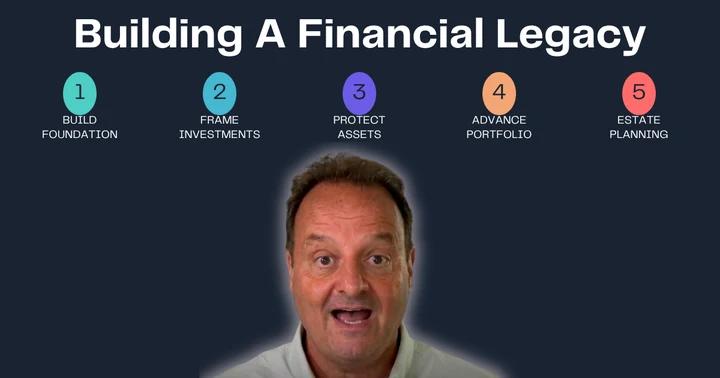
So let us talk about building a house. I am a contractor building a house. What is the first thing a contractor needs to do? Build a strong foundation. That is what you, as an investor, need to do. You do not go out and start a business right away or invest in stocks without having a foundation built.
Because what happens is, you may get lucky and make money, but after three months, or after six months, or after interest rates rise, or after a war starts, or whatever happens, you lose the money and say, “It was bad luck.” It was not bad luck. It is that you built the house too quickly. You did not build the foundation.
The foundation is step one. What is in that foundation? First, an emergency reserve. You need to have money set aside. Before you go and risk money in a risky investment, a mutual fund, a real estate deal, or a business deal, you need to have money set aside.
There are some other things in that foundation too. You need to understand your relationship with money and how you feel about money. You need to explore that because you may be self-sabotaging without even knowing it. Once you have the emergency fund and that understanding of your relationship with money, then you can start educating yourself. That is all in the foundation.
I made a huge mistake when I started investing. I did not have the foundation. I jumped all the way to what I call stage four.
Stage two is the framing of the house. You are putting up the two-by-fours and the two-by-sixes. That is when you can start investing a little bit of money.
And in stage one, I forgot to mention, you need to start creating habits that are going to make you successful. You need to learn how to live within your means. You need to learn how to save money. If you cannot save money, you will never be able to invest that money. So stage one is really important.
In stage two, now that you have those habits, that understanding, and a little bit of experience, you can start investing in mutual funds. You can start building your cash management system, your budget, understanding income and expenses, and learning how business really works. This is the stage where you dip your toe in the water.
Stage three is the windows, the doors, the siding, and the roof. That is the insurance. That is the protection of the house. In stage one, you may learn about home insurance and car insurance, but that is not really the focus. As you start buying and investing, now you have to start learning about umbrella insurance. You have to make sure you have enough life insurance and enough general liability protection. All those questions about protection become important.
You cannot put on the windows and the doors unless you have the framing and the foundation.
Stage four is all about the mechanicals: HVAC, plumbing, lighting, and electrical. That stage can be thought of as when you move into real estate, alternative assets, business, self-storage, or single-family homes. You can do it at stage four because now you understand cash management, you have good habits, and you have protection around your investments. If you skip to stage four without the earlier stages, the house ultimately crumbles because you do not have the foundation in place.
Stage five is the landscaping and the finishing touches: the walkway, the pavers, the things that really make the house complete. That would be estate planning, asset protection, LLCs, trusts, and advanced tax planning. You are not going to do that at stage one because you do not yet have the experience or the need. You may be learning about it then, but it is really a stage five skill.
If you are looking to scale as an investor, I know it is hard to hear this because most people just want to rush right out and start investing. But you really need to build the foundation. If a contractor rushes the house, ignores the blueprints, and goes out of sequence, we all know what happens. We get a house that does not last more than two or three years, and it has problems. I hope that illustrates the steps I think a person needs to take to be able to scale a portfolio.
Paul Leon: Right. No, I like that. As somebody who works in the home improvement space, although for a backup power company, I actually like your analogies a lot because a lot of the small businesses I have worked with are HVAC companies and electricians.
I would argue, from experience, that blue-collar workers sometimes understand saving money more organically than white-collar workers. I am not trying to compare and say blue-collar is smarter than white-collar or vice versa. I just think there is overlap there.
Among your clients, what are some signals you see that tell you this person has bad money habits? If they do not start fixing those habits, they are going to end up broke, poorer, and further away from wealth. What are some common habits you see that, if people do not change them, will send them in the reverse direction? Let us talk about the pain.
Gino: This is a great question. I love this because I am going to use another analogy. This is something we learned in money coaching. They are called money archetypes.
An archetype is a character in your mind. It is a way for you to process information and make decisions around money. There are eight archetypes.
Picture yourself driving a car. The person driving the car is the warrior archetype. The warrior is the one who gets things done. You and I had 10 minutes to figure out this podcast and get on Riverside. The warrior says, “We are going to make it happen, Paul. We are not going to quit. We are going to figure out this VPN thing.” That is who you want making your money decisions. They are not going to make hasty decisions. They are going to work hard, build the foundation, and do what is right when it comes to money.
Next to the warrior in the passenger seat is the magician. The magician archetype says, “Okay, Paul, we know what you really love. We know what you are passionate about. We are going to keep you on track.” The warrior is going to work really hard, but the magician understands your why and your soul’s purpose. When you put those two together, and you are making decisions for the right reasons, it is like pouring gasoline on a fire.
In the back seat of the car is what we call the creator-artist. In me, the creator-artist is like the opera singer. You need that type of energy because it lights you up. You need to be creative, whether that is shooting guns, going fishing, having a garden, painting, drawing, singing, or whatever it is. We all need a little of that to come out because it inspires the warrior. You do not want the creator-artist making decisions about money. That is what you do not want. But you do want it inspiring the warrior.
Now, in the trunk, you have the other five archetypes. None of them are inherently good or bad, but each has a shadow side.
One that I displayed in a negative way was the tyrant. The tyrant is demanding, overbearing, fearful, and controlling. It comes from fear and scarcity. It can work in the short run, but in the long run, if the tyrant continues to make money decisions for you, you are going to burn out and turn people off. You do not want to live in fear and scarcity when it comes to money.
The next two really lean into your question: the fool and the innocent.
The fool can be great because you need optimism and fun sometimes. But if the fool is driving the car and making every decision, it becomes, “Ooh, crypto. Ooh, single-family homes. Ooh, shiny object.” You need the warrior to evaluate those decisions. If the fool is making every decision, that is not good.
The innocent is the one who does not want to know. They stick their head in the sand and say, “I do not care. I do not want to know anything. I am not going to open my checking account. I am just going to keep my money in savings.” The innocent is not going to do well when it comes to investing.
Then there is the victim. “Woe is me.” We have a lot of victims in this economy right now. And I know because I was one back in 2008 when I started. But if the victim is making your money decisions, they are going to make terrible decisions. Victimhood may be understandable for a little while, but if you continue to blame your circumstances on external factors, your life is not going to get better.
There is also the martyr. The martyr is compassionate, wise, and giving. But at a certain point, they may also self-sabotage. They may give because it makes them feel good, and they may expect something in return. Like every archetype, there is a shadow side.
Ultimately, I like to say keep those other archetypes in the trunk. Let them pop out every now and again, but make sure your money decisions come from the warrior. A lot of people let the fool pop out and say, “I have ten grand. I need to go buy a deal.” That is what I used to do. But when you do that, the house crumbles.
Paul Leon: I like that frame. I have not heard it explained that way before. So the warrior is the one you want driving, and the magician is in the passenger seat, if I heard you correctly.
Part of your teaching is about having a value-based decision-making framework. I want to go a little deeper and maybe bring the archetypes back into that. Is there an archetype most people naturally flock to if they know nothing about money, in your opinion? And what archetype would you say you were before the $450 million portfolio, and then what archetype did you have to become to get the results of scaling 1,500 units in less than five years and a $450 million portfolio?
I am just going to make this up as an example. I am not saying this was you. Were you the victim archetype and had to become the warrior? I am asking very transparently about your journey, even if you did not know those terms at the time.
Gino: Paul, I was all of them, baby.
This is important for spouses too. When I got married to my wife, we were completely different. If you want to have a little exercise and a little fun, I would say that in my opinion, the fights we have as spouses are not usually really about money. We argue about money, but that is not the root cause. There are behaviors, feelings, and attitudes underneath the argument.
When my wife and I got married, I came from a more entrepreneurial household. I was the one who learned how to save, set goals, and think about money. I was driven. I knew more about money. My wife, on the other hand, came from more of a blue-collar background. They were great people, but they were living paycheck to paycheck. They did not know much about money, and they thought rich people were evil.
So when we got together, I became the tyrant. I was more controlling, but I did it from a place of fear because we started having kids. I thought, “I cannot spend money. I have to save. My mom told me to save for a rainy day.” I was conditioned that way.
My wife, on the other hand, knew nothing about money, abdicated it, stayed home with the kids, and said, “You take care of the money.” That caused a lot of problems in our relationship because she wanted to spend on certain things, and I was more of a tyrant.
As we learned and grew, and by the way, that is why I am so passionate about coaching and about money, because once you really peel back the onion, you start seeing the patterns and behaviors.
What happened for me was that I had these limiting beliefs around money. I thought money was scarce. I thought I needed money to make money. Then I started investing in real estate and realized, yes, it takes money to make money, but I can use other people’s money. I can go to a bank. I can use seller financing, where the seller takes back part of the deal as a note. I can raise capital through syndication.
Once I started seeing that, my limiting beliefs started going away. I began to say, “Okay, what is money really?” Early on, I also had the belief that rich people were greedy. Eventually, I understood that money does not corrupt people. It reveals people.
I had this little fear in the back of my mind that if I became really wealthy, would my family think I was this rich, evil jerk? Would my wife’s family think that? I did not want them to. So sometimes we unconsciously hold ourselves back because of these beliefs.
If you really stop and think about it, and I know we are both practicing Catholics, Catholics often have negative connotations around money. We ask ourselves, “How much is too much?” That is a question for everybody.
I think you should make as much money as you possibly can, because money creates impact. Profit, to me, is not the fuel. It is the destination. Money is a result. If I am really good at something and I buy more apartments, I am going to make more money. That does not make me a good or bad person. How I use that money may say something about me, but I think the whole topic of money is so emotional and heavy for people that they tend to push it away and unconsciously sabotage themselves.
Paul Leon: On paper, you and I are obviously not equal in net worth, but what I am starting to learn about making more money and developing the skill of entrepreneurship is that I would say I am starting to become more of the tyrant, going back to your archetypes.
I will say things around the house like, “We have to slow the spend,” and my wife hates that phrase because I say it so much. But I do not know. I feel like if you have more money, you can see more of the future. That is just a belief I have about money. That is why I think it is important in case there is that rainy day fund you need.
You mentioned faith, and we are both Catholic. This might be a weird question, but since we are in the same spiritual system and practice of Christianity, does faith play into wealth and money? Obviously, I assume the answer is yes on some level, but how does it play in, in your opinion? Is there a framework we should be looking at, or is it more that faith gives emotional comfort? I am curious how faith may play into money in your professional perspective.
Gino: When I was at the restaurant, there were some great years early on. Then in 2008, everything changed. The Great Recession changed everything. I was struggling to make money. I remember at times feeling like I was hiding in the kitchen. I was a chef, and it was almost like I was hiding there.
One day I had an epiphany. You know one of the seven deadly sins is sloth. I had to have a hard conversation with myself. Am I being slothful? Am I being a little lazy here? Am I hiding? Is this what God made me for?
I think we are all made for something unique. I think we all have amazing gifts. When I look back, I think, “He gave me great parents. He gave me a great opportunity. I was born in the wealthiest country on the planet, and yet I am sitting here in the kitchen hiding.” To me, that felt really off. It felt, for lack of a better word, sinful.
And then I would come home and my kids would see me struggling at work and not enjoying work. I did not want them to grow up hearing dad say, “Work is tough. Work is hard. You are not going to make money.” I did not want that.
So I had to ask myself, “What do I need to do?” For me, I had to look in the mirror and say, “I need to change.” I do not want to call it rock bottom, but we all hit a point in life where we realize we need to change.
From that perspective, I thought, “Okay, God gave me intelligence. He gave me ability. For those of us who can do something with that, I think we have to, because there are people who are not able to make money. So the more money I can make, the more my family and I can sit down and ask how we can use it.”
I will give you a quick example. We have a priest friend at the shrine, and he wanted to write a book. I was able to help pay for the publishing. He now has this amazing prayer book out there. He did not have the funds, the skill, or the experience to launch a book on Amazon. We were able to do that as a family.
If I did not have the money, that would not have come to fruition. That is just one little thing you can do with money. Imagine if you have extra money. You can start a podcast and help other people. Becoming financially independent is just the first step. Once you do that, there is so much else that opens up and so many other ways you can impact others.
Paul Leon: You said you were hiding. I assume that means you were not taking risks. Maybe you were just doing what felt comfortable instead of what felt uncomfortable. I was wondering if you could define what hiding looked like and maybe connect some dots for people listening who might say, “I am hiding too.” I can give examples from my own life, but I am curious if you can get more specific.
Gino: Yes. When I went into coaching, and I became a certified life coach, there was something called an energy block. I recently read a book called Taming Your Gremlin. In life coaching, a gremlin is that voice in your head that says you are not good enough. Maybe you are too fat, too ugly, too short, too old, too slow. We all have those voices.
The voice I had in my head was, “I am this pizza guy. Who is going to invest with the pizza guy? I do not have any skill. I do not have any value.” That is what I was hiding from.
If you are listening to this, sit down and think about what that voice is telling you. Name that voice. Really name it. The pizza guy was the thing holding me back from going out and having conversations.
What is powerful is that one day I stood up to the gremlin. I was sitting in the front of the restaurant, and in walked my business partner, one of my current real estate partners. He works at a hedge fund. He is really intelligent and really well versed. We started talking about oil, commodities, China, and real estate. He did not know I had those interests or that experience. I told him about a real estate deal.
Now, if my gremlin had been in charge, it would have told me, “Shut up, Gino. You should not be talking to Mike because you do not know what you are talking about.” But instead, I thought, “What is the worst thing that can happen?”
That is the first thing we need to do. Realize you are not alone. We all have a gremlin. It does take control at times. It does hold us back. It does keep us hiding in the kitchen.
At coaching school, I literally took a wooden spoon. Every time I thought about the gremlin, I looked at that wooden spoon because it reminded me of being in the kitchen and helped me see how silly it was. Just because I was in the restaurant business, why could I not learn about real estate? What was really holding me back?
There are so many people in real estate who are not rocket scientists. I am living proof of that. There are a lot of people in this business who barely graduated high school. Once I started understanding that, I realized I was the problem. It was all the inner thoughts I had. That really helped me.
Paul Leon: I appreciate you being open with me. I also invite your thoughts on this, wherever you are comfortable sharing. I do not know a lot of life coaches who are Catholic in my circle. I am not saying that is good or bad. It just stands out to me.
Gino: Let me jump in on that. Ten years ago, it was very frowned upon in the Catholic space. But if you go back to St. Thomas Aquinas and the founding theologians, there is a lot there about living a good life, growth, and development. In a sense, you could say there were early forms of that kind of thinking.
The issue, I think, is that with life coaching, one of the faults can be that it becomes too much about you doing it all yourself. In the Catholic space, we know we need God’s help. We cannot do it all by ourselves. But at the same time, some Catholics throw up their hands and say, “Well, if it happens, it happens.” No. You have to put in effort and work too. You have to pray and think seriously about what God wants you to do.
There is a beautiful mix between the two. You are open, honest, reflective, and prayerful about what God wants you to do. I do not think God wanted me stuck in that kitchen. I think He wanted me on podcasts, helping people, inspiring people, and showing that a pizza guy can become a real estate entrepreneur.
At the same time, I had to put in the work. I had to work on myself personally alongside God. That is where the power comes in. If you focus too much on yourself and avoid the spiritual element, then in my opinion, you are often doing it for the wrong reasons.
There is a company called Metanoia Catholic that does life coaching from a spiritual perspective. They have a really cool coaching program as well.
For me, getting into personal development was a huge decision because I needed it. I was always blaming other people. I took no responsibility. I was aimless. I did not know how to set goals, ask empowering questions, listen well, or lead well. Those are all skills I learned through life coaching. I did not go to become a life coach. I went to learn those skills, and I became much better at them.
Paul Leon: So you were like a customer first. You enjoyed it, and then you became more involved. I connect with a lot of what you are saying. I did not work in a pizza place, so I cannot connect in that exact way, but I used to work in the car rental world.
At one location, we had a lot of interesting people. I will give you a story that kind of connects the dots. At least once a week, or every other week, we would get a white rental van back with bullet holes in it. I remember one time I said, “These holes were not in here before you rented the car.” I could not call them bullet holes because you have to treat the customer right. But they were. The guy said, “Yes, they were.” I said, “No, they were not. We take pictures of our cars.” Then he dropped the keys and ran away.
I mention that because I was in a situation where I did not want to be stuck just doing car rental forever. I was also doing comedy, which I still like doing now that the MBA is done. We will see what happens with that skill because there are a lot of other goals.
I remember being so low that one of the things my wife and I committed to during the pandemic was praying the rosary every night. We had not even prayed once a month before that, if I am being totally transparent. But for whatever reason, we thought, “It is already bad. It is already terrible. What is it going to hurt to pray the rosary every night?”
I got laid off the next week from my job. We still prayed the rosary. Then the pandemic happened. We still prayed the rosary. I applied to 400 jobs. We still prayed the rosary. It was not until the last 50 applications, three years later, that competing offers came, the opportunity came, and the job I love doing came. The rest is history.
I share that with you because you shared your story.
One of my new goals is learning the skill of how to grow a happy family. You have done that. You have six kids, a wife, Julia, and you have been married for over 27 years, if I heard you correctly earlier. What are some of the secrets? That is a heck of an achievement. What would you say to somebody who is just starting a family, or somebody like me who is only at the 10- or 11-year mark and still feels like there is a long way to go?
Gino: From the marriage perspective, it is going to be challenging because men and women are different. We interviewed Dr. John Gray, who wrote Men Are from Mars, Women Are from Venus. The current culture may tell us there are very few differences, but the differences that do exist are massive, and I think we need to understand them.
For instance, when we get into an argument, I am more the type of man who will sit in my “man cave” and process it. Women tend to want to talk it out. That is a big difference.
If my wife comes to me with a problem, I want to solve the problem. But sometimes she does not want that. She just wants to talk. We have to know those differences.
One of the things that helped us tremendously is understanding that. When I talk to my wife, I think the thing men crave most is respect. We want our wives to respect us. But at the same time, I need to do the things that earn that respect.
When I told her I was leaving the restaurant and she said yes to me going into real estate full time, the respect I wanted from her required hard work and effort from me. My goal was to protect and provide for the family. I think that mindset has helped us over the years.
As for the children, I think you need to spend time with your kids, and you need to listen to them. One of the things I did wrong early on was that I was too quick to tell them what to do instead of actually listening to them.
The other thing I hope listeners take away is this: if you make a mistake in front of your child or your wife, be quick to say sorry. For a lot of us, that is hard because of old wounds. When we do money coaching, we talk about what happened in our past. One of my wounds is that I was blamed a lot in childhood. Everything was always my fault. My mom was quick to blame me, and it escalated over time. As an adult, I became very defensive.
So if you make a mistake with your child and say sorry, you are teaching them how to become an adult and how to act like one. If you spend time with them, focus on them, listen to them, connect with them, and say sorry when needed, that will help the relationship tremendously.
Paul Leon: I get relationship coaches on here sometimes. I had one coach, Rabbi Shlomo Slatkin, and he taught me in our conversation that marriage is often the journey of working through the relationship we have with our parents. I thought that was an interesting frame.
You can tell me this next question is none of my business, because it just came from my thought process. What was your relationship like with your family, or your mother specifically, that you feel you carry into your marriage today?
Gino: That is a great question, and it is something we discuss in money coaching. My mom was a great mother, but she was very controlling. She took care of all the finances. She was a really hard worker and a little more dominant.
My father, on the other hand, was more of the fool archetype. She literally gave him an allowance every week because if she gave him all the money, he would spend it.
When you go back to my dad, he lost his mother when he was only 13 years old. He needed to become the leader of the family. His dad would go out to the farm, and he had to take care of his sister. So you can see there were a lot of wounds there.
Looking back, I can see how that affected me as an adult. Early in my marriage, I became the one controlling the money, being more tyrannical like my mother. My father was more like the innocent, and in some ways my wife was too. My father was great. He was an excellent provider. He went to work, made the money, and handed everything over to my mom, who controlled it all.
Even in the broader family, my mom is the youngest one, but she still tends to control situations. That pattern showed up in my own life too.
Now, there are certain things she does that I really dislike, and I will intentionally do the opposite. But it matters to think about all of this from a money perspective, because there may be things your parents did that you hate. For instance, if you had a parent who struggled financially, one child may unconsciously say, “That is just how life is.” Another child may say, “I am never going to be like that. I am going to build a company and make millions.”
That may be fine, but when you finally get there, you may look back and realize you did it just to prove something to your father. I am here to help people understand their money journey and how their past is unconsciously controlling their behaviors.
A lot of the patterns I am talking about with you now, I have only really noticed over the last few years. I was fortunate that my mom had enough positive behaviors for me to absorb. But there were negative ones too, especially around scarcity, fear, and saving. That sounds great on the surface, but when you get older and have money in the bank, how many people do you know who cannot enjoy it because they are too afraid to spend it? We do not want people ending up that way either.
Paul Leon: Before I ask the next question, I am curious, Gino, and I do not want to make assumptions. Some people may be watching this and some may be listening to it. Were you born in this country originally? I do not mean that in a negative way at all. I mean it in a positive way. I just want to understand where you came from on your journey. Were you born in the States?
Gino: My parents were both born in Italy. They came here, met here, and I was born in New York.
It is interesting because growing up in the 1970s and 1980s, there was fear and shame. My name is Gino, and back in the eighties people made fun of that kind of name. We were not rich. I came from a lower-middle-class background. My dad opened his restaurant when I was eight years old, and we did not really start making money until I was maybe in high school.
So I wore older clothing. I wore hand-me-downs. My mom forced me to speak Italian, and back then, that was not seen as cool. A lot of that gave me a chip on my shoulder, and it affected me negatively. It was hard.
But when I look back, I am really thankful because they gave me the values of hard work, responsibility, and family. So there is a lot of positive and a lot of negative.
My parents saw this country as an amazing opportunity. They left Italy in the 1950s and 1960s when things were stagnant. There was no growth and no opportunity. They came here, worked really hard, and built a great life for us.
I remember sitting there in my mid-thirties thinking, “My mom barely graduated elementary school. She did not go to high school when she came here because it was either go to school or get a job and help pay rent. She got a job.” And I thought, “If this lady can open a business and have a rental portfolio, and I am here complaining about my situation, how foolish does that make me?”
Paul Leon: This is going to sound terrible, but when you said pizza place, I had assumed that background, and I do not like making assumptions. We know that saying. I just wanted to ask because I think it is important to humanize people.
Gino: No, that is fine. That is the cool part about life. We should not be offended or triggered by everything. Whatever you say, it is okay. Stephen Covey says there is a stimulus and a response. What people say is about them. What you hear is about you. Let me say that again. What people say is about them. How you internalize it is about you.
I hear that now, and I think it is great. With a name like Gino, and my dad’s name being Vito, in Brooklyn, New York, of course that stereotype is going to come up. There is nothing wrong with that. Why would I get insulted? If it was not accurate, that is okay too. Let us have fun in life. Let us loosen up a little.
Paul Leon: I appreciate that. I like laughing and humor too. A lot of people do not know I am Cuban with a name like Paul Leon. Two very white-sounding names. So I can understand where you are coming from on some level.
Let me ask you an interesting question that will challenge you a little but also connect to your expertise. Say I give you a blank piece of paper, and the goal is to write down some of the most important money and finance questions that connect to creating lasting wealth. I know that is kind of an oddball question, so I will say it again. What are the questions we need to put on that paper?
Gino: Great question. I do not need a script for that one. There is a difference between wealth and being rich.
Wealth is something that you perpetuate long term. It is sustainable. Usually, it is not flashy or easily seen. Rich, to me, is someone who earns a great income, but when that income stops, they have nothing to replace it. Rich people work hard for their money. I think wealthy people also work hard, but they work to make their money work hard for them. That is the difference.
That is what happened to me at the restaurant. I was working very hard for my money, but my money was not working hard for me.
If someone wants to create wealth, people figured this out over 5,000 years ago in Babylon. There is a book called The Richest Man in Babylon by George S. Clason. It is a very simple book. It teaches basic laws of money. If you read those lessons and apply them, your life and wealth trajectory can change dramatically.
One of the most basic principles is this: save at least one out of every ten dollars you make. At least 10 percent. Learn how to put your money to work, but do not hand it to con artists. Learn the business first. That is why I used the contractor framework earlier. You need to understand the whole structure before you start building.
Once you learn it, you need to make those dollars work for you. Over the long term, you want to create some kind of income stream for yourself because when you get older and retire, most people do not have a net worth problem. They have a cash flow problem.
Learning how to make your money work for you is critical. Owning a home and paying it down over time can also be a wealth-building strategy, because it creates equity that can support you later.
But honestly, it is often our behaviors that hold us back. Another book I recommend is The Psychology of Money by Morgan Housel. It is a great book on behavioral finance. It explores why we do what we do with money.
It sounds simple to say, “Save one out of every ten dollars,” and people will say, “Well, I cannot afford that.” Maybe you can and maybe you cannot, but then start smaller. Save 20 cents out of every $10. Start somewhere. Cut back somewhere. It always comes down to a person’s beliefs and behavior.
Paul Leon: How can people find you and interact with you if they want more information? Where should they go?
Gino: If this resonated with them, if they love talking about family, faith, or how to start having conversations about money with their family, because that can be difficult, just go to barbaro360.com. We have resources on the website. We have our podcasts and blogs. If you want to schedule a call with us, you can do that there too. Everything is at barbaro360.com.
Paul Leon: I will obviously put the links in the show notes, but I wanted to give you a chance to say it directly.
One question I want to circle back to is something you mentioned earlier when we started this topic. You used the word legacy.
I have a lot of people who talk to me about what legacy is in leadership, and everyone defines it a little differently. I am going to reiterate your successes: a $450 million portfolio, hundreds of multifamily units built in under five years, six children, and a beautiful wife, Julia.
What does a happy legacy look like in your definition?
Gino: I would ask anyone listening to figure out what it looks like to them by doing this simple exercise. Imagine yourself in a chair on your front porch 30, 40, or 50 years from now. What do you see? What do you hear? Who is there? What have you accomplished? What does life look like over those years?
If you can create that picture in your mind and say, “That is what I want 30 or 40 years from now,” then you can reverse engineer it.
For me, it is simple. It is being on that front porch with all six of my kids around. We are big on family. My daughters want to stay home and be mothers. They want to homeschool their kids too. So for me, it is having grandkids running around, having the family understand business, maybe having a family business, building Barbaro360 so we can pass it on to the next generation, and teaching them all the skills.
It might also include having a home in Italy where we can go every year and spend a couple of months together. That is what legacy looks like to me.
Ultimately, it is about having the faith and values passed down to the next generation. And as Catholics and fathers, I think our duty is to get our kids into heaven. That faith component is huge. You have to lead your household spiritually and look to Saint Joseph as a role model.
Sometimes when you are living in the world, you forget that. But ultimately, I think that is why we are here. We are here for a short period of time to create as much impact as possible and leave a really meaningful legacy, while keeping our focus on what matters most.
Paul Leon: Since you mentioned him, why Saint Joseph?
Gino: I think about how courageous he was. Imagine your wife is pregnant in that context and in that time, and most people would have said, “I am out.” But he stayed. There is not a lot written about him, but what is there is powerful.
Then he has that dream, and he says, “Okay, we need to go to Egypt.” He is faithful. And then to be chosen to be Jesus’ earthly father is pretty amazing. He was also a carpenter and taught Jesus. I am sure Jesus learned a lot from Joseph as well.
To have that kind of life, that kind of courage, and that kind of faith is incredible. Sometimes I wish I were more courageous like him. If I stop and think about it, it really is remarkable.
Paul Leon: That is interesting. I think what can get lost sometimes is Joseph’s major impact. We think of Jesus, Mary, the crucifixion, the resurrection, but Joseph’s role can fade into the background, even though it was significant. That is an interesting thought experiment.
Gino, what is an important question I have not asked you that we should ask now?
Gino: I would say this: what would you have done differently if you were younger? I get that question a lot.
My answer is that there is not much I would have done differently because I love where I am right now. But if there is one thing I might have done earlier, it would have been to explore my feelings around money sooner and learn finance at a higher level when I was younger.
For anybody out there struggling with finance or money, it is a topic like anything else in life. We need to learn it. We are not born great communicators, great leaders, great at finance, or great at sales. These are all skills. They are things we should all try to learn and master.
Unfortunately, money has changed a lot over the last 50 or 60 years and now plays such a central role in our lives that I think we really need to understand what it is and how to become good at managing it day to day.
Paul Leon: If there is one question we need to answer about money, whether somebody ever interacts with you or not, what is that one question?
Gino: Right now, the one question is this: how do you feel about money? What is your emotional relationship with it?
If you go to barbaro360.com, there is a money quiz there that will give you your archetypes. Be objective. Do not try to choose the “right” answer. Just understand what you feel. Is there fear? Scarcity? Shame?
If those emotions are there, they can really affect whether you become financially successful or financially free. That is why it is important.
I used to operate from a place of scarcity all the time. That was my mindset early on. Once I changed that and started looking at money differently, opportunities began to show up.

Investor?Father of 6
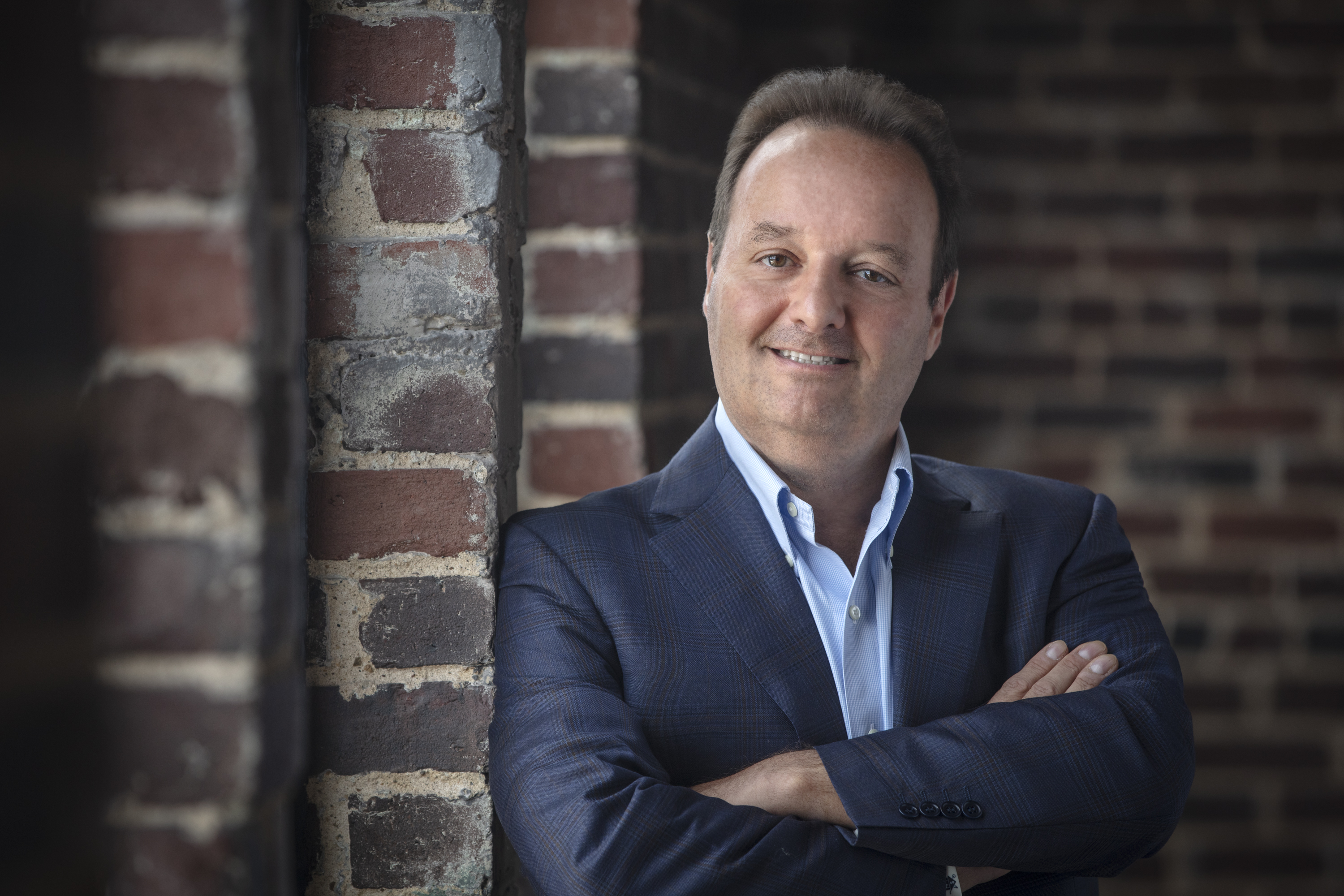
Gino Barbaro is an investor, Certified Money Coach®, entrepreneur & podcast host. As an entrepreneur, he has grown his real estate portfolio to over 1,900 multifamily units & $450,000,000 in Assets under management.
His mission, through Barbaro 360, is to empower families to build lasting legacies by focusing on restoring traditional values in family life, finance, and helping families create a healthier relationship with money.
Gino is the best-selling author of Happy Money Happy Family Happy Legacy. He resides with his beautiful wife Julia and their six children in St. Augustine, Florida.