

 Apple Podcasts
 Spotify
 YouTube
 Amazon Music
 RSS Feed
  Goodpods
  iHeartRadio
 April 23, 2026
Everything I Have Learned From Closing 5,000+ Sales | Tips For Sales Managers
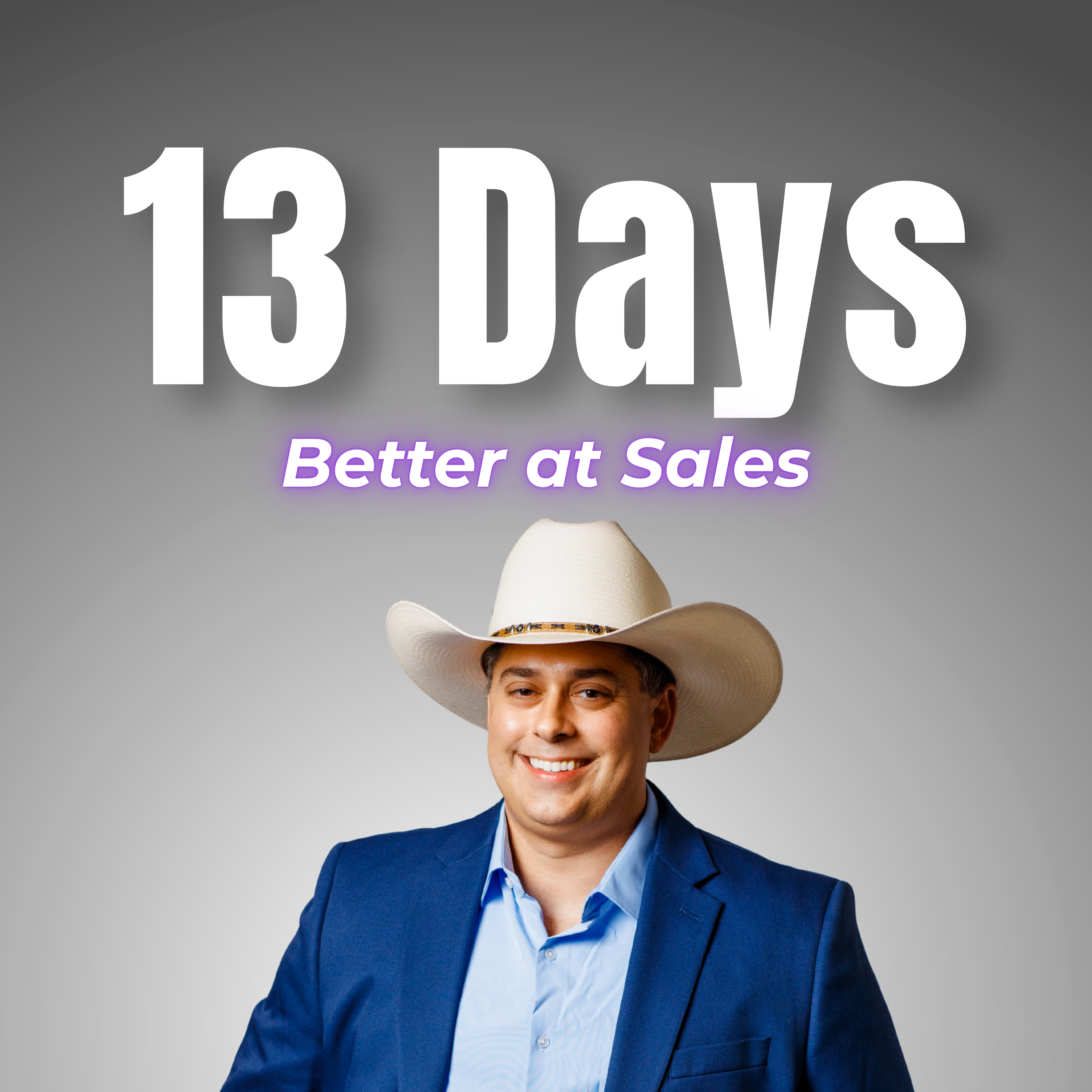


Can sales skills improve in just 13 days? In this episode of The Manager’s Mic, I break down practical sales training principles that help sales professionals improve communication, sharpen their value proposition, understand buyer psychology, build a stronger sales pipeline, handle rejection, and follow up with purpose.
Follow me online for more sales management tips
https://www.themanagersmic.com/
In this video, you will learn:
- How to improve sales skills through consistent action
- Why a strong value proposition matters in every sales conversation
- How buyer psychology affects sales outcomes
- Why tone and communication style shape trust
- How to build and protect a healthy sales pipeline
- How to handle rejection without losing momentum
- Why persistence and follow-up drive more closed deals
- How relationship-based selling creates long-term success
Chapters
00:00 Introduction to Sales Mastery
04:12 Understanding the Sales Process
09:36 Effective Communication Techniques
14:25 The Role of Follow-Up in Sales
#Sales #Management #Tips #ManagersMic
Transcript
Plug: Paul Leon here. I want to take my hat off for a moment and speak directly to you, the listener or watcher of our show. Thank you so much for being a consumer of the show, and I want to take our relationship a step further. When you join our newsletter at TheManagersMic.com—again, that is TheManagersMic.com—I am going to give you a free selling script to skyrocket sales.
Paul Leon: It only takes 13 days of consistent action to become better at sales than most gurus and people online. I have personally closed over 5,000 sales. Here is everything I have learned from doing that, including the insights from the ones I have lost. My name is Paul Leon. I have trained over a thousand people. I have worked with over 500 companies and influenced $100 million in revenue. I like making content like this to help you power up your sales skills so you can get the same results.
Plug: Thank you so much for being a listener and watcher of the show. And now, back to the episode.
Paul Leon: Communicating a value proposition is the most critical skill within a sales process. Most people understand pain, but masters understand acute pain. A value proposition does this, ideally, in 10 to 30 seconds. We need to get to the point and answer three questions in the back of a prospect’s mind: Who is this person that is contacting me? What is the reason they are reaching out? And question three: What is in it for me?
When we do this correctly, we stop selling and we start helping people buy. “I help business owners in Columbus, Ohio stop losing profit from their sales process” would be an example of a value proposition.
You want to create “How do you do that?” statements—because when you can create the loop of “How do you do that? How do we do that?” that is when you have a really good value proposition.
A more niche example would be: “I help telemarketers in the medical industry communicate value to maximize cash from consultations.” Now, that might come across car-salesy, but again, the point is the same. We want to niche down our value proposition to the acute pain because we want to get out of the sales process and more into the buying process. In the consultation, I may find something else crucial that allows me to tailor that message, and that is totally fine.
You want to know your value proposition up front and carry that through your questions, through your consultation skills—because here is why this is important. Once you have defined this value proposition, do not change it for 12 months. Stay with it, because if you tend to tinker with it, or you tend to have that more creative side, one of the things that always stayed with me is this: Marketers tinker; salespeople are systematic.
I meet these marketers with fancy degrees trying to teach me how to… and then I will ask them, “When is the last time you did outreach or messaged anybody on LinkedIn?” And it is always this face like…
Now, I want to be clear: If you have a product or solution that is between $25 and $200, you need a marketing expert. I would encourage you to hire a marketing expert because it is worth paying for that.
Prospects are a number until they pay or receive a proposal. Then they graduate into being a customer, or they drop out of the funnel of their own doing. The phrase “buyers and liars” has some sense of truth to it, but I prefer: Buyers vote with their dollars. When someone says they cannot afford a product but they book a trip to Disney the following week, that tells me they are full of shit. No—prospects buy the way they want to buy.
How I deal with that situation these days is I let it go. I just let it go. I used to get mad at stuff like that under my breath, like, “How could they? I thought they were going to buy.” But wishing someone harm is just like drinking poison while waiting for the other person to die.
Communicating the value up front with easy-to-understand math will close more sales, especially with adults over the age of 24. “Cost” is associated with loss; “investment” is associated with gain. Believing in what you sell and constantly learning it like a child will help you naturally communicate it more positively. Negativity sells fast, but so does polarizing positivity. “I would rather be stupid on fire than brilliant on ice” is a phrase that has always stayed with me.
Know your features and benefits in order of importance, and be able to tailor them based on what the prospect shares with you throughout the consultative sales process. Now, this may be subjective based on the prospect, but when we know what features are important and what matters to the prospect, we can close more.
It is important we know that up front because sometimes prospects do not know what they want. So if you can say things like, “Most prospects will go with…” or “What they like the most is X because it does Y result,” that helps you not manipulate, but positively influence them by showing what other people have done to get the same results.
Most will bring up the price—get over it—and have a question ready to overcome that bullshit objection. The reason price is such a big objection is salespeople make it the biggest objection in their belief system because they do not truly believe in the price. They do not truly believe in the product, or they do not truly believe in the solution.
After a lot of trainings I will do, at least once I will hear, “Well, this product is expensive.” And I want to be upfront with the prospect about that: “Paul, it is so expensive. It is expensive.” By the way, that voice I just made is not anybody I am imitating—that is just the voice in my head.
Personally, to me, that means you are saying, “It is too hard to talk about the price because I do not believe enough in it.” And it says that I do not really want to tailor this to a prospect. Instead of saying that, say, “I do not have this skill just yet. Can you help me?” Go to your sales manager. Go to your sales leader. Just role play it out. Just role play it out.
I remember I was struggling in sales—and there was this guy, Willie, who was better than me. And three things made him so good. One: He worked the most hours. That helps. Two: He role played the most and practiced his script every day before the doors would open. And I think that frame—that middle ground of what works—is something we all need to model and adopt.
I had a person come up to me once and say, “Do you have an email template that, once the prospect reads it, they will just buy and give me money?” And I tend to have this bad habit of being sarcastic. I had a little rapport with him, so I said, “That is the payment link.”
They say yes to the fifth follow-up call because they do not trust you yet. The reality is: You have to stack the pipeline. Stack the pipeline. That will strengthen the security of closing more sales. Guides beat gurus in preparation, not reputation.
I have seen top salespeople use a tool or menu of solutions to show a prospect what they want. I used to sell seven out of ten sales back-to-front, front-to-back, and when I mirrored this, I got the same result.
A friend of mine who runs this major HVAC company—we were having a conversation about this, and he told me… we got on the topic of, “Do you hire a great salesperson? How do you level up? How do you give them the skill? How do you identify somebody who cannot make it?” He goes, “Have you ever been a waiter or waitress?” I go, “Excuse me?” That is the question I ask because waiters and waitresses, when you really think about it, all they do is listen. I know how to read a menu. That is really 80% of sales. We can easily level up and train the other 20%.
I heard that and it made me reflect on the reality—what I mentioned earlier—that one of my best years in sales was when I had this clipboard of solutions (dating myself a little here, and that is fine). There were bundles on this menu of solutions I had on this clipboard, and all I would do is point to what was on it.
And the funny thing is, when you took the bundle apart and you looked at all the prices online, it was cheaper to get each part—but people did not care. People would buy on the spot because it was mapped out, it was clean, and the speed of the solution mattered more than the price. I did not talk about the price; I talked about the solution.
That worked in the ghettos of Orange Blossom Trail in Florida and in the rich areas of Florida like Winter Park, Florida. And if you have never been to Orange Blossom Trail: a lot of pimps and a lot of prostitution. What was crazy is that menu worked across poor income levels and rich income levels. That is why it is important to adopt that.
Tone is more important than you think. Record yourself, listen back, and do it again. I am going to say something that I do not think you are going to like—and if you are a germaphobe, this is not going to resonate with you. Just do not adopt this one.
But I would practice reading your script with a pencil or pen in your mouth. Just make sure you clean it first, and then do it out loud. [unclear] Record yourself, listen back, and then do it again. Tone is more important than you think. Record yourself, listen back, and then do it again. It starts to wake up these face muscles right here. I like that frame too. I think this is a good trick.
Have you heard of the time traveler’s trick? A lot of people reference this. If you could go back in time and tell your younger self about buying, let us say, Apple stock before it blew up—but you could not tell yourself who you are—what would your tone be like? How many questions would you ask yourself? That way, you can set up a positive outcome.
Saying nothing is the best close once you show the proposal. But if a prospect says no, or “I need to think about it,” the one-to-ten close is the best follow-up. And then the third best close is worst-case/best-case: “If you buy, what is the worst thing that will happen? What would need to be true for you to get the results you are looking for?”
Now, there is a Hail Mary close you can try if it feels hopeless—like this is your final attempt. It does not matter anyway because you are probably going to lose the sale. Here is the Hail Mary close: “Is this a no forever, or a no for right now?” Ask that.
I used to use this a lot when I would go through grocery aisles. I used to sell phones in a wholesale store. I would go through the grocery aisles and people would always say no, like, “I am just trying to buy milk. What are you trying to sell me a phone for?” And I would say, “Oh, okay. No problem. Hey, is that a no forever, or a no for right now?”
And what happened a lot of the time is they would laugh at me and start to chuckle, and they would be like, “What do you got?” And then we would start a dialogue, and I could ask more questions. And a lot of that converted into the sale.
Hopefully that is a win for you, because it was a win for me—a lot.
The word “but” is good in sales. A negative followed by a positive—let me make this clear—a negative followed by a positive highlights the positive. So my old professor Rick Bomeljay, who wrote Listening Pays, is probably going to hate this one. But this does not work in any other situation except sales. Do not try this on your wife or somebody you truly love because they are going to pick up on it—because let us be real: women are smarter than men.
But the way it works is you list the negative things about what you are doing, then you follow it with “but,” then solution, solution, solution.
So if I was selling a vacation, I would not start with, “The TSA person is going to feel you down. You are going to go through security. Somebody is going to fart on you on the plane. They are going to throw water on your face. There are going to be kids screaming.”
You say, “Hey, you are going to go through security. Yes, it is going to be uncomfortable. There may be some children. It may be a difficult flight. But on the other side of it is a jacuzzi, a warm bed, a hotel, and you and your wife. You can have the best time of your life on this trip.”
That is an example of how you use “but” effectively: acknowledge the negatives the prospect may be thinking, followed by “but,” followed by solutions.
When demoing or showing or presenting a solution, pause at every section to allow a prospect to ask questions. Meaning: Do not assume intelligence. I define intelligence by invitation—meaning if I can help a sixth grader understand it, then an adult will get it.
American Public Media shared that after studying a sample of 130 million Americans, only 48% read past the sixth-grade level.
Now, I want to be very clear: Do not label people stupid—whether it is a prospect, a coworker, or a leader in your organization—unless they call you stupid… then shut them down. Now, I am just kidding—do not do that. Just walk away.
I have been called stupid and many names by many prospects, and I have been a comedian before, so I know it hurts to hear those things. Unfortunately, a lot of managers have called me stupid, or… “Fix my face. You are ugly.” Those are not good situations. But I do believe there are times where you do have to protect your confidence. Protecting your confidence in sales is crucial.
I had a consultation with a prospect once, and during the presentation, I will never forget: he started mocking me and insulting me. He actually took my product and started imitating me like, “Oh, look at me with my little tiny solution.” He started poking fun at me. It was the weirdest moment I have ever had. He went out of business. I cannot imagine why—he had great customer service skills.
The funny thing about the situation was he actually called me a few months later and he was like, “Hey, do you know any business?” And I shook my head like this—like, “Uh-huh. Yeah.”
If you ever see me do this (and you know me in the real world), if you ever see me go like, “Oh yeah…” this gesture right here—that means I have checked out.
The pipeline is life in sales. That is a Jeb Blount quote. I would encourage you to check out the podcast Sales Gravy by Jeb Blount. A lot of good selling insights in there. I am re-quoting him for that because I think it is a powerful one.
Speaking from personal experience: Momentum in motion maintains healthier emotion. I am going to say that again: Momentum in motion maintains healthier emotion. But the only way you are going to get that is by making sure that wheel is greased and keeps spinning and spinning and spinning.
How many calls, calls, calls, calls. Consultations, consultations. Never say no in the sales process. Replace it with what can be done.
In my experience, the first 30 days in a particular all-commission role is very, very scary because you are looking at a calendar—an empty calendar. It feels really scary because it is equated to your paycheck. The emptier it feels, the emptier you feel, and the scarier you are going to feel.
However, if you own the pipeline, own the momentum, and do the critical selling actions, you will be just fine. And this is important: You want to follow up every 24 to 48 hours, and then keep that habit throughout your sales process—until the prospect either drops or graduates, as I said earlier, into being a customer.
But here is the important thing you want to remember in all this: You have got to strike while the iron is hot. And what that means is: Always prioritize new, but make sure you feed old. Prioritize new; feed old. Because you can put your name on it. You can claim it throughout your wholesale process as well.
Here is another thing I will tell you: Whatever you think the number is, you probably have to double it or triple it at this point. So if you think you need to reach out to one person on LinkedIn, make it two—probably four or five minimum.
But again, be patient with yourself. And as you are being patient with yourself, and patient with your process, whatever you do: Do not work with naysayers, and do not let your foot off the gas. Just keep it down, keep it down, keep it down, and put the blinders on. Just get them away from you—back and forth.
My wife makes fun of me when I do this gesture, like, “Get the blinders out.” Okay, I do not know why I did that.
Doing the next right thing will matter more than reading the next right thing. So you can read all the books you want. You can listen to all the podcasts. Watch this video. I would encourage you: If this had an impact, apply it—and do not watch anything for probably two weeks.
I know that sounds weird, but I think sometimes I am guilty of over-learning versus over-applying.
Embrace the little no’s now so you do not confront the big no’s later. Here is what I mean by that: Being able to lose without losing enthusiasm is your most powerful weapon. No from a client will always hurt less than no to someone you love.
For me, hearing no from a prospect—somebody that was not my family or somebody I did not love—did not matter as much because it hurt more if I had to say no to my wife because I could not give her something, or if I had to say no to my kids because I could not pay for their college. That hurt more to me than a stranger.
And luckily, I am able to handle no so much more now. I have been able to save up so much money so my kids have a good future and a good college. And that is the power of being able to hear no without losing enthusiasm. Bam fam, bam fam.
Book a meeting from a meeting. Book a meeting from a meeting. Book a meeting from a meeting. Book a meeting from a meeting.
So a prospect or customer should always know what the next step is in the solution or process. And here is an important part: Your sales manager should also know that as well.
The worst thing you could ever do is, after a meeting or consultation—especially one that did not close—you go back to your sales manager and they say, “Well, what happened?” and you have struggling shoulders. I call it struggling shoulders. It looks like this…
So if your manager asks what happened, a better answer would be: “Well, we asked them the one-to-ten question. They were a six. I could not get them to a ten. They were waiting for a competitor for another quote. And what I really want to do is role play how to be more adamant—but not pushy—and be more pleasurable to work with. Would you work with me in a role play? Can I work with someone else? Because I do not want to lose a sale to this situation again.”
Sales starts after the fifth phone call from a live person—and I mean from a live person. Not an AI chat. Nothing else. Real talk.
New leads will always take priority, as we said earlier, but we also have to make sure we keep the initial experience super positive.
I think the best frame for feeling this way through times of tribulation—if following up feels frustrating—is: Believe in everyone, trust no one. I think that is a really good frame. Believe in everyone; trust no one.
And do not chase money. Money chases them—because money is a measuring tool based on how many people they help, how many conversations, how many emotions they transfer. If that is there—to show you have patience, to show that you care about their well-being, and you just want to help them and help their loved ones—that is why it is important to ask for a referral.
Ask like this: “You have been an awesome prospect. Who do you know that is just as awesome as you, that may benefit from this solution?” Also—even if they do not buy.
So there you have it: Lessons from 5,000 sales. If this is helpful to you, check out our website, TheManagersMic.com. I have a free selling script to support you as well when you sign up for our newsletter.
But if you do not want to do that, feel free to leave a comment in the chat, and I will go in there and answer questions and give you a response from me to help you level up, script up, have better script adherence, and build stronger selling skills—so you can put more cash in your pocket and collect more cash from those consultations.
``
Sponsor

Sponsor