


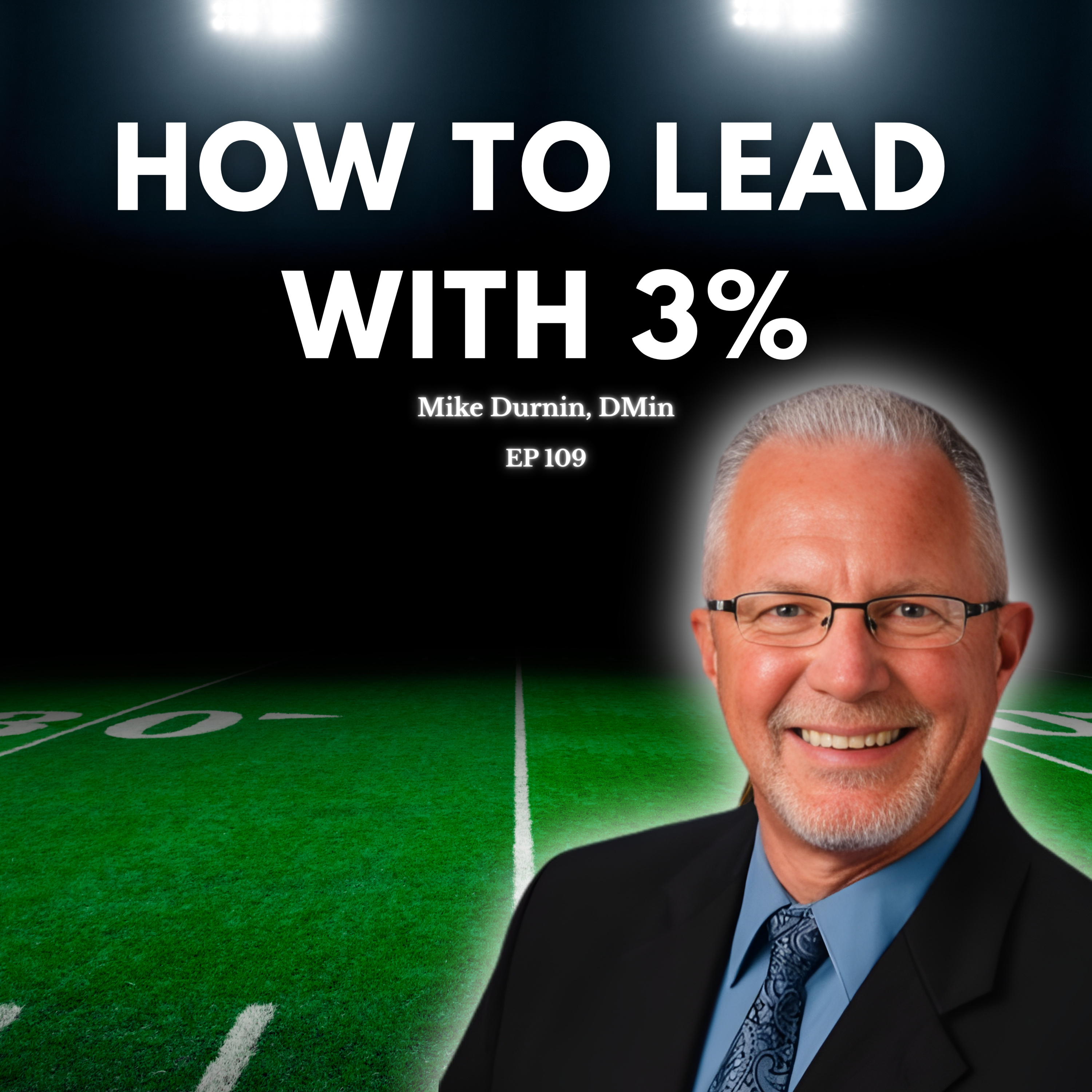


In this episode of The Manager's Mic, I sit down with Mike Durnin, DMin, a leadership expert and former football coach, to uncover the secrets of leadership. Together, we break down his unique "Handful of L's" framework and the "1 and 0" concept to help navigate leadership development without losing an identity. We also discuss the Chris Norton Foundation, which emerged from a tragic moment during an American football game. Although the Chris Norton story teaches us the importance of injury prevention whether in a game or during athletic training, we also learn that a tragedy from sports or another experience does not define our potential.
To donate to the CNF Wheelchair Camp
Click Here To follow Mike Durnin on LinkedIn
Sound bites
"We need to stay consistent and keep going onward and forward."
"You want to collect as many 1's and 0's versus 0's and 1’s."
"When you don't have enough courage to be your authentic self, you try to be somebody else."
Chapters
00:00 Introduction to Mike Durnin, DMin
02:17 A Story of Impact: Coaching Lessons
06:42 The '1 and 0' Framework
11:29 The Handful of L's Framework
19:33 Common Leadership Mistakes
22:20 Authenticity in Leadership
24:59 Advice for Younger Self
26:23 The Chris Norton Story
35:27 The Chris Norton Foundation and Its Impact
44:19 Leadership Lessons from The Stations of the Cross
Visit our podcast website to download a FREE Sales Tool when you join our newsletter
Dr. Michael Durnin (00:00)
He’s lying motionless on the ground. This is about 20 yards from where I’m standing on the sideline. What had been a loud, excited crowd—it was complete silence.
I could hear a helicopter.
They’re telling us he’s got a 3% chance of moving.
As I walked out there, the athletic trainers are already stepping into place, doing their thing.
And of course, my thought is: I just failed miserably. So we get—yeah—well, let him get hurt.
Paul Leon (00:28)
Why did you fail?
Mike Durnin is a nationally recognized leadership expert, educator, and former championship-winning coach with a distinguished career in higher education spanning coaching, teaching, and executive administration. As founder and president of Via Crucis Leadership LLC, he delivers high-impact keynotes grounded in powerful storytelling.
Mike equips leaders to navigate uncertainty, build resilience, and lead with purpose in today’s chaotic world. He also serves as a president of the Chris Norton Foundation, which was featured in a documentary called Seven Yards. He holds a Doctor of Ministry (DMin) degree.
And I want to say, Mike, this is a pretty cool podcast. I’m looking forward to our conversation today.
Dr. Michael Durnin (02:18)
Paul, I’m looking forward to it as well. I always enjoy conversations with people who have an interest in sharing stories and leadership—just having fun and learning from each other.
Paul Leon (02:33)
Yeah, that’s my philosophy. So let’s get into some questions I had here. As I was studying your LinkedIn, do you prefer Mike or Professor? I think you’re okay with Mike. I always like to ask.
Dr. Michael Durnin (02:46)
I’m always good with just Mike. That is perfectly fine.
Paul Leon (02:50)
All right. Walk me through—top of mind—because you’ve helped a lot of people. Mike, what’s a story from all your coaching experience that captures how you lead today? I know you can pick a ton of stories, but let’s think of one that comes to mind in this moment.
Dr. Michael Durnin (03:04)
Yeah.
It’s great that you asked that question, Paul, because I’m at that age where, you know, I’ve been around for a while, and there are a lot of stories. But one—and actually I’ve given this in a few talks—is when I was, and this was shortly after the Chris Norton story (and we can get into that later; I’d love to), but I had a young man who was one of these athletes at Luther College.
He was like 6’4”, 230 pounds—looked like a Greek god—and a very good athlete. However, some of the decisions and choices he was making off the field did not correspond to the standards and expectations of the program—and even the school, for that matter.
After a few inappropriate decisions by this young man, I made the hard decision, so to speak, of basically telling him: you’re no longer part of the team for the rest of the year.
About a year later, he came back. We worked our way through one more year before I left Luther College.
Well, a couple of years later, I got this phone call message and it says, “Hey coach, give me a call as soon as possible.” Now my first thought was he was calling because he was sitting in jail somewhere and needed help.
Well, I quickly picked up the phone, called him, and he goes, “Coach, I just got to tell you a few things.” And he goes, “After I left Luther College, I went to Africa and taught English for a year. And while I’m there, I finally figured out what you were trying to tell us—what you were teaching us—back when I was making all the wrong decisions.”
He goes, “I came back, and I got my further degree so I could become a middle school counselor and help young people not make the same choices I was making along the way.”
And he goes, “Besides that, I met this young lady—and she never would have dated me when I was in college. She’s way too classy for that, way too smart.”
And he goes, “We have picked out two wedding dates. But before we make a decision, I want to make sure you and your wife can be there.”
Paul Leon (05:51)
Wow.
Dr. Michael Durnin (05:51)
It was at that moment—I’ve talked in a lot of talks—it’s like the impact you have sometimes… and sometimes you never see the impact on people you have touched.
When I’d let him go on the team and so forth, he’s not getting it, he’s not getting it. Well, he didn’t get it back then, but he eventually did.
And I think it just proves that we need to stay consistent, and we need to keep going onward and forward, because we don’t know when that impact will hit certain people.
To me, that’s a story I still have in my office here at home. I have a picture from that wedding day—with me, one of his very close friends during that time, and one of the other coaches. I’ll never forget that wedding.
I remember walking into that church. We were there a little bit early because of travel. He saw me and my wife walk in, and he comes over—stopped everything that was going on: all the pictures being taken, all those kinds of fun things. Both my wife and I got this huge hug from him. Tears were running down my eyes at that point. It was amazing. That’s one of those wild stories for me.
Paul Leon (07:05)
You said that he called you a year later because he said, “I understand.” Can you give me a preview of how you would coach your players during that time—some key statements they needed to uphold—so that way they could meet the standard of a better quality of life? Could you give me a preview into that, if that’s fair?
Dr. Michael Durnin (07:27)
I think it all begins—you kind of mentioned in the intro—for a number of decades now, my personal philosophy, my “why,” if I’m Simon Sinek, of why I do what I do, is to be 1 and 0 every day in every way, living life, creating a transformation of self and others to be better.
When I teach that, and what I tell myself as well: I can be 1 and 0 walking across a campus, walking through the store, simply by: do I smile and greet others, or do I turn my head and avoid? If I turn my head and avoid, I’m 0 and 1. If I smile and greet people, I’m 1 and 0.
I walk down the street. I see an empty Coke can sitting on the ground. If I walk by it, I’m 0 and 1. If I pick it up, put it away, I’m 1 and 0.
A teacher, professor has assigned a reading—a chapter to read. If I get that done and I’m prepared going into class, I have an understanding, I could actually teach it myself—I’m 1 and 0. If I’ve blown it off for one reason or another—maybe something’s come up where I couldn’t get it done—I’m 0 and 1.
In our lives, none of us are perfect, but we want to collect as many 1 and 0’s versus 0 and 1’s.
Everything we did, everything we tried to teach those young people at that time—it was more than just the game of football. I felt like I was trying to help people get ready for the game of life. That’s how we taught. That’s how we coached.
We taught the game of football—there’s no doubt about it—and we looked to be as successful as possible. But I truly believe, and I still believe to this day, there’s a bigger cause than just the game of football.
Paul Leon (09:25)
When you say “bigger cause,” and thank you for that framework—the 1 and 0, 0 and 1—I’m making the assumption that that framework, that way of thinking, did that come just from football? Did it come from other sports as well?
Dr. Michael Durnin (09:37)
Sure.
In football, we teach: okay, next play. Matter of fact, Allen Stein Jr. just wrote a great book called Next Play. It’s the next quarter, it’s the next game, next man up—whatever the case may be.
So that 1 and 0 framework has been part of athletics forever. But then through reflection and through conversations with lots of people, it’s like: this really relates to everything else too. There’s a symmetry between 1 and 0 on a football field and 1 and 0 as you go grocery shopping, or 1 and 0 when you’re having dinner with your family.
So I started thinking about that—that this is making more and more sense.
Now, the whole statement I read earlier—“1 and 0, every day in every way, living life, creating transformation in self and others to be better”—it was fueled by Pete Carroll. Many years ago, he wrote a book called Win Forever. In his book, he challenges the reader to create their own “why” statement in 25 words or less.
So I took that to heart, and I ended up spending three months coming up with that framework, that phrase—and it has never left my side going forward.
Paul Leon (11:13)
I love that. And I haven’t heard it quite that way before.
For me, if I were to take that framework and apply it to my own life, I would say what I want to be 1 and 0 in 2026 is more present with my wife and kids. I think in 2024, 2025, I was probably 0 and 1 in that, because I’ve been so obsessed and career-focused. I like that a lot.
And I actually took some notes on the books he wrote Saturday night. That’s one benefit of doing a podcast. I get to go back and be like, okay—now I—
Dr. Michael Durnin (11:51)
Ha ha.
Paul Leon (11:52)
That’s one benefit of it.
Walk me through—you had mentioned earlier your “handful of L’s” framework. For context, for somebody who maybe has never heard that before, because I always think of the lowest common denominator—not in terms of intelligence, just being new to you as a professional—walk me through that, and then let’s start there.
Dr. Michael Durnin (12:14)
I’d love to walk through the handful of L’s. And to be honest with you, you talked about the least common denominator—see, I’m an old football coach. I played college football myself. I’m not real smart. I like to keep things simple, and I think coaches, generationally, have looked to keep things simple.
I started thinking about: in athletics, the great ones always come back to fundamentals. The great coaches always teach fundamentals. And what are fundamentals built upon? They’re built upon—and they help strengthen—a foundation.
So I started to think about: what is the foundation for leading ourselves, and if applicable, leading others? What are some key components that transcend through the decades of people researching leadership development, etc.?
So I came up with five. I grouped them into five L’s.
The first L is: continue to learn. I have yet to meet a great leader who wasn’t continually learning. You can learn by reading books, you can listen to podcasts, you can do an AI search in today’s world—that’s fine in my book—but you keep searching as many ways as possible. And then you also engage in conversation, because I believe that is part of learning as well. So that’s your first L: continue to learn.
Second L: continue to laugh. Now, I kind of stretched the word “laugh,” because it is finding joy, but it’s also taking time for rest and renewal and reflection so that you continually refill your cup.
I mean, I’m what I call a recovering workaholic. Listening to what you just said about ’24, ’25—you probably had some of those workaholic traits in you. Like: I’m going to go, I’m going to go, and I’m going to go.
Paul Leon (14:18)
Yeah.
Dr. Michael Durnin (14:19)
For me, I started researching the people that I consider at the upper echelon, and there was a factor of taking time to rest. Go ahead—take that vacation, walk away. If you’ve done things right, you should be able to walk away and everything else keeps going.
I wanted that to be part of my handful of L’s—part of that foundation.
The third L is: listen. A lot of people say, “Listen to understand, not to respond.”
I use a graphic a lot of times when I’m speaking. I’ll put a PowerPoint—I’m not a big fan of PowerPoints, but I love PowerPoints that are basically a picture of one word type of situation. I’ll put a picture up of two water spouts coming down: one’s hitting a brick and one’s hitting a sponge. The one hitting the brick, the water goes all over the place. The one hitting the sponge—what does the sponge do? It soaks it up. I believe that’s how we need to listen.
Listening pertains to all the L’s, but I wanted to make sure it had its own place because listening, to me, is the first step in communication. If you talk to anybody who’s done research on leadership development, they’re going to talk about the importance of communication. Communication is a leadership skill. Well, the first part—the foundation of communication—is listening.
So now you’ve got three L’s: learn, laugh, and listen.
The fourth L is: live. Continue to live. You need to be in the arena. If you’re always thinking, “I need to do more before I can jump in and do something,” you’ll never do it, because there’s always more to learn. There’s always more to do. You need to be in the arena. No one ever succeeds being on the sideline.
My guess, Paul, is your very first podcast was probably not as good as all your recent ones.
Paul Leon (16:42)
I don’t want to listen to it.
Dr. Michael Durnin (16:45)
But you had to start somewhere. You had to get into the arena to make this happen.
One of the great quotes I love to share when I’m talking about living—I always do it as a close—is Teddy Roosevelt’s Man in the Arena: “It’s not the critic who counts…”
That, to me, is essential for us. We’ve got to be able to say: I’m going to do it. I’m going to have the habits. I’m going to have the discipline. I have a conviction for doing. And “doing” is actually my word for 2026. I just need to keep doing.
And then the fifth L is: love. I use the word “love” to encompass a lot of different things, but it’s basically the sacred presence that we provide for others.
Chris Voss, in his book Never Split the Difference, talked about unconditional positive regard. I talk many times about unconditional love. I believe they’re working toward the same area. Chris Voss talked about how he learned to be a better FBI hostage negotiator when he provided unconditional positive regard to terrorists and people who were threatening to kill people. By doing that, he could actually flip the script. If it works there, it’s going to work in a lot of other places too.
So those are your five L’s. That is how I look at the foundation for leading ourselves—and, if applicable, leading others.
Now, there is a bonus L, and the bonus L is: legacy. It’s not only the legacy you leave on others, but more importantly, the legacy others—when you continue to do the five L’s… when you continue to learn, laugh, listen, live, and love… others leave a legacy within you.
That, to me, is just as important as anything else.
So there’s your handful of L’s. Every time I read a book—I just got done, I read Next Play from Allen Stein. I read one from Kristen Browning and Cameron Orr called Built to Lead. I’m reading one right now that a lot of people have read, Unreasonable Hospitality.
As I read those books, I look and see: this fits into this L; this concept fits into that L. It still holds true. Which for me gives me more power in terms of what I’m sharing—but more importantly, it also justifies: yep, I’m on the right track, and I still have more to learn.
Paul Leon (19:44)
When you think about the 5L framework and the bonus L being legacy, and you think about all the people you coach, what do you think is a common mistake that a lot of people make in trying to lead or be stronger? Across all your students and things you teach, what’s a mistake you commonly see that you have the foresight now to be like, that’s probably going to go where I think it’s going to go?
Dr. Michael Durnin (20:13)
I’m going to share things that I know I’ve made mistakes on more than anything else.
One is: when you don’t have enough courage to be your authentic self, you try to be somebody else. I have learned from my own failures of leading: when I’ve said, “No—this is me. This is my authentic self. This is what I believe in. These are my values. This is my purpose. This is my why.”
When I’ve done that, yeah—some people disagree, and that’s fine. I’m not trying to be anybody else.
And I believe when I watch other leaders not be themselves—as long as that is for the common good, okay, we’ll put a caveat in there—but you need to first and foremost be yourself. When you’re not, bad things happen.
The other aspect is: in everything we do, there are technical sides to it. I really love all the premises of servant leadership, but there’s still that technical side. There are things you need to get done. There are processes and procedures that need to be done. That, to me, is leading and living within the mind.
But then you also have empathy. You have the essential skills: kindness, care, and compassion for others. When I talked about love—people don’t care what you know until they know that you care.
The beauty is finding the balance between the mind and the heart, because that is where love and wisdom reside. Don’t think of yourself as leading just from the mind. Don’t think of yourself as leading just from the heart. There’s a balance there—and that balance is going to be different for everybody. But you’re looking for that balance between mind and heart, because that’s where love and wisdom truly reside.
Paul Leon (22:26)
Tell me about a time you went through—are you comfortable sharing for context—when was that moment where you said, “I’m not being my authentic self”?
Sometimes I get into a state—or at least I’m guilty of this—where I don’t really see it right away. Or I’ve been in situations where I can honestly say I’m guilty of letting it go on sometimes for years.
Would you be comfortable speaking a little more for context around when you went through a time where you were not your authentic self—maybe what happened for you to have that self-realization, which is a key skill, especially around leadership?
Dr. Michael Durnin (23:08)
Yep.
Here’s one. It was actually when I was back at Luther College. We were struggling. The last couple of years I was there, we struggled some to win games on the field. We were doing a lot of other great things, but what I was trying to—and I’m going to go back to us talking about the mind and the heart—I got myself too much focused on only the heart part and forgot the mind part.
I avoided making some decisions—avoided taking the path where I knew deep down that’s where we should be going, but I didn’t do it. I hesitated.
And as I talked about continuing to live, I forgot to be in that arena.
After a short time of doing that, the university said, “Mike, we’d like to go in a different direction for a head football coach.” And I don’t blame them. I wasn’t me at that point.
I can look back and say, I wish they would have given me a chance. I think we had some things starting to turn around. But they made the decision, and that was it.
It also provided me some other opportunities in my life that never would have been realized without somebody saying, “No, we’re going a different direction.”
And it made me open up my eyes even more to the importance of being courageously authentic no matter what. Let the chips fall. Somebody might still say no to me, and that’s okay. But if I can still be my authentic self, I’m perfectly fine with that.
Paul Leon (24:47)
If you could go back in time, but you couldn’t tell yourself, “Mike, it’s you from the future,” and you couldn’t tell yourself anything about the future—what are some things you would say to your younger self going through that tough time of being laid off as a football coach?
I’ve been laid off five times. The first time was very painful. The second time, I was like, thanks, but I’ve been through this before. Somewhere around the fifth time, I was kind of like—
I’m curious what you would say to your younger self going through that, but he probably won’t take it because the pain is too real in that moment.
Dr. Michael Durnin (25:17)
Ha ha ha!
When I talk about different presentations, I’ll talk about some of the tools involved with being able to implement the handful of L’s. Two of the tools:
First: stay calm. You need to stay calm. Great leaders are great leaders because they stay calm in crisis situations and chaotic moments.
Second: don’t be afraid—you’re going to need others. No one does this alone. So keep developing relationships, because you’re going to need others along the way.
That would be the two biggest things I would tell him. Besides saying: keep working on continuing to learn, laugh, listen, live, and love—but you need these tools. You need to be able to stay calm. Don’t panic.
And make sure it is okay to lean into others, as long as you continue to realize there’s going to be a point in some role in life where others are going to need to lean into you as well.
That sacred presence—where you honor others, and you allow others to work their beauty, their magic, in your own life.
Paul Leon (26:56)
That’s good wisdom.
You mentioned the Chris Norton Foundation. For context, in case somebody doesn’t know it—let’s talk about that for the person who’s never heard of it. And let’s talk about what impact that’s had on your philosophy around leadership to where you are today.
Dr. Michael Durnin (27:16)
I will try not to get as emotional as I do sometimes with the story. It is an emotional story.
So Chris was a young man—for your audience’s sake—he was the All-American high school student-athlete. Great student in the classroom. Along with that, he was a great football player, basketball player, track athlete. He had a great faith. He was the All-American kid that every coach in America would want to be part of their team.
Now his athletic talent was more of a Division III level, but I could give the qualities of Chris to—I don’t care what level—any coach would look at those qualities and say, “If he had this other measurable, I’d take him in a heartbeat,” just because of who he is.
So Chris comes to school. We were very fortunate—he decided to come to Luther College. His very first year—this is 2010—Chris arrived on campus in August, and it’s October 16th, 2010. Chris had worked his way up. He was a backup defensive back. He was playing special teams.
We’re in the third quarter—early third quarter. We had just scored, got some momentum going, and Chris is on the kickoff team. He’s going down the field, he goes in to make a tackle, and he doesn’t get up.
He’s lying motionless on the ground. This is about 20 yards from where I’m standing on the sideline. What had been a loud, excited crowd—it was complete silence.
As I walked out there, the athletic trainers are already stepping into place, doing their thing. I walk out there, and he’s got no movement. Now he is conscious, which was a good thing. He’s conscious.
A couple minutes pass, and his parents come down from the stands. His oldest sister comes down from the stands. Other medical personnel come up. After about a half an hour—45 minutes—they transport him to the ER.
We did go ahead and finish the game, but as we’re finishing the game, in talking to the team, I could hear a helicopter. Now we’re in Decorah, Iowa. There are only two reasons a helicopter is in the air: one, they’re crop-dusting a field. The other one is they’re life-flighting people from Decorah to Rochester, Minnesota—to Mayo Clinic.
I knew at that time of day—that’s Chris. I knew what was happening without even hearing from anybody.
So I come off the field, and the athletic trainer comes to me and goes, “Mike, Chris is being life-flighted.” I said, “Yeah, I could hear the helicopter.” He goes, “They’re telling us he’s got a 3% chance of moving below his neck.”
My heart’s just dropping even more.
So I quickly got some things together. My wife ran to the convenience store to grab essentials for Chris’s family—knowing that she was smarter than I was in the moment. She remained very calm, and they had only come here to watch the game and drive home.
So we jumped in the car and we drove up to Rochester. I remember walking into the hospital. I’m going down this hallway to where the waiting room is, where Chris’s family is. I could see one figure standing in the hallway—that was Chris’s mom. The same mom who, seven months earlier, I said to her like any coach in America would say: “When your son comes here, we’re going to take care of him.”
And of course, my thought is: I just failed miserably right there. So we get—yeah—well, let him get hurt. And even though I know it’s part of the game, her son is now lying there, waiting for surgery.
She turned to me, though.
Paul Leon (27:19)
Okay—and I invite your feelings if you’re comfortable, just to be clear.
Dr. Michael Durnin (31:53)
As I got close, she gave me a hug and said, “Mike, they’re only saying a 3% chance. Any moment—paralyzed from the neck down—but we are going to believe in that 3%.”
That’s the mindset of the Norton family. That’s Chris’s mindset—having that belief to look past whatever current situations are there, for a better world, a reason to be here.
Since that time, Chris was just amazing. He went after rehab, he got a little bit of feeling back. He’s defined in the eyes now—he still lives most of his life in a wheelchair. Yet he was able to, through his own conviction, perseverance, and grit, walk with assistance across the stage four years later and get a diploma.
A few years after he got the diploma, at the end of his wedding—him and Emily, his wife, and Emily actually was the one who helped him walk across the stage—they had gotten engaged the night before. She’s as much a saint as anybody. They walked seven yards—hence the title of the movie—seven yards down the aisle after their ceremony, hand in hand, arm in arm. Now Emily’s really lifting, but Chris had enough mobility to do that.
One of the most beautiful things of the whole situation is Chris realized he was hurt in an NCAA game, so he actually has lifetime catastrophic insurance. So if he needs something because of his disability and so forth, he’s always got a case manager. He realized very early: most people don’t have that, especially people with spinal cord injuries. You have a few months—or even a few weeks—to do some things, and they send you on your way. You’re on your own.
He realized he could do something. He wanted to do something. Hence, he and his father started the foundation in 2012.
To date—when we raise money—we have different rehab facilities that will write grants to us that we fulfill. We also sponsor, every summer, a wheelchair camp. We’ll bring in approximately 25 young people—ages maybe six or seven through 18 or 19—who primarily have either spinal cord or neuromuscular challenges, so they spend a lot of their life in a wheelchair, if not all of it.
We provide them a week-long camp: zip-lining, horseback riding, all the experiences. But we provide it not only for them, but their families, because we know families are important in this type of situation. And it’s all expenses paid.
We have raised since 2012 well over— I think we’re getting close to probably $2.5 to $3 million. Basically, almost every dollar goes right back out the door for some reason.
And what it has done—this experience—and I wouldn’t wish this on anybody. Yet, if you’re going to go through any type of tragic event, you want to do it with the Nortons. Because never did they ever allow that event to become a tragedy. It was a tragic event, but never a tragedy.
They have fueled so many individuals. People who watch that movie end up in tears. Chris has written two books—one with his father and one with his wife, Emily.
His message when he goes out and speaks is amazing. It’s basically how to stand up and keep going onward and forward. Even though the only way he can stand up—the literal stand up—is with the assistance of somebody else.
That has fueled me. This happened before I was let go at Luther, and what I’m experiencing right now is nothing compared to Chris and his family. I need to be able to go onward and forward and keep looking.
And the other aspect: I want to keep looking to serve others as best I can, because I watched how Chris and his family served so many—within their messaging and within the monies that the foundation gives out.
I’ve just been blessed and honored to be a part of that foundation since the beginning.
Paul Leon (36:43)
That experience and lesson—for me, I’ve struggled with conditional thinking. I have this condition where I think X should equal Y.
When I was hearing about the 3%, before you said, “We’re going to believe in the 3%,” I would have never thought that. I’m just being real. As someone who’s still developing as a leader, I would have never thought to think that way—which is why it’s a very powerful story.
I’m curious: would you say that experience catapulted you to wanting to do your doctorate, that kind of led to that post-layoff and all those events? And I also want to reverse engineer why you chose to make your thesis around the Stations of the Cross.
Dr. Michael Durnin (37:48)
Here’s what happened—there are a couple of things that catapulted me in that direction.
After I left Luther, I ended up at the University of Dubuque. I’m an assistant head coach there. I’m teaching a little bit and working with students, and the president back in December 2017 said, “Mike, I want to meet with you.”
He brings me into his office and he says, “Mike, how would you like to do us a favor?” And of course, when the president of a university says “do a favor,” it’s kind of like, okay—sure—what do you got?
He goes, “I’m going to put you in charge of all student life. You’re going to be on my cabinet,” which of course is like the C-suite level of higher education. “And you’re going to be my guy in that area.”
I looked at him and said, “Jeff, my background’s not in that. I’m a teacher, I was a coach, I’m coaching. I’ve done some athletic administration—supplementary administrative roles. I’ve never done that.”
He goes, “I don’t care. I know how you think. I know how you put things together. I know you believe in the mission of this university. I know how you treat people, because you’re the person I want.”
And of course I said yes. One of the reasons I said yes was: there was my 3%. I don’t know what is beyond, but I’m going to take this on. I want to find a way.
As I did it, the first 48 hours were chaos. I had a racial incident on campus. I had a sexual assault on campus. There was a perfect storm. And the president said, “Mike, remember now—you’re not allowed to resign from this position, no matter what’s happening.”
But it was great.
Then I started saying: I’m going to do this—being authentic, living what your why is. I said, okay, I’m going to do it, and I’m going to do it my way. It might look a little different from how anybody else would do it in this position, but here’s how I’m going to do it.
As people noticed that, at the University of Dubuque they have a great theological seminary. A couple of people had been watching and listening to things that I was doing and saying, and they said, “Mike, you should really think about getting your Doctor of Ministry.”
I said, “One, I’m not an ordained minister.” And I knew enough about administration at that point—I’d been around it and knew the guidelines for different areas in our university. And they said, “We don’t care. We want to try this anyways.”
After about three months of back and forth, and this is where the L’s come in—the aspect of continuing to learn—I made the jump.
In February of 2020, I started my Doctor of Ministry. Now I’m saying 2020 for a reason.
At the very same time we’re starting, I’m part of a three-person team leading the strategies and the vision for how we’re going to take on COVID. So I have a plate full just with that, besides everything else I was doing.
And I said, yeah—I’m going to do this. Four years later, I walked across the stage—after I’d technically retired from higher ed—with a Doctor of Ministry. And I can say without a doubt: every book I read (we were reading at least a dozen books a year for the cohort), and then the whole dissertation, helped me do a better job in my actual job—even though it wasn’t ministry. It was helping me lead people and helping me lead students, specifically.
How the dissertation came about: we’re about halfway through the program. They started the conversation: what are you going to do for your dissertation? How are you going to put this together?
Well, my cohort—I’m the only one who’s not an ordained minister. Everybody’s coming up with these ideas related to what they’re going to do for their churches, etc. And I’m going, what am I going to do?
I remember lying in bed one night, thinking: okay, you love leadership. You’ve been studying leadership for years. You read books on it all the time. You try to see what other people have done in certain situations.
And I truly believe the Holy Spirit works within each of us in different ways. But as I’m lying there, for whatever reason, I started thinking about the Stations of the Cross—the traditional Stations of the Cross.
I was born and raised Roman Catholic. And though most people don’t even— even Roman Catholics don’t know much about the Stations of the Cross.
Then I thought back to this great cathedral outside of Milwaukee, Wisconsin called Holy Hill. They have this huge pathway from the church down to the parking lot, and it’s the Stations of the Cross—an outdoor Stations of the Cross. That pathway is where I proposed to my wife 45 years ago. We’ll be married for 45 this coming summer.
So I’m thinking about the different stations and saying: this leadership concept works with that station; that leadership concept works with that station.
I got up in the middle of the night. I wrote all 14 stations down, and I started matching leadership concepts to the various stations.
That morning, I ran into the cohort leader—advisor for my doctorate—and I said, “What do you think of this idea for a dissertation? Write a workbook you could facilitate, take a group of people through this, do all the research on the stations and the leadership concepts, put it all together, and let that be the dissertation.”
And they said, “Go for it.” So there was born the dissertation.
For example: the very first station is “Jesus is condemned to death,” but within the scripture passages related to that, they’re amazed by how calmly he stands there. Well, the first tool—and we already talked about it—is staying calm. There it is.
Second station: he takes up the cross. We all take up crosses each and every day—not to that extent—but we still have crosses we need to bear. There are setbacks and challenges we need to take on. That’s a leadership concept right there.
Flip to station eight: Jesus meets the women of Jerusalem and stops and talks with them and prays for them. Any good leader, during turbulent times and at all times, takes time for others. They give back.
So each of the stations has a leadership concept, and I still do some retreats. I have one coming up in March at a spirituality center here in La Crosse, where I’ll lead people through it. It’s basically how to lead yourself through the concepts I associated with each station.
Paul Leon (46:19)
Is that thesis available online? I’m assuming it is. For context: only 1% of the population has a PhD. My wife has a PhD. I’ve seen a lot of theses. I’ve never seen one like that, so I just thought that was very powerful.
Coach people on how you’d like to be best connected.
Dr. Michael Durnin (46:23)
Yes, it is.
Paul Leon (46:49)
Online—if people want to learn more about you—let’s speak to that for those who might want to get to know you more, whether it’s through your website or other resources you provide.
Dr. Michael Durnin (47:00)
To me, I love LinkedIn for a variety of reasons. I can connect to a lot of people. I learn from others on LinkedIn. And really and truly, that is the best way to reach out to me—via LinkedIn.
I’m the only Mike Durnin that has the initials DMin at the end, which is Doctor of Ministry. That is the best way. You can drop me a message, ask questions, etc. My email is on my LinkedIn page, so you can get to me that way.
My dissertation is also how I came up with why the company name—my LLC—is Via Crucis Leadership, because Via Crucis is Latin for “way of the cross.”
Paul Leon (47:40)
Okay—yeah, I didn’t know that. Very thought through. I love that.
Dr. Michael Durnin (47:55)
So that’s the tie-in.
That’s the best way to get a hold of me. I welcome any and all. And when you reach out to me, I’ll give you my cell number—the whole bit. My cell number’s in so many places now, it doesn’t matter.
Paul Leon (48:12)
Yeah, and I’ll put all that in the show notes. I always like to plug it in audibly.
What would you want to tell people just coming into the concept of leadership?
Dr. Michael Durnin (48:23)
How I close—I’ll basically close every time—and I’m always going to leave this message with any and all.
Keep our minds and our hearts and our souls open as we continue to learn, continue to laugh, continue to listen, continue to live, and continue to love.
When we do that, we are providing ourselves the opportunity to not only leave a legacy upon others, but more importantly, allow others to leave a legacy within us. And when we do that, great things happen.
President & Founder
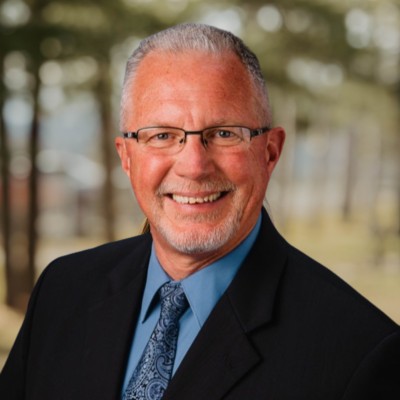
Dr. Mike Durnin is a nationally recognized leadership expert, educator, and former championship-winning coach with a distinguished career in higher education spanning coaching, teaching, and executive administration. As Founder and President of Via Crucis Leadership, LLC, he delivers high-impact keynotes grounded in powerful storytelling, authenticity, and his signature “Handful of L’s” framework. Guided by his philosophy—“1-0 Every Day in Every Way”—Mike equips leaders to navigate uncertainty, build resilience, and lead with purpose in today’s chaordic world. He also serves as President of the Chris Norton Foundation, was featured in the documentary 7 Yards, and holds a Doctor of Ministry degree.