Plug: Paul Leon here. I want to take my hat off for a moment and speak directly to you, the listener or watcher of our show here at the Managers Mic. I want to take our relationship a step further. When you join our newsletter at TheManagersMic.com website, I am going to give you a free resource called a selling script to skyrocket sales.
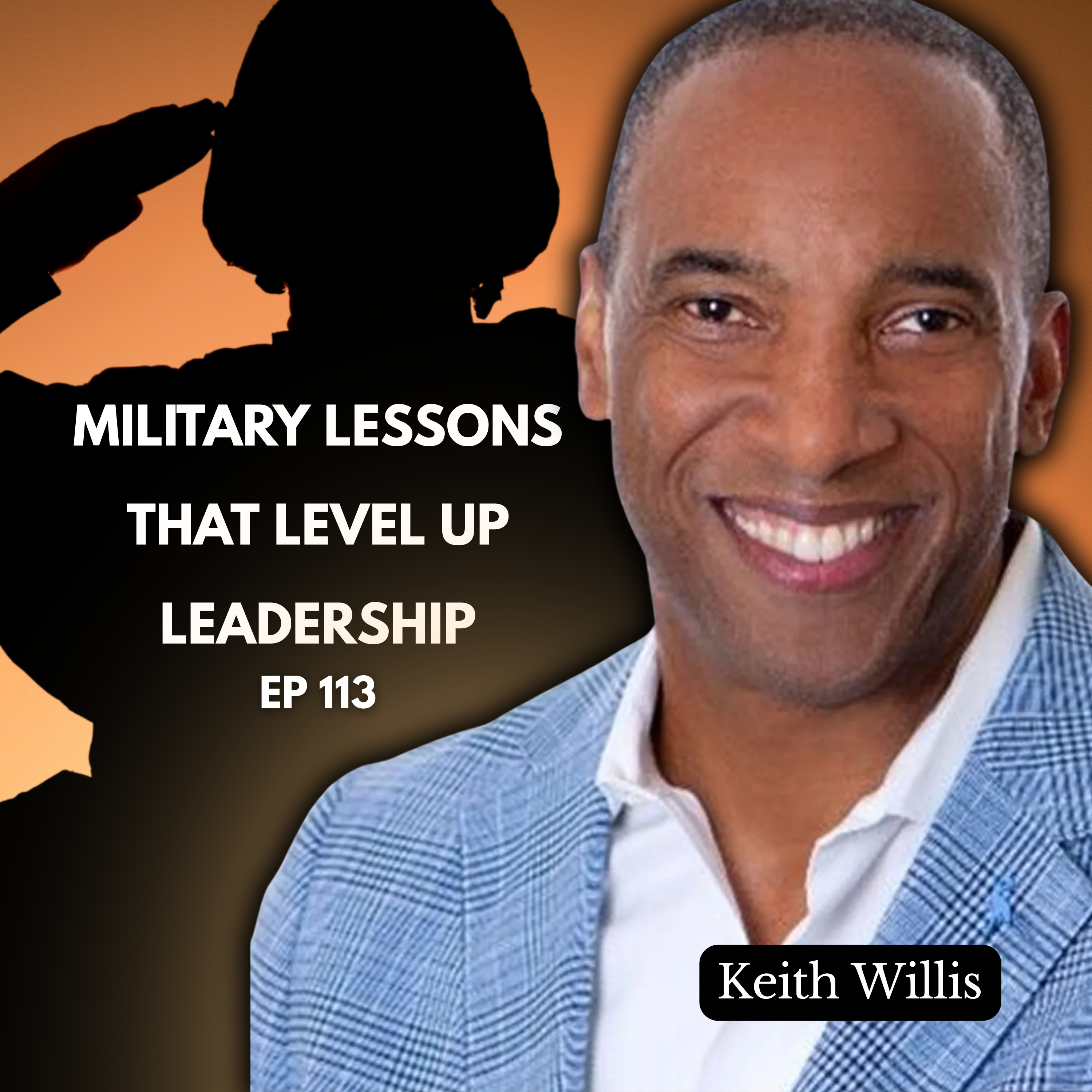
Paul Leon: Welcome back to the Managers Mic Podcast. I have a great guest for today. It is Keith Willis. What Keith does, and I am super excited about this, he helps sales managers transform teams into high-performing teams. And Keith is an expert at this because he understands those challenges, because he helps remove them for companies with the following results through his
Plug: And my promise to you is that this resource is totally free, helps you evaluate your current script, and see where it might need some improvement.
Paul Leon: core management training solutions. Those results include reliable top performers, consistent team results, and structures that improve processes. In fact, in studying Keith’s career, he has actually had some clients in cases where they have achieved these results within six months, which is a very fast turnaround time. And I say that because a lot of training programs out there, for those who may have never considered this or maybe you are somebody new to this podcast, typically 18 months is a good turnaround time. So for somebody to do it in six months is absolutely fascinating.
Today what our core topic is going to be around—and at least we will start there with you, Keith—is we are going to talk about what business leaders can learn from the military about servant leadership today. That is going to be our anchor
Plug: Thank you so much for being a listener and watcher of the show. And now back to the episode.
Paul Leon: topic to kind of hone on leveraging your experience, Keith, and going deeper as we peel the onion and define what good management looks like and the leadership skills needed to create the environment and results you deliver for companies, if that is fair.
Keith Willis: Well, thanks Paul, really excited to be on with you and looking forward to our conversation. My military experience started before I was in the Army. I did four years of ROTC, and as a part of that you have a cadre, and what they are, they are responsible for the program. And so I saw a lot of leadership there.
We would have class once a week and then we would have what you call lab. And then lab, we would do things like rock climbing, rappelling, those types of things to build not only skills, but build confidence. But at the same time, classes—there were thought processes and things that you learned throughout the time. And so these are people that over time you are going to look up to. They would talk about things like leadership. They would teach you a lot of different lessons.
And then in my third year, I went to camp, which is competitive. You get ranked. You are in a platoon of about 30 people and have, they call five at the time—people get graded. So there are only five fives and then there were fours, and you have to at least get a three to be able to get out of camp. And everyone that is a five is going to compete for the regular Army commissions relative to those West Pointers.
So there were just a lot of lessons that I learned. One of the things around the servant leadership: leaders eat last. And in terms of that, that is something that we just say, or if anybody has read Simon Sinek’s book, he talks about that. And some of that is from his experiences of spending some time with the military.
I remember that was brought to fruition. We had gone out into the field while in Germany. And it was super cold outside. And I remember the company commander rolling up his sleeves, helping put up tents because ultimately we all wanted to sleep.
And oftentimes we think of leadership. We think the leaders are going to sit back while the soldiers are going to do all the work. But ultimately it is about everybody putting in together so that we can accomplish our mission.
Paul Leon: I love that. During your time in ROTC, you had said that the leader was also the one setting up the camp, if I heard you correctly, yes?
Keith Willis: Yes, yes.
Paul Leon: Would you say that that was one of the first times that you saw that and it kind of broke a belief of what you presumed leadership looked like and started to define it during that time? Or was there other examples you experienced during that time that created your own definition of foundation that gets you the results today?
Keith Willis: Well, it is funny that you asked that, Paul. My experience around servant leadership was outside of the military. Now I was in college at the time also. I worked at McDonald’s. And one of the things that I can say is that McDonald’s was the first corporate culture that I worked in because they were very definitive. There were a lot of processes and those type of things.
But I remember there was one of the managers that when we would close, he would roll up his sleeves and he would do everything he could do to help everybody close the store down. Oftentimes when you work with a manager, they were focused on the money, they were counting the drawers, they were doing all of those things.
I do not know what it is that he did, but he seemed to always have his work completed and he would mop, he would sweep. And I would say he was not necessarily the friendliest. I would just say that earlier on I did not like him. And then later on I began to appreciate him because of the way he did things. And I could see his leadership style and the fact that he was always trying to push us out.
Now obviously being in college, I was taking ROTC at the same time. That lesson from McDonald’s carried over because then when I was able to see that on the other side with the military, that was a lesson that was reinforced. And so I began to understand that as a leader, you are also a servant. That if you are serving your people effectively, then you are going to get the best outcome that you can.
Paul Leon: I think a lot of people make assumptions about the military, kind of like what you spoke to, that it is about control. I see that a lot in a lot of different groups. You hear stuff, you just have to kind of stay quiet and let people talk because you are not going to change anyone’s mind if that is their strong belief system.
And I actually worked in a McDonald’s too, since you had shared. I worked at one in Washington, DC. It was my first job. I had to—this is going to make me sound terrible—so I am sharing something with you that a lot of people do not know. We locked the doors. This is how bad this McDonald’s was where I had to take a mop. And this is really sad, but like a lot of people would be homeless and they would bathe in the sink. So I was like a kid. I had to take a mop and I had to shoo away people bathing in the sink. I felt bad. Like I hated doing that though, because the manager I had at the time, that was my task.
And I remember asking him, like, why am I having to do this? And he said, because there is a certain status we have to keep.
And I think sometimes when it comes to the military, we assume that they are too tough. You had a lot of environments is probably the easy way to define some of your experience, whether it was McDonald’s or military.
What about those high stakes environments, if you want to go a little deeper with me, Keith, that helped you define servant leadership further? If we want to go there, if that is fair.
Keith Willis: I was in Germany for three years. And to give a little context, I left Germany in ’89. So I believe it was—I cannot remember if it was August of ’89 or something like that—when the Berlin Wall started coming down. So at that time, it was the 40th anniversary of the Berlin Wall coming down. I was in Berlin then at the time when they were having
Paul Leon: Great. Ru it.
Keith Willis: the riots and all of that stuff. So I was not able to go into East Berlin. So that is kind of the context.
We used to have what they call these no-notice alerts. A no-notice alert would be you would load up all of your stuff, recall roster 3 a.m. in the morning or whatever, and then you hit the road in a convoy like you were going to war.
And I remember looking back that there were still plans as late as, at the time, 1987, where Russia was going to come over the border. So this was no joke. And we would practice and we would do these things and there would be timing. How long did it take us to get together and those types of things.
So we played—I would not say played—we practiced. It was what we did on a regular basis. And depending on where you were in Germany, you were practicing your mission on a regular basis. It is what you did. And that is just part of the military culture, that oftentimes what you are doing is your mission.
Now, because I was in an ordnance unit, we fixed equipment, which was a little different because folks that were out in the field, they would be the ones that were fighting the wars, but if their equipment broke, they would send it back to us.
We would train once a week. We would have a day of training and preventative maintenance checks and services. That would all be every Wednesday. And so that was something that we did.
And there was a correlation between leadership and how well you took care of your vehicles, how well you trained. And so those are just things that you get to, but it was just kind of a whole thought process.
And when we think about it, I remember when the first Gulf War happened, there was a helicopter unit that was not able to go over. And I remember them talking about the helicopters. There were issues with the helicopters, this, that, and the other. They sent a helicopter unit from Germany. It was not the helicopters, it was a leadership issue. The lack of maintenance was a reflection of the leadership.
So all of these things begin to come together and kind of put together a story. So when we think about leadership, we think about things like everybody is going to get orders, you have to follow orders, but at the same time, part of your responsibility is to tell it like it is, and everybody has opportunity to lead. Everybody has a function in the military.
If you are the armorer, for example, you might be an E4, but your responsibility is to make sure that all of the weapons are clean. So you might have to tell a lieutenant, your weapon is not clean enough.
I had that happen to me. I decided to pull rank, which was dumb at the time. From that time forward until the time that I left Germany, he called me LT.
Paul Leon: Yeah—really?
Keith Willis: He never called me sir or anything like that because I had lost his respect. Because at the end of the day, he had a job. I thought he was being difficult, but whether he was being difficult or not, he had a job to do. And if he did not think my weapon was clean enough, it probably was not clean enough.
And here again, orders only go so far. You have to influence through people. You have to get them to do the things that need to be done. And sometimes it just means having a conversation, not giving an order.
People will respect you far more having a conversation, getting some insights from them, what their thought processes are, and putting those things together. Then you can come up with an idea of what is going to work, what makes sense.
Paul Leon: Right. Why was it, Keith, if I may, a mistake for you to say an order was a mistake? And LT—does that mean lieutenant or was that like inside joke? I assume that meant lieutenant. Those two parts to that question.
Keith Willis: Yeah, it means lieutenant. Generally when you are an officer, they may call you—sometimes LT can be an endearing term. In this case, it was not. It was like, you jackass.
Paul Leon: Right. I mean, I have been called a jackass. I have never associated that word with the word lieutenant in my life, just to be clear. So that is why I was kind of like, it sounds like a term of endearment. But I guess his tone is what you are referring to. Correct.
Keith Willis: Yeah, it is—every now and then, sir, or lieutenant, or something like that, versus LT—it is kind of, you have not earned that right for me to call you, sir.
You decided you did not want to clean your weapon because I said that it was dirty or needed to be cleaned further. You had better things to do.
My responsibility—I think at the time in that unit we had close to 300 soldiers—that specialist was responsible for weapons in the unit. So you turned your weapon in, he was the one that said it is good to go.
And I do not know that I maybe—maybe he was being difficult, but I think sometimes you just have to kind of play along. If he was being difficult, I mean, you know how that joke goes. Sometimes when somebody gets in, they have a level of control. They decide they are going to figure out if they can use that leverage. But sometimes you earn respect that way also.
You do not have to pull rank. You can just go along with it and clean the weapon and they give you that level of respect. I was not willing to do that.
Whether he—looking back, I think he was probably more right and I was definitely more wrong. Regardless of what his thought process was, at the end of the day, he had a job to do, and I needed to follow his direction.
Paul Leon: That is fair. At the time, you can recall—and I do not know how much you are allowed to share, I do not know if there is like a—I do not know. I always imagine there is like a military NDA that exists. I have never been in the military. So stop me if I have gone too far.
But was the issue around the sense that you were trying to protect him, like was your intention that, and then you pulled rank? And then your tone shifted if we want to peel the onion there.
And then the other part I am going to ask you, just so you know what is coming: how you would have said it differently to get a better outcome if you could go back in time and do it again.
Keith Willis: So if I go back in time—and let me say it this way. In some of these special forces teams, SEAL teams, people of a variety of ranks, everybody has a role and responsibility.
So let us just pretend for a moment I decided I was going to go to Ranger school. I was going to go to special forces and I have an E7. Maybe I am a captain at the time or there is an E6 that has responsibility for something. Imagine me countermanding that person and saying, no, we are going to do it this way, even though it is that person’s responsibility.
From that perspective, I look and I say, man, you were really wrong because—it was not special forces, it was not any of those things. At the end of the day, what the armorer asked me to do is go back and clean the weapon or finish cleaning it. Or he felt that it was not clean enough.
Whether it was or not is relative. It should have just been what I did. It would not have taken me an additional five or ten minutes. I could have played along with him.
And so by me just saying, hey, I am turning in my weapon and that is that, I just lost a lot of his respect.
And I think at times when we are communicating with people, there is a common—and this is just in leadership in general—we want people to do what we want them to do. I mean, everybody is a control freak to some degree.
One of the issues of what we have in the world today is we spend a lot of time having conversations about what we think other people should be doing. And sometimes it is just, you just need to do what you need to do. And if somebody asks you to do something because that is their role and responsibility, then that is what you need to do.
It is not like it was going to spend an extra hour cleaning the weapon. It would just—or I could ask them some questions: hey, where would you like me to focus my time on this weapon? I thought it was clean, help me out here. Give me a little bit more information. There are a lot of other things I could have done other than decide I was going to use my rank.
Paul Leon: I like that. You were very humble—coming from humble beginnings, mentioning McDonald’s—and we have that in common.
I have a belief, personally, that good results and action come from a place of either clear direction or a lack of it, or too much ambiguity.
I kind of want to go into your work today, the things you are doing now, because you are helping a lot of sales managers get results. And a lot of that stems from that background, which is very impressive.
And I do want to say—before I go deeper, Keith—I do want to say thank you for what you have done for our country. Personally, I do not feel like I should have started with that. Now that I am speaking of wishing I could go back in time, if I could do this, I would have said that. So let me just stop here and say thank you for what you did for our country, number one, right off the bat, if that is fair.
Keith Willis: Thanks, Paul. Appreciate it.
Paul Leon: So where do managers create ambiguity in their day-to-day that you see when you first go into a company? You could frame it from that way or any way you choose, Keith. Where do managers create it without even realizing it?
I just kind of want to peel the onion around this question and see if you can give some good examples that we can kind of jump off from, if that is fair, or what you have seen, your experience.
Keith Willis: I will start with myself because I think communication. So when we talk about ambiguity, it is being clear in your communication. And at the end of the day, communication is very, very hard.
Even after all these years, having managed people and managed teams, you think you have it down pat. Having done consulting, I have an executive assistant and very—you know—trying to figure out whether or not you are communicating clearly, you will find out very quickly.
Ask your executive assistant to do something, they will look at you like a deer in the headlights. I have no earthly idea what you are asking me to do.
And the funny thing about it is that they will ask stuff that you think—in the back of my mind—I just would never have even thought of that question in a million worlds.
Here is an example. Before I got on our call, I was in San Diego a couple of weeks ago and I needed to do an expense report. And I had asked my executive assistant to do this expense report. I sent over—I put all of the receipts and everything—and then I sent over and just said, this needs to be done.
Now we had done an expense report, I do not know, several months ago. I guess that was ages ago. I have a Loom video. I looked for one. I did not find anything. But I sent this email off to her. She sends back an email and—and the last thing I said was, if you have other questions, let me know.
So we ended up on a 15-minute call, me walking through the document, but it was clear that my original direction and email was clearly not clear enough about what needed to happen, how it needed to happen.
The reality of it is that this is what happens on a regular basis with managers. You have a sales team, you tell them to do X, you do not give any context, you do not say why. You give no other information other than to say this needs to be done. You have no other information other than that.
So I think in terms of managerial work sessions on the sales side—so in pharma, sales managers usually spend time in the field a couple of days, and then at the end of the day they usually will have some type of thing that the representative has to do: a development plan of some sort.
Usually what happens, from four to six weeks later, the manager will go out into the field and the thing that was supposed to be done from a development standpoint either was not done, or the field coach report—and they were maybe clear and not clear about what was supposed to be done—and they worked on it the night before. Then the manager wonders why there has been no improvement in skill.
Part of it is that oftentimes communication is one way. Here is what I think needs to happen. There is no level of agreement. Do we agree that—do we both agree that this is the issue, this is the challenge, this is the problem?
What are your thoughts about how we should solve this? Here is what my thoughts are. Can we come together somewhere in the middle?
So in some cases, you have managers really good at coaching, but not real good at accountability. They do not hold the person accountable. They do not have due dates about whatever it is they want that person to do.
Let us just say for argument sake that you want the representative to do speaker programs or more speaker programs. And then you wait six weeks to follow up. Well, you could follow up in a couple of days and say, we just had a conversation about setting up speaker programs. Who did you talk to? What offices did you go to? And then give some direction or have a conversation about next steps and those types of things.
So that is what I mean about ambiguity. It happens on a regular basis. And then the manager who sits in the middle has the same problem, because oftentimes the direction they get from their manager is very ambiguous because the direction that that manager got from their manager was very ambiguous.
So everybody is running around in circles chasing themselves because no one is clear exactly what is supposed to happen. And then if you are in a meeting and you ask for some clarification, people will look at you like you are crazy.
Paul Leon: I have a selfish question. It was not on my guide. In your opinion, in your experience, what are some dangerous assumptions new managers make that cost them significant amounts of time, frustration, and a lot of pain?
If I gave you a magic wand and you could wave it at all new managers today who are starting their position, what are some dangerous assumptions you feel new managers make that you would eliminate right there to help them all at the same time?
I am just going to make up a number: this would probably increase productivity by 50 percent. I am just making it up, that is not anything found in any real data. I am curious from your perspective, what are a few assumptions new managers make based on your experience?
Keith Willis: I would probably say number one, there is a feeling that somebody has waved a magic wand over your head and made you a manager, that all of a sudden you are all knowing. And you do not have the ability to ask anybody any questions or ask for help. Because I know that was an assumption that I had made.
Paul Leon: Yeah. Right. Mmm.
Keith Willis: It was not until later in my career that I asked for help with situations. I remember one time going into a coaching situation where I roleplayed with my manager. I had been an experienced manager for years and we both played through a situation.
My manager told me you need to tell this person—there was an issue around trust—and they said, you need to tell this person that. And I was like, really? You want me to tell them that? And so I did that.
The bottom line is that the coaching conversation went extremely well. If I had not done that, it may have gone in a different direction.
If I look back the previous, I do not know, seven or eight years when I was a district sales manager, very rarely did I approach my manager and say I need help with something or any coaching situation or coaching conversation. I might talk to a peer. I had a peer I would talk to every day. We would talk at least once a week for, I guess, over the course of six years.
But the thought that I needed to go to my manager and have that conversation, it was just—I thought that that would make me look less than.
And I think the same thing with your people. If you open yourself up to be a little more vulnerable, also to let them know, hey, I do not have all the answers. I am here in this with you. I think that will go a long way in helping make new managers a lot more effective. So that would be number one.
Paul Leon: Hmm. Hmm.
Keith Willis: Number two, there is an assumption that the manager’s role is to mold and direct people into what they need to be. My mantra is that your role as a manager and leader is to make your people the best version of themselves that they can be.
And what I mean by that is you are their talents, their skills, abilities that they have. Those skill sets may be very different than yours. Now the job is a job. There are certain things that you need to be able to do on the job, but what you have got to do is you have got to be able to leverage that person’s talent.
If the person is really good at storytelling with their customers, let them tell. If the person is very good at using data and analysis and those types of things, you help them leverage that.
Now there might be elements where they need to tell a story, but that is not what you default to with them because you are not helping them be the best version of themselves that they can be.
So I think between that and asking for help will go a long way in helping new managers be a lot more effective because just like if you are a new sales rep, you are learning. It is just like being a new manager.
If you are playing sports, if you are in the minor leagues and you go to the major leagues, it is the game, but everything goes to a different level. So it is the same thing. Everybody is at the same place. You are moving from point A, you are moving to the next point, to the next point. You need help along the way. You have got to be willing to have those discussions with people.
And then you have got to bring your team in and you have got to help them see that here is how I can help you be the best version of you that you can be.
Paul Leon: I think the word that comes to my mind is it is a matter of discipline. I feel discipline is a word that I am going to introduce here at this point in the conversation. Do you feel that the word discipline is really that line that separates a high-performing manager from an average one?
Would you say there are other words on that line, Keith, that also need to be included? Or maybe if we could just pick one, would that be the one or is there more there?
And then I want to ask you, what does discipline look like in management further, if we can go there too.
Keith Willis: Yeah, I—
Paul Leon: discipline look like in management further, if we can go there too.
Keith Willis: Yeah. So if I were to use discipline, I would say discipline and consistency kind of go together. I think of it that way.
One-on-ones. When I was a sales manager, you spend time in the field. One of the things that I did not do is I did not do regular calls with my team. Now I might spend office day on Friday and talk to everybody on the team, but I did notice that managers that talked and communicated with their teams from a sales perspective more regularly produced more consistent and better results.
When I went into the home office, I remember when I did my first one-on-one. Now, I was a manager that did kind of the walk-around management, talk to people all the time, those type of things.
I did my first one-on-one with my direct report and we were only supposed to have 30 minutes. We spent about an hour and a half and I remember thinking, I talk to her every day. Like, what am I missing?
And that was when I realized, oh, doing a one-on-one weekly is really important. It is something you should do on a regular basis.
And the data is compelling. I think it is Marcus Buckingham that says at least a 15-minute conversation every week makes a big difference. Gallup has got some data that talks about one-on-ones, and there are other tools and resources out there to talk about doing a one-on-one is a very smart thing to do.
Paul Leon: Yeah. Yeah.
Keith Willis: That is something, that is a tool that managers will do. And what I find is because in a lot of organizations people travel, when do managers not do one-on-ones? When they are on the road.
Well, we have got phones, we have Zoom, we have Google, we have all of these things. Even if it is just a 15-minute conversation, do your one-on-ones. It will go a long way in making a big difference.
Or you have got a team, do a staff meeting. It is all of those different things.
We talk about things like change management. We talk about communication. Those are all vehicles that we have an opportunity to meet with our people, develop our people, provide coaching and feedback on a regular basis, just in a weekly one-on-one.
So if you think about it, and that is just for argument sake, if you do them consistently, let us say you do about anywhere 48 or so of them, that is a good amount of time that you are spending with an individual just on business, on development, and those type of things.
So I think the best managers do that consistently. And then you add that along with accountability: what is it that you are supposed to be doing, and then making sure that those things get done.
So those are things that I find that differentiate the best managers from those managers that are just okay. Because ultimately those are the pieces that get back to this execution piece.
Paul Leon: Right.
Keith Willis: Especially if you are a first- and second-line manager, it is all about the execution. And what is the best way to get execution? You have got to spend time with people. You have got to have these one-on-ones. You have to provide some coaching and some feedback. You have got to have some accountability. That is the only way that you are going to impact that performance line.
Paul Leon: I like that. I did not mention that you were StrengthsQuest—
Keith Willis: Yeah, I am certified as a CliftonStrengths Coach.
Paul Leon: And for those who may not have context to what that truly means in terms of value and why it is a value to someone when they hire you, would you mind sharing to maybe like somebody who may not know what CliftonStrengths is? Because that has been founded in years of research. I am curious if you are willing to speak about your journey, why that certification is important to you, why you got it, to help get results for your customers.
Keith Willis: Yes, my CliftonStrengths journey started—I was a manager at the time. So I had read this book, Break All the Rules by Marcus Buckingham. And in that book, he talks about CliftonStrengths. And the way he does it, he does not talk about it from the standpoint of these are the 34 themes, here is what they mean. He talked about it in stories and people living every day and how they did their jobs and how they applied their strengths, or their top five.
And so it was done in a way that you could visualize what that meant for people.
He does another part where he shows how people move from one job to another job, and the jobs are so completely different, or different careers, but he shows how they use those same strengths in another role.
And so I remember thinking, hmm, that seems like something that would be very beneficial. And that was driven home.
I was with one of my sales representatives at the time who was struggling, and they struggled with product knowledge. And so at the end of the first day they told me, well, I guess I am going to go home and cry. And they were being a little facetious. Yeah, yeah. I had a good relationship with her.
Paul Leon: Hmm. Yeah. I was going to say, he said that or she said that—well, it sounds like you had good rapport.
Keith Willis: But I got to tell you, I went home and thought about that. And it is like, okay, what am I missing?
So the following day, I asked her, I said, what is it that you do well? And she says, I paint pictures for doctors to get a sense of the patients they should be writing for. And so I said that that was what we were going to focus the day on. And so that was what we did.
Now, her product knowledge was never great, and was never going to be great. She is a great salesperson. And it was not that product knowledge was not important. It just was never going to be the strength for her.
But the consequence of that day was that she finished the year over 100 percent.
Now, Paul, I wish I could tell you that at that point I was selling on CliftonStrengths and I was going to use it forever, but that did not exactly happen that way.
Eventually I went into another role, helped stand up leadership development at another pharma company, and had the opportunity to get certified. So I got certified as a CliftonStrengths Coach.
And then as I worked in the home office with different teams, we began to apply it more consistently to really help with performance of my teams. And not only that, my last couple of training teams, I was able to turn that team over twice, getting people promoted.
So that was when it clicked to say, this is a real difference maker. And I also saw the correlation between leaders and teams that I coached, that those teams performed at a higher level than those teams that did not do CliftonStrengths.
So that is why I think it is beneficial.
I like a definition that I heard. And the definition is: it is the thing that you do best with the least amount of effort. So when you think about your talent, it is exactly that. What is it that you do that does not take a lot of effort or energy that you do absolutely the best?
And if you can find that sweet spot and just focus on that, then that is a winning combination.
It was Steve Harvey that—because he talks about that a lot—because he jokes about, I only tell jokes. He is like, I used to get in trouble so much for telling jokes and things. He said, but it is the thing that I do. And I mean, he has made millions and millions of dollars. He is like, I can take any situation and I can sit down and write jokes about it.
Paul Leon: That is a good frame. Yeah.
Keith Willis: And so that is his talent. And so all of us have talents that we oftentimes do not use.
So if we want to think of it from that perspective, CliftonStrengths is a tool that will help you. There are 34 themes. Obviously, there are more than 34 talents, but it gives you some insights into those themes.
It really is not a strength until what we say, consistent near-perfect performance, which I would argue and say that will take a lifetime to do.
So if it takes a lifetime to do that, why would you even waste time focusing on your weaknesses? Could you use your strengths to overcome some of those weaknesses or just focus on those things that you do extremely well?
Paul Leon: I like that. I like Steve Harvey a lot too. I know when I was doing comedy a lot, I used to listen to him. I do not know if I shared with you that. You are the star—I did the stand-up thing. But we will see when I am done with this MBA in the next 40 days, if I put that back on my plate.
Keith Willis: Mmm, okay. Cool.
Paul Leon: So many big goals. I am curious, recap me: you reached the status of a director of sales in the pharma world, if I heard you earlier correctly, or is it higher than that when you were in that world?
Keith Willis: Yeah—wishful thinking. I was the director of field operations. I reported into the zone VP. That was my favorite role in pharma. We had what they call DFO council, sales council. So marketing, sales, everybody comes in for all the different meetings and everything. And it was a developmental role.
Paul Leon: Okay, that is awesome. Wow.
Keith Willis: The pharma industry, there are a lot of downsizing and things like that. So I would say that was the pinnacle, the height of where I reached.
Then I went back into training as a director. I ran one of the training teams and that was pretty cool. And then we were bought by an organization. I became an associate director. You know how it is—your title is X, but I am on the leadership team and I have budget responsibility. So it is relative to the role that you have.
I was running the multi-billion-dollar training teams with multi-billion-dollar brands. So it is just kind of a relative concept is what I would say.
But I do think that that runs into one of the things that I am working on right now. I am working on writing a book called Never Look for a Job Again. And I am going to build a course out for that and everything.
And part of it is all the lessons from getting out of the military into corporate America, building a career, going through that journey. And a lot of people get to that point where they are stuck and they want more. So being able to take some of those lessons that I learned along the way and be able to share that with people.
So that is one of the things that I am working on and plan to get done before the end of the year.
In corporate, they will tell you wait in line, you have got to do this, you have got to do that, and do that. And for every person that does that, you always find two or three other people that have done completely the opposite.
We tell ourselves a lot of stories. We act like we are the captain of our own ship oftentimes. It is that they make a concerted decision, I want to do X, and I am not going to let people stand in my way of getting there.
Paul Leon: Right. That is fair.
Keith Willis: So I look back and say, I always wanted to do marketing. I did not do marketing. Now, when I look back on it, there are probably two or three other things that I could have done that would have gotten me where I wanted to be.
And so it is those combination of lessons and then watching other people make that decision. And then oftentimes when I am having conversations with people or coaching people, I will ask them some different questions and it is things they have not considered, people they should be talking to, all of those things.
And so sometimes it is just creating a more effective roadmap and then following the roadmap. I mean, life gets in the way. It is never going to be perfect, but at least if you have a roadmap, you have an idea of where you are going and you can make a turn here, you can make a turn there.
I think ultimately what it does is, as long as you feel like you are in control, you are going to be happier than if you are not. If you are in a situation where you feel like, I am not in control, the next downsizing is coming and I am trying to figure out how to get the next role versus how do I leverage that to get a promotion?
How do I ultimately be the best version of myself that I can? How do I do that in a way that is very purposeful?
Paul Leon: What I like about you so far in our conversation together is you do not give any pragmatic—like, you are pragmatic, practical advice. Not like these blown up, like TikTok things like buy this and get this. And I like that about you.
And I like that you were humble enough to admit a mistake during your military experience. I am curious, since you were humble enough to do that—because you had worked extensively with pharma sales teams as you had shared—what is the biggest leadership mistake in that industry right now, that now that you are out of it and you can have that 80,000-foot view of it, if you are willing to speak to that? And I have some other questions if we can go there.
Keith Willis: I would say one of the mistakes—and I do not know if it is just pharma—oftentimes people get promoted and they do not have any training for their next role.
Back in the day when pharma was young, a lot of companies had developmental programs and so people were somewhat prepared. We were also a lot younger and people sped through the pathway pretty quickly to those next promotion roles and things like that.
I mean, I went to recruiting selection training as a sales representative. I went to leadership type training. I went to a skills assessment center. All of these things before I became a manager.
And a lot of companies have gotten away from that partly because of downsizing. You put somebody through a developmental process and then there is nowhere for them to go. Then if they leave, you have trained the manager for another organization.
These positions, they just end up opening. And so no one is doing any leadership development.
And it is very juxtaposed to what the military has done. When I went to officer basic course, it was before my first duty station. I spent six months before I even went to a duty station talking about, how do you be a platoon leader?
And then when I went back to my officer course, it was the same thing. How do you be a staff officer? How are you going to be a company commander?
So that on both sides. That is not only on the officer side, it is also on the NCO side where there is a great deal of schooling and training for the next level, helping leaders become prepared for that next level.
In corporate America, that oftentimes does not happen. So we will take the best salesperson and then we will make them the next manager.
In some ways it is very juxtaposed because sales can be a very individualized role. I mean, you can afford to be a prima donna as a sales representative if you put up great numbers. You cannot really afford to be a prima donna if you are going to be a great manager because it is not about you, it is about your people.
And I think those are challenges. They just have to figure out how to get people trained earlier.
And another part of that is where do budget cuts come? Usually the training department.
I know a couple of years ago in leadership development—and this was not only within pharma, this was across industries—companies were cutting leadership development people left and right. And so there was a space where there were not a lot of people conducting and doing the training.
And the other part of this is that I think there is a thought process that AI is going to replace people in jobs and roles, but you still have to have blocking and tackling. You still have got to have some practice with those things. So technology will only take you so far.
Paul Leon: Yeah. I am curious since you brought up AI, and since it is top of mind, it is—every day I hear about it. It is kind of getting to the point where it is exhausting.
But in your professional perspective, how should managers think about AI right now? Is it a threat? Is it a tool? Is it a distraction based on what you are seeing? Let us peel the onion around this question.
Keith Willis: I think AI is an amplification tool. If you are somebody that reads a lot, knows a lot, it can be a great thinking partner.
It can help you with coaching. You can take coaching situations and scenarios, you can load that in, you can ask questions. It will help you with blind spots. There will be stuff that you miss that you need to have in a coaching conversation that can help you prepare more effectively.
AI is not going to have a conversation with you or for you. I mean, you can have a coaching conversation and they can give you some feedback, but you have to go out and you have to execute it.
It can help you with numbers. It can help you with so many different things. And the thing is that a lot of people are using AI and they do not even realize it. There are CRM tools, there are other tools that are available that give them data and information. They just do not know that they are using AI.
You have to be very purposeful in how you are using it in a way that helps make you more effective.
Can it help me save time? Can it help me be more clear in my communication? Can it help me coach more effectively? Am I providing enough feedback?
You can ask all of those questions and you can set up AI in a way where you use it in that way. Or even putting together decks or things like that.
You just have to get AI to get to know you so it can, in a sense, replicate who you are and how you communicate.
It is interesting because if you read enough AI, you can tell when something is written by AI because it has—I joke and say it—loves to overuse adverbs. And why do we use so many dashes? I never knew we used dashes when we used to write.
Paul Leon: Yeah. Funny you say that. I have my friend who is a big tech—he is a big geek, like big geek. This is a guy who has like five different programs, understands stuff more than me. I have gotten to the point where I am editing content, I am like, somebody used AI here.
Like I can get to a point: this person would never use this word. And I can—I will see him and I am like, hey, I used that word. What do you think of that word? Like, what word? I never heard it in my life. I can tell he used AI.
I want to kind of go in this question, because I think it is an important one. You have built a consulting firm for a long corporate career, and you had to go from military to director, and now there is the entrepreneurship journey that you are in, you are still doing.
What has entrepreneurship taught you about leadership that the corporate world never taught you that you feel is worth discussing and sharing, maybe for that manager or that consultant as well who may want to also think about that as well in their journey? Because side hustles are a thing. You know, people have that. I am curious to see some of the lessons you have there, Keith.
Keith Willis: Mm-hmm. Yeah. The biggest lesson is I like to say entrepreneurship is the biggest self-development tool that you will find in your entire life.
If something is not going well, all you need to do is go look in the mirror because no one is coming to save you, no one is coming to fix you.
I would say I used to joke and say that I needed to get the corporate beat out of me because if you do not like a decision, you can change it tomorrow.
It is funny because a lot of organizations talk about people being entrepreneurs or owning a part of the business. In some ways it is juxtaposed because you do not have that latitude to make a change tomorrow if you do not want to do something. You are chasing somebody else’s goals and objectives, not your own. So that makes it difficult to be an entrepreneur or a solopreneur or however you want to call it when you sit within an organization because you are beholden to some goals and objectives. And you probably would make some different decisions based on that.
So I would say those are the biggest lessons.
There is a level of patience that has to come with it. I would say there is a direct correlation to self development and being willing to take a look in the mirror. The more that I spent time developing myself, I think there is a direct reflection of that in the business. So it is not for everybody.
Because you do not have a safety net. There is no safety net. So there are plenty of sleepless nights and things that you worry about.
You have to figure out this piece around—we talked about strengths and talents and those types of things. And a lot of times when you start out, you are bootstrapping. And so you have to figure out what is it that I should not do that I can find other people to do? When does that piece end? How do I work that? How do I do those things?
At the same time, it does help to know a little bit about a lot of stuff because when you hire people, at least you have some insights into what they are doing and what you are trying to accomplish.


 Apple Podcasts
 Spotify
 YouTube
 Amazon Music
 RSS Feed
  Goodpods
  iHeartRadio