
 Apple Podcasts
 Spotify
 YouTube
 Amazon Music
 RSS Feed
  Goodpods
  iHeartRadio
 The People First Playbook What a Championship Coach Taught Me About Leadership | EP 116
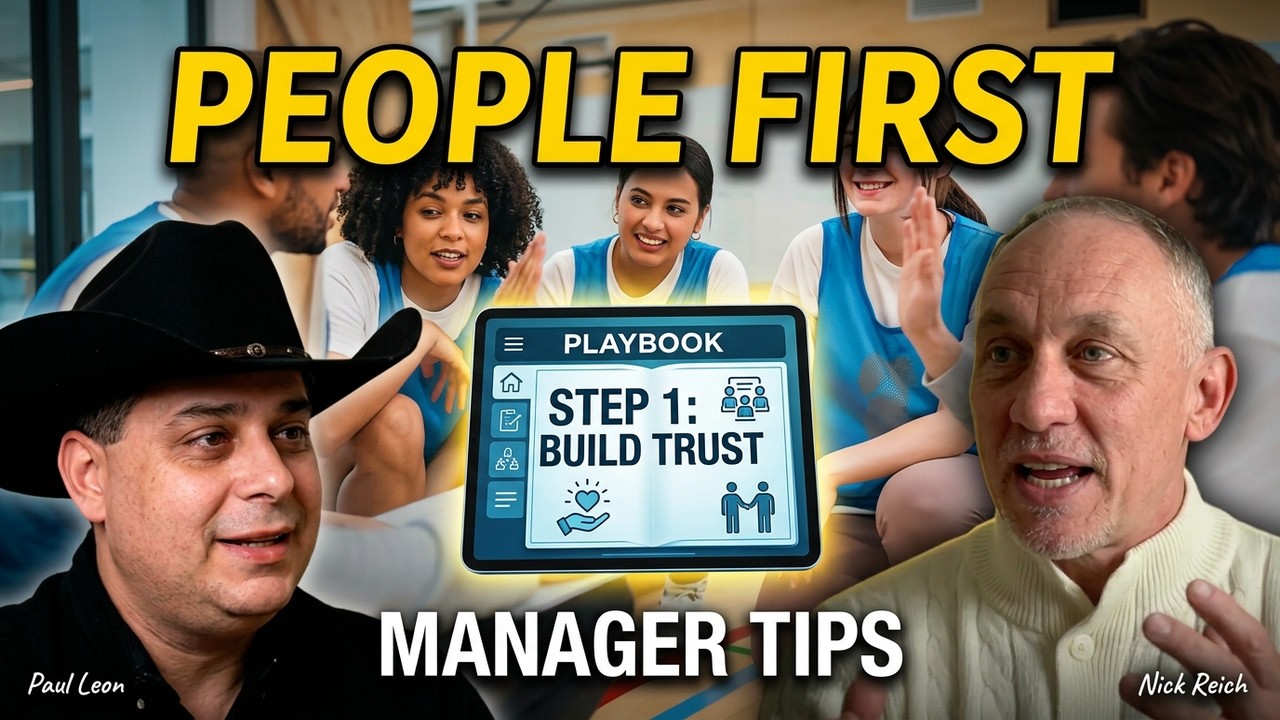


What can basketball teach you about leadership? Nick Reich breaks down his People First Playbook — a proven framework for building trust, purpose, and high-performing teams."
Follow Nick Reich
People First Playbook
https://www.peoplefirstplaybook.com/
https://www.linkedin.com/in/nick-reich05/
Chapters
00:00 Introduction to Leadership Philosophy
02:46 The Journey to Coaching and Leadership
04:47 Lessons from Basketball in Leadership
08:18 Boundaries in Leadership and Team Dynamics
10:19 The Impact of Managers on Mental Health
12:36 Awareness and Responsibility in Leadership
15:11 The Six Components of the People First Playbook
20:33 Defining Purpose in Leadership
22:33 The Importance of Purpose in Leadership
24:20 Intentionality in Defining Purpose
26:08 Navigating Managerial Transitions
27:49 The Role of Communication in Leadership
29:42 Recognizing Humanity in Leadership
32:43 Building Connections and Trust
33:56 Activities to Boost Team Morale
"🎙️ Subscribe to The Manager's Mic for weekly leadership insights for new managers."
Free Gift
Paul Leon:
Welcome back to the Managers Mic Podcast. Today, I am joined by Nick Reich. Nick is a leadership coach and co‑founder of Abundant Empowerment and CoLab, organizations dedicated to developing people‑first leaders and high‑trust teams, which is why I am excited about this conversation.
Nick’s upcoming book, Every Player Is Bigger Than the Program, blends storytelling, strategy, and systems thinking to help leaders navigate complexity with clarity and humanity. His leadership philosophy was shaped on and off the basketball court.
As a young coach, Nick built a team with no history, no reputation, and every reason to fail. Yet in just four years, they built a state championship program, the fastest in Indiana history. That experience informs his work today: the belief that people, when led well, become the engine of transformation.
Nick has spent more than two decades leading and advising purpose‑driven organizations across the social impact and business sectors. He is recognized for translating complex change into practical, actionable guidance that helps leaders build trust, strengthen culture, and communicate with clarity.
Nick lives in Indianapolis, where he coaches leaders, facilitates retreats, and teaches the People First Playbook to teams committed to creating meaningful, human‑centered work. Nick, welcome to the Managers Mic Podcast.
Nick:
Thanks, Paul. I appreciate you having me on.
Paul Leon:
How was that introduction? What did I miss?
Nick:
I think you covered it well. As you mentioned, a lot of the work I do stems from my background in social work and from launching a high school basketball program at an inner‑city Indianapolis charter school almost 20 years ago.
We had no brand, no gym, no team. As you said, we built the fastest state championship program in Indiana history. Basketball is a big deal in Indiana, and that championship game was actually the last game I ever coached.
Since then, I have focused entirely on leadership and leadership development. I am passionate about understanding how to create high‑performing teams, strong cultures, and the kinds of leaders who make that possible.
Paul Leon:
You mentioned social work. What drew you to that path? Did you plan to be a basketball coach, or was that never on the roadmap?
Nick:
Coaching was definitely not on the roadmap. I took a very indirect path to finishing my degree. I attended a small school in Illinois playing college basketball, but I was kicked out at the end of my sophomore year.
I spent some time lost in my early twenties before settling in Indianapolis. That is when I decided to pursue social work and finish my degree. I wanted to work with youth and provide something I felt I did not always have growing up.
I became the school social worker at a new charter school. I joined midway through the school’s second year, and this was almost 20 years ago. At the time, the basketball program was just an after‑school intramural option to keep kids busy and engaged.
Someone said, “You played college basketball. Why don’t you help build this program?” Coaching was never the end goal. It was a means to engage students, create structure, and support a path to graduation and life beyond school.
Paul Leon:
You often frame leadership lessons through basketball. What did basketball teach you about coaching and managing people that new managers often miss?
Nick:
Looking back, the biggest lesson was consistency. We focused every day on the type of culture, teammates, and leaders we wanted to be.
When I speak with new managers, that is what we emphasize in the People First Playbook. Once you become a manager, you become a household name. People talk about you at the dinner table. You have a responsibility to lead well.
Leadership starts at the individual level. Leader development is self‑development. New leaders need to understand their purpose, their values, and what they stand for.
From a basketball lens, leaders also need to know the game plan. Everyone on the team must understand where they are going, how they will get there, and their role in making it happen.
You also have to know your people. That means understanding strengths, weaknesses, and how each person responds to feedback. People‑first leadership is not soft. High expectations and accountability matter. People want to be challenged when it is done with respect.
A leader’s job is to clear the path, remove barriers, and put people in positions to succeed. That looks different for everyone, which is why knowing your people is essential.
Paul Leon:
You mentioned managers becoming part of the dinner‑table conversation. Some people say work should stay at work. How do you see that?
Nick:
I push back on that idea. You cannot separate work and home completely. If you have a bad day at work, it impacts your home life. If something difficult happens at home, it follows you to work.
At Abundant Empowerment, we talk about full‑circle leadership. Who you are at work, at home, and in the community are connected.
As a basketball coach, I had players live with me at different times. Every Friday night during the championship run, the entire team stayed at my house. I am not suggesting managers do that today, but it shows the value of connection.
There are boundaries, of course. You do not share everything with every employee. But understanding our shared humanity builds trust, transparency, and strong culture.
A manager has more impact on a person’s mental health than almost anyone else besides a spouse or partner. That responsibility deserves more attention.
Paul Leon:
Your book talks about the six pillars of the People First Playbook. Can you walk through them quickly?
Nick:
The first is purpose. Leaders must understand their why and their core values.
The second is direction. Teams need clear vision, goals, and defined roles.
The third is connection. Leaders must know their people well enough to put them in positions to succeed.
The fourth is excellence, which means clear standards, accountability, and addressing behavior that does not align with your values.
The fifth is enablement. Leaders remove barriers and support people based on their individual needs.
The final pillar is legacy. Every leader is leaving a legacy every day. The question is whether it is intentional.
Paul Leon:
Does purpose change based on the role or organization?
Nick:
For me, my personal purpose has stayed the same across every role. Teams and organizations have different purposes, but individual purpose remains consistent.
Winning games or hitting revenue targets are byproducts. Purpose is about people, growth, and long‑term success. When leaders chase short‑term results only, they miss what is possible.
Paul Leon:
Do people struggle with purpose because it is a skill, or because they were never taught to be intentional?
Nick:
It comes down to intentionality. Leaders must take time to reflect, think, journal, and define who they are. Purpose is not something you are born with. It is something you choose and refine over time.
Paul Leon:
Where can people learn more about you and the book?
Nick:
PeopleFirstPlaybook.com is the book site. There is also a People First Leadership Assessment available there. You can also email me directly at nick@abundantempowerment.com.
Paul Leon:
Final question. If you could wave a magic wand and fix one thing about leadership today, what would it be?
Nick:
I would bring back humanity. Leadership today requires more empathy, vulnerability, kindness, and connection than ever before, especially as technology advances.
People are bigger than programs. Brands do not breathe. People do. When leaders invest in people, people carry the organization farther than any name on a jersey ever could.
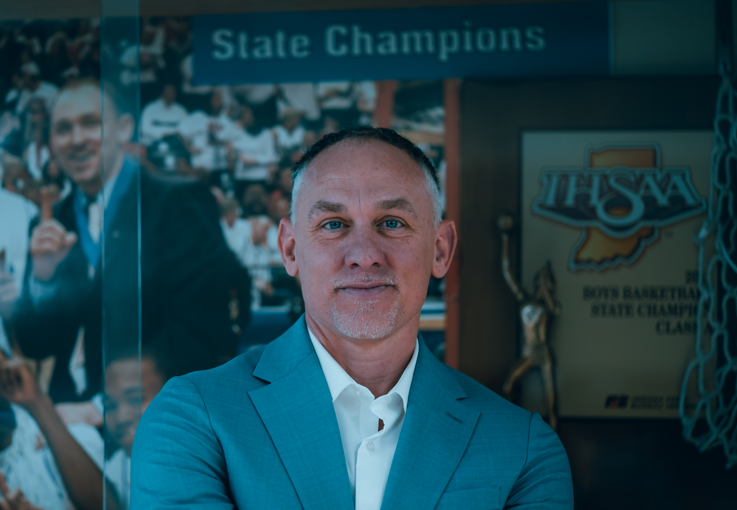
Chief Strategy Officer & Author
Nick Reich is a leadership coach, author, and the co-founder of Abundant Empowerment and CoLab, organizations dedicated to developing people-first leaders and high-trust teams. His upcoming book, Every Player Is Bigger Than the Program, blends storytelling, strategy, and systems thinking to help leaders navigate complexity with clarity and humanity.
Nick’s leadership philosophy was shaped on and off the basketball court. As a young coach, he built a team that had no history, no reputation, and every reason to fail; yet together they built a state-championship program in just four years, the fastest in Indiana history. That experience informs his work today: the belief that people, when led well, become the engine of transformation.
Nick has spent more than two decades leading and advising purpose-driven organizations across the social impact and business sectors. He is recognized for his ability to translate complex change into practical, actionable guidance that helps leaders build trust, strengthen culture, and communicate with clarity.
He lives in Indianapolis where he coaches leaders, facilitates retreats, and teaches the People-First Playbook to teams committed to creating meaningful, human-centered work/