

 Apple Podcasts
 Spotify
 YouTube
 Amazon Music
 RSS Feed
  Goodpods
  iHeartRadio
 How to Create a Community That Sees You (feat. Emily Green) | Tips for Managers
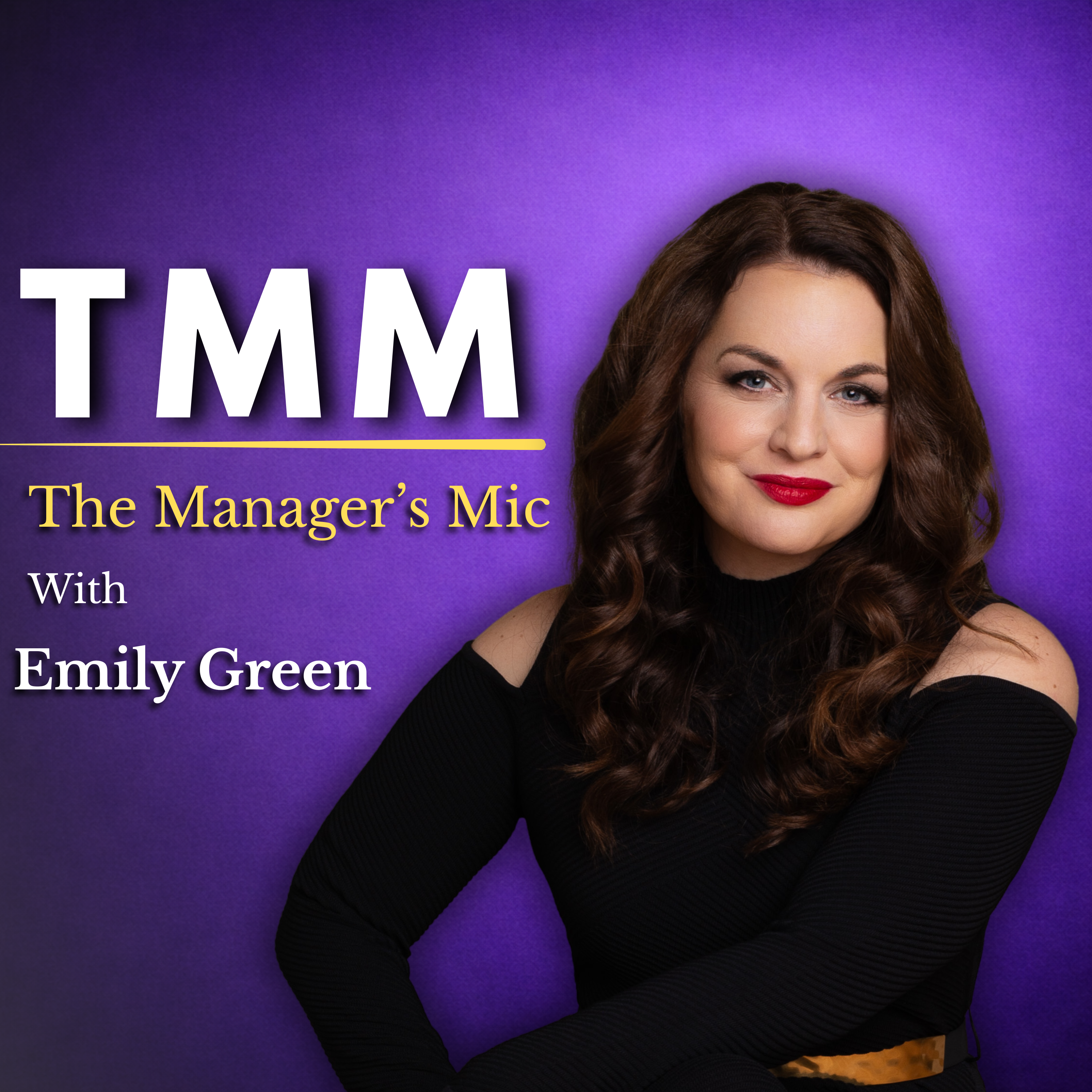


Emily Green shares how she created a community for those seeking speaking opportunities. She shares her journey of owning a marketing agency, which she later sold. If you are a new manager looking to create engagement, this episode is for you.
Follow Emily Green
Website
Join The Love Means Business Community
https://emily-s-site-eec1.thinkific.com/products/communities/my-community-speaker-support
Chapters
00:00 Introduction to Emily Green
02:49 Lessons from Selling a Business
04:13 Understanding Marketing Agency Dynamics
05:09 Client Success Stories and Growth Strategies
06:55 Building a Brand and Agency Culture
09:37 The Decision to Sell and Transitioning to New Ventures
12:01 Challenges Women Face in Business
14:41 The Importance of Support and Community
20:12 Exploring Love Means Business Community
21:02 Tips for Building a Community
23:46 Creating Value through Networking and Opportunities
26:30 The Art of Writing for Engagement
32:02 An Important Lesson from Emily’s Career Journey
Follow the podcast that helps new managers avoid the habits that kill rapport
https://www.themanagersmic.com/
Legal Disclaimer
Leonsolutions, LLC, and the content it produces are for educational purposes; your results may vary. No guarantee of results is claimed. The publisher of this content is not responsible for any actions taken or not taken as a result of reading, watching, or listening to our content.
Plug: Paul Leon here. I want to take my hat off for a moment and speak directly to you, the listener or watcher of our show here at The Managers Mic, and say thank you so much for being a consumer of the show. I want to take our relationship a step further. When you join our newsletter at themanagersmic.com, I am going to give you a free resource called a selling script to help skyrocket sales.
Paul Leon: Emily Green, you have extensive experience in marketing, public relations, and business development. In studying your LinkedIn, I also had the opportunity to learn that you are a lead strategist who drives both visibility and revenue as the founder of Grace Communications, a national marketing agency that was acquired in 2024. You have worked with clients across industries to grow their brands through strategic storytelling, digital marketing, events, and partnerships. What I love about your work is that today you are helping organizations strengthen their visibility, refine their messaging, and build marketing strategies that actually connect and convert. You are also the founder of Love Means Business, a growing global community and platform that helps leaders turn ideas into impact through speaking, media, and thought leadership.
Plug: Thank you so much for being a listener and watcher of the show. Now back to the episode.
Paul Leon: As the host of a podcast called Love Means Business, which I will put in the show notes, and I encourage listeners to please check out and follow, Emily, what did I cover about you that is important? What is important for people to know?
Emily Green: Well, I just want to make sure it is clear that I sold my marketing agency, Grace Communications, in 2024. Sometimes people still think that I am running it, but I did sell it, so I no longer own that agency. But I could not have Love Means Business and everything I do now without having run that business. It taught me so much and gave me many of the tools I still use today. Besides work and all of the amazing things you just said, I am also a wife, a mom, and a pet enthusiast. I would have all the pets if we did not have an HOA and restrictions, so maybe it is a good thing that we do.
Paul Leon: What kind of pets or animals do you have right now, just out of curiosity?
Emily Green: We have two cats and two dogs, and I really want to get chickens again. We used to have chickens and ducks before we moved, but again, the HOA will not allow it. We are working on it.
Paul Leon: Darn those people trying to keep houses nice and safe. I think you brought up something really important to your story, which is that you sold a business. You sold your marketing agency. What were some key lessons, frameworks, or things that came out of that experience that brought you to where you are today as a successful entrepreneur?
Emily Green: Yes. I think communication is the biggest one. That sounds cliché, but communication with your clients and your team is so important through a transition like that. When you are in the middle of selling your agency and going through all the legal steps, communication matters. Other than that, I feel like everything else went well, but with every sale there are complications, just like every time you sell a house there are complications. If someone is thinking about doing it, just know there is no perfect sale. There is always going to be something that happens, so you really have to be prepared for that. The other thing I would say is this: if you are wanting to sell your business and you are not sure whether you are ready, or you do not know what to do to get your business ready to sell, there are a few things I learned a year or two before I actually sold it that I started putting into place. Those things made my business sellable. Grace Communications was created to really bridge things, so sometimes people do not fully understand what I mean when I say marketing agency. We focused on public relations, event planning, and social media. Those were our three main services. My differentiating factor was that I combined my love for philanthropy and making the world a better place with marketing. Our whole thing was, at Grace Communications, we do things gracefully. One of the things that helped differentiate us and made the business attractive when it was up for sale was that I had several national clients, not just local small clients we had grown with over five to six years. We were able to work with amazing companies of all sizes that were doing great things in the world. As far as case studies go, we had clients from animal hospitals to pet services, all the way to national clients like Kimco Realty. They are almost a billion-dollar company, and we helped with events, social media, and PR for several of their properties across the U.S. Passionate Paws Animal Hospital was one of my first clients. I actually met them through a corporate position I had before I started my business. We ended up getting chosen to help with a small festival called Pups and Pints. We also helped launch platforms like YouTube and other channels they had not been using, and we actually grew one channel from zero to about 10,000 subscribers in a year and a half, which is pretty hard to do on YouTube.
Paul Leon: Wow, that is really hard.
Emily Green: It was really fun and really rewarding for me to be aligned with clients like that almost from the first three to five months of starting the business and then growing with them all the way through. I was able to expand the services we offered, expand my team, and grow not with a large number of clients, but with the right clients that were a good fit for us.
Paul Leon: I like that. I think one mistake I have been guilty of is not defining the right avatar of who you serve. At least for me personally, I have made that mistake. What other mistakes do you feel you did not know about when you first started, but later figured out and overcame in order to attract those national clients? Or were there skills and competencies you had to level up further to attract more people?
Emily Green: I think you have to think of your business as a brand too. That is actually hard as a marketing agency because you are always thinking about everyone else’s branding. So you can easily forget that you are a brand too. Your agency has to have its own vibe. I had not even defined our core values or our mission. I did things like an employee handbook around year three or four because one day I realized, I am doing this for all these other clients and I have not even done it for us. That was a big game changer. I started focusing on the culture of the agency and recognizing that yes, we are helping all these other brands with their voice, but we have a voice too. That is our actual identity. Then we put on these other identities when we help other clients. That can be really hard, and almost every marketing founder or leader I have ever talked to struggles with that. You give so much of your creativity and energy to helping clients that it can be hard to have anything left for your own marketing and your own brand.
Paul Leon: Did you want more work-life balance, and is that why you said goodbye to the business? Or was it just that you wanted something different? I like Love Means Business a lot, so I am curious how you knew that transition needed to happen. What were your signals?
Emily Green: When I first started my agency, I never thought about selling it. I did not even know people sold businesses, so that was not in my head at all. I really thought, okay, this is going to be my legacy. I am going to pass it on to my daughter or something like that. But as I got into it and started doing a lot more public speaking, originally for leads and to grow visibility like I talk about in Love Means Business, it became its own thing. I started getting booked so much that I began to feel a shift. It started to feel like another business altogether in a lot of ways. That was part of it. Also, when my agency had a presence in 10 different states, I realized either I had to take a big step back and hire someone to take over a lot of what I was doing, or I needed to sell, or do something, because I could not keep doing all of this thought leadership and speaking, be a good mom, expand our family, and still have the energy to be all these different things. I knew I had to make a decision. I thought, let me just see if I can sell it. I do not even know if I can. I tried a couple of different things to insert leadership and take some things off my plate while also seeing if I could sell it, and it did not work how I wanted it to. That helped make the decision. You have to be realistic. As much as I love success in business and love what I do, my personal life, my husband, and our home life are precious to me. I wanted to make sure I had enough for that and for the work I was doing. I could not do both. I had enough traction with speaking and with people wanting me to help them on a consulting basis, like I do with visibility coaching, that I felt I already had the foundation for a whole other business. Now, some would argue, Emily, you could have started that before you sold your agency. Yes, I could have. But you only have so much time. And I did not even have the community idea in my head then. That had not even been born yet. Everything with Love Means Business grew one thing into another.
Paul Leon: Are you comfortable if I ask something more personal? One of the challenges I hear, and I am not technically qualified to go here, but I am going to try, is that it is hard for women in business because there are a lot of expectations. My wife has coached me on this over the years. At first I did not always get it, and then over time I started to understand it more. I am curious, because you are a very professional and astute woman, if you were talking about what women need to do in business to level up, and what they need to protect to stay strong, I wonder if we could go there. I want to better understand that conversation my wife sometimes has with me about the challenges women face in business and with their professional brand, and what men need to be more aware of so women can have more opportunity and more respect in the workplace. In my experience, women are often more professional than men a lot of the time. I am throwing you a curveball, but I wonder if you are comfortable going there with me.
Emily Green: Sure. That is funny you say that because my husband does not think that. We have gotten into some debates about it. He works in a very male-dominated industry. There are hardly any women in his field, and he always complains that women are too dramatic or not professional. And I always tell him men can be dramatic too. I have plenty of examples of that. Honestly, I think people can be dramatic, period. So I will just be direct. I think women, number one, cannot go into business assuming men are out to get them, that everyone is trying to talk down to them, or that they will automatically be treated unfairly. You have to go in with an open mind, because if you do not, you can actually create a hostile environment yourself by being negative and almost making that outcome happen. Having said that, women do have to walk a tightrope. You have to be assertive, but not so assertive that you get labeled with the bad word women often get labeled with. That is hard, and I do not think men have to worry about that as much. But I also think there is power in being a woman. If you can use that strategically, you can really level the playing field. Some feminists might not like me saying this, but I personally like it when men open doors for me and do things like that. If you want to argue it from a strict feminist perspective, maybe that is not the right way to think, because technically it is saying I cannot do it myself. But there are still some societal things in place that I enjoy the benefits of as a woman. Now, when people cross the line and become disrespectful, regardless of gender, that is unacceptable. I have had that happen. I have had men do it, but honestly, women can sometimes be worse than men when it comes to being disrespectful or belittling. I think that is where women sometimes have to overcompensate and really show their strength. Do not be afraid to speak up. I have never been afraid to do that. I have had to put people in their place a lot of times. People underestimate me. I am a small person. I am only 5’3”. I am a woman. People often think I am younger than I am, and they automatically assume things about me that are not true. I used to get mad about that. Now I just think, they will see. Just wait. They will see.
Paul Leon: I love that. Are you comfortable sharing a specific experience?
Emily Green: I have talked before about one of my bosses in my last position before I started my first business. She was terrible. She was awful to me. She was always saying belittling things. I should not say it was only me, because it was everyone, so I guess I did not feel completely singled out, but she especially had issues with me. It got to the point where she would not even include me in meetings or calls because she did not want me to get exposure to upper leadership. She would say things like, “Oh, you lived in New York City, you worked in New York City, but you are from the country,” because I grew up in the country in Missouri, “you would never make it in New York City,” things like that. And she really had no idea what I had done. I had done commercials. Arguably, I had done way more hard and scary things than she had, but she made it a point to always say little things to try to make me feel bad. I honestly ended up thinking it was sad and even funny sometimes because she was trying so hard. But women like that really hold us back. They do, because they do not support other women. They are so insecure. She only cared about herself and her career and wanted no one around her who might challenge her or become what she saw as a threat. I do not even know if that was because she was female or just because of her personality, but that is an example.
Paul Leon: Yeah, absolutely. I remember when we had that phone call before deciding to do a podcast together, one of the things Emily and I connected on was that I had an experience with a manager, and for those two years it was a female boss who would say things to me like, “Hey, can you do me a favor?” This is the one that always makes me laugh now, even though it was annoying at the time. I think I shared this with you, Emily. She was in a meeting and said, “I do not know how to explain this, but can you fix your face?” And I was like, what? How do I do that? It was just very vindictive, very nasty feedback. I do not know if that is a female or male thing. It is just sad when it happens. I do invite your feelings on that. You also said something I am curious about. You said you are expanding your family. First, congratulations. I did not know what that meant, and if you do not want to go there, we do not have to, but I was curious.
Emily Green: Thank you. Sure, we can go there. We are adopting. So we are in the adoption process.
Paul Leon: Okay, congrats. That is a hard process. I do not know from personal experience, but a lot of couple friends my wife and I have say it is emotionally challenging. Where are you in the process? Do you feel like you are near the finish line, or is it more uncertain right now?
Emily Green: Everyone’s process is different, so I do not know exactly how to answer that. I think we probably still have a bit to go, but we are done with our home study, so that is exciting. We are now hopefully about to start with our placement agency, so that is kind of where we are. But placement can take six months or it can take four years. It is a very wide range of time.
Paul Leon: Really. Well, I pray that it goes as smoothly as possible and that whatever challenges you, your husband, your family, your two dogs, and your two cats face, you all overcome them well. I am rooting for you. I do want to talk about Love Means Business, since that is where we are naturally transitioning. You do not know this, but I actually looked at 50 different communities online. I often feel like many communities have some kind of underhanded motive or something under the table. I have trust issues.
Emily Green: Yes. Me too. We can definitely talk about this.
Paul Leon: When I first heard your name, because it is a very unconventional name, I thought there is probably a critic out there who sees it and maybe has negative thoughts. But I want to talk to that critic for a second, and then I want Emily to take over because she is obviously the owner of Love Means Business. After studying 50 communities and being approached by many, I have been very happy with the investment so far. For somebody who does not know what Love Means Business is, could you speak to the value proposition? If somebody is considering joining an online community, what value can they get out of it?
Emily Green: Yeah, that is more than fair. And I also want to say that I did not ask him to say that, so it is awesome that you looked at 50 communities. Honestly, I used to roll my eyes every time I saw someone announce they were launching a community. I would think, great, now they are going to be a coach too. It felt like everyone and their brother was saying, “I am going to be a coach and open a community.” So I never, ever wanted to have one. But what happened was I had so many people coming to me asking, honestly, for free advice. Things like, “How do I get booked for this?” “Can I pick your brain about that?” I always say, listen to what people come to you for unsolicited. Really pay attention to that. I mean in your DMs, in your messages, in all of that. That is your perceived value, and that is where your next business or your next big thing could be. I kept getting that, and I would say to my husband, here is another person who just picked my brain for an hour for free. I do not mind doing it, but after a while you start thinking, okay, I need to create something that lets me do this on a bigger scale because it is exhausting to repeat it over and over. I started with my LinkedIn newsletter, and I began sharing opportunities every week for speaking, media, events, and things like that. That grew really fast for me. I had over a thousand subscribers in a month, and for me that was a lot of growth. That was when I started thinking, okay, this is telling me there is even more need here. So I asked myself how I could combine my event experience with this need people had for help getting booked. Since I had a non-compete after selling my agency, I could not actually book people myself. So I started looking at different options, and that is when I found Thinkific, which hosts my community. I had the idea of combining traditional networking with elements of a PR agency. That is really what I tried to do. My vision was for it to be its own ecosystem. You can sign up for platforms that show you speaking opportunities. You can sign up for other services that show you media or podcast opportunities. You can join chambers for networking. But having all of that in one place is, in my opinion, incredibly valuable. And having that focus go beyond visibility into practically helping people get booked and paid, that is where my heart is. I am not doing this community to post motivational memes. It is not about that. I want to see people get booked and grow. So that is what we focus on. We post three to five opportunities every single day for speaking engagements, podcasts, and media placements that people can apply to. We also host two virtual events a month that people can attend from anywhere. They are educational and include a networking component. The other thing I do is celebrate the wins. We do that at every event. The first part is celebrating all the member wins, and I do that on social too, to show people the things members are getting booked for and the collaborations that are happening directly from the community.
Paul Leon: I am a very slow buyer, Emily. People who know me well know I am the guy who does so much research that you wonder if I am ever actually going to buy the car. I just do not want to rush. I first heard about your group from several podcast guests. I kept hearing about it over and over, and for context, this is why I wanted to talk about this. It felt like I kept hearing, “You have got to hear about this Love Means Business group. I got speaking and training opportunities from it.” I kept thinking, where are these people coming from? This happened for six months. Eventually I thought, let me just ask who is behind this. That is how we connected. So it is a really good group. I will put a link in the show notes for those considering a credible community with people who actually care. I do think, like anything else, you have to put the time in. I will be honest and say I need to do that more myself. I do have a question because you said your LinkedIn grew really quickly. My assumption is that comes from the way you approach content and the way you write, which is clearly a skill you have leveled up. Without giving away the whole farm, could you give me some key insights into how you approach writing content, how you approach your LinkedIn newsletter, and maybe some writing tips? For example, what do you think about first? What is your thought process? I would love to walk through that, because that is something I need to work on over the next 18 months, and I think a lot of people do too. I was wondering if we could peel the onion there, because I was very curious.
Emily Green: The big thing is this: it is not about you. Yes, you have your goals, whether that is growing your podcast numbers or growing membership for your community. You need to identify your actual business goals, and social media becomes a way to help you achieve those. What you cannot do, and what I see people do all the time, is go straight at it too aggressively. Every post is about them. Every post is some subtle sales pitch for whatever they are trying to grow. What I do, and what I help my clients do, is make it about people through other people. That still ends up helping what I am trying to build. You found out about me through other people. That is far more credible and far more appealing than if I had cold called you, emailed you, or pitch-slapped you and said, “Hey, you should join my community.” That would feel creepy. But if six different people tell you about it, especially if they are people you trust or they came to you because I featured your podcast in my community, that is way more compelling. On LinkedIn, with my newsletter, I could have written a personal article every week with all my thoughts and rambling ideas, but no offense, that is what a lot of newsletters are, and people do not read them because they do not care. Why? Because it is not about them. It is your thoughts, your passions. What I do in my newsletter is feature someone, or a business, or an event in every section. I do have an overarching theme, but there may be 10 people tagged and featured throughout the whole thing. That is going to reach a lot more people, and it gives them a reason to read it, share it, and engage. So if you are struggling with writing or struggling with engagement, create community with your posts. That is the key. If you find a way to include other people and make your content taggable and shareable, that is going to help you a lot.
Paul Leon: When did you first learn that? Did you always have that instinct, or is that something you figured out through your journey of running and selling a marketing agency? My assumption is that these were mistakes you made earlier and then corrected later. I know for me, I am a slow learner. I just got my MBA, finally.
Emily Green: Do not say it like that. Congratulations. That is a real accomplishment.
Paul Leon: I appreciate your enthusiasm. I do not think I have had a guest clap for me in a long time.
Emily Green: No, seriously, a lot of people do not finish, especially when they are working and have everything else going on. That is really hard, so good job.
Paul Leon: Thank you. It means a lot to me. I still have to tell my mom, but she does not listen to my podcast, so I will probably just have to call or text her. But I am curious how you figured this content thing out. Was it because you were not getting traction at some point and thought, this is not working, I need to change? Or was it something you learned in a training? I just want to understand how you peeled the onion there.
Emily Green: I think I had a bit of a leg up because I had run my agency. Even before that, when I was at Simon Property Group, which was my longest corporate role, about seven years, I had leadership roles in social media and digital marketing there. So I definitely saw what worked and what did not work, both at the agency and with clients whose LinkedIn presence we managed. We would test things, and some would work and some would not. So yes, I definitely learned by testing. But I also gauge it based on my own preferences. What do I enjoy? Who am I drawn to? What businesses do I naturally gravitate toward? They are usually the ones creating community. I do not know how else to say it. When you create community with your content and your writing, you invite people into a world and make them feel included. Maybe they are even part of what you are writing about. Sometimes that feels counterintuitive. People think, no, I am trying to grow my thing, talk about myself, and build my brand, so why would I feature someone else? But that is where the magic happens. You have to figure out a way to have your own vibe while still including other people. Let me give you some high-level examples. The Kardashians—people may hate them, whatever—but they are billionaires. They have said in interviews that one of the fastest ways they have grown their businesses is through collaborations and partnerships. They are always doing partnerships. Think about it like that. It does not have to be some giant brand like Pepsi, but every time you collaborate and partner, just like we are doing right now on this podcast, you are increasing your reach and growing your brand. If you can do that with posts and with writing, it will really help your reach.
Paul Leon: For me, when I started podcasting, I did not know where it was going to go. Part of the reason I started was to document who I was before and after the MBA. I knew that if I just kept doing enough volume, something would happen. And worst-case scenario, I would be able to reference my younger self later, see where I was, and learn from it. So with that in mind, I want to challenge you with a question. If you could go back in time and talk to a younger Emily, you can pick any point in time, but here are the rules: you cannot tell her it is you, and you cannot tell her that you are from the future. What would you say to convince your younger self to do certain things earlier and avoid years of mistakes?
Emily Green: I hope not everyone says this, but honestly, I would not really change anything. Even with my last corporate position, it was unfortunate that it got eliminated eight months in, but if that had not happened, I would not have started my agency. And I am not sure I would have met my husband, because I met him around that same time. If I could tell myself anything, it actually would not be about my career. It would not be, “Hey, it is okay, all this career stuff is going to work out.” It would probably be more about my personal life, like, “It is okay that all this dating stuff is not working out. Do not take it so hard. You are going to meet someone.” That was the area where I think I would have wanted to comfort my younger self. But in terms of my career, I honestly would not change anything because every step led to the next. Even the bad stuff taught me something. In my personal life, I probably would not change much there either because it helped me appreciate my husband even more because of the things I went through. But I would want to somehow give my younger self a hug and let her know, do not worry so much. It is going to be okay.
Paul Leon: You have mentioned your husband a few times. What does it take to make a relationship thrive while running a business? I believe 90% of happiness comes from who you choose to be with under your roof. I really believe that. I am curious if you have any insight there, since you have a family, you are adopting, you are a successful entrepreneur, and you have a good relationship. I wonder if you could talk about what your husband does that helps you feel supported and loved so that you can thrive in your career. I think that is important for men to hear too.
Emily Green: Absolutely. I think the biggest thing is that he accepts me for who I am. He does not try to change me. He just supports me in whatever I say I want to do. When we first started dating, we had only been together three or four months when my last corporate role was eliminated. So this was very early in the relationship. I remember him saying, “I got you. I have your back.” At that point I was not sure what to do. Previously, every time I got a promotion or a new job, I just relocated. But because he had been married before and my stepdaughter is his daughter, we could not move anymore because of custody. So I was kind of freaking out. I kept thinking, what am I going to do? I told him people were telling me I should start my own business, but I was not sure I was ready. And he literally said, “I got you, whatever you want to do. If you want to do that, I got you. If you want to do something else, I got you.” That meant everything to me. To have someone truly in your corner who believes in you, supports you, and cheers for you, that matters. I think women are often taught from a young age to support men, so most women are naturally very supportive. But a lot of times women do not feel that same support in their professional paths. With him, it has been huge for me. We are a team. I support him too. He has all these crazy hobbies, and I always make time to go watch and support him. My hobby is my business, and I happen to make money from it, but that is my thing. He knows how important it is to me.
Paul Leon: I have been married a good amount of time too, and I have always believed in supporting your partner. My wife had two career opportunities back to back, and we had to move for them. Since you shared some TMI, I will share some too. Moving twice was emotionally hard. I hate moving. I do not think anyone likes it. But I remember telling Tricia, my wife, whatever it takes to make you happy, I will do it. So I really do pray for you and your husband’s success, because that is very important. What is something we have not talked about yet that you feel is important?
Emily Green: Do not be afraid to be vulnerable when you are building your visibility, whether that is through speaking, writing, or social media. Do not be afraid to be vulnerable. Having said that, be strategically vulnerable. Do not share just because you can. Share to further the story. Share to connect. Share in a way that actually adds value or enhances the message you are trying to communicate. I think that is a real game changer when it comes to connection and creating community. Be open to sharing things that might feel slightly off-brand or a little too personal, as long as they genuinely support the point you are making.


CEO & Founder
Emily Green is a TEDx speaker, visibility strategist, and entrepreneur who built, scaled, and sold a national marketing agency serving healthcare, nonprofit, and service-based organizations across the country. She is the founder of the Love Means Business ecosystem, which includes a podcast, coaching practice, Speaker Support & Referral Community, and the T.H.O.U.G.H.T. Leadership program—designed to help purpose-driven professionals amplify their voice and impact.