
 Apple Podcasts
 Spotify
 YouTube
 Amazon Music
 RSS Feed
  Goodpods
  iHeartRadio
 No 1: Sales Leader: The Truth About Winning in Sales
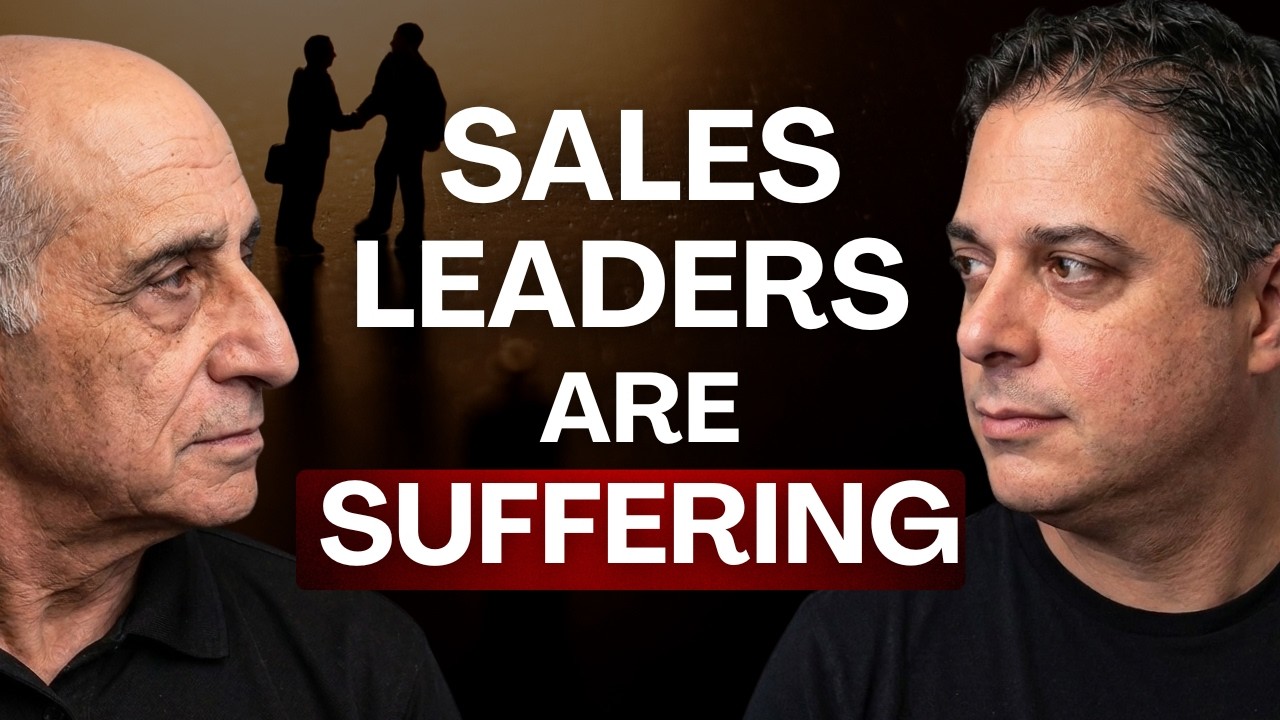


In this episode, sales expert Joe Pici shares insights on sales leadership, outbound strategies, accountability, and the importance of continuous learning in sales. Discover practical tips to improve your sales process and build a resilient mindset.
He Explains
- How to have self-discipline in sales
- Why not executing outbound calls will cost you your edge.
- Why investing in training is essential
Chapters
00:00 Introduction and data on sales turnover
00:30 Sales leadership challenges
01:10 The importance of hiring discipline and training
01:58 Joe Pici's background and expertise
03:07 Training and coaching for all business sizes
06:45 The skill gap in outbound sales
11:32 Free gift for sales growth insights
13:07 Costs of onboarding and training
14:40 The character traits for sales success
17:03 The importance of accountability in sales
20:47 Case study: boosting sales with accountability
24:55 The value of ongoing training and coaching b
28:36 Traits of successful salespeople
36:39 Joe Pici’s coming of age story
43:29 The legacy and impact in sales
45:41 The role of passion versus happiness
48:20 How to know if sales is for you
49:55 Closing remarks and final thoughts
Enjoyed The Epidose? Click Here for a Free 90-Day Leadership Roadmap - https://www.themanagersmic.com/newsletter/
Follow Joe
Website - https://www.piciandpici.com/
LinkedIn - https://www.linkedin.com/in/joepici/
Legal Disclaimer
Leonsolutions, LLC, and the content it produces are for educational purposes; your results may vary. No guarantee of results is claimed. The publisher of this content is not responsible for any actions taken or not taken as a result of reading, watching, or listening to our content.
The transcript was corrected by AI and may have mistakes
Paul Leon: In a study done with 939 companies that have a B2B sales model (business-to-business), researchers found that sales development reps had a 45% annual turnover. Account executives had a 30% annual turnover. Sales managers had a 28% annual turnover, and customer success managers had a 25% annual turnover. Joe Pici, what is going on in the world of sales leadership today when we look at these numbers, in your opinion?
Joe Pici: Well, I think first of all, it depends on how you hire people. I think one of the biggest mistakes in hiring is that we oversell the job. We make it sound like, "You talk a lot, you're charismatic, so you're the right person for the job." In my experience, you hire self-discipline and ambition, and you train sales skills. So I think one of the main reasons there's such high turnover is that companies do not state clearly what the job description entails. They oversell the role, and as a result, they put the wrong people in the seats. That's the first issue.
The second issue is a lack of quality training. Companies assume that if you hire people who speak well and smile a lot, they're automatically going to excel in sales. I truly believe—and statistics back this up—that companies that train systematically on strategies, skills, and communication will achieve higher retention and close more sales.
Paul Leon: So Joe Pici, I've had the privilege of knowing you for a couple of decades now. For anyone who hasn't had the opportunity to have a conversation with you yet, who are you to them as it relates to sales leadership for someone coming to this conversation for the first time?
Hey guys, Paul Leon here. Thank you so much for watching or listening to The Manager's Mic podcast. If this is your first time clicking on this content or tuning in, this is a podcast dedicated to new people leaders who want to build more psychological safety in the workplace and avoid the traps that destroy rapport among teammates. That's the mission of this podcast—at least, that's the intent.
Joe Pici: Who Joe Pici is: he's an expert at helping companies and individuals generate quality leads and book appointments with decision-makers. You want to get in front of the right person at the right time for the right reason, increase your closing ratios through consultative sales, negotiate higher fees, and do a better job with follow-up. Who I am to you out there is a...
Paul Leon: And a big part of this is sales leadership, which is what I do day-to-day. This isn't all I do—I work a full-time job with a very reputable employer, I have a family, and I have kids to support. But as you know, if you happen to be a podcaster or content creator, it can be a very lonely road. You don't do this just for money. You do this for that one person you want to help, and that's my focus going into every episode.
Joe Pici: ...person who can help you attract and retain quality clients, no matter what your vertical is.
Paul Leon: How many years have you been doing that now, for someone who might not be following you on LinkedIn yet? Whether an episode gets one view, five views, or maybe a hundred views—which is rare—or listens, whatever metrics you treasure. I say all that to say: this episode is on sales leadership. For those who have followed the show for some time, you know I interview a lot of people—cancer survivors, millionaires, teachers, and ordinary people like you and me.
Joe Pici: Well, I actually started training and coaching sales reps in the early nineties. We started out in direct marketing, developed our own methodology, and were keynoting around the world. But then in the late nineties and early 2000s, we saw a gap in the marketplace.
Paul Leon: We're all just trying to fight the good fight and be good people. I would argue that of all the content I've made, this is the best episode I've ever produced on sales leadership, featuring a subject matter expert named Joe Pici. What I hope for you as you tune in, or if you stay through the whole episode, is that you walk away with the sales leadership knowledge you need to be more proactive in your sales process.
Joe Pici: Sales training back then was mostly about charisma and mindset, which was fine, but we knew key components were missing: namely, structured processes and skills. So around 2002, we launched Pici & Pici as a 100% speaking, coaching, training, and consulting firm to help people master the exact skills and processes required.
Paul Leon: I've consumed a lot of content around sales on the internet and read many books while completing my Master's in Business Administration. I can comfortably say that among all the content I've produced on sales leadership, this is the best. I hope you enjoy it. Please consider liking, subscribing, or commenting, but know that you don't have to. Wherever you are in your career journey, I'm thinking of you, that single listener.
Joe Pici: ...not only to excel in sales and scale their businesses, but—if they choose to—to become great leaders, sales professionals, and business owners.
Paul Leon: I think it's important to highlight the caliber of clients you've had the privilege to partner with to power up their sales processes. They span nationwide, including keynoting for the NFL and working with McDonald's—just to name three organizations most people will recognize right away. What I appreciate about you in my experience is that even though you've worked with Fortune 100 companies, you still know how to meet solopreneurs and mid-sized businesses right where they are. Can you speak to those client journeys as well?
Joe Pici: Yeah. We operate both a B2B and a B2C division. Our B2B side delivers corporate training for small, medium, and large enterprises. On the B2C side, we host our own three-day sales boot camp where solopreneurs, speakers, coaches, trainers, and sales professionals gather from across the country. They master skills and processes to scale their businesses or reach the top of the sales leaderboard at their company. We've trained thousands of professionals across those sectors. We also work extensively with consultants and coaches who want to build profitable practices. How do you build a profitable practice? By attracting and retaining quality clients.
Paul Leon: In preparing for this conversation, I started doing cold outreach on LinkedIn last week. One thing I'm reminded of whenever we talk—and I'm just showing my cards here—is that I don't do enough outbound sales. If I'm being transparent, I don't think most people do, and I'm guilty of slacking in this area. Returning to the numbers we discussed earlier from that 2025–2026 study, why is outbound such a difficult skill for people to execute consistently? Is this skill gap a major driver behind those high turnover rates?
Joe Pici: It is. There isn't just one reason—there are several. First, there isn't much high-quality outbound training available. I once saw a speaker brag about doing outbound sales, but he didn't actually do real outbound work—he just stood on stage during a seminar and performed a staged call. As you know from experiencing our training, whether corporate or boot camp, by day three every participant is making live outbound calls to real prospects.
Here's the key: if you master the skill of picking up the phone with the right scripts for navigating gatekeepers, securing callbacks, and reaching decision-makers, you hold the keys to the castle. But as you humbly noted, if you don't do it daily, you lose your edge. I still handle all our sales alongside coaching, speaking, and training. I average 75 formal proposals per month, 100% generated through outbound outreach—picking up the phone 90% of the time to contact people I don't know, reaching the decision-maker, and initiating the sales process. I enjoy it because my highest closing ratio comes from prospects reached through that process. But if I slacked for a week or two, it would become difficult for me too. It's like being an athlete: you repeat the discipline until you master the skill, and then you maintain it.
Paul Leon: How many calls on average per day do you make to generate those 75 proposals? I think this is an important point to unpack, Joe.
Joe Pici: That's a great question. Let's look at the math. Forget my numbers for a second; let's say a sales rep makes just 25 calls a day. Working five days a week, that's 125 calls a week, or roughly 500 outbound calls a month. If you have effective scripting across 500 calls a month, I guarantee you will generate at least 40 to 50 quality conversations. You don't need to submit 75 proposals; decide what your income goal is. What if you submitted 20 to 25 formal proposals a month? That is 100% higher than what most salespeople produce in their entire career.
I've gone into insurance companies and sales organizations, walked the floor with owners or managers, and asked: "How many of your reps are conducting at least 20 quality meetings a month?" The answer is zero. The average sales rep currently averages three to six quality meetings per month. That tells me they haven't mastered outbound prospecting, yet your business vitality is measured by how many quality consultative meetings you perform monthly. That's why I will always advocate starting every sales process with a phone call.
Paul Leon: I want you to share how people who are experiencing this pain point can connect with you via text. After you share that, I want to dive deeper into this topic together.
Joe Pici: Absolutely. I'll offer a free resource first. Grab your phone, open your text app, type the word SALESEDGE (S-A-L-E-S-E-D-G-E), and text it to 59925. That will send you a link to a Pici & Pici page where you can enter your email to receive a complimentary 45-minute webinar on The Non-Negotiables of Sales and Business Growth.
If anyone listening would ever like a complimentary "Cup of Joe" strategy conversation—I'm not a hard closer and I don't pitch people who aren't buying—you can reach me directly at 407-947-2590. You can also connect with me on LinkedIn under Joe Pici (P-I-C-I). Any contact method works, but phone or text is best. Now, back to you, buddy.
Paul Leon: I'll include all of those links and details in the show notes and on-screen so listeners can easily find them.
Going deeper into what we were discussing: you mentioned the cost of training. In preparing for this conversation, I researched the cost of recruitment—job postings, agency fees, interviewing time, and background checks run approximately $15,000 to $25,000 per team member. But what caught my attention was the cost of onboarding and lost productivity: companies reported losing three to six months of productivity per hire, translating to a loss of $20,000 to $40,000.
Joe Pici: Absolutely.
Paul Leon: The reason we established your background and provided your contact details upfront is to demonstrate the proof behind your recommendations. Establishing proof is critical in sales. Whether training Fortune 100 enterprises or solopreneurs, is the core pain point around accountability and results the same across both groups in your experience?
Joe Pici: One of the primary challenges for sales professionals is accountability. People are often intimidated by that word. I've had corporate leadership tell me, "Do not use the word accountability; our team hates it." That stems from a complete misunderstanding of what accountability actually is. I offer a 90-minute workshop for teams on how to hold professionals accountable without micromanaging or driving them away.
Accountability starts during onboarding. For example, Paul, if I were hiring you as a sales rep on a base salary plus commission, the first question I would ask you is: "Paul, how much money do you want to earn this year?"
Paul Leon: Playing along with the scenario, my answer would be: "I want to make $150,000 in this role."
Joe Pici: Fantastic. Let's say your base salary is $70,000, meaning you need $80,000 in commission earnings. I would then say: "Paul, to reach your goal on a $70,000 base, you need $80,000 in commission. Our average deal size yields $5,000 in commission."
Paul Leon: Understood. I'm following the math.
Joe Pici: "Which means you need to close 16 deals this year to achieve your target. Do we agree on that math, Paul?"
Paul Leon: "Yes, we are in agreement."
Joe Pici: "Paul, do I have your permission to hold you accountable to achieving your personal financial goal?"
Paul Leon: "Yes, you have my permission."
Joe Pici: That sets the foundation. I once spoke with franchise managers and asked how many of them knew their reps' personal financial goals upon hiring, or had explicit agreements permitting them to hold reps accountable to those personal targets. Zero of them had done so. Instead of establishing a partnership—saying "My job as your manager is to help you earn $150,000 for your family"—managers typically issue unilateral demands: "Do this, do that, do this."
From there, you build the framework: meeting schedules, Key Performance Indicators (KPIs), and regular check-ins to evaluate whether you are on track. When leaders mismanage accountability, turnover spikes because reps interpret accountability as arbitrary pressure.
Paul Leon: I'm guilty of having had that reaction earlier in my career—whenever a manager mentioned accountability, my guards went up. I prefer complete transparency, and in my client consultations, showing my cards helps dissolve barriers. For example, I recently told a prospect that if a partnership wasn't aligned, that was completely fine—I valued the relationship over immediate revenue. That 15-minute conversation led to two additional consultations. Framing outreach around relationship over transaction works well in my experience.
Joe Pici: That demonstrates your professional maturity. You have over two decades of experience in sales, management, training, and an MBA in leadership. But early in your career, when managers brought up accountability, it felt like pressure because those managers didn't know how to execute it properly.
Now, with your experience, you understand how to lead effectively. The average sales representative—and this is a well-established pattern—attends a single sales training course in their entire career. Companies might purchase virtual training modules for remote reps; the rep sits in a hotel room, turns on ESPN, grabs a pizza, and absorbs just enough information to pass the completion quiz.
Paul Leon: Exactly.
Joe Pici: That's why live, interactive training remains superior—it demands active engagement. Part of the solution is rep maturity, but the larger responsibility lies with managers understanding that accountability is a collaborative partnership between the sales professional and leadership.
Paul Leon: Can you share a specific case study or scenario from your career illustrating this? Your decades on the front lines give context that raw data alone can't capture.
Joe Pici: Well, you're data-driven, which I respect. Beyond training, keynoting, and coaching, I also serve as a fractional sales manager for select clients. A company near Tampa hired me right as they were preparing to fire their two outside sales representatives for low performance. I had reached out to them via a cold call, and they said, "We're about to fire our sales team, so we don't know if taking this call makes sense."
I asked what onboarding and coaching they had provided the reps up to that point. It turned out they had provided none—they simply hired them and sent them into the field selling heavy industrial hoses and clamps. I asked, "Would it be worth bringing me on for 90 days of fractional sales management to help turn their performance around, rather than incurring the cost and ramp-up time of hiring replacements?"
Paul Leon: That makes total sense.
Joe Pici: Their monthly quota was $25,000 per rep, but they were averaging only $12,000—a 50% deficit. Within 30 days of implementing structured training, coaching, and our daily KPI focus board, both reps exceeded $40,000 in monthly production. Both reps had drive and strong work ethic; they simply lacked the technical structure and routine accountability.
By day 60, with numbers climbing, I advised leadership: "You need to adjust their compensation structure. Now that they possess high-value sales skills, you risk losing them to competitors if their pay doesn't reflect their output." Leadership dismissed the warning. By day 85, both reps were recruited away by competitors.
The takeaway isn't just about money; it's that pairing structured training and accountability with ambitious, disciplined reps dramatically reduces turnover, increases output, and builds bottom-line performance.
Paul Leon: So once the reps developed those high-value skills and built momentum, the company failed to continue investing in them appropriately. Is that a common mistake among business owners?
Joe Pici: Absolutely. Many owners assume that because a rep completed training in the past, they are set for life. Doctors, real estate agents, and legal professionals undergo mandatory continuing education every year to maintain their credentials, yet sales lacks standardized ongoing requirements.
What I take pride in—and as John Wayne said, "If it's a fact, it ain't bragging"—is that our live training pays for itself. On day three, during live outbound calling, we book actual appointments and close revenue. I once asked a client, "What did you pay for this training, and how much revenue did we generate today during the live session?" They looked at the numbers and were amazed.
Paul Leon: Right.
Joe Pici: That's why we also offer intellectual property licensing. Organizations can send internal leaders through our train-the-trainer program. For instance, at our upcoming boot camp, corporate leaders from Arizona are attending to license our curriculum so they can deliver standardized onboarding to every new sales hire internally.
Paul Leon: I love that model. Considering that standard onboarding and lost productivity cost $20,000 to $40,000 per rep, having an ongoing internal framework is a logical investment.
Playing devil's advocate for analytical managers listening: there comes a point where a leader has to evaluate whether someone is the right fit. Reflecting on your example of ambitious reps versus individuals who lack the drive to grow, what specific character traits are essential for success in sales?
Joe Pici: Being hungry, humble, and persistent.
- Hungry means they have an internal fire—they want to accomplish more for themselves and their families.
- Humble means they are teachable, coachable, and open to learning.
- Persistent means rejection doesn't derail them.
Sales and entrepreneurship are not for everyone. A common error business owners make is allocating capital toward facilities, web design, marketing, and inventory, while leaving zero resources for sales execution. Owners have asked me to work pro bono after exhausting their budgets, which I decline—I don't need practice. Sales is the primary function that drives revenue. When an executive team complained to me about their reps' performance, I told them plainly: "You have two choices: fix them or fire them. Either provide quality training and accountability, or transition them out. Never complain about what you are willing to tolerate."
Paul Leon: "Never complain about what you're willing to tolerate"—that's a powerful statement. What I love about producing this podcast—even if it isn't an immediate profit center on a spreadsheet—is the continuous learning process. Roleplaying is useful, but execution is what matters.
I'll share a personal challenge: I struggle with rejection and can dwell on it. I remember sending a detailed proposal to a prospect on LinkedIn, and after receiving no response, I noticed two years later that she had never even opened the message. Initially I felt frustrated, but then I laughed and realized: "I'm simply not generating enough volume." When outreach volume is low, individual rejections hurt much more. What is your perspective on that dynamic?
Joe Pici: That is 100% accurate. People ask why I maintain such high proposal volume. Here is a tactic I used just before this recording: I cold-called a prospect from LinkedIn, delivered my value proposition, conducted a brief consultative meeting, and asked if she wanted a formal proposal. She said yes. I told her: "When I press send, I am going to call you immediately—not to demand a decision, but to confirm you received and opened it."
I called back, confirmed she opened the file, verified it covered her requirements, and asked what additional information she needed to make a decision. She requested 24 hours to coordinate funding. I execute that process 70 times a month. If every proposal converted, I'd be a quadrillionaire!
Paul Leon: Haha!
Joe Pici: I don't attach emotionally to uncommitted proposals or leads; I focus on clients who commit and pay for value. Maintaining high volume removes emotional attachment to single outcomes.
Furthermore, no one loves rejection, so I developed scripting where a "no" isn't a personal rejection—it's simply a rejection of the timing or current solution, which keeps your mindset intact. We have a client who has attended our sales boot camp every six months for 15 years. When asked why, he replies: "Every year I return, my income increases—why would I stop?" Top athletes like Tom Brady or Peyton Manning maintained dedicated mechanics coaches throughout their careers.
Paul Leon: Dedicated coaches just for their throwing motion.
Joe Pici: They had nutrition coaches, strength coaches, and technical coaches. Elite performers rely on coaching. Yet people enter sales, read one book, and assume they have mastered the trade. That makes no sense.
Paul Leon: Could you share your origin story with our audience? What key moments shaped your career, built your mental toughness, and led to your methodology?
Joe Pici: Absolutely. Before addressing that, regarding AI: I recently addressed 120 electrical contracting business owners on thriving in an AI-driven economy. Professionals who combine strong interpersonal communication and consultative skills with modern technical tools will dominate. AI cannot replace genuine human relationship building.
As for my background and mental toughness: it was forged out of necessity. Before coaching sales, I practiced it—and I still sell daily. If you hire a sales coach, they should actively sell so they remain sharp. Early in our career, my wife and I faced $350,000 in medical debt and imminent foreclosure. We had to succeed in sales to survive.
Paul Leon: Right.
Joe Pici: You are either running away from a bear or running toward a dream; at that time, we were running from the bear. You either quit or you build resilience. When you build real skill, you realize that 80% of initial prospect contacts are not ready, willing, or able to buy immediately. That's why consistent follow-up is necessary.
As your activity increases and your skills sharpen, your closing ratios improve. When I started in sales, my closing ratio was a terrible 3%, but we survived because I maintained high call volume. Today, my closing ratio is approximately 90% over an 18-month window.
Paul Leon: A 90% conversion rate over an 18-month window—that's a fair timeframe.
Joe Pici: Consider this statistic: 90% of sales representatives never follow up after an initial "no" or unanswered call. Executing a structured follow-up process dramatically changes your production metrics.
Paul Leon: That aligns directly with recent research from HubSpot showing that prospect response rates peak after at least two phone calls and two emails.
To close with a broader question: I recently spoke with an executive producer of The Chosen in an online forum, and when asked about AI's impact over the next five years, his stance was: "Adopt AI or be left behind." Beyond technological shifts, what lasting impact do you hope to leave on sales leadership through your work?
Joe Pici: My goal is to ensure leaders understand the enduring power of effective communication and consultative sales. Transactional sales focuses on rushing to a quick "yes" or "no." Consultative sales recognizes that 80% of transactions occur between the 6th and 15th touchpoint, requiring sustained, value-add communication. It took me 10 years of consistent follow-up to secure Blue Cross as a client, and 10 years to secure Coldwell Banker. I want to leave behind a clear, actionable methodology that transforms sales into a high-value, problem-solving discipline.
Paul Leon: Ten years—wow.
Joe Pici: When you execute consultative sales properly, it doesn't feel like selling—you are actively solving problems and delivering measurable results for your clients.
Paul Leon: Do you have to be "happy" in your career to succeed? We've touched on this concept during travel between meetings in the past, and I'd love your perspective on it.
Joe Pici: Happiness is pleasant, but passion and purpose are far more critical. You won't feel happy every single day. There were days when our backs were against the wall financially where I didn't feel happy, but I was passionate and committed to taking the necessary actions regardless of emotion.
Furthermore, many people struggle to achieve their goals because of subconscious misalignment—they know what success requires, but if they fail to execute the work, they feel unaligned with the result. My main concern with AI is that it bypasses the development process. When people rely on shortcuts, they skip the personal growth that comes from overcoming challenges. Sales builds character because you become a true problem solver and trusted advisor.
Paul Leon: What is one essential question around sales leadership that we haven't touched on yet?
Joe Pici: "How do I know if sales is right for me?"
Paul Leon: That's a great question.
Joe Pici: You don't know until you give it a real, sustained effort. I started my career as a high school football coach and loved it. If you had told me 40 years ago that I would spend my life in sales and business development, I would have thought you were crazy. But once I got into sales, I appreciated the meritocracy—as an independent professional or business owner, performance dictates output. You control your results. You'll know if sales is right for you if you give it a dedicated, structured trial over time.


CEO of Pici and Pici, Inc.
Joe Pici—ranked among Global Gurus’ Top 30 Sales Trainers—is the strategist behind Rapport Mastery™, the results-driven sales system he co-created at Pici & Pici Inc. Since 1992, he has coached teams and top producers to reach decision-makers, book more appointments, and close deals through live phone-call workshops.
As COO and co-founder of Pici & Pici and co-author of Sell Naked on the Phone, Joe distills three decades of front-line experience into a turnkey framework that:
• Increases appointment setting
• Boosts close rates
• Secures repeat business and loyalty
• Elevates communication skills
• Provides clear direction for sustainable growth
Whether you’re an individual representative or a Fortune 500 team, Joe’s Rapport Mastery training delivers measurable, fast ROI.