Do Managers Need More Confidence?
Do Managers Need More Confidence?
The jump into management is rarely smooth. One day, an individual contributor is being praised for personal performance. Now coaching others, upholding standards, and staying steady in seeking answers for their team.
That mental shift hits hardest in sales and customer service, for the following reasons
- Numbers are tracked.
- Calls are monitored.
- Emotions run high.
- Results are public.
A new manager learns that being good at their work is not the same as leading people.
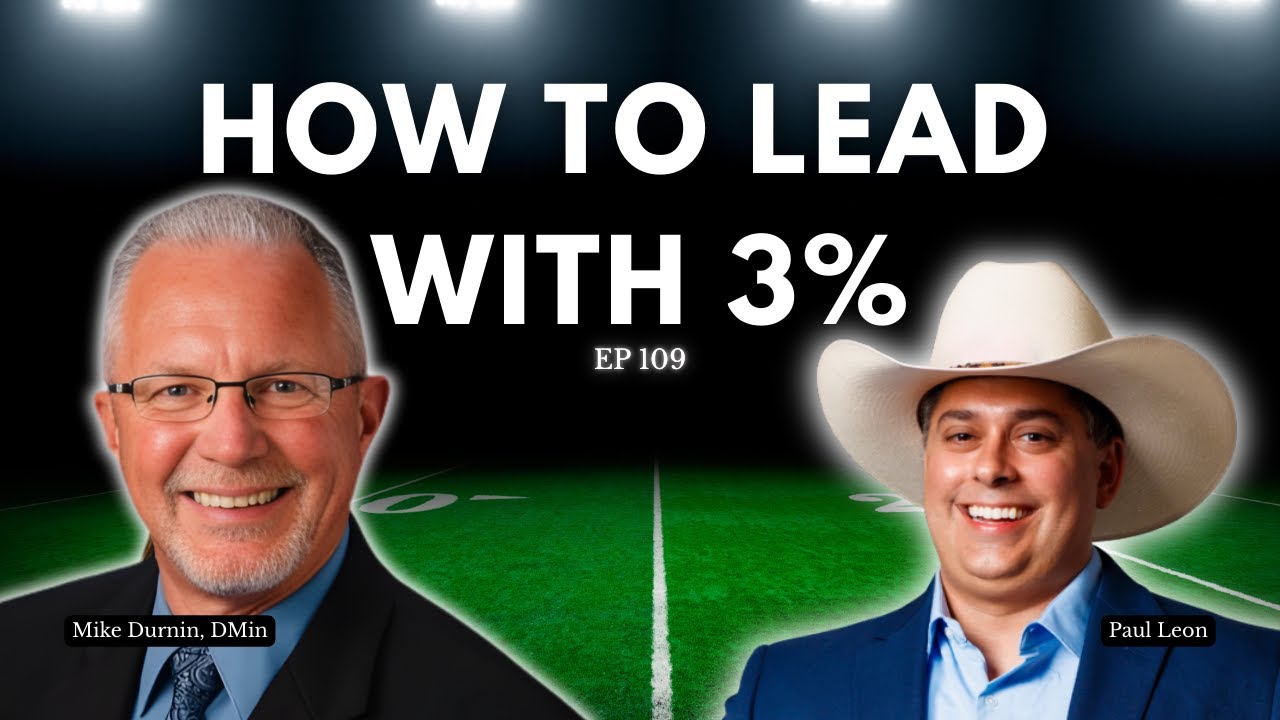
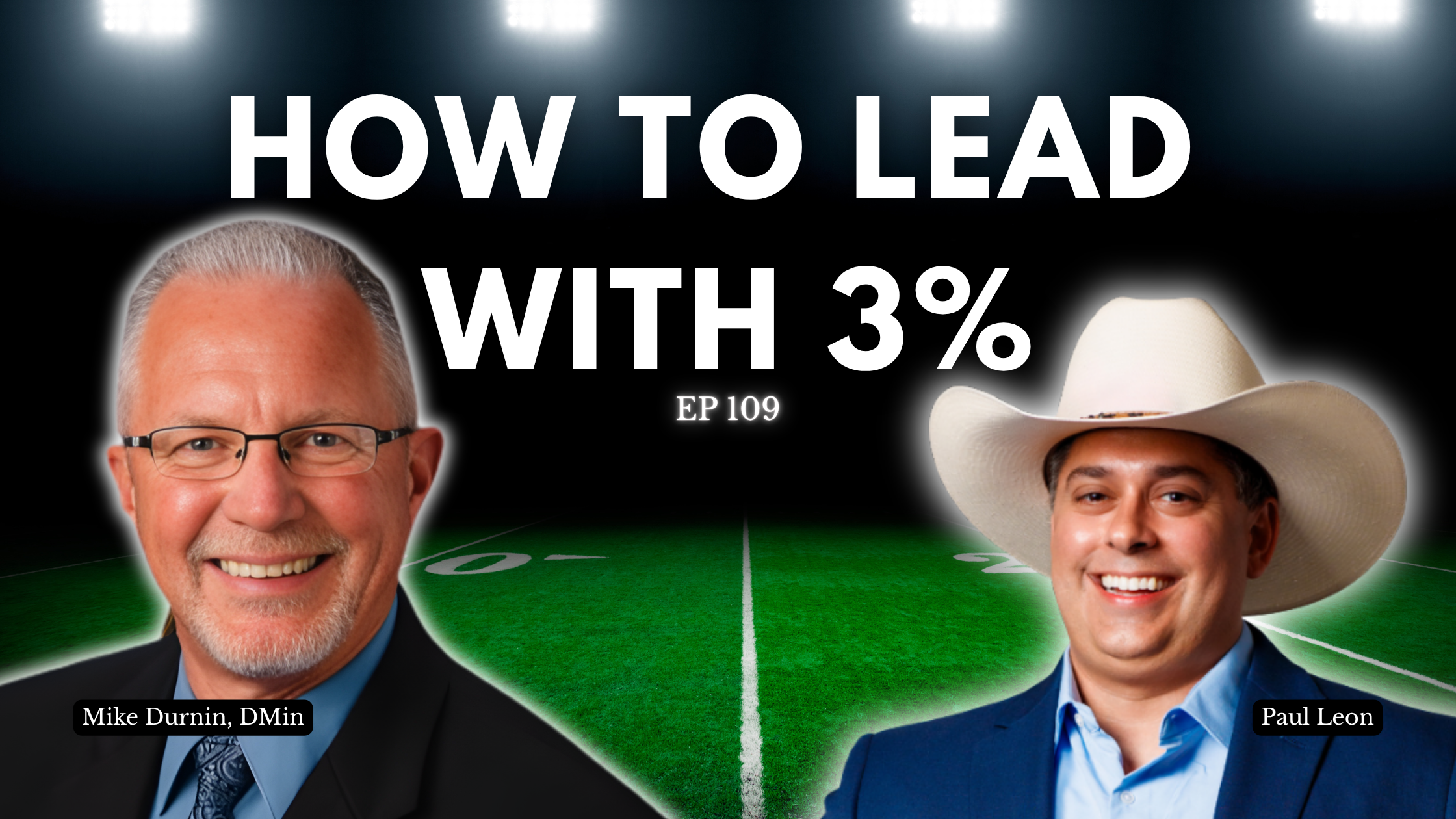
That is what makes my conversation with Mike Durnin, DMin, compelling. It presents leadership as a series of daily choices that yield results.
Suppose we take the example of a sales manager stepping into a leadership role for the first time and may experience these traps:
- Believing they need to sound smarter, act tougher, or project certainty at all times.
- Assuming that they need to step away from the human side of the job and become only operational.
That instinct creates distance fast, resulting in:
- One-on-one coaching becomes less effective.
- The team feels disconnected.
- Trust erosion.
Leadership is not built by trying to look impressive but by being dependable. That difference matters; employees do not decide whether to trust a manager based on a big speech. They decide based on what the manager does every day. They watch whether expectations stay clear. They notice whether feedback is fair. They remember whether the manager stays calm when the room gets tense.
Why Small Choices Matter
One of the strongest ideas is the “1 and 0” concept. Every day gives us a chance to move leadership forward or backward. A few examples include:
- A manager may delay feedback because the conversation feels awkward.
- A frontline manager may walk into a one-on-one meeting unprepared.
- Avoid correcting poor behavior because of a hard week.
None of these moments looks dramatic, but stacked together, they shape culture. People do not need perfection, but they do need a person whose standards are clear.
These moments speak to the quiet pressure new managers carry:
- They want to prove they deserve the promotion.
- They want people to like them.
- They want to respect.
- They want results.
Those pressures push a new leader into overthinking every move. The “1 and 0” idea cuts through that noise. It narrows leadership down to the next visible choice, making decisions easier.
That is useful in sales, where coaching may become reactive and tied only to numbers. It is useful in customer service, where managers often get pulled into customer complaints, putting out emotional fires and losing sight of team development. In both settings, the best managers make the next right move even when the picture still feels messy.
The deeper message is hard to ignore: leadership skills improve over time before feeling ready.
The Best Managers Lead Without Performing
Many first-time managers fall into the performance trap. Not performance in the business sense, but performance in the personal sense. Many new leaders start acting like what they think a manager should be. They become more guarded, formal, scripted, or controlling (typically by accident).
These habits usually stem from fear, not arrogance. They fear losing credibility. They fear appearing unready. They fear that they will look inexperienced.
It warns against trying to become somebody else because leadership feels unfamiliar. That matters because teams can tell when a manager is acting from insecurity. It changes how feedback lands. It changes how meetings feel. It changes whether people say what feels safe.
For new sales managers, this is critical. Reps need coaching they can trust, not theater. For customer service managers, it matters as much, and in many cases, more. Teams already deal with stressed customers, tight metrics, and constant policy tension. They do not need a leader who adds another layer of emotional uncertainty.
The “Handful of L’s” offers a structure for how managers can keep growing while staying grounded. It points toward caring for people, without reducing a leadership style. It keeps the human side and the performance side in the same conversation.
That balance is what many new managers miss. Some lean so hard into empathy that standards weaken. Others lean so hard into accountability that trust erodes. Strong leadership requires both. Mike Durnin, DMin, speaks to that tension in a way that feels practical for people leading under real pressure.
It also carries an important emotional truth: new managers do not fail only because of a lack of skill. They fail when they lose themselves trying to look like leaders.
Calm Leadership Changes The Room
One of the most useful takeaways from the episode is the emphasis on calm. Calm is often mistaken for passivity. In reality, calm is one of the clearest signs of leadership maturity.
Sales teams feel pressure in forecasts, missed targets, and closing cycles. Customer service teams feel it in escalations, response times, and difficult customer interactions. In those moments, people do not only listen to the manager’s words. They study the manager’s state watching tone, pace, presence, and reaction. If the manager becomes frantic, the team absorbs that. If the manager stays grounded, the team borrows that steadiness.
That is part of what makes this episode more than a general leadership conversation. It speaks to environments where intensity is normal. It allows stopping the pursuit of a fake image and instead focusing on steadiness.
That is engaging because it meets new managers where they actually live. Most are not asking how to become inspirational. They are asking how to handle pressure, coach well, and still feel like themselves.
What Many People Get Wrong About Management
While working out at the gym at 4:30 AM, two people were talking. One said, "You know, there is proof that the higher you go in a company, the less you do!" Those two people at the gym have it wrong: the higher up you go, the more work there is. In training over 500+ companies, I heard stories of business owners stressed out of their minds trying to make payroll and feed their families, and confiding in me personal challenges that, after the conversation, made me cry in my hotel room. Still, it was worth it, since I could be that sounding board for them, even if my heart would break for them, because I care about their success.
The message is to avoid empty encouragement and empty actions, but respect how hard managing people is. When you do that, you are 1 and 0.

Founder
Sales enablement executive driving enterprise performance through scalable training strategy, behavioral sales methodology, and cross-functional alignment. Translates complex product and commercial priorities into field-ready programs that accelerate adoption, improve close rates, and deliver impact across national dealer and sales networks. Recognized for transforming training functions into strategic business drivers by integrating data analytics, AI-enabled content development, and leadership coaching to elevate performance at scale.
Past Results:
• Transformed national sales training strategy by shifting from technical instruction to behavior-based selling, training over 500 dealerships and driving record performance, contributing to over $700M in revenue.
• Spearheaded sales enablement for new product launches, developing and delivering training while coaching 60 field leaders to drive consistent execution, contributing to $11M in first-year revenue.
• Developed and delivered behavior-based training programs (DiSC) for leadership and sales, equipping over 1000 learners with tools to improve communication, engagement, and selling effectiveness.
• Introduced and scaled an enterprise-wide training evaluation framework, establishing the first-ever measurement system and achieving a 4.9/5 satisfaction score.
• Leveraged business knowledge to build and scale The Manager’s Mic, a leadership-focused podcast from inception to top-50 category ranking.
Request a FREE 30-minute sales strategy session directly with me.
How to Be a Trustworthy Leader: Build Psychological Safety