Building a Team While Keeping Your Freedom | Tips for New Managers
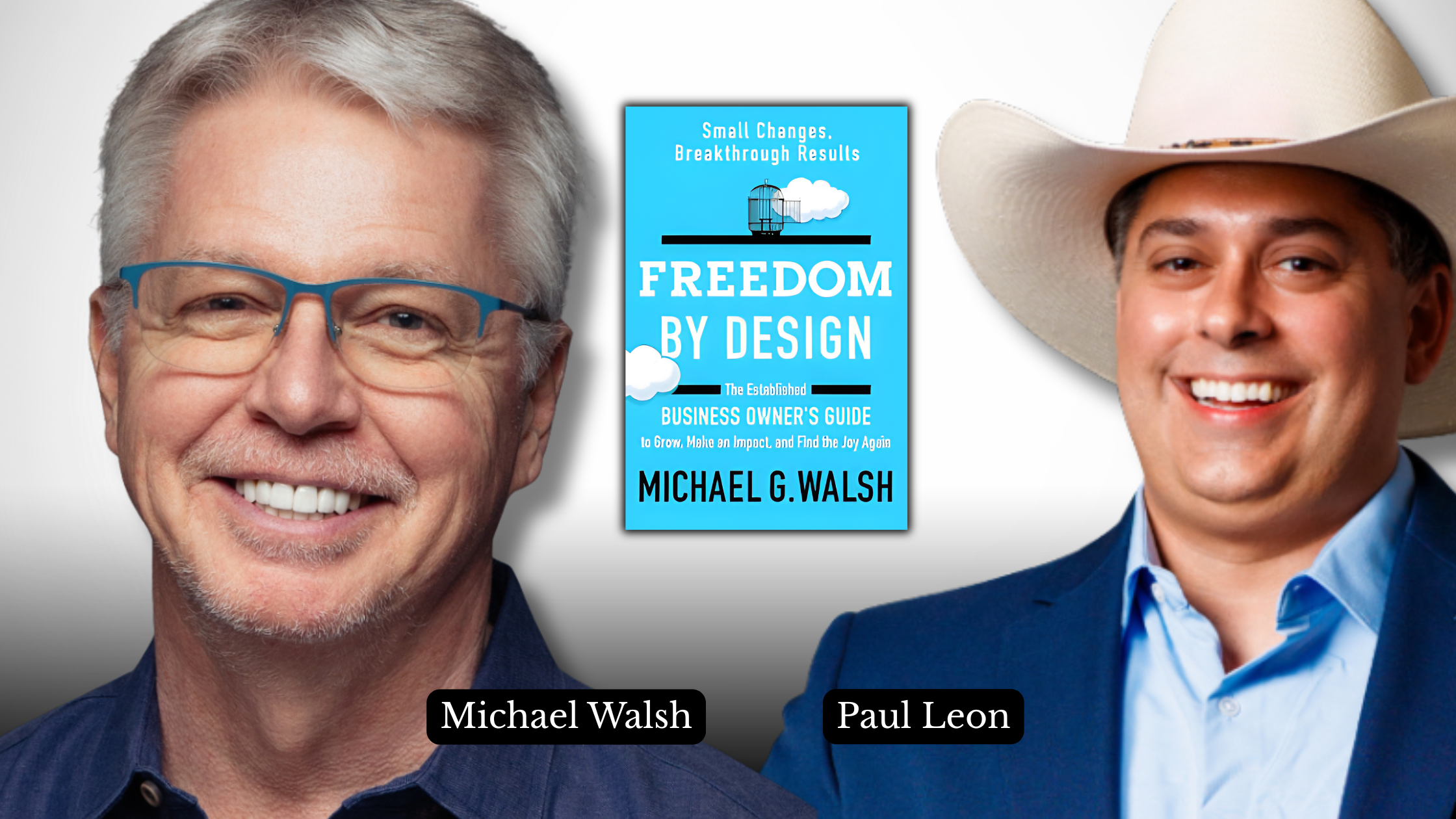
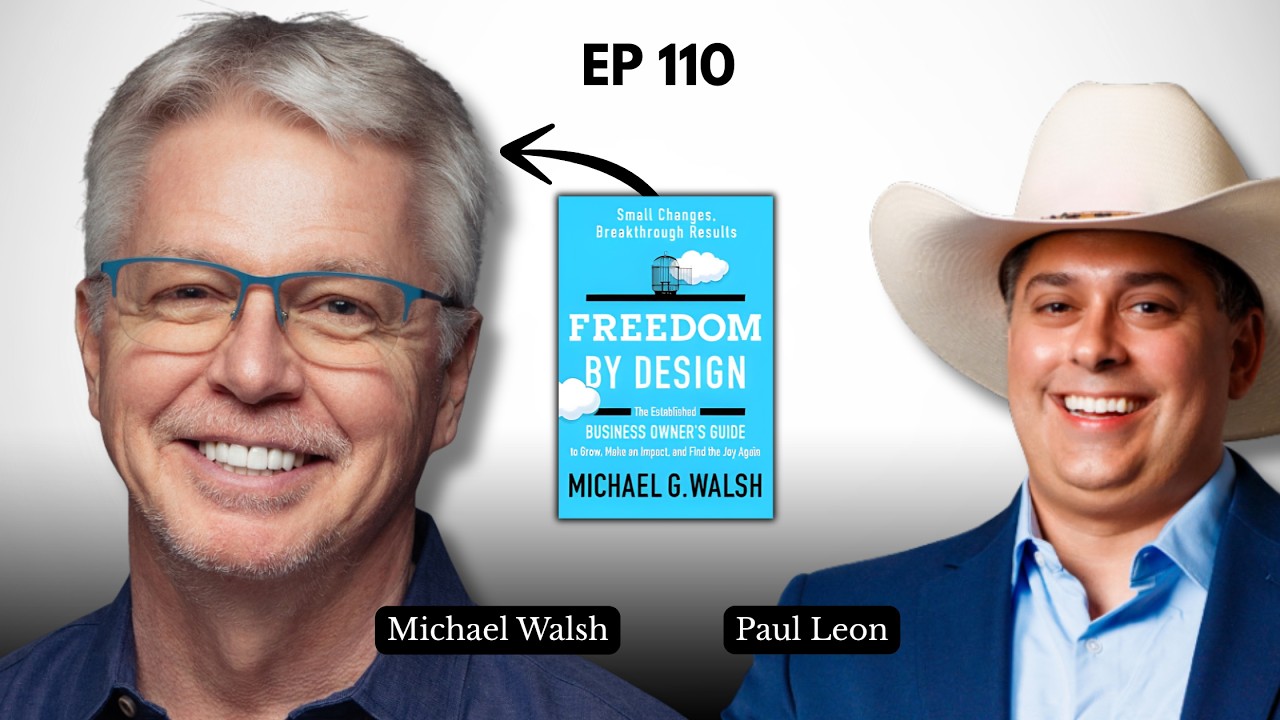
I sat down with Michael Walsh to examine a problem that too many operators misread. Walsh is not coming from theory alone; he founded the Walsh Business Growth Institute in 1995. His work focuses on using business to create profit and freedom. His earlier books give our conversation more weight than another “scale faster” comment on social media.
What stood out most was his claim that growth problems repeat even when businesses look different on the surface. The industries vary. The owners vary. The personalities vary. But the friction points start to rhyme. That matters because it shifts the conversation away from personality. If you are a founder or manager who is exhausted because the team cannot perform without constant intervention, the issue is not effort. It is most likely a structural issue.
Walsh makes that concrete with one case study, he describes a client whose company had been stuck between roughly £250,000 and £400,000 in revenue. Instead of treating her plateau as a financing problem, he reviewed the numbers. Michael then challenged the assumption that outside capital was the real answer. Mike helped her redesign pricing, structure, and the growth path itself. Through Mike Walsh’s consultative skills and the client's acting on that advice, the business reached £2 million by 2014. Later, the company grew to £7.3 million in revenue and was sold to a private equity firm.
The lesson is clear: when a business stalls, the first diagnosis should not always be “we need more money.” Typically, the real gap is a weak model, positioning, or a structure that no longer fits the ambition.
Build an Intelligent Ecosystem
Walsh’s larger argument is that businesses often break after the first million because leaders keep trying to run a more complex company with earlier-stage habits. He flags recurring pressure bands around:
· $2 million.
· $5 million.
· $8 million.
· $10 million.
· Then the difficult stretch between roughly $12 million and $20 million.
His book mirrors that pattern, describing founder overload, profit compression, inconsistent team performance, and increasing internal politics as revenue expands. The point is not that every company breaks in the same place. The point is that scale changes the job. At each stage, the organization needs different talent depth, different role clarity, and a different management system.
This is where his “intelligent ecosystem” idea comes into play. Walsh rejects the machine mentality that treats people like interchangeable parts and assumes tighter control is the cure for growth pain. His framework says the business has to be designed around working human beings who need support, clarity, relationships, growth, and a reason to care, while reducing workplace behavior to a four-step framework, recurring drivers, which has some Kotter influence, I assume:
- Thrive.
Through a practical lens, if your team feels threatened, they will protect themselves. If they see a credible path to growth, contribution, and support, energy rises. That is a more useful operating model than labeling every performance issue as an attitude problem.
The best part of that framework is how quickly it changes management behavior. Walsh’s transcript ties present behavior to perceived future. In plain English, people act today based on what they think tomorrow looks like. If tomorrow looks blocked, motivation drops. If tomorrow looks possible, effort changes. That is why this conversation works for managers, not only founders. It gives you a better diagnostic question. Instead of asking why someone is disengaged, start by asking what future they see for themselves here.

Walsh is also sharp on what goes wrong after a top performer becomes a manager. The argument is that many individual contributors are promoted because they are capable, then fail in management because they assume leadership means telling people what to do. His answer is blunt: “Management should provoke thought!”
Framing matters; influence belongs to the person who sets the frame of the conversation, not the person with the best delivery. He even points listeners toward the work of Robert Cialdini, an expert on persuasion whose principles are powerful and serve as the benchmark for what good looks like in this field. The practical takeaway is that context changes reception. If you walk into a one-on-one to correct behavior, you will likely trigger a defensive response. If you frame the conversation around a shared goal, future growth, and the employee’s own ambitions, the same feedback lands very differently. That is not manipulation but disciplined leadership.
Designing Freedom
Mike Walsh addresses time off, he says, “Rest is not a luxury for later. It is part of growth.” he explains that he drafted his first book while on vacation and came to see recovery as a requirement, not a reward. His growth page makes the same point in different words, arguing that time off and self-care are critical ingredients of an effective growth strategy. Going further, Mike says he built his company to allow for weeks of travel each year. That detail matters because it reframes freedom from lifestyle branding into operational proof. If your team cannot function when you step away, then scaling has not solved your dependency problem but disguised it.
That logic also explains why his framework is bigger than process improvement. Mike Walsh lays out a multi-layered approach:
1. Rethink the core around profit.
2. Customer value.
3. Professional growth; train and grow people.
4. Hire smart; strengthen teams.
5. Develop managers; grow leaders.
6. Prepare for unexpected change.
Read together, the model is designed to help owners move from permanent problem-solving to a business that produces freedom. Freedom from the business, and freedom because of the business. That is stronger than revenue. Revenue matters, but if growth increases stress, political friction, and owner dependence, the business is getting larger without getting better.
What I like about this conversation is that it replaces hustle language with operating discipline. Walsh says, "Businesses should support the goals of owners and their people." Meaning, management is meant to solve real-world problems, not decorate them with slogans. Put those two ideas together, and the message is simple.
If you want a business worth millions, do not just chase more. Redesign the company so that better managers, structures, conversations, and recovery scale together.
Other Favorite Quotes from Michael Walsh
· “Your perceived future shapes your present behavior.”
· “Effective management provokes thinking.”
· “Listen more.”
Recommended Action Checklist for Growth
1. Map your company to its current growth band and name the next structural break before it hits.
2. Write down one important decision that still feels overwhelming.
3. In your next one-on-one, stop leading with advice. Ask employees what they want for their future.
4. Take a real break and watch what stalls. This will show whether your systems or team supports freedom or owner dependence.
5. Invest in development before you chase the next revenue target.
Founder
Sales enablement executive driving enterprise performance through scalable training strategy, behavioral sales methodology, and cross-functional alignment. Translates complex product and commercial priorities into field-ready programs that accelerate adoption, improve close rates, and deliver impact across national dealer and sales networks. Recognized for transforming training functions into strategic business drivers by integrating data analytics, AI-enabled content development, and leadership coaching to elevate performance at scale.
Past Results:
• Transformed national sales training strategy by shifting from technical instruction to behavior-based selling, training over 500 dealerships and driving record performance, contributing to over $700M in revenue.
• Spearheaded sales enablement for new product launches, developing and delivering training while coaching 60 field leaders to drive consistent execution, contributing to $11M in first-year revenue.
• Developed and delivered behavior-based training programs (DiSC) for leadership and sales, equipping over 1000 learners with tools to improve communication, engagement, and selling effectiveness.
• Introduced and scaled an enterprise-wide training evaluation framework, establishing the first-ever measurement system and achieving a 4.9/5 satisfaction score.
• Leveraged business knowledge to build and scale The Manager’s Mic, a leadership-focused podcast from inception to top-50 category ranking.
Request a FREE 30-minute sales strategy session directly with me.
How to Be a Trustworthy Leader: Build Psychological Safety