
 Apple Podcasts
 Spotify
 YouTube
 Amazon Music
 RSS Feed
  Goodpods
  iHeartRadio
 Why Teams Underperform (and How to Fix It)
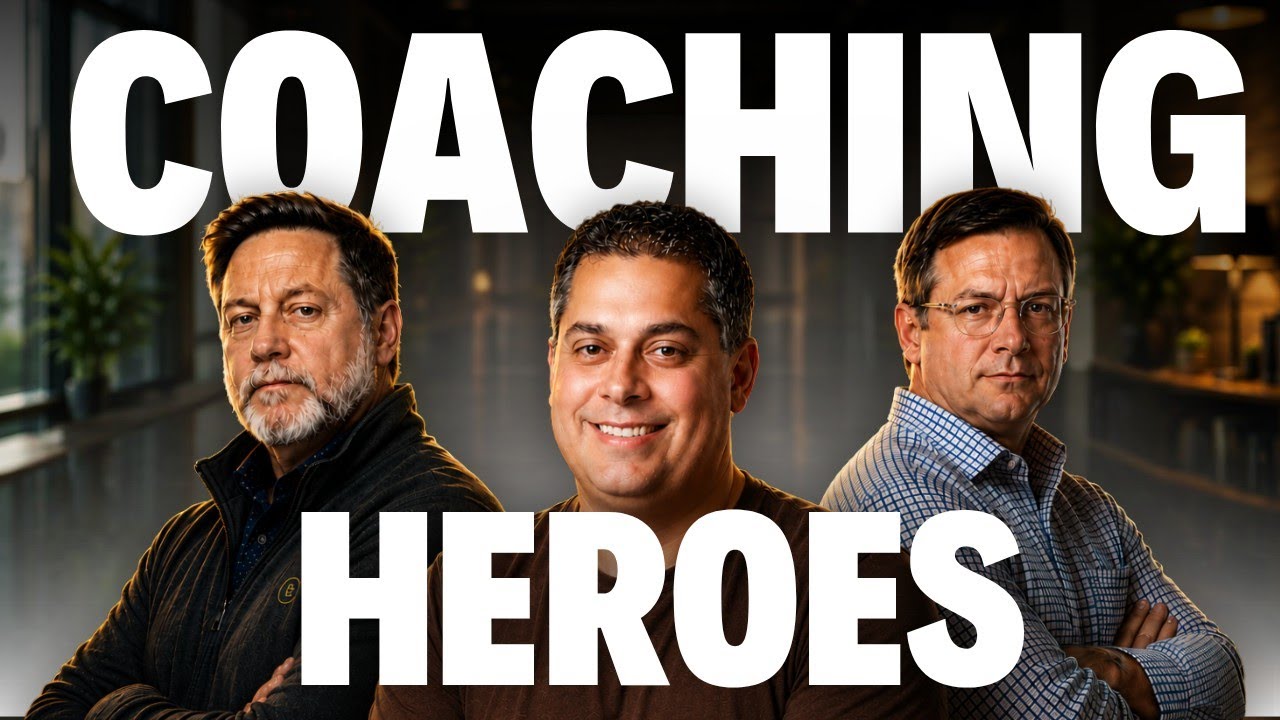


This leadership conversation features coaches Brian Powell and Tom Reynolds exploring how effective leadership, coaching, and intentional team development drive organizational effectiveness. They explain how to build high-performing teams through psychological safety, honest communication, and strong collaboration in real workplace conditions.
About Bryan Powell
Bryan Powell is the co-author of The Efficient Frontier of Teaming™, a number one Amazon Best Seller in three leadership categories. The book offers a practical framework for understanding why capable teams underperform and what it takes to move beyond high performance toward Optimal Performance™. It was built inside real teams operating under real accountability pressure.
Alongside Brian’s coaching practice, he is finalizing his doctoral research in performance psychology focused on how psychological safety shapes team performance in results-driven environments.
Tom Reynolds
Tom Reynolds is the co-author of The Efficient Frontier of Teaming™ with Brian Powell, where he contributes his expertise around psychological safety and agile goal setting. Specifically, his chapters help teams to see how the right kind of conflict can build psychological safety, and that you can hit a moving target if you plan as though your plan will break down.
With a background in business and clinical psychology, Tom uses a practitioner-scholar approach to design leadership solutions that bridge the divide between research and practical application. He holds a Doctor of Psychology (PsyD) and a Master of Business Administration (MBA) from Widener University, the only program in the United States to provide integrated training across those two disciplines.
Ask about their free team-building tool, the team contract!
https://www.theefficientfrontierofteaming.com/contact-us
Buy Their Book
Chapters
00:00 Trailer
00:50 Meet Bryan Powell & Tom Reynolds
04:04 The Challenge of Team Alignment and Development
05:44 The Role of Authenticity and Disagreement in Teams
07:28 Building Trust Through Tough Conversations
08:56 Frameworks for Psychological Safety Across Industries
12:34 The Team Contract Tool for Engagement
14:10 Workplace Changes and Future Skills with AI
16:06 Essential Competencies for the Next Decade
19:44 Reflections on Using AI in Education and Work
22:03 The Power of Human Judgment in the Age of AI
24:23 Building Authentic Teams and Leadership Mindsets
28:16 The Impact of Authenticity and Engagement on Performance
33:19 Research Insights on High-Performing Teams
36:13 The Partnership and Journey of the Authors
41:02 Final Advice for Leadership Teams Seeking Effectiveness
Legal Disclaimer
Leonsolutions, LLC, and the content it produces are for educational purposes; your results may vary. No guarantee of results is claimed. The publisher of this content is not responsible for any actions taken or not taken as a result of reading, watching, or listening to our content.
Plug: Paul Leon here. Thank you so much for being a consumer of the show, and I want to take our relationship a step further. When you join our newsletter at TheManagersMic.com, I am going to give you a free resource called a selling script to help skyrocket sales.
Paul Leon: I have with us today Bryan Powell and Tom Reynolds. Bryan Powell, you are a leadership coach who helps organizations turn potential into sustained high performance. Your work focuses on building trust, clarity, and shared ownership within teams to drive measurable results in complex, high-pressure environments. You hold a master’s degree in organizational leadership from Colorado State University and are completing a PhD in performance psychology at Grand Canyon University, where your research centers on team effectiveness. You are a Professional Certified Coach through the International Coaching Federation and have logged more than 5,000 coaching hours with executives and leadership teams across Fortune 100 organizations, including Wells Fargo, Merrill Lynch, and Crown Castle. You integrate leadership psychology, behavioral assessment, and stakeholder-based coaching to deliver measurable business impact, and you are a contributor to the Forbes Coaches Council and serve in leadership roles that advance the coaching profession.
Tom Reynolds, you are a business psychologist, executive coach, and trusted advisor to senior leaders across industries, including biotech, manufacturing, financial services, and professional services. You partner with executives and teams to help them get unstuck, rethink challenges, and make meaningful progress in complex environments. You are both authors of the book The Efficient Frontier of Teaming. Your expertise in psychological safety, adaptive leadership, and agile goal-setting helps teams harness productive conflict, strengths, and trust as drivers of sustained performance. And just in case I did not flex enough for you here, Tom, you hold a doctorate in psychology and an MBA from Widener University, one of the only integrated business and psychology programs in the United States. Tom, your research helps people design leadership solutions that are both evidence-based and actionable.
And I have got to say, Bryan and Tom, welcome to The Manager’s Mic. There is a ton of intelligence in this virtual room together. I am really looking forward to our conversation today.
Plug: Thank you so much for being a listener and watcher of the show. And now back to the episode.
Bryan Powell: Yeah, appreciate being here, Paul. Basically, you had to open up and say, “We have got a couple of coaching geeks on the call today.” We love working with teams and helping them, once again, reach their full potential, whatever that looks like for them.
Paul Leon: What I do, for those who are joining us for the first time, is send a simple email to ask what questions might be best to explore. So I have a question, and this is just to kind of get us started, Bryan and Tom.
Team building has been discussed for decades, yet many organizations still struggle with alignment, trust, and communication. Bryan or Tom, I will let you decide who wants to go first. What do you believe most companies are still getting wrong about how teams actually develop and perform?
Bryan Powell: I think there are a couple things there. I will just start us off and then let Tom add his fantastic knowledge on the subject as well.
When we start working in organizations and with teams, think about what happens when you onboard with a company. They get your laptop to you. They show you how to log in. They show you all the tasks, responsibilities, and everything you are going to be executing in your role. The one thing they usually do not talk about is how to create a trusting environment. They do not define psychological safety together. They do not talk about what a high-performing team actually looks like. They do not spend time learning more about you, your uniqueness, your strengths, your ideas, or how we communicate together.
The best way I sum it up is this: organizations are usually really good at the quantitative. We will look at revenue, production, and productivity. But what they really lack is attention to the qualitative competencies. Those are the ones I mentioned. We do not have open discussions around them.
I have stood in front of audiences and asked, “How many of you are on a high-performing team?” I get 500 leaders raising their hands, but there is no shared definition and no real conversation around what that actually means. A lot of those qualitative things either get taken for granted or pushed to the side because maybe they are seen as fluff, depending on the leader.
Tom Reynolds: Yeah, and I will add to that, as you said, Paul, the industry has been charging ahead for decades. Everybody understands that team development is important. People know it needs to feel good to be part of a team, but they do not know how to make that happen beyond surface level. That is why Bryan and I focus so much on authenticity and engagement.
People are not being authentic if they show up to a team thinking, “I have got to get along with everybody, agree with everybody, and make everything rosy and cheerful.” What we focus on is: how do we get the real stuff out there? You have to do it skillfully. You have to sign up for it. Sometimes we contract directly with teams and say, “Here is how we are going to engage in disagreement.”
Really, at least from my perspective, and I think Bryan believes this too, you have to go through some reps of tough conversations and commit to coming out the other side. Then, you know what? You trust each other. Even if you do not agree 100 percent, you have gone through difficult things together. Even if it was just a difficult conversation, you can say, “I know how that person acts when it gets dicey, and I still want to work with them no matter what the situation.”
Bryan Powell: No, I think that is spot on. We are talking about those qualitative competencies. Sometimes leaders grew up under command-and-control styles and try to mimic that because they think that is what successful leadership looks like.
When you think about the team, I think Tom is exactly right. When you really start engaging in these conversations, you want to be able to challenge each other. You want to think about conflict in a productive way. Lencioni talks about productive conflict, and when I am engaging with teams, they often do not have the reps Tom is talking about. What usually happens instead is avoidance.
Maybe the team is not hitting certain KPIs, so they just do not talk about it. Or if they do talk about it, it sounds like, “I am hitting my goals. You are not hitting yours. What is wrong with you?” Rather than what we call in our book positive accountability, where we support each other and recognize that failure is going to happen. The question becomes: how do we come out the other side and learn from it?
A lot of the teams we work with are not intentionally avoiding these things. It is just that these skills have not been in their roadmap. They have not actively sat down to talk about them. So they either get missed or discounted, when in reality that is the fuel that drives the results.
And when we start thinking that way, it is not about what is broken. It is about what the full potential of the team could look like. That usually gets leaders and teams really curious about what the next step is.
Paul Leon: Is there a framework or type of exercise that you have seen work across industries? The reason I ask is that I imagine psychological safety swings differently depending on the industry.
For example, when I used to work in car rental, psychological safety did not feel as prioritized. I am not knocking the car rental industry. I just want to be clear that this is only an example. If someone did not get the car they booked, they became hostile. Versus when I started working with business owners making five million a year in banking and similar spaces, psychological safety felt much more top of mind. I do not know if that is because of income level or industry. So I am wondering if there is some exercise or framework we can peel the onion around that works across both.
Bryan Powell: Tom, go for it.
Tom Reynolds: Even in your car rental example, I am sure there are branches where psychological safety exists and others where it does not. Why is that?
Sometimes people who go to too much grad school do a lot of research and come up with brilliant ideas that people on the ground already figured out. Here is one thing that I do think applies everywhere. We borrow it from a psychologist named Tim Clark, who talks about psychological safety as elevating intellectual friction while maintaining low social friction. It is almost like a yin-yang idea, and usually those things move together.
So let us say we are in a disagreement about how to handle a dissatisfied customer. Often those two things get stuck together. If Paul has an idea that I think is silly, I can respond in a way that not only treats the idea as silly, but makes Paul feel like I do not like working with him. Then Paul goes on the defensive. He starts doing performance art to make his boss or teammate happy. That does not solve the problem. It only gets us through the moment. We do not build better collaboration skills, and we do not solve the problem better next time.
But if I can disagree with the idea while still taking care of Paul the person, that is different. I can say, “Hey Paul, I do not know what to do with this irate customer. Figure it out, tell me how it worked, and then we will debrief afterward and figure out what works better in the future.” Even if I think the idea is silly, if I give you the chance to be yourself, try it, and then talk honestly about whether it worked, that is much better for the outcome. And now you know you can trust me, even if I disagreed with you in the moment.
As to why that might show up more in banking than in car rental, I do not know if there is anything inherent to the industry. Sometimes there is just different investment depending on who gets what and why. Some of the best ideas hit the top of the house first and then gradually make their way down. But we want our ideas to be useful to leaders at every level, whether it is a branch team in car rental or a C-suite. A lot of these ideas are universal.
Bryan Powell: Yeah, and one thing I would add is that through all of our coaching engagements with teams, we realized this had to become real and tangible rather than staying a theory.
So we developed a tool called the Team Contract, which is in the book. We are actually going to provide it to you. For any listeners who want it, it is a fillable PDF that we have used in thousands of team engagements. It allows the whole team, not just the leader, to sit down together and define how they are going to operate. How are we going to create psychological safety? How are we going to build trust? How are we going to engage in productive conflict?
Now it becomes real. It becomes tangible. Now we have defined the culture we want to operate in, rather than just grasping at whatever leadership skills one person happens to bring to the table. We want the whole team engaged in that conversation.
When the whole team is involved, it brings everything to another level because it is not just us coaching the leader and then hoping the leader translates it back to the team. When the team sits at the table and creates these things together, now you start hearing words like ownership and empowerment actually mean something.
You let me help set the table, and if I created even five percent of it, I now own it because you allowed me to contribute and think creatively. You empowered me rather than dictating what the best version of the team should look like.
Paul Leon: What was that tool called again, just so I make sure I have it right?
Bryan Powell: The Team Contract. And we will send you a copy so you can share it with your readers and listeners.
Paul Leon: I am going to talk about something I know you probably cannot get away from, but I am going there anyway.
As the workplace becomes more fast-paced, AI-driven, and increasingly hybrid, what competencies do you believe become essential for teams to thrive over the next five to ten years?
Bryan Powell: Great question. It is something we are actively working on with teams right now. Internally, I created a program called Amplifying Human Intelligence. And the reason I talk about it that way is because every conference I go to, AI is in every presentation, and honestly, I think people are tired of talking about AI. The real question is, how are we going to use it? How do we take action with it? How do we use it as a thought partner, a collaborator, something that helps challenge our bias?
That is what we are really working on with teams. Are you using it transactionally, like a prompt engine or a note taker? That can be helpful, but it does not necessarily drive team results. The bigger question is: how do you use it as a coach or collaborator? How do you have it help you think through anxiety, development, adaptation, and all the things that come with modern work?
And if we go back even five years to COVID, the workplace has already changed. We went into hybrid and remote work, and yet many organizations are still using the old playbook. You see companies moving to hybrid or remote and then calling everybody back into the office, even when the numbers show people may be more productive in hybrid models. They are still operating from the belief that we have to all be in the same room, by the water cooler, to collaborate and innovate. That is simply not always true.
So when you ask about essential skills, I think the skills that have been talked about for years are just going to become even more important. Effective communication is one. Emotional intelligence is another. All the research has shown for years that emotional intelligence is one of the most desired skill sets, and I think it is only going to increase in importance. The point is not that AI becomes the end-all. The point is that it frees us up to spend more time with team members and clients, rather than getting bogged down in operational friction.
Tom Reynolds: Yeah, and I would build on that. This might sound funny, but I think the ability to reflect on your work in a really practical way becomes even more important.
For example, I do a fair amount of executive assessment work. There is a whole process there where I am talking to the leader, taking notes, looking for evidence, trying to evaluate their ability to influence without authority, and doing all of that at once. There are many ways AI can free me up. I can have it transcribe the conversation so I do not have to worry about catching every single word. That lets me focus more on the person. If the AI can help me search for evidence, I can still screen out hallucinations and make judgment calls, but I am freeing up more of my time for high-quality thought and less for cognitive grunt work.
So I am spending about the same amount of time overall, but now more of that time is thoughtful, clear, and high-value. That helps me generate better ideas, speak more clearly, and give people more of my attention and mental energy. Fifteen years ago, getting there would have been much more cumbersome. You could do it slowly through Google, but now, if you know how to use the tool, you can get there quickly and start changing what you do.
Bryan Powell: Yeah, and we have not even talked about agents yet. I am working with a lot of teams, and Paul, since you work a lot in sales, I think this will resonate. I work with large wealth management firms across the country, and we have created prospecting agents. I can put in a name, a title, and a company, and the system can generate a 21-point dossier on that person. It is a little scary what it can find, but it helps me think through how to connect emotionally with that person. I can build in things like DISC preferences, infer from LinkedIn content, articles, videos, and so on. It is not going to run the meeting, but it helps me prepare differently. It helps me think about their emotional needs, not just my own.
So yes, I think AI will change the workplace. And because of that, emotional intelligence, effective communication, and the ability to engage in productive conflict and collaboration are going to rise even more.
Tom Reynolds: And I would add one more thing. In addition to communication and EQ, AI adds even more importance to human judgment. If AI can do the rote, quantitative, search-based, repeatable work, and everybody has access to that, then your value increasingly becomes your ability to answer the question: okay, now what do I do with this? That is going to become premium across all kinds of industries.
Paul Leon: I agree with you guys one hundred percent. I need to check out Perplexity. The tool I have mostly used has been ChatGPT, especially for SEO and thumbnail work in combination with Canva. Just being transparent about what I use outside my day job.
I think what is going to separate people is still creativity and critical thinking. Bryan, you mentioned that earlier with the prospecting agent. Not everybody is going to think that way or know how to put that together. So I think the human side still matters.
Tom, any thoughts there?
Tom Reynolds: Yeah, just a quick tie-back to psychological safety. This is where the human judgment piece comes in. If you suddenly have access to information you would not have had in the past, be a good colleague, teammate, whatever you want to call it, and respect common sense. Know what you should know, what you should not know, and what it is going to do to the relationship if you use that information the wrong way.
That is the human side of it.
Bryan Powell: Exactly. And when Tom and I wrote this book, we were looking at different factors and different research, and that is where the Efficient Frontier of Teaming came from. We identified four different types of teams that organizations can move through. When we looked at the research, globally, the story was not very good.
If you look at Gallup, engagement scores have gone down for years. Globally, only about 30 percent of team members are considered engaged in their current work, and that is costing something like $8.8 trillion in lost productivity. So the data tells us we are not paying enough attention to engagement.
That is why we focus on helping people feel engaged in their role, not like they are just showing up to do transactional work. And we also focus on authenticity. Tom is certified in different personality assessments, and so am I. One of the ones I use with teams is DiSC. We do individual assessments, but we also map the whole team. What is fascinating is that sometimes you see the similarity effect. People connect with those just like them. So you will see a team of 25 people who are all basically the same. Or you will see a senior leader who unknowingly hired people who all share the same preferences.
When you think about innovation, collaboration, and reaching full potential, that matters. If people feel fully engaged, empowered, and that they are genuinely contributing to the success of the organization, everything goes up: tone, effort, support, energy. And when they are authentic, they are not wearing a mask or trying to show up in whatever way they think the leader wants. They bring their real ideas. They bring the things that may differ from what the leader is thinking and that may be exactly what takes the project or result to a higher level.
That is why we use those two levers, authenticity and engagement. And when you look at the model, at the bottom is what we call a dependent team. That is a team dependent on the leader for everything. Nobody wants to make a decision because they are afraid, so the leader becomes the bottleneck. It is basically the old command-and-control model.
At the top, you have what we call an empowered team. That is where you respect my ideas, want to hear them, and where we bring unique strengths and different thinking to the team so we can get the best results. If everybody is not being authentic, then you are not getting diversity of thought or experience. So those two levers matter.
Tom Reynolds: Yeah, and the only thing I would add is that there has been a shift. There was a time where you went to work, put on the jersey for the company, and that was just understood. People are not willing to put on the jersey in that same automatic way anymore.
They want to be respected for who they are. They want to be able to put on the jersey and still bring who they are to work, including what is going on at home, their ideas about the industry, and their broader identity. People want a different contract with their employer now. It is not necessarily written down, but it is understood.
So if you want people to put on the jersey for your organization, you have to figure out how to make that authentic for the individual joining the team. It does not mean it has to become chaos, or that the leader is herding cats all day. But it does mean engaging people in a way that feels authentic if you really want the most value out of them.
And honestly, that raises a deeper question: why are we showing up to work every day? Is it just to tick a box? Earn a paycheck? Get through the next mortgage payment? Or is it to make some kind of meaningful difference? The teams that really excel today have figured out how to answer that question well.
Bryan Powell: Yeah, and I think that is why Tom and I collaborated the way we did. We already talked about Gallup. There is a ton of great information out there. Another study I often bring up is one from Dale Carnegie and Associates, because there still really is no universal definition of a high-performing team.
I was standing in front of 300 leaders at a very large wealth advisory firm, all market executives responsible for billions of dollars. I asked, “How many of you are on a high-performing team?” All 300 raised their hands, whether out of peer pressure, ego, or uncertainty.
Then I told them that statistically, that is not even possible. When you look at the research, globally, only about 30 percent of teams are considered high-performing. And the top three competencies that show up are these:
First, well-defined KPIs and goals. In many organizations, there may be lagging KPIs at the top, but leading KPIs and day-to-day expectations are often unclear.
Second, communication. Like we said earlier, effective communication consistently shows up as a key driver of high performance.
Third, and this surprises people, is consistent time for learning and development. Not mandatory compliance classes. I mean real time set aside every month to help team members build new skills and competencies. In our coaching, that gets pushed aside all the time in favor of transactional, day-to-day work.
So after I gave them those three dimensions, I asked the group again, “Now how many of you are on a high-performing team?” And it dropped to maybe 15 people. Which is fine. Some teams really are high-performing. But it showed that one, we often do not define what a high-performing team actually is, two, people may raise their hand because of pressure or identity, and three, most teams are not putting their time and attention into what actually drives high performance.
So for me, a big takeaway is this: define high performance together. Look at the research and decide where you are actually going to invest your time so that people can confidently say they are on a high-performing team.
I worked at a large company where I was coaching leaders across sales, service, construction, marketing, all over the organization. Tom was part of that same environment, helping build development programs. We got put on a project together early on. What I always appreciate in coaching and consulting is someone who comes with a different perspective. I really do think this profession is an art form. I can walk into a museum and appreciate different artists. It is the same in coaching. I have one approach to leaders and teams. Tom has another. When we put them together, we felt it created something valuable and impactful.
Tom Reynolds: Yeah, and the only thing I would add is that there are different roads into coaching. I came through clinical psychology. Bryan came through leadership and organizational work. At the place where we both worked, it was like two ships passing in the night, but each of us realizing there was something valuable in the other person’s way of thinking.
If you come out of a clinical psychology program, you are going to naturally frame everything through that lens. You may not pay as much attention to coaching approaches that came more from industry and leadership practice. I would sit in rooms and think, everything Bryan says just makes so much sense. Whatever I was thinking of doing, I was not thinking of what he was doing. It was so direct and useful. At one point I literally asked him, “What are your five best books on coaching? Nothing from grad school.”
So it was really about recognizing that there was something complementary there.
Bryan Powell: Can I go back for a second? I do not know if you just quoted Kenny Rogers or Dolly Parton when you said “two ships passing in the night,” but that almost brought a tear to my eye.
Tom Reynolds: I do not know. Apologies if that was the wrong metaphor. That is where human judgment still matters, especially if you are going to use a metaphor or tell a cheesy joke on a podcast.
Bryan Powell: Now I have to go to Spotify and look that up.
Tom and I have both been actively working in the coaching space for well over a decade. These are things we have done with leaders and teams for years. So when we put this book together, it was shaped by a lot of different concepts, approaches, thought leaders, coaching sessions, and trial and error. Actually writing it was fun, but it took us about two to two and a half years to get it fully completed and published. We even hired a professional editor before it ever got to the publisher, who then edited it again, because we knew we would get too wordy. I think the first version was something like 77,000 words, and a business book is supposed to be more like 45,000.
So yes, a lot of passion, a lot of work, a lot of experience, and a lot of trial and error went into it. We felt that if we could put this together and share it with teams and organizations, it could be genuinely impactful.
Paul Leon: Anything else there, Tom? Or did he cover it?
Tom Reynolds: No, I would just say we were having conversations like this all the time, and eventually we said, there is a book in these conversations. So we wrote it.
Bryan Powell: I had a great mentor named Janet Harvey, a Master Certified Coach, when I was first getting into coaching. She gave me something early on that has always stuck with me. She said, “Everybody you work with is creative, capable, and resourceful.”
That has always stayed with me. So when I am working with a leader or a team, I would challenge anyone listening to be curious. The next time you go into a meeting or sit down with a team member, remind yourself: that person is creative, capable, and resourceful in their own way. You do not need to dictate everything. You can allow them to be fully engaged, authentic, and bring their ideas.
That mindset shift helps a lot of leaders become much more curious, and it helps team members show up differently.
Tom Reynolds: And that is actually the first time I have heard that little line from Bryan, but it completely aligns with what I am about to say. If you are a leader out there and you are feeling stuck, as long as two things are true—one, you know the direction you want to go, and two, you are committed to persevering through reasonable resistance—then from there, do whatever you can to get your team to call out roadblocks as directly as possible and to call out opportunities to move faster or more skillfully as directly as possible.
That is how you are going to get the creativity out of your people. That is how they help move the needle. Because if everybody is stuck in performance art, stuck in hitting this month’s number just to make it look good to management, pretending you are in charge and no one should question you, you are just not going to get the same buy-in.
But if you are committed to the goal and committed to working through whatever comes up, then you can give people permission to be their full selves and share their full ideas. They still have to be committed too. There still has to be accountability. But if everybody is genuinely committed, then you can have a much more open and robust conversation, and problems get solved faster.
It is not going to look perfect. But it never does at the beginning. So let us stop pretending and start making progress. Then we can dial in perfection where it matters as we approach the goal.
Bryan Powell: Yeah, I think this was an awesome conversation, Paul. We really are two coaching geeks who are deeply passionate about what we do. We are still learning all the time. We are curious students as well.
If any of your listeners want to talk more, geek out with us, ask us a question, or have a consultation, they can go to our website, The Efficient Frontier of Teaming. There is a lot of information there, and they can send us an email. We are always willing to jump on a quick call, even if it is just 15 or 20 minutes, to answer questions or help a team think something through.
What would it look like if teams in the workplace actually had a roadmap to reach their potential? That is what gets both of us smiling. And when we work with teams, we do not walk in and say, “This is broken and needs to be fixed.” Most teams already have some degree of success. What we try to do is get them to think about what their full potential looks like.
And we cannot name that for them. They have to name it themselves. That is where the empowerment and ownership come from. We just help them get there and challenge them in a positive way. A lot of the concepts we talked about today, and many more, are in the book as practical tools people can actually use, not just theories.
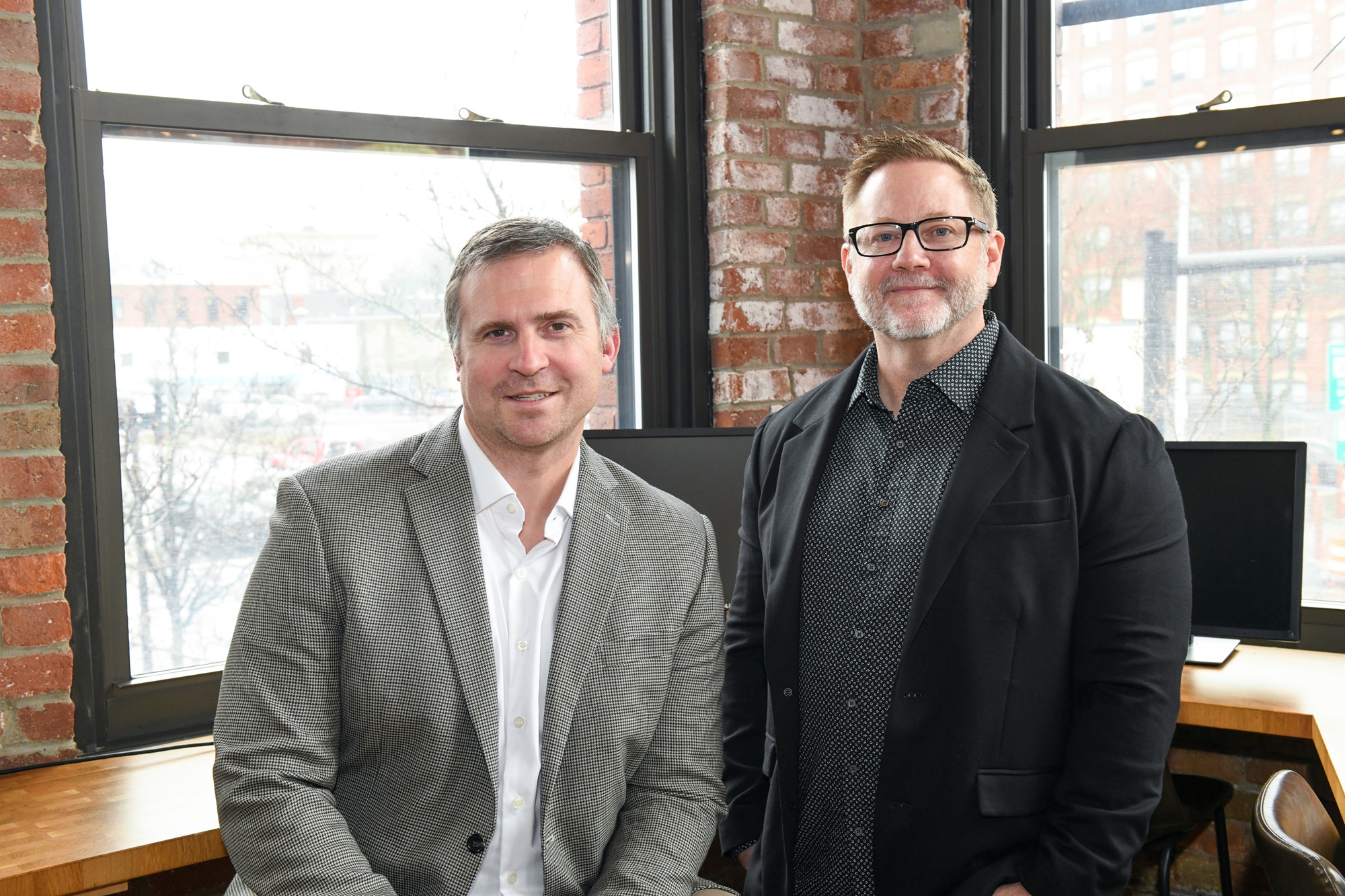
Executive Coach and Co-Authors
Bryan Powell is an executive team and leadership coach who helps organizations turn potential into sustained high performance. His work focuses on building trust, clarity, and shared ownership within teams to drive measurable results in complex, high-pressure environments.
Bryan holds a Master’s degree in Organizational Leadership from Colorado State University and is completing his PhD in Performance Psychology at Grand Canyon University, where his research centers on team effectiveness. A Professional Certified Coach (PCC) through the International Coaching Federation, he has logged more than 5,000 coaching hours with executives and leadership teams across Fortune 100 organizations, including Wells Fargo, Merrill Lynch, and Crown Castle.
Bryan integrates leadership psychology, behavioral assessment, and stakeholder-based coaching to deliver measurable business impact. He is a contributor to Forbes Coaches Council and serves in leadership roles advancing the coaching profession.
Tom Reynolds is a business psychologist, executive coach, and trusted advisor to senior leaders across industries including biotech, manufacturing, financial services, and professional services. He partners with executives and teams to help them get unstuck, rethink challenges, and make meaningful progress in complex environments.
Tom is co-author of The Efficient Frontier of Teaming™, contributing expertise in psychological safety, adaptive leadership, and agile goal-setting. His work helps teams harness productive conflict, strengthen trust, and sustain performance … Read More